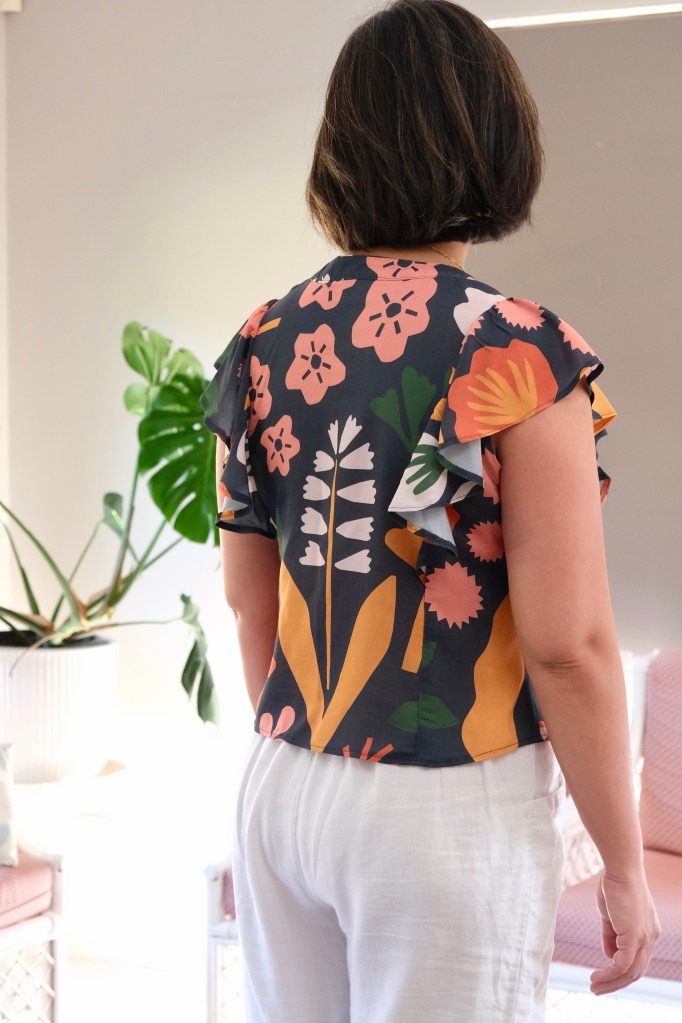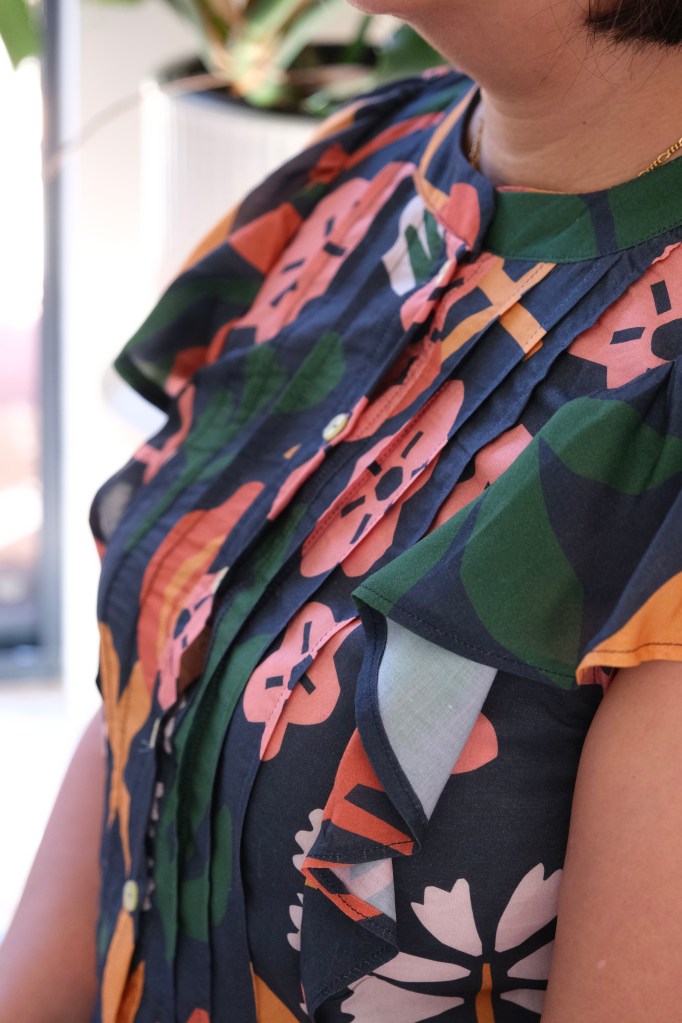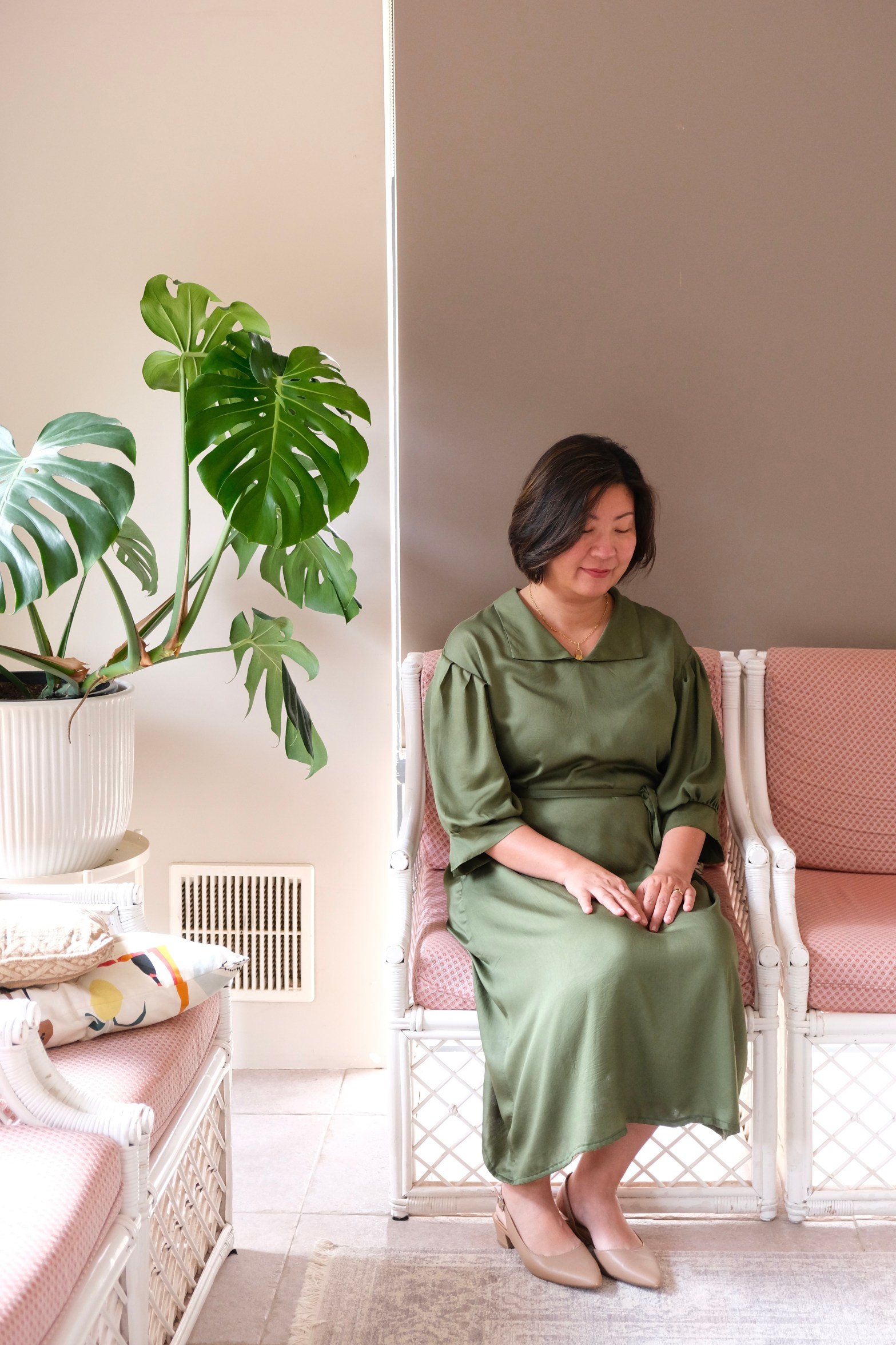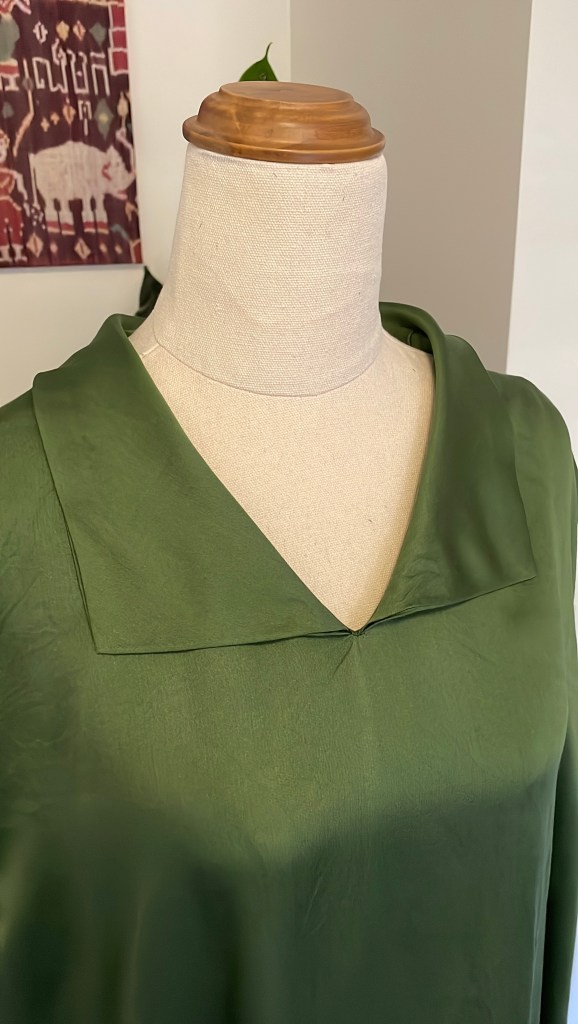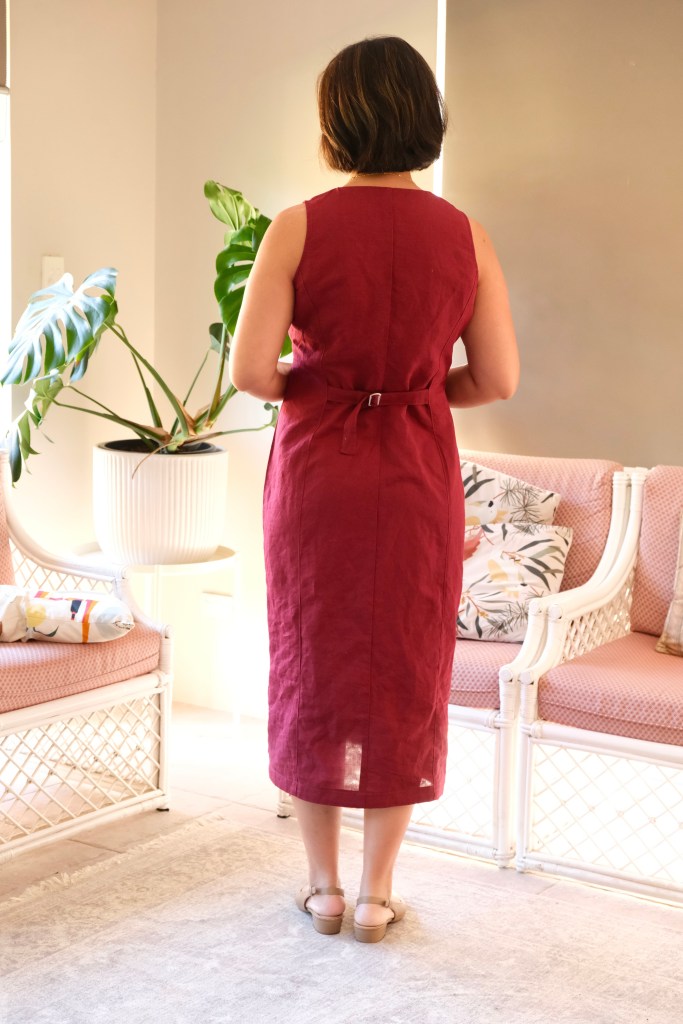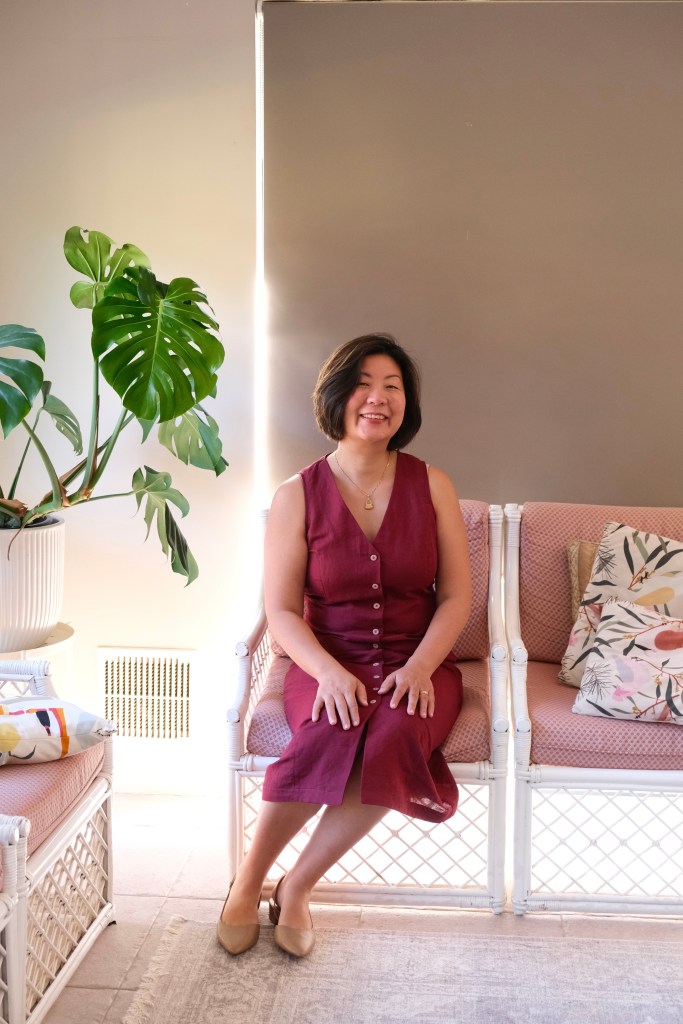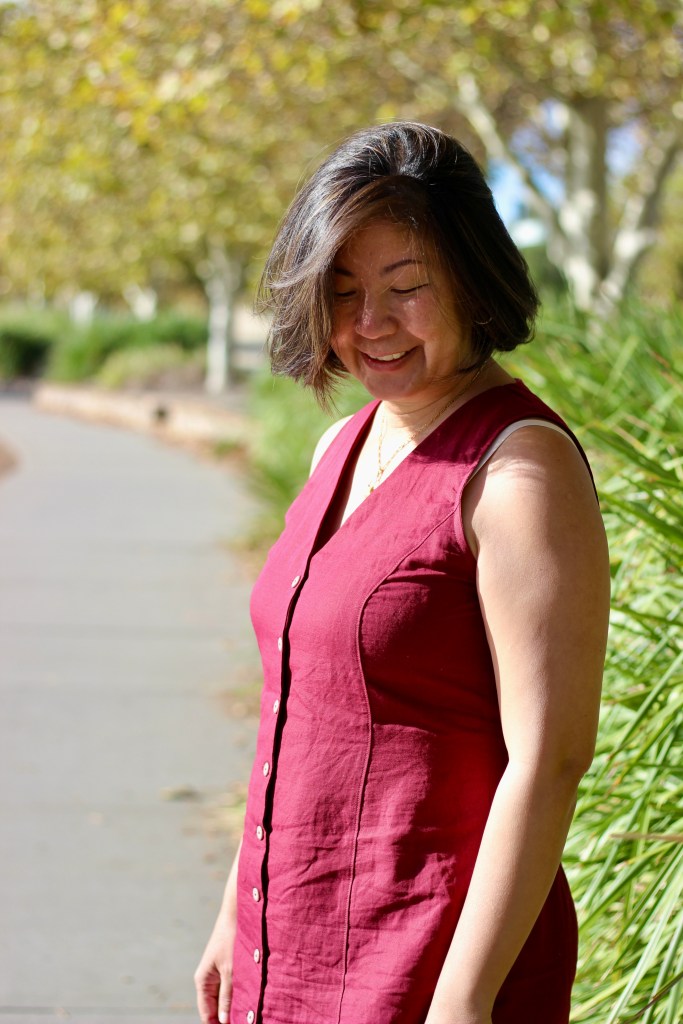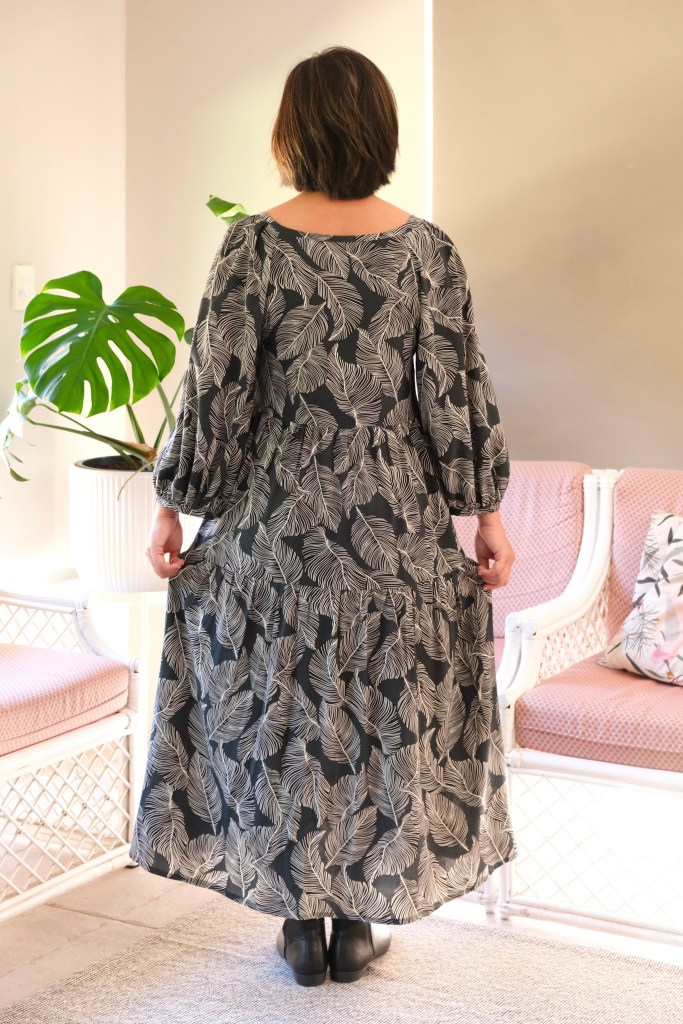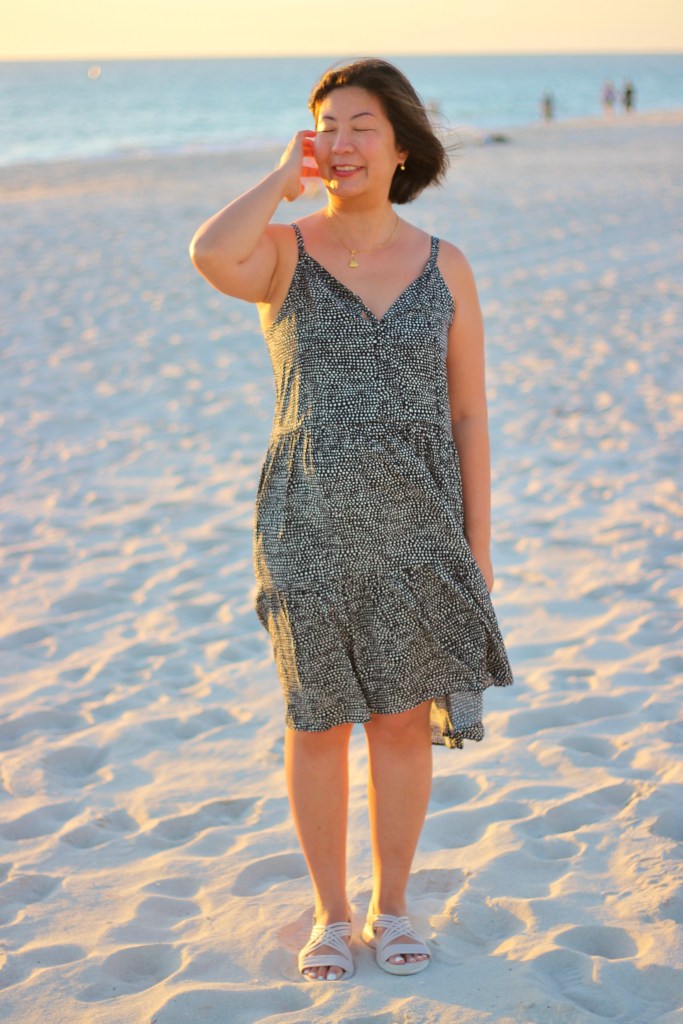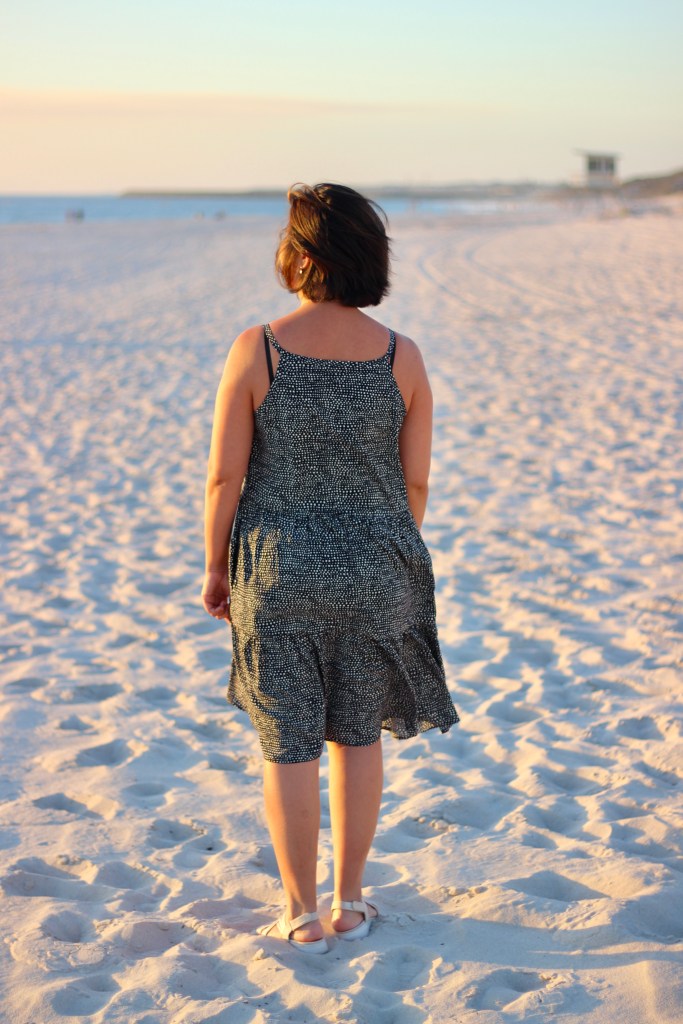
Arcadia Dress

It’s always exciting to get onto the Sew to Grow testing team. Lindsey designs sewing patterns that are stylish and easy to wear for daily life. Among her many talents, she is also a sewing teacher so her patterns are always logically constructed and made to fit beautifully. I’ve been sewing her patterns from the start of my sewing journey and have learnt so much from them. 

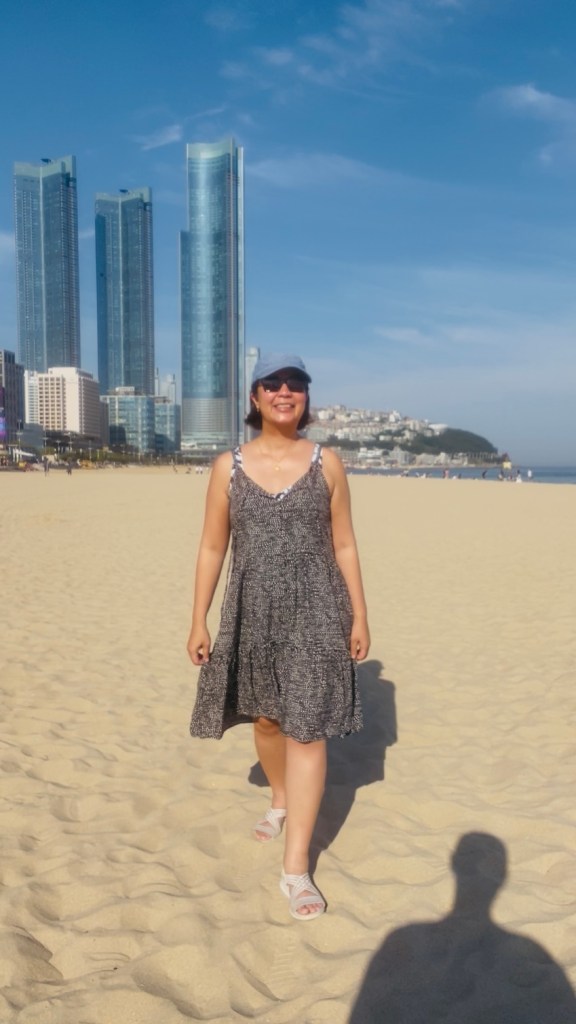
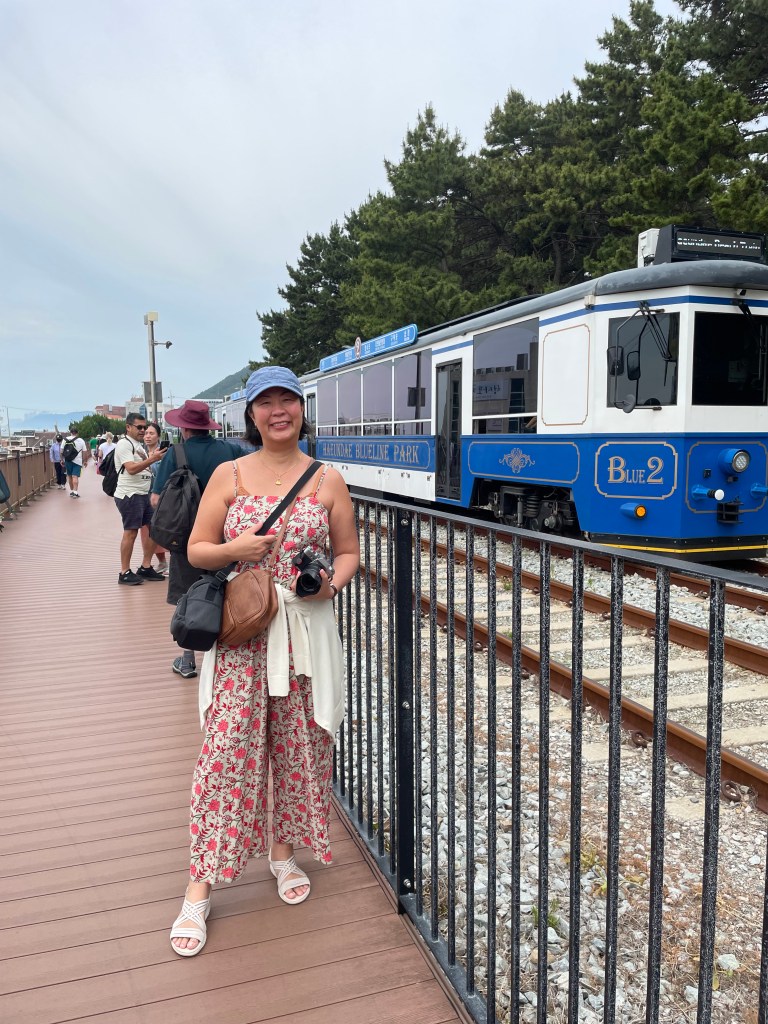
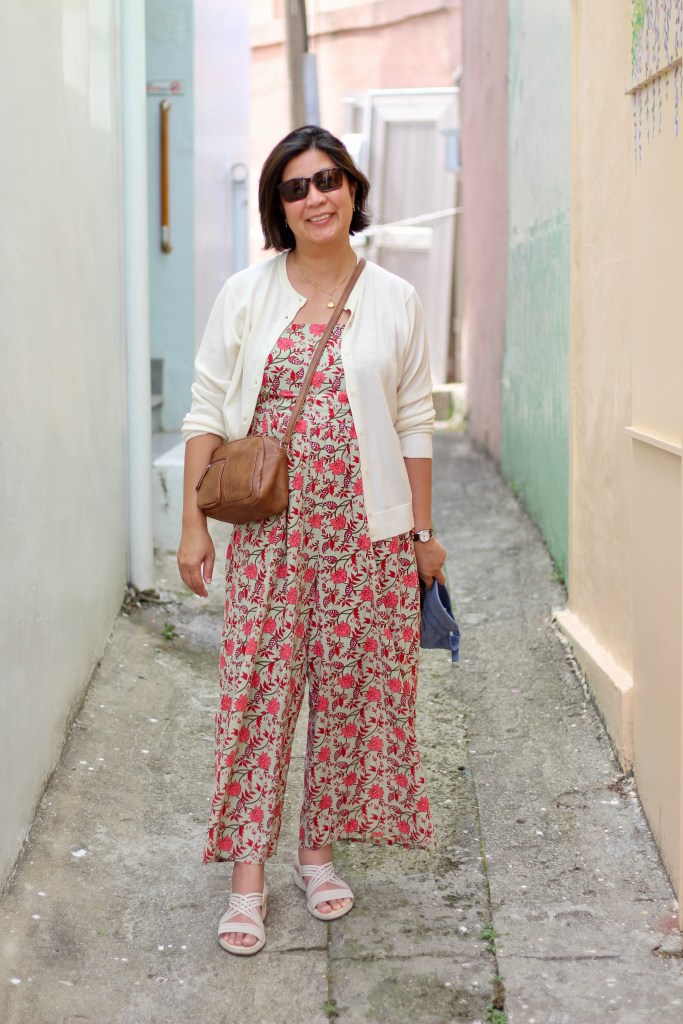
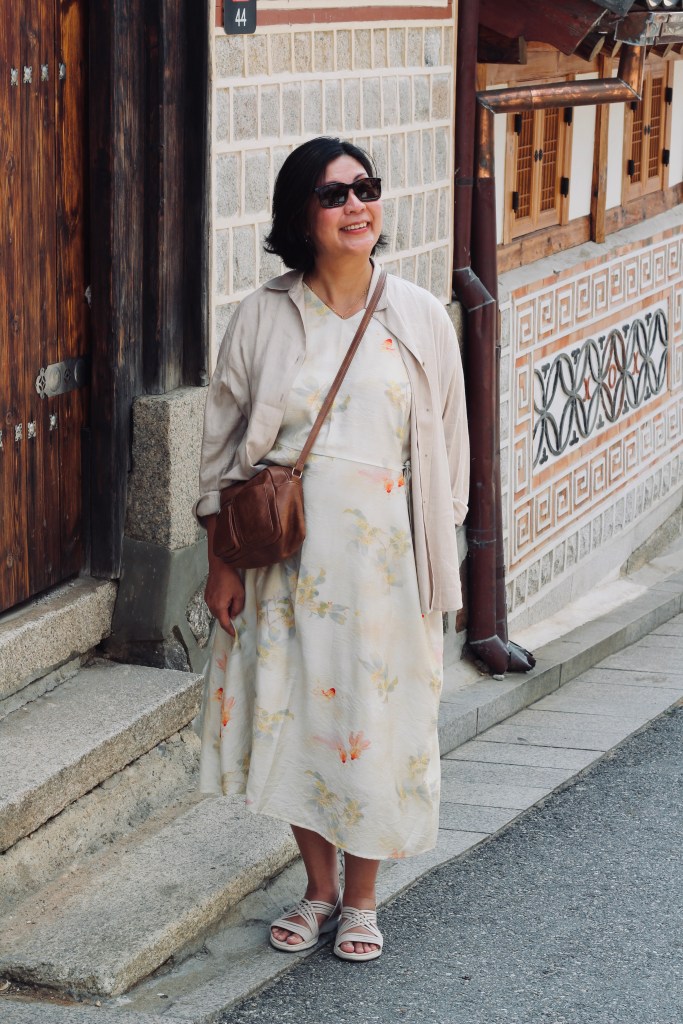
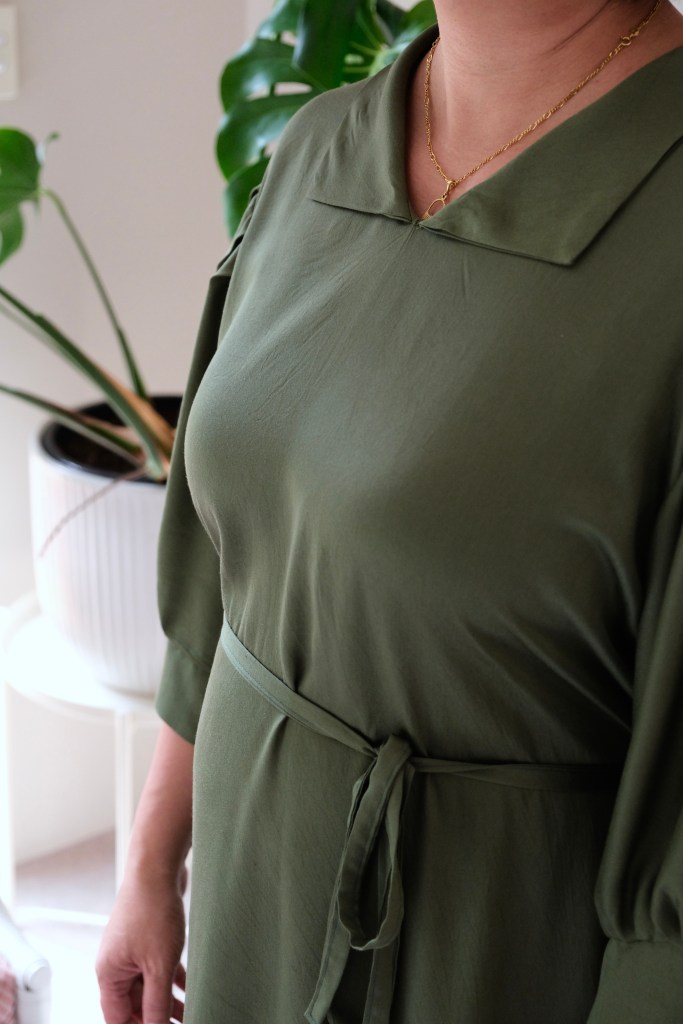
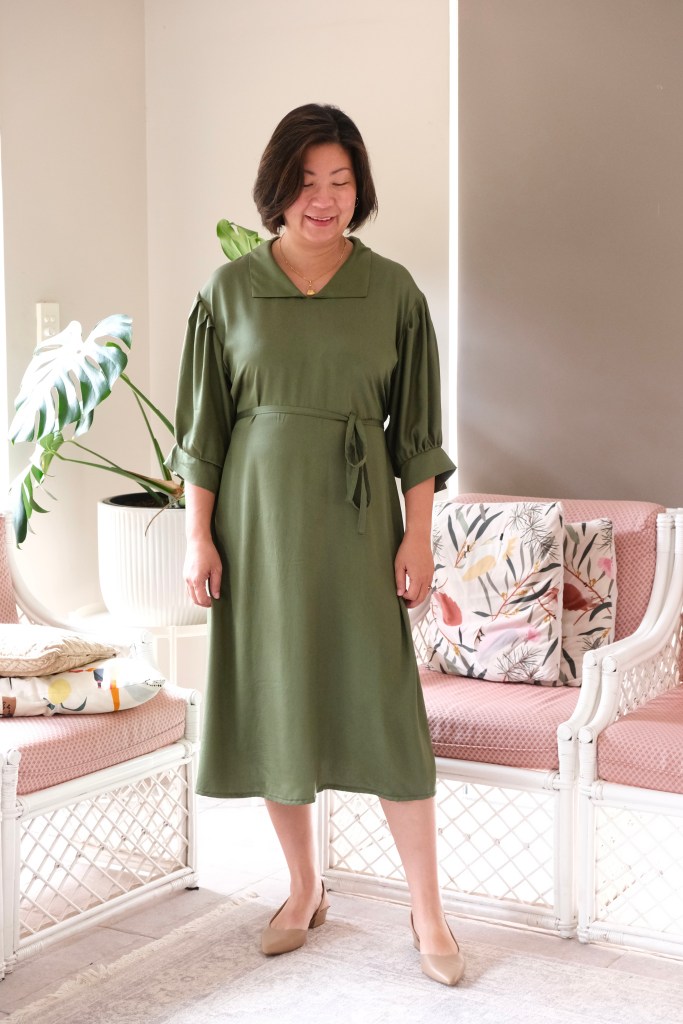
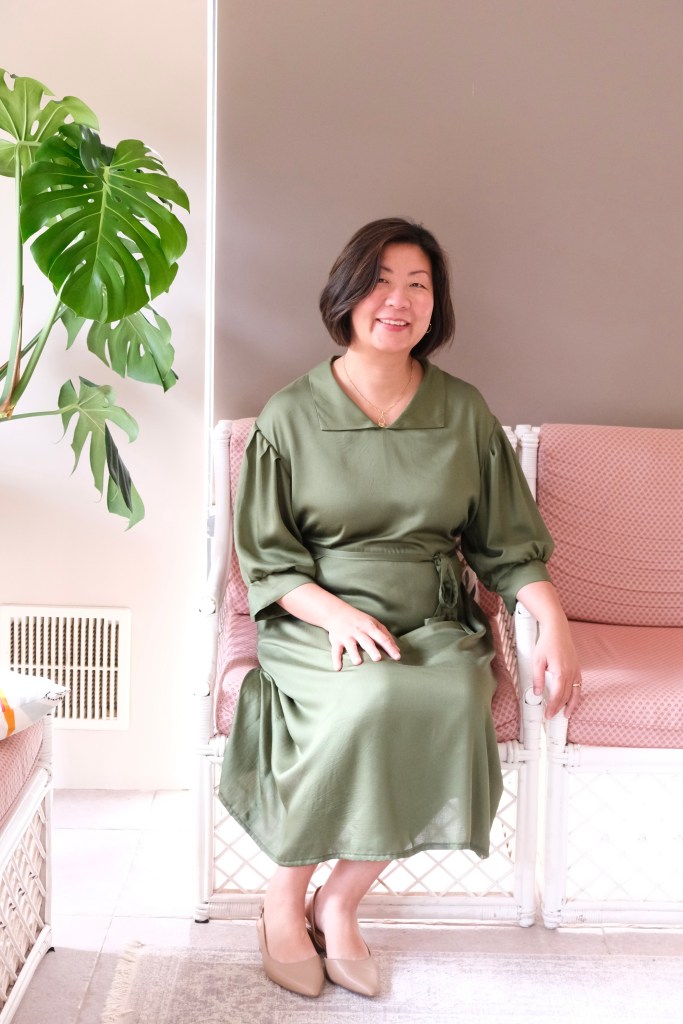
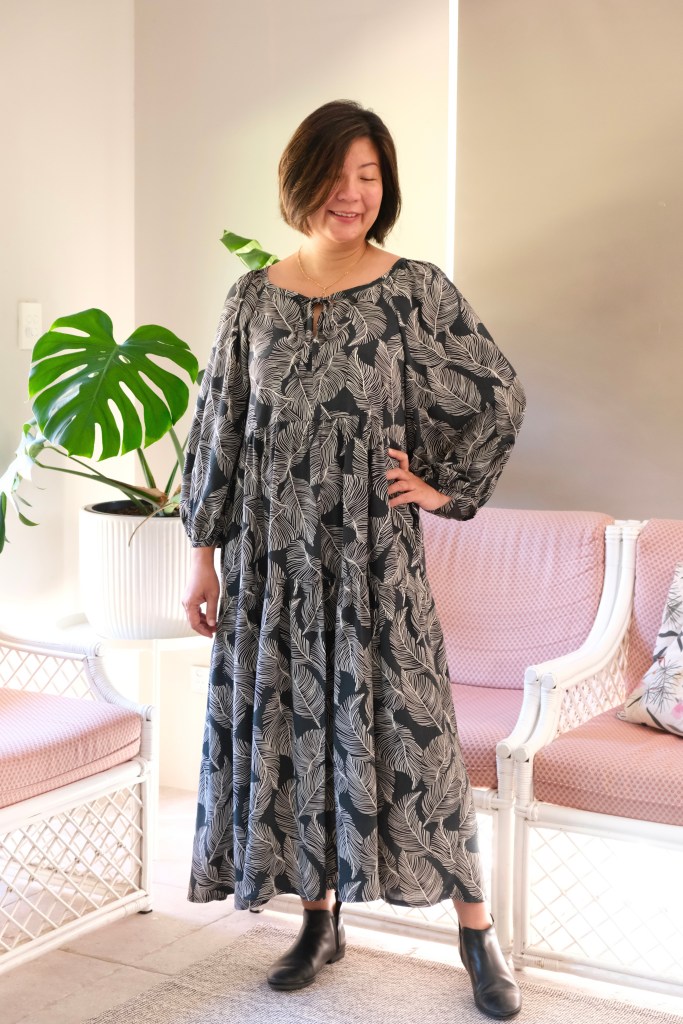
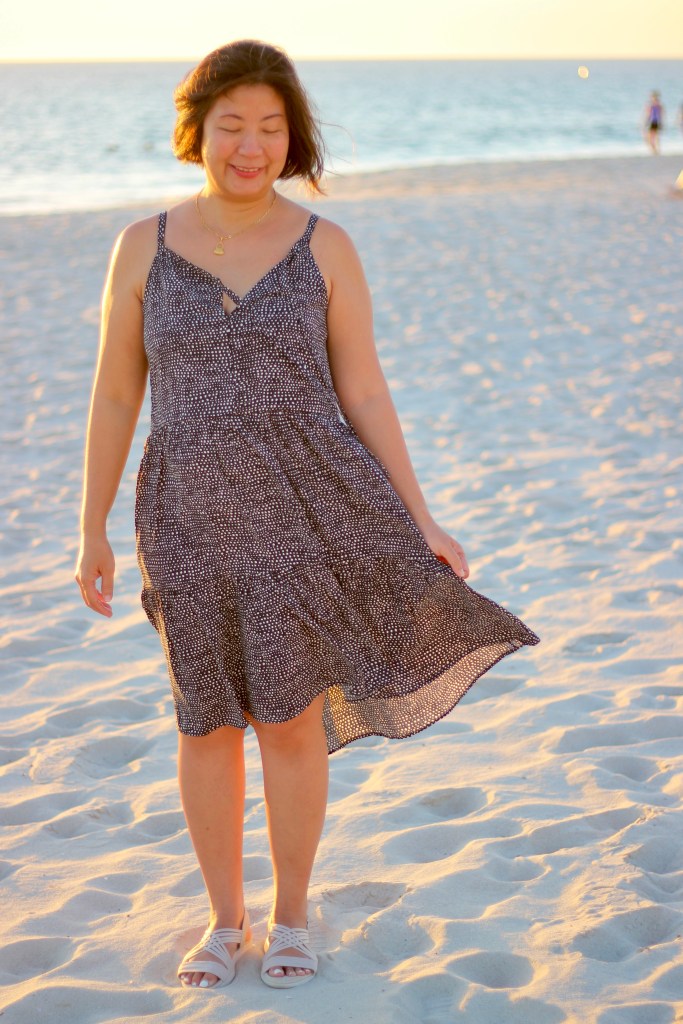
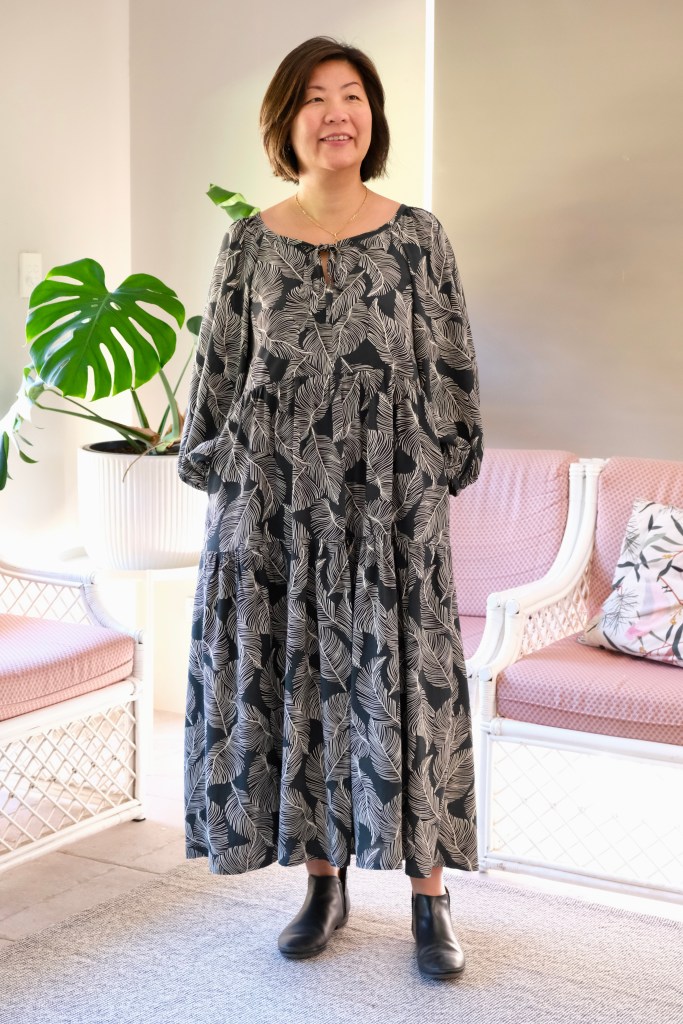
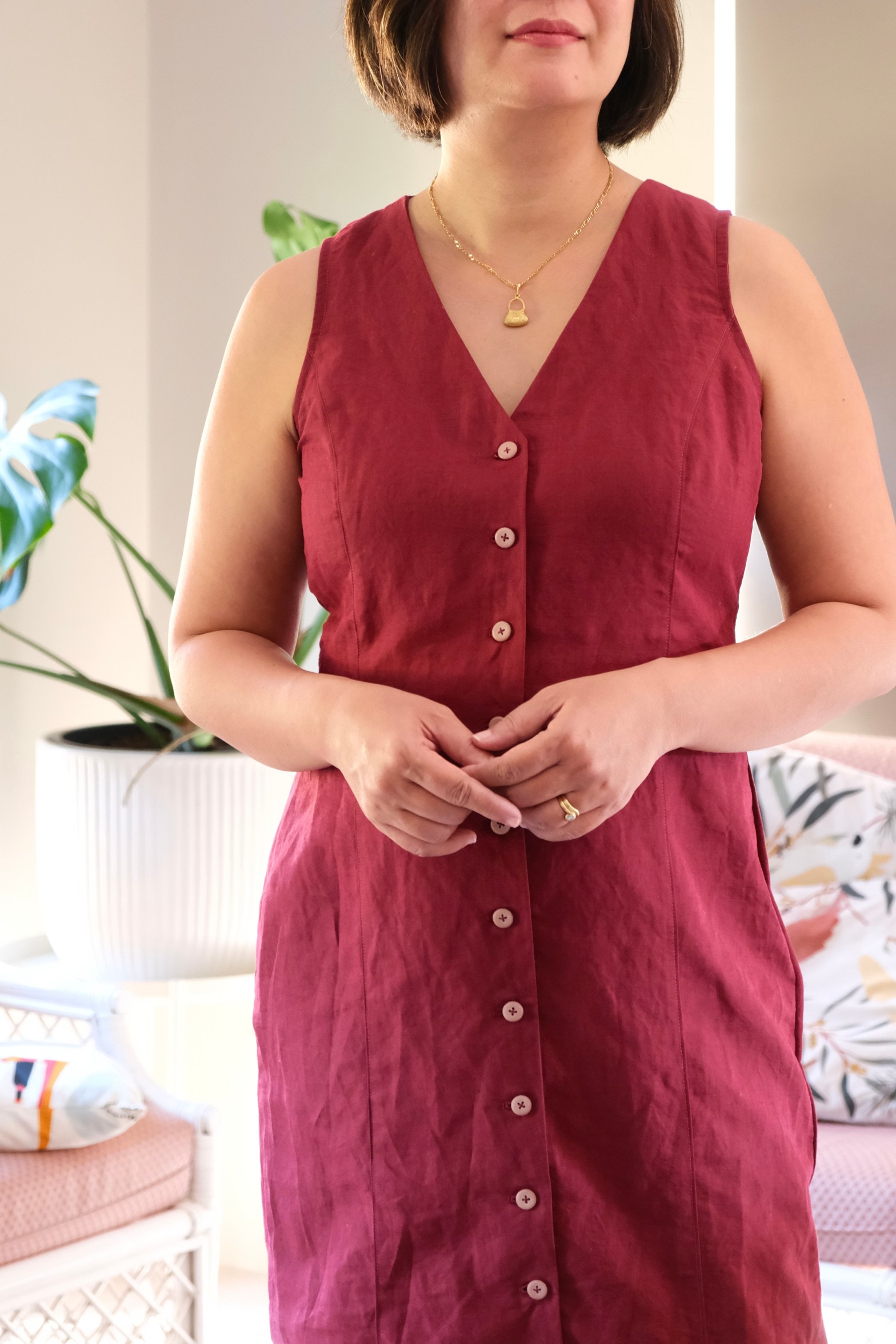
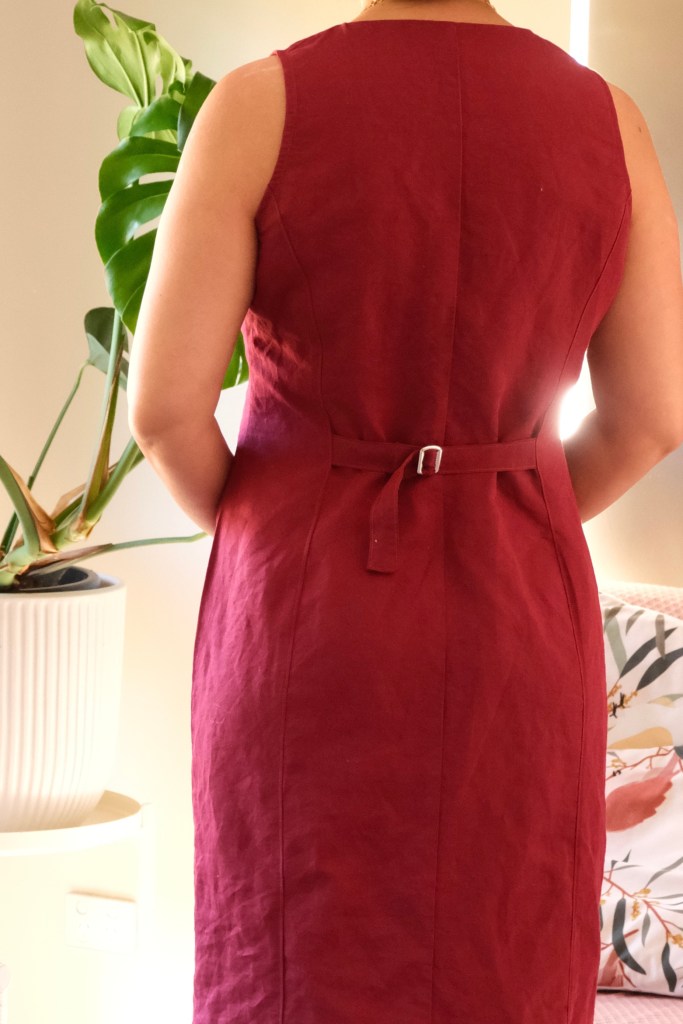
The Arcadia Dress is a versatile pattern that comes as a top and a dress. It can be sewn as a sleeveless or long-sleeved tiered dress with a front tie on a lined split V bodice. I made two versions, a sleeveless short version and a long-sleeved maxi version. I love the relaxed vibe of the pattern and it’s such a versatile pattern.

I sometimes find tiered dresses to be very oversized and worry about swimming in volumes of fabric, but the Arcadia Dress is sized to fit in a flattering way. My measurements of 38-inch bust, 33-inch waist and 40-inch hips fit into the size 12 and I found the pattern true to size. No modifications were made except for my maxi version. To achieve the maxi length, I doubled the width of the bottom tier. 

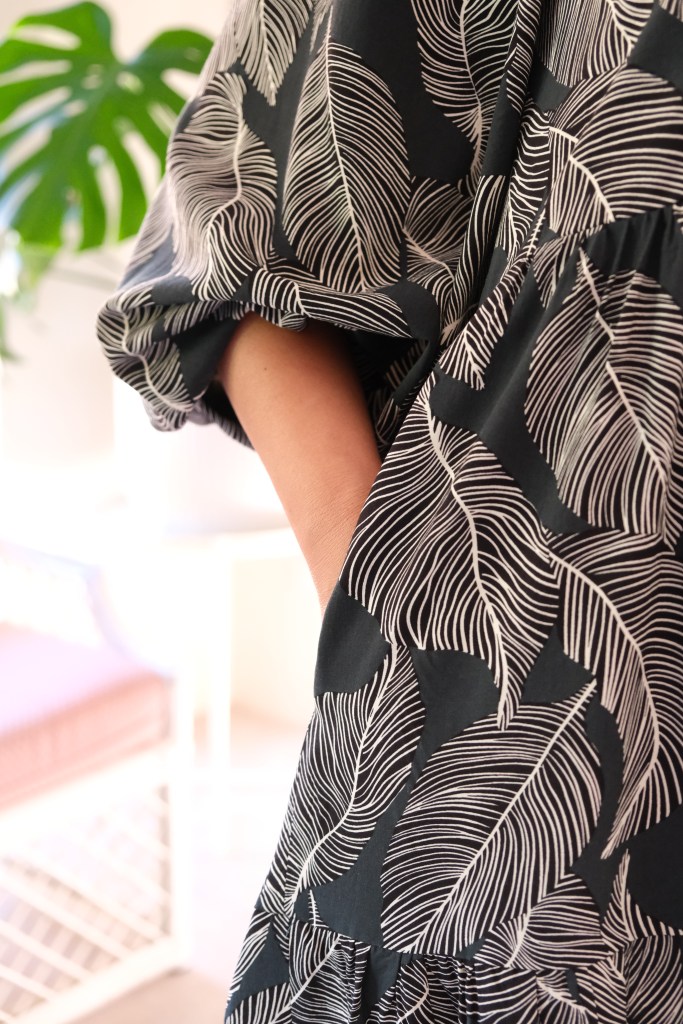
The sleeveless dress used about 2.5 meters of fabric and my maxi version required about 4 meters of fabric. Luckily, there was a good sale on rayon fabric at Spotlight! I decided on rayon because the pattern is made for woven fabrics, and I thought the patterns would be showcased best by something lightweight and billowy. I also generally find rayon to be so comfortable to wear in the Australian climate. I think my sleeveless version will get a lot of wear in summer, but my maxi dress will get worn all year round.

There are so many positives of the pattern. I’m often pulling up straps with my sloping shoulders so I’m always trying to modify straps to sit on my shoulders. Well, I think I’ve found the perfect strap design because I haven’t had to worry about that with my Arcadia Dress. My straps on the sleeveless version stay put because the straps join onto the neckline with a long length of bias binding, and they seem to sit perfectly without any chance or length for them to slip off the shoulder.

Another nice feature is the v-opening with the ties which eliminates need for zip or button instalments. It’s a great dress to slip over the head and go. The bodice is lined too which gives the dress a beautiful quality finish. It’s these little details that make sewing your own clothes so worthwhile.

I’ve loved seeing the other tester versions emerge and there’s been a few tops that have been made. I’d love to come back to this pattern in the future to make one. This will be added to my TNT (tried and true) patterns. Lindsey was such a pleasure to test for. It was nice help her bring this pattern to life.

Thanks for reading and happy sewing!

X Em

A Round-up of Tees

I know tee-shirts aren’t the most exciting item in the wardrobe, but they are probably the hardest working item. When I first started making tees, I realised that there are so many designs and there’s also such a variety of knits to make them with. I’ve also come to realise that there is a difference when a good quality knit fabric is used. It makes it so much more enjoyable if the fabric is great quality and fun to look at. 

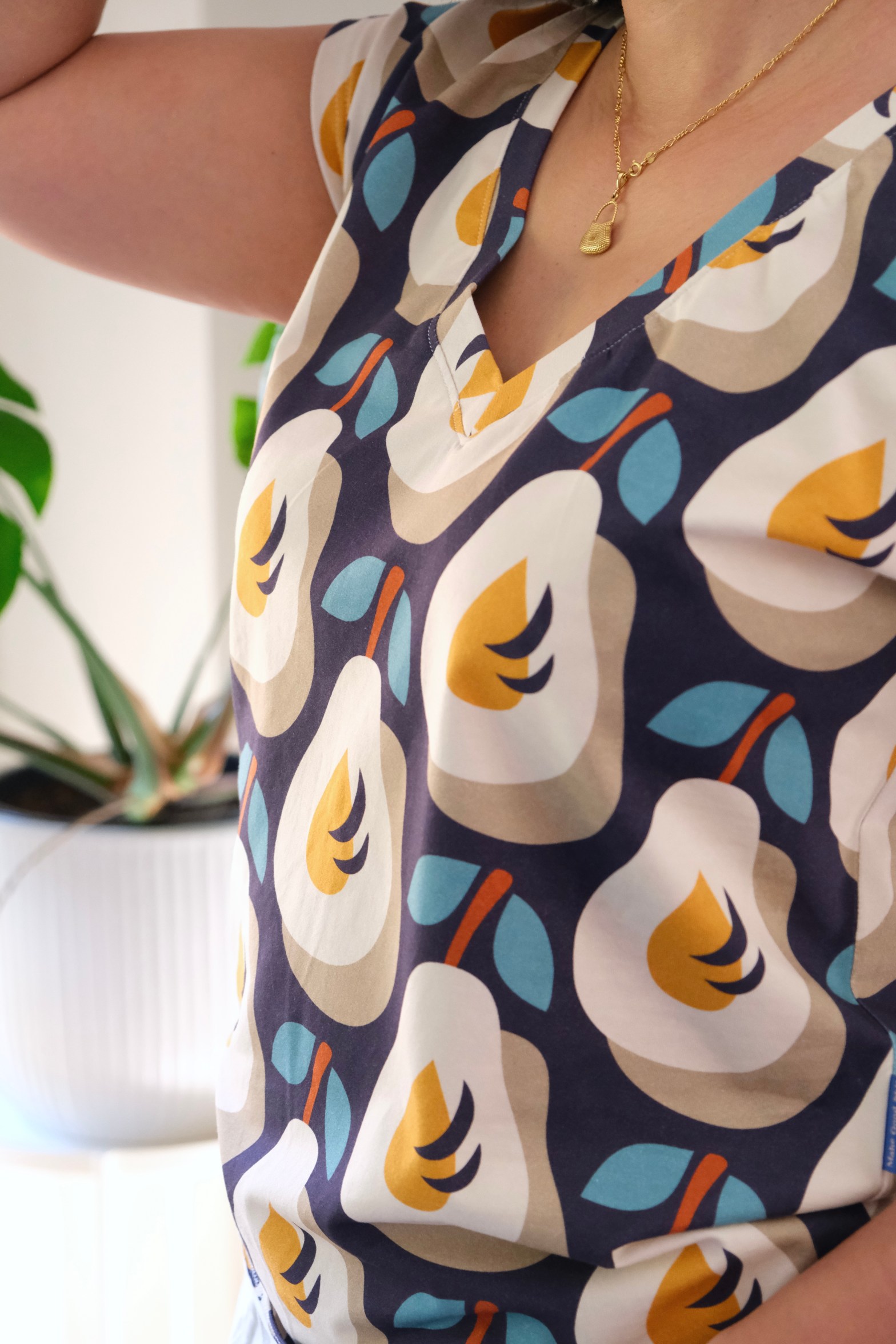
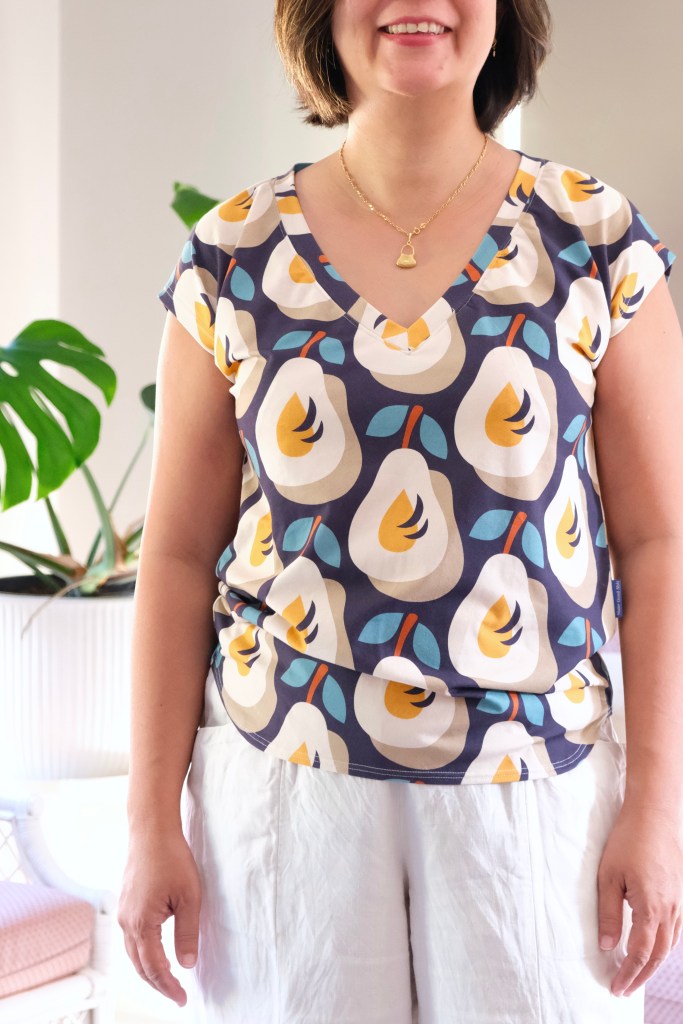
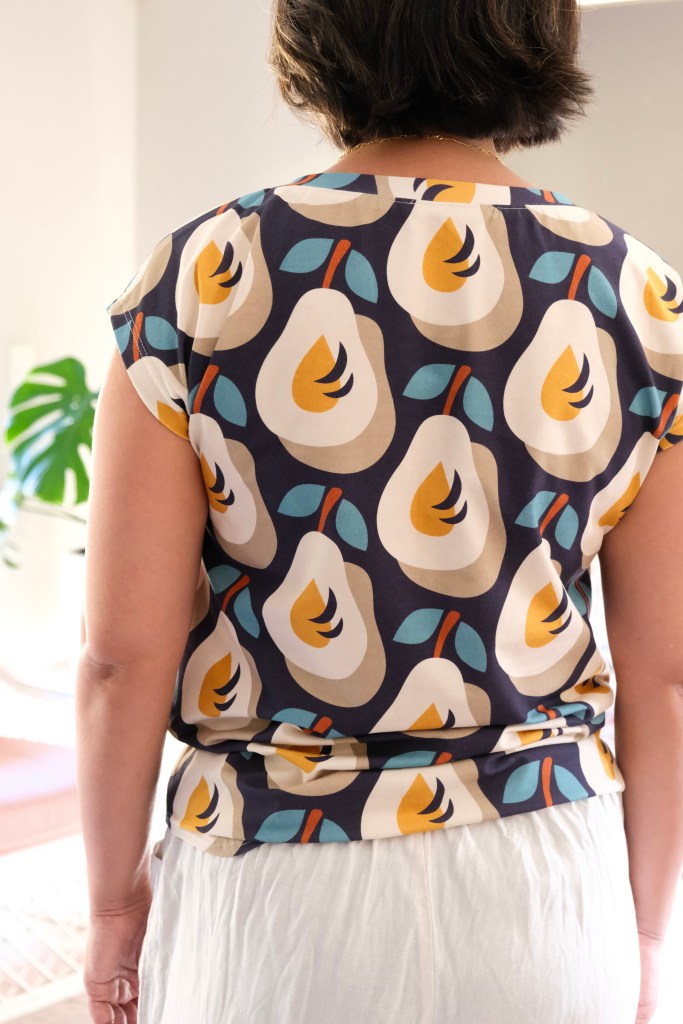
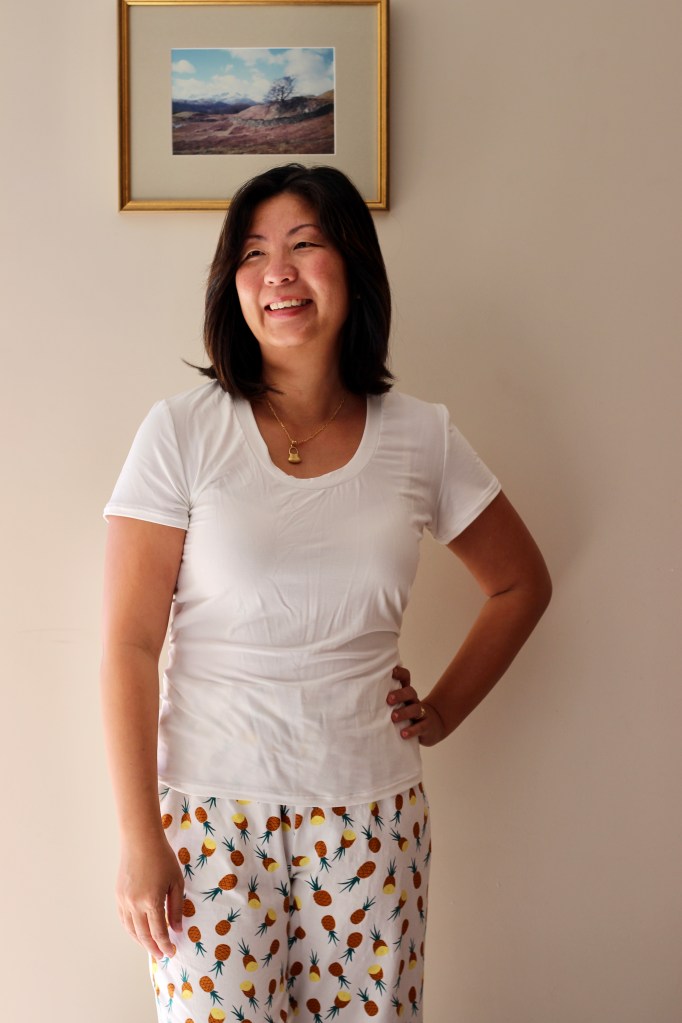
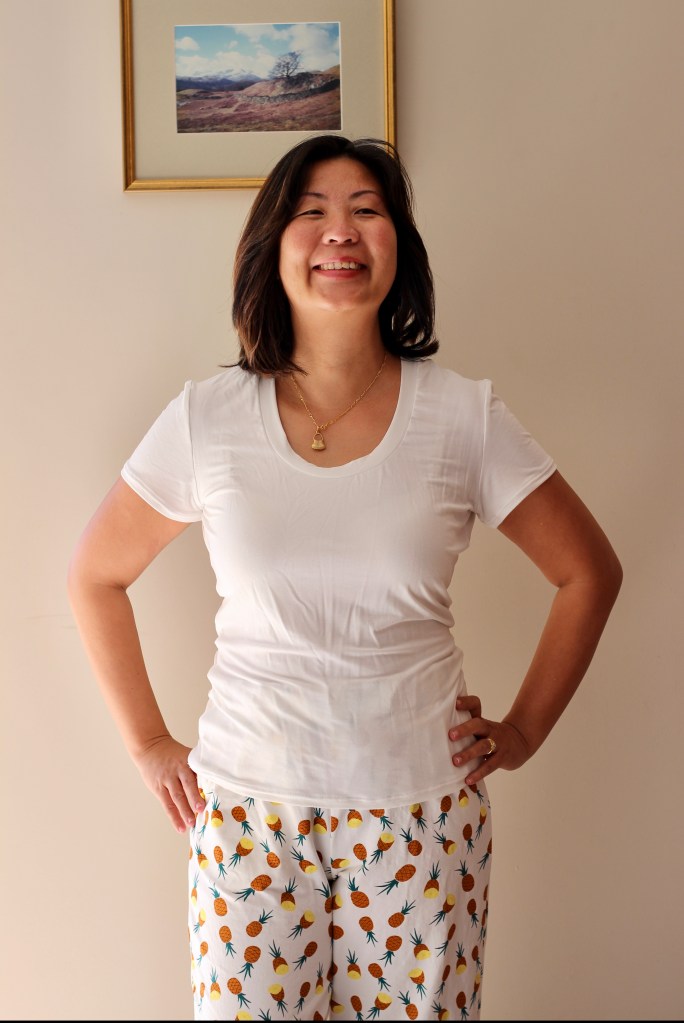
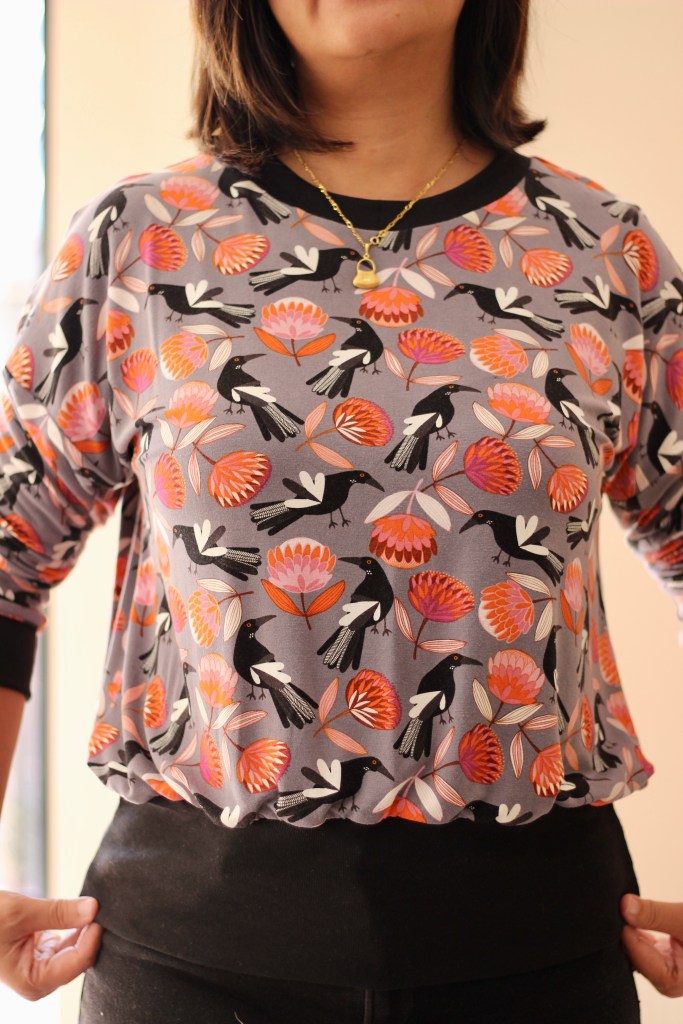
In this post, I thought I would review some of the tees that I’ve made, starting with my new Swimstyle Velma Top in the Rou Cou Cou Retro Pears which I bought from Maai Design. I have sewn the Velma Tee, but this is the V-Neck version. I’ve made the Size L for my measurements of 38-inch bust, 33-inch waist and 40-inch hips.  The cotton jersey that I used is velvety soft but with a little bit of weight and structure which was easy to handle and a perfect match for this tee.

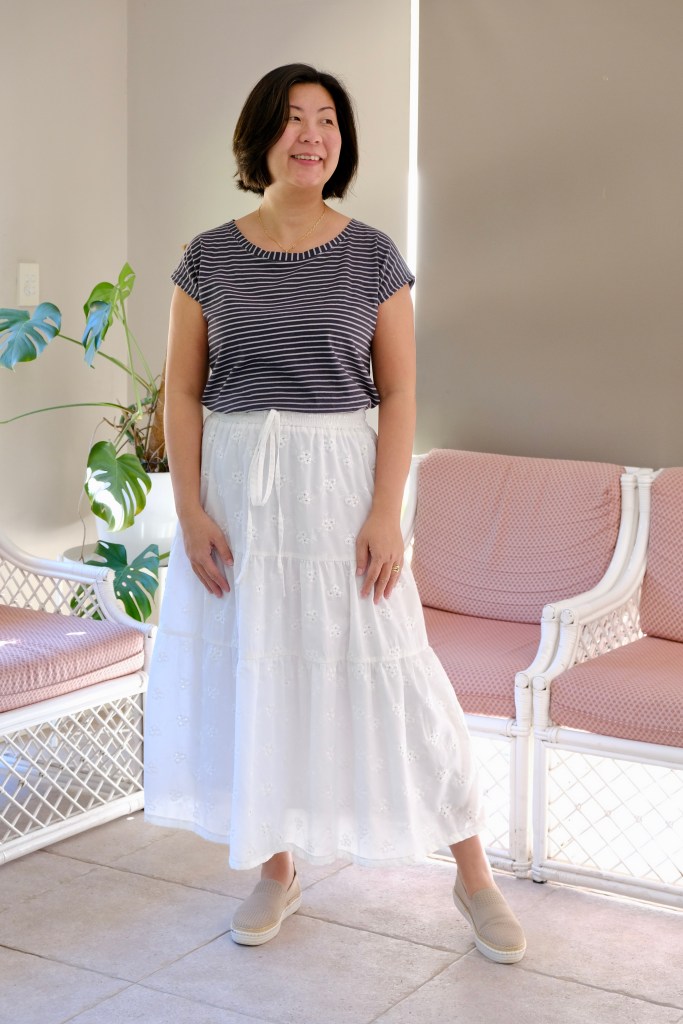
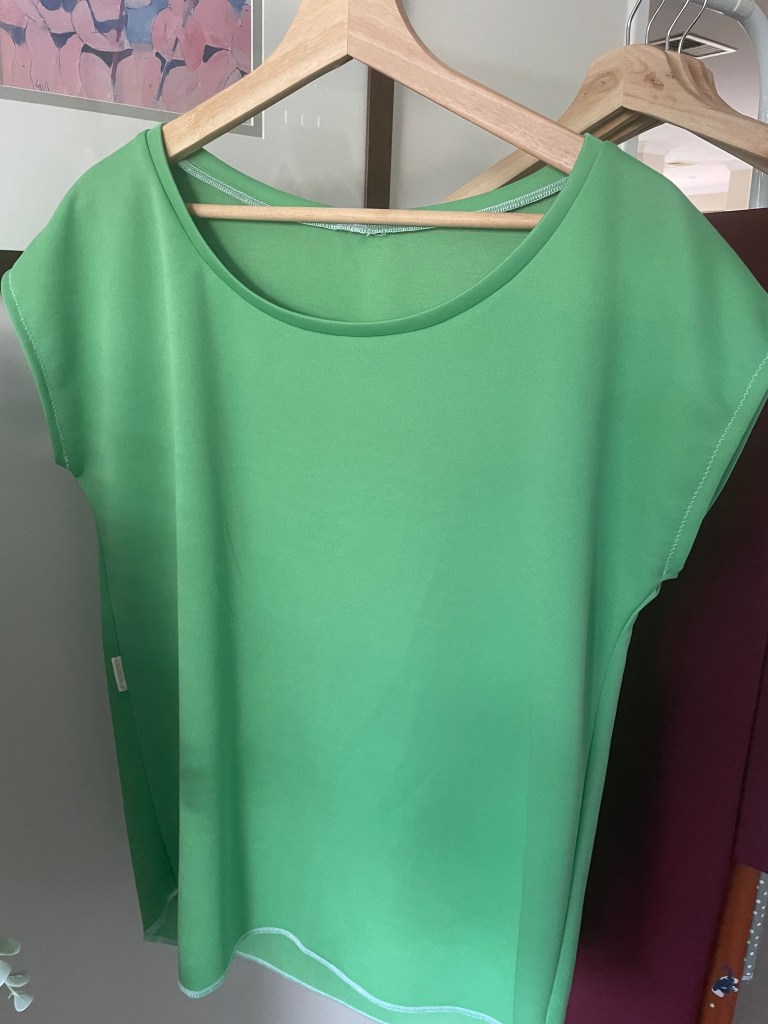
As mentioned above, I have made the round neck version of the Velma Top. I love that it has the scoop neck, and I was so happy with how the neckline sits. Instruction for both round and V-Neckline are excellent. I also like how the sleeves drop from the bodice. I loved it so much that I made three of them. I experimented with three different types of knit. I found that I liked a knit with some structure and less stretch for this like the cotton jersey, a brushed knit and a rayon scuba.

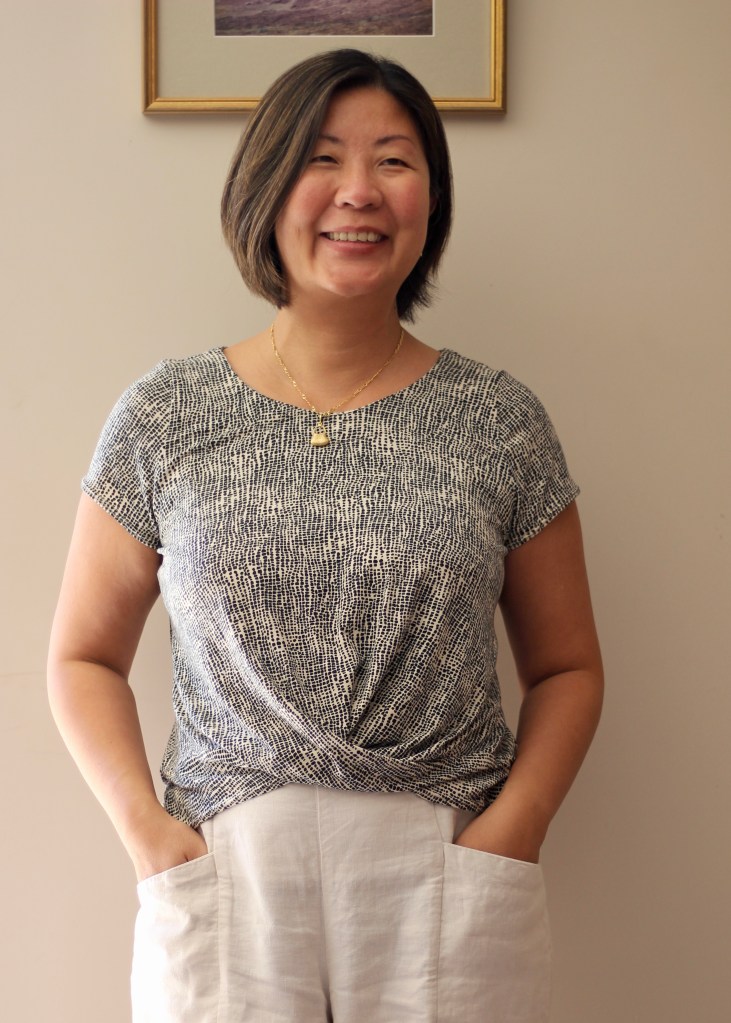
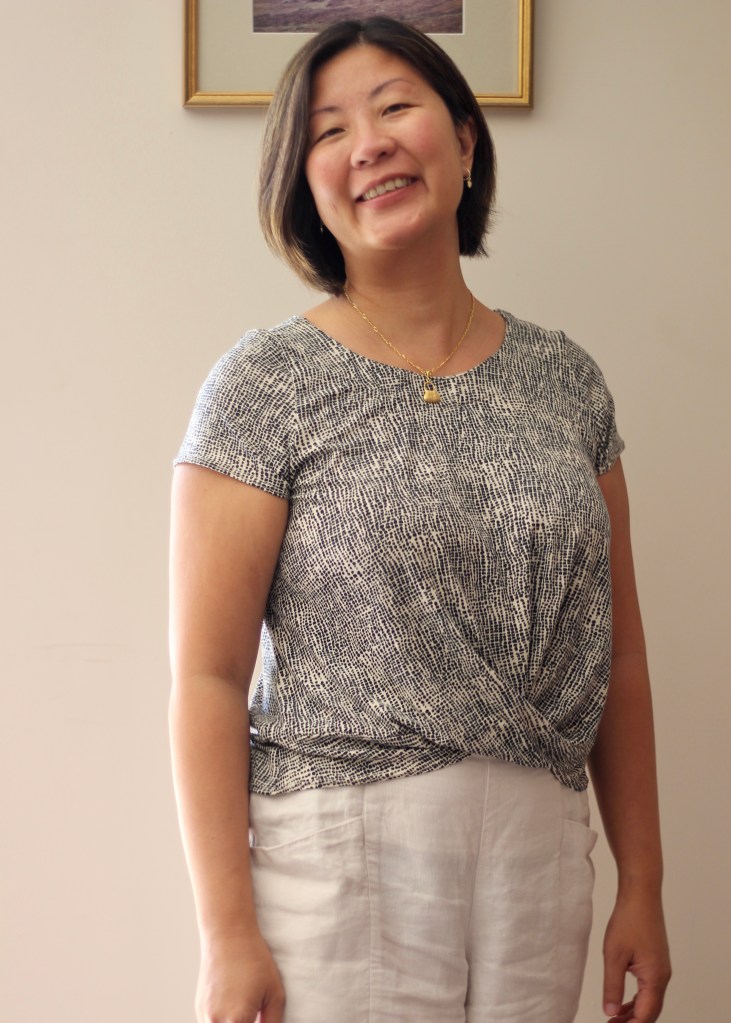
Another well-loved Tee pattern is the Cashmerette Brattle Top. I was very nervous when I was asked to sew this for Cashmerette Club. I ended up making three of these. I love the unique twist in the front. It’s a true elevated basic. I made the size 10 for my measurements. Cashmerette has a fit calculator which gives you a great estimate of the sizing. For this pattern, I used a patterned rayon spandex jersey for one and a bamboo jersey for another two. These were lightweight and had a lot of drape that suited the twist in the front.

The Carlyle Tee is another unique Cashmerette Tee. It has a beautiful square neckline with puff sleeves. I used a cotton jersey for this, but it doesn’t have enough stretch, and I haven’t reached for it as much because I find it too stiff. I will probably return to this pattern with a softer and drapier knit fabric like a rayon spandex knit.

I haven’t written about the Stellan Tee on my blog which is a free PDF pattern from French Navy. It has a classic tee with sleeves. I don’t think I made the correct size, and I wish that I had sized up. I had bought some beautiful cotton jersey fabric from Megan Nielsen when she still had a store. It’s still wearable but again, I had pictured an oversized boxy tee but although it sits with all the right proportions, it’s not the comfortable floppy tee that I wanted. Unfortunately, I haven’t taken any photos but another tee that I love is the Patternscout Comfi Tee. I’ve only made one and the neckline is floppy but it’s one that I have reached for many times over. It’s a fitted tee with a round neck. I need to go back and make another one.

Lastly, the Megan Nielsen Jarrah Sweater was the very first knit pattern that I tried to sew. I know that technically it’s not a tee, but I learnt a lot by making these and it’s a tried and true pattern that I keep going back to every year. I think the practise helped me master a few important skills like attaching the cuffs and neckline. Learning how to control the stretch and how to use the overlocker.

So, the humble tee is one of the most used and valued items in my wardrobe. Now that I’ve used “good” fabric, I’ll be looking for more so that I can keep searching and making this most comfortable item in my wardrobe.

Thanks for reading and happy sewing!

X Em

Daisy Top

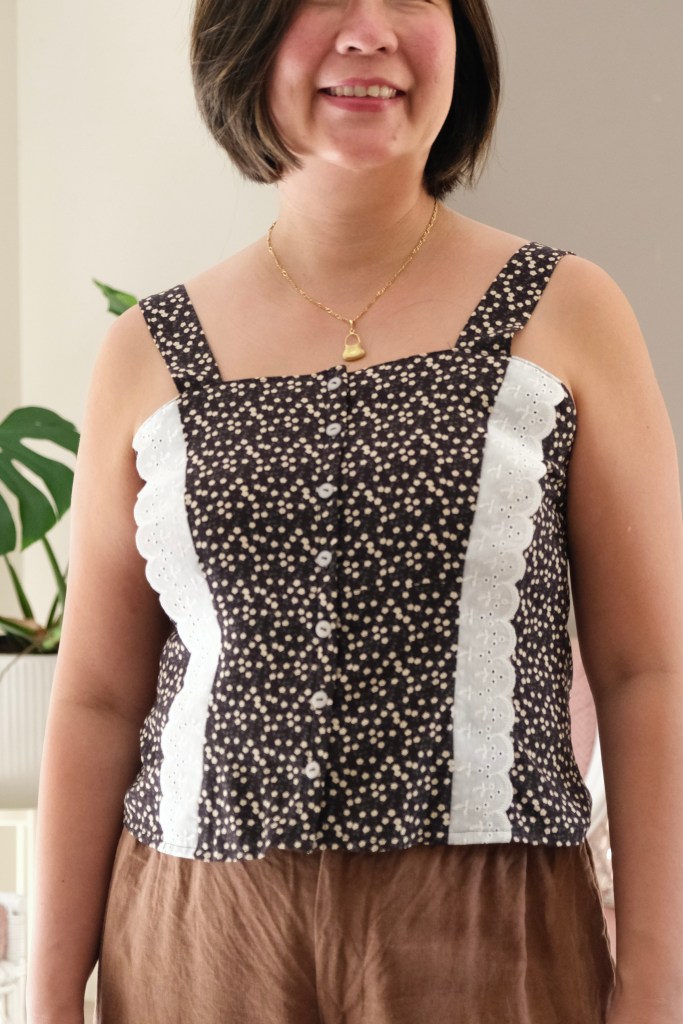
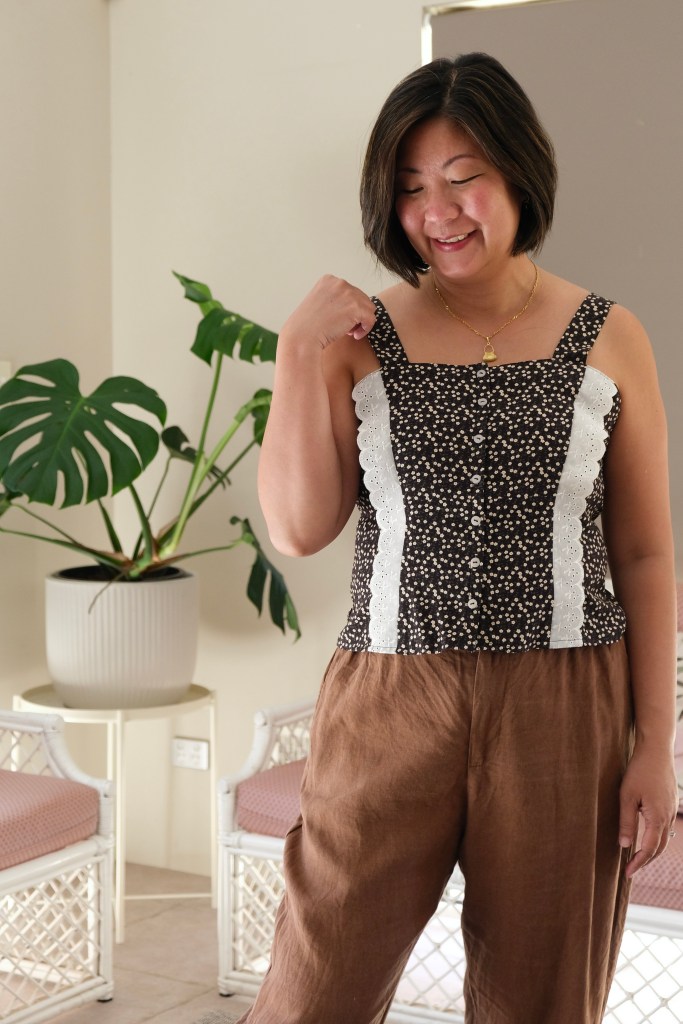
As I said in my Instagram Post, this pattern is tiny but mighty. The Stitchmaiden Daisy Top has multiple versions in one top. I find it to be a good skill building pattern. I’ve been wanting to experiment with attaching trims and more decorative details in my sewing and this pattern has a great section on ideas of show to add decorations. There is also a length variation, so I chose the longer version. 

Once I got going with my top, I knew I wanted to make another one straight away. But before starting on the final versions, I used the remnant white slub to make a toile. I initially cut the size 44 but found that it was too roomy at the bust, and the princess seam didn’t sit in the right position. I decided to make the size 42 but didn’t have to grade to the 44 waist because the pattern has a 2cm side seam which makes the pattern so easily adjustable.

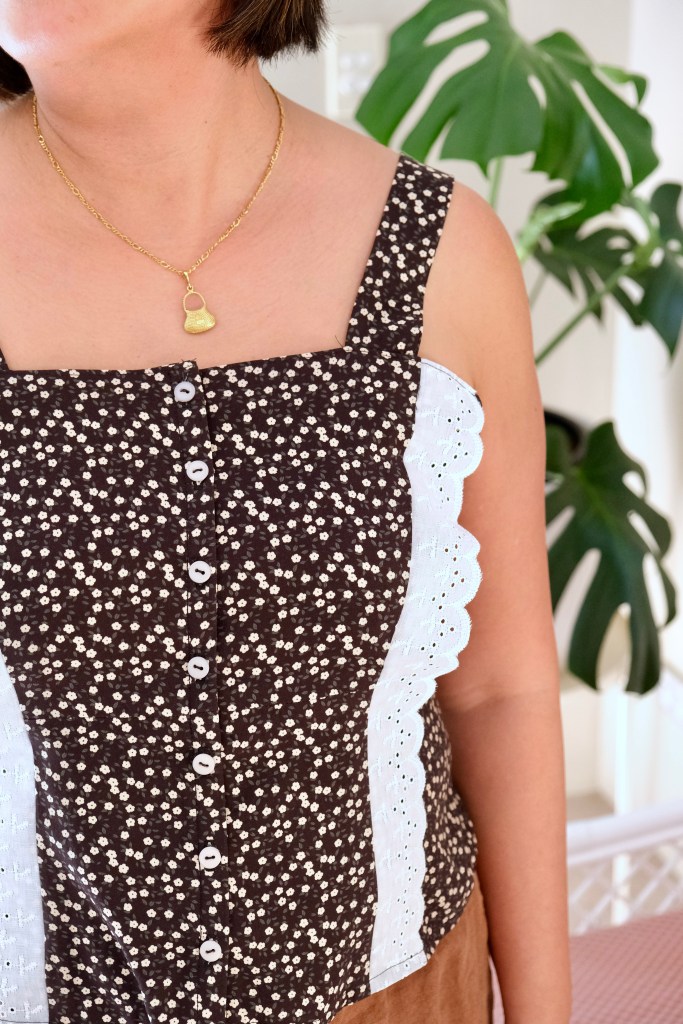
The top I had envisioned with this pattern was a softer, breezy top with lace detailing. I was happy to find a rayon with a print called Daisy for the top. I matched it with a cotton lace trim which I would insert instead of the ruffles in Version C of the pattern. I’ve never inserted lace before. Initially, I inserted it with the lace facing inwards, so I had to get out the seam ripper. That’s when I decided to film it. I find documenting the process really helps me to learn.

In the end, the top came together quite easily. As I said, this pattern is drafted, and the construction is organised so that everything can come apart quickly for adjustments. I only had to modify the side seam with the 2 cm seam allowance at the top of the bodice and sewing down to a 1cm seam allowance at the waist. The strap comes with a 5 cm seam allowance which fitted well. I did move the straps inwards of the princess seams because I have slightly sloping shoulders. This worked well except I found that I couldn’t wear a bra with straps because they weren’t covered with the straps in that position.

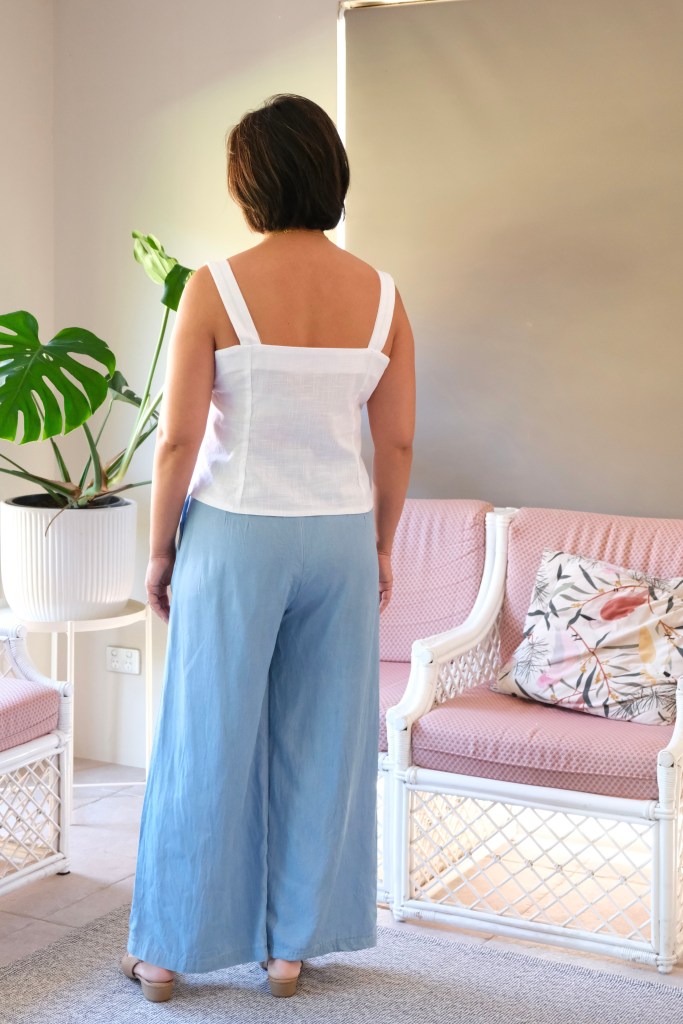
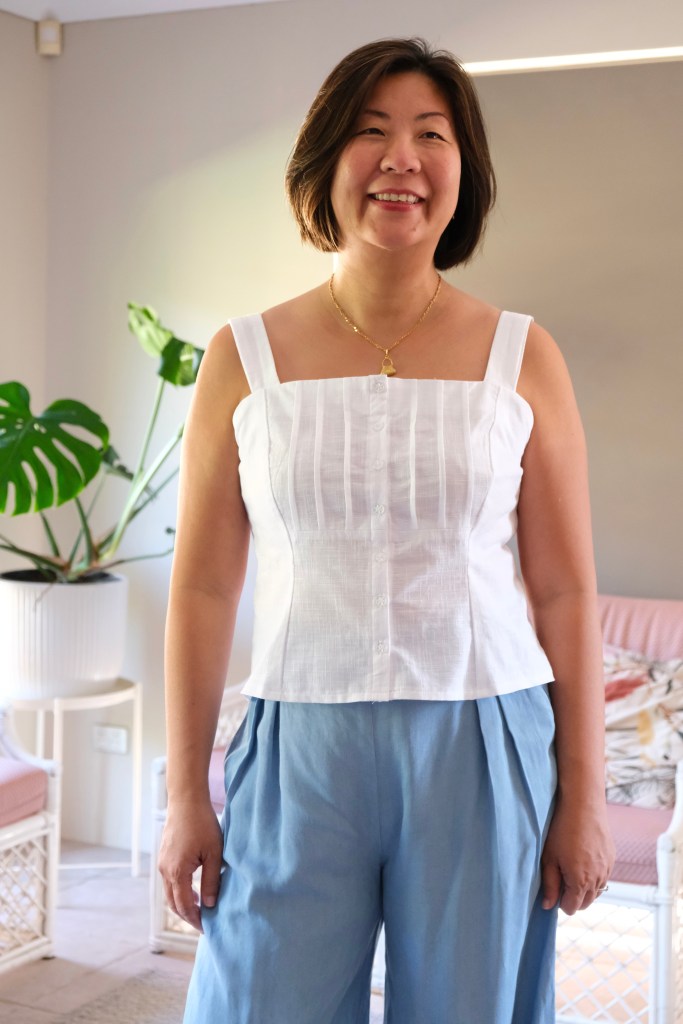
Once that was finished, I went back to the white slub toile. I removed all the basting stitches and cut down the pieces to the size 42. This time, I thought that the stiffer structure of the fabric was better for Version D which features pin tucks. I stayed with the straight neckline rather than a sweetheart neckline. I love how the neckline rises slightly in the front.

Again, this pattern was enjoyable to make. In the second pattern, I decided to add the facing pieces as one after I had sewn together the side seams. I also attached my straps before attaching the facing. Only be aware that doing the construction this way makes it harder to readjust at a later stage.

The Daisy Top is a lovely addition to my growing handmade wardrobe. It’s pretty but also practical. I think I’ll get a lot of wear out of them. I’m grateful to be collaborating with Stitchmaiden as they gifted me with this pattern. Even though gifted, no blog post was required but I felt it was worth sharing and all opinions remain my own.

Thanks for reading and happy sewing!

X Em

Jackie Top

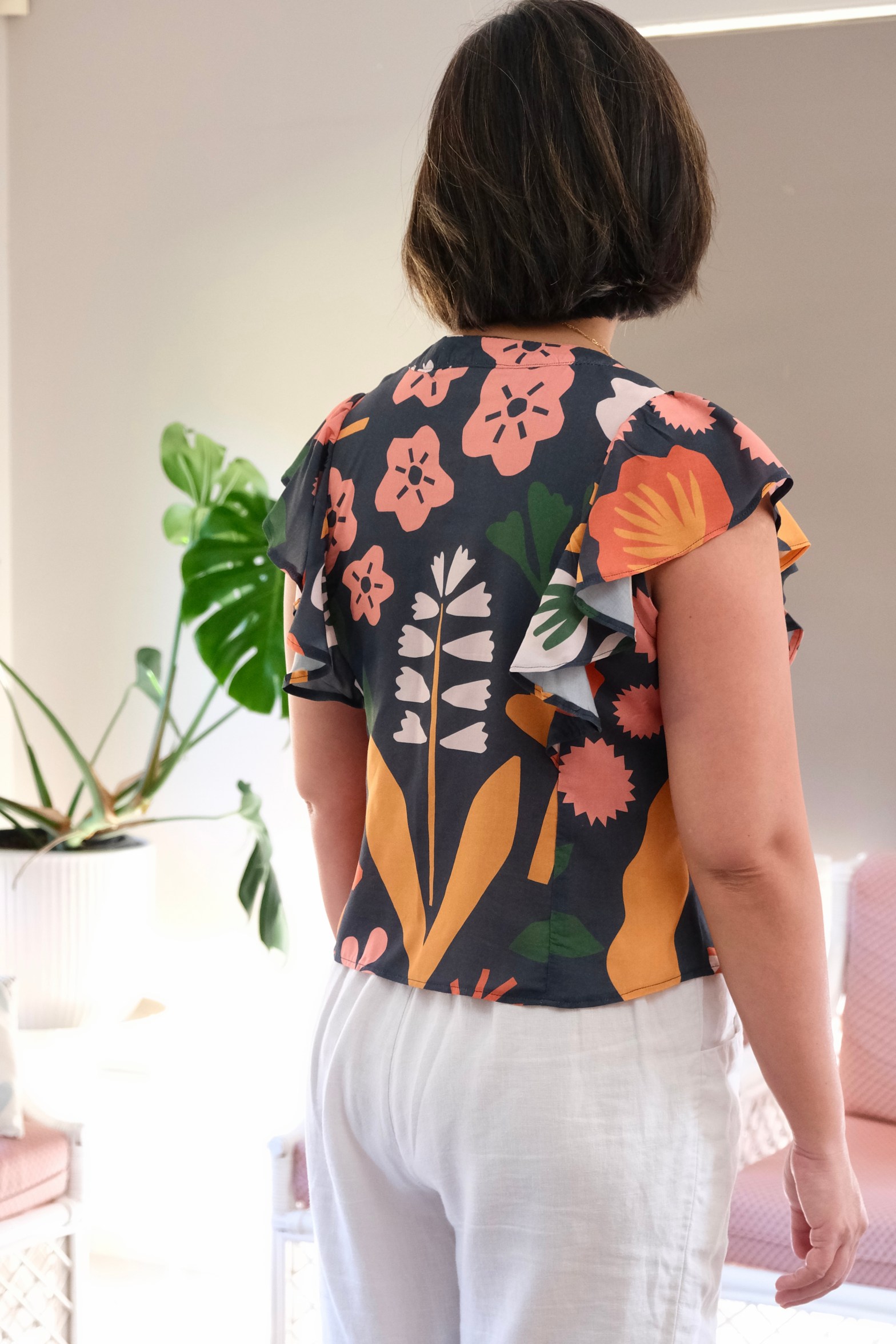
Have you ever come across a pattern that is made for both woven and knit fabric? The Dutch Pattern Studio released the Jackie Top which is made for both types of fabric. This is quite a rare phenomenon. I have seen people hack woven fabric patterns sometimes to suit knit fabric and vice versa. It’s also a pattern that has a few variations so it can be a summer top or a dress.

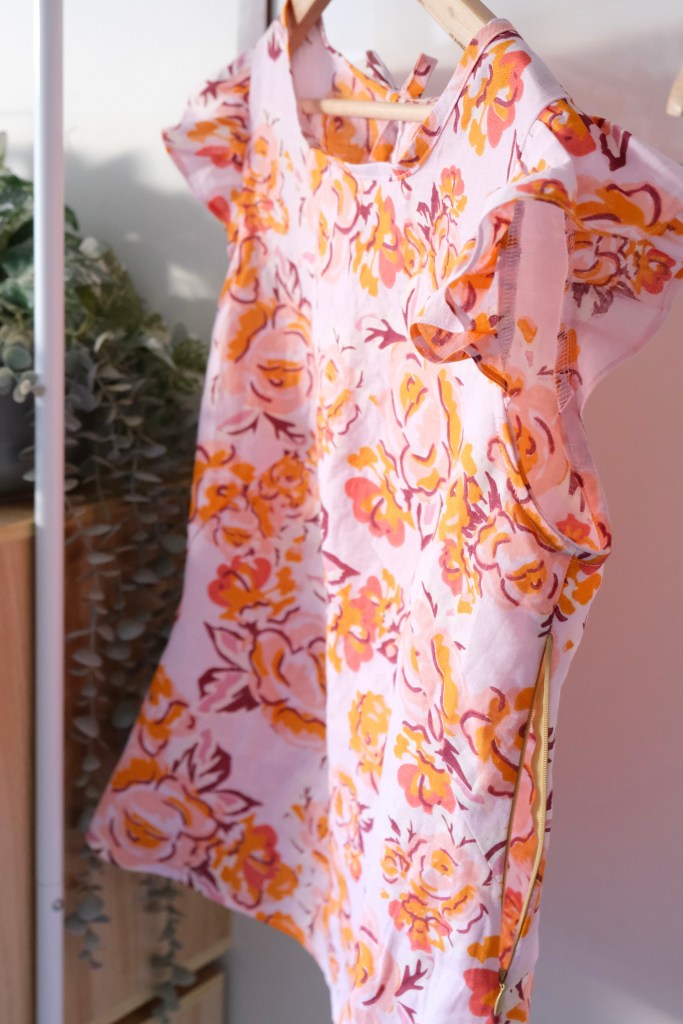
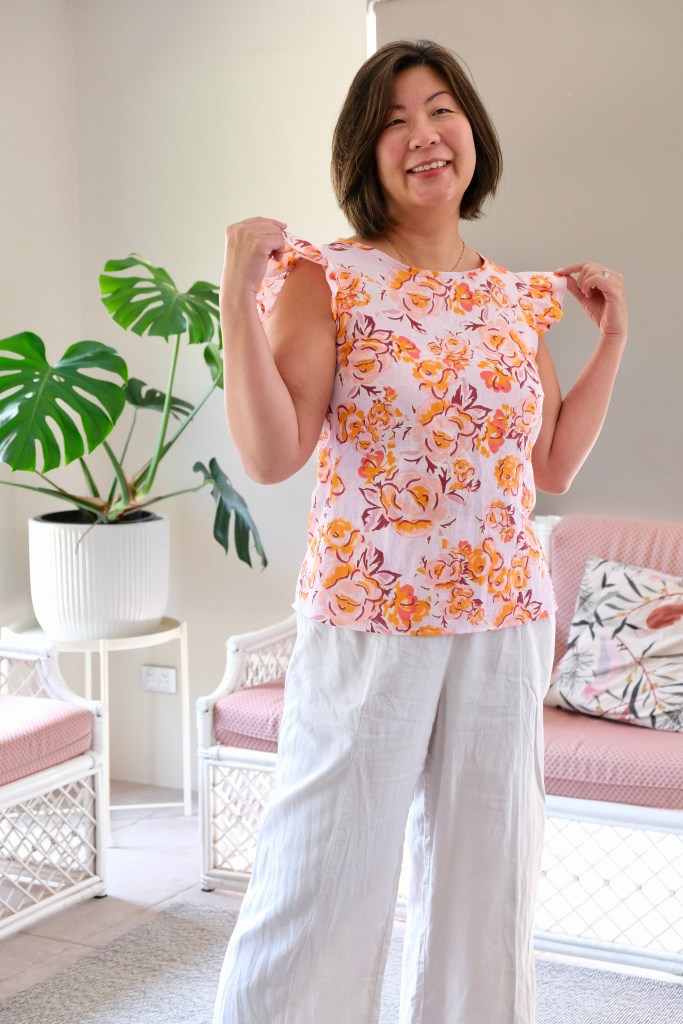
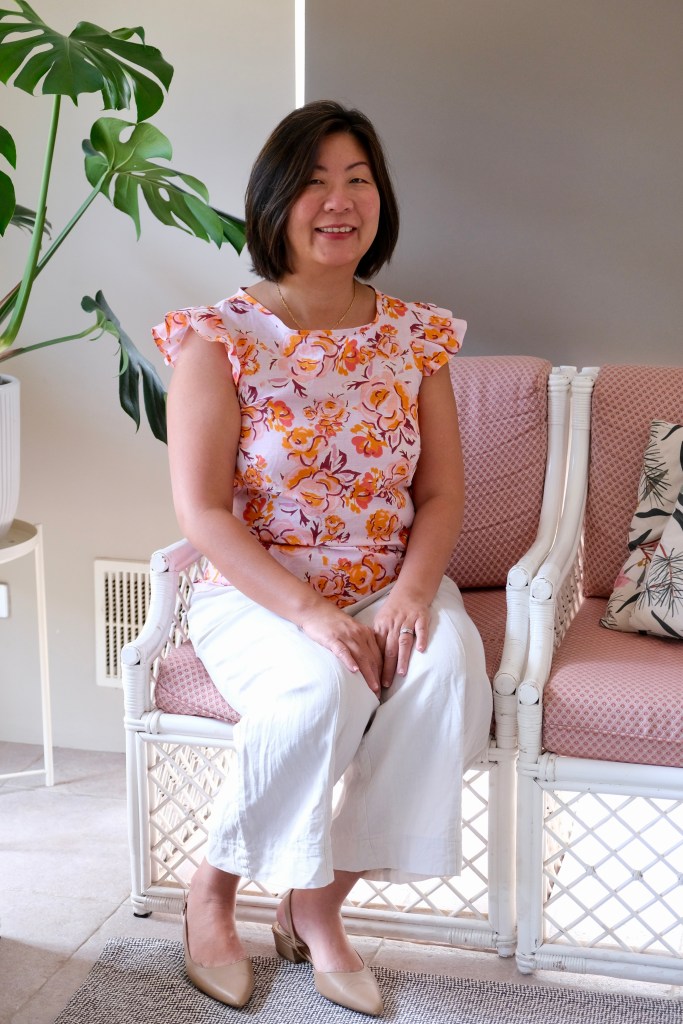
I had some leftover fabric from making the pattern test I did for the Maker Haus Nadine skirt and so I thought that rather than sticking it back into the cupboard and letting it sit there to oblivion, I would instead use it to make the Jackie Top. I picked the top with the ruffled sleeve openings because I thought it would make quite a cute matching set with the Nadine Skirt. Let’s see if I find an occasion where I can wear it as a set. 

So, because my version is made with woven fabric, I had to install an invisible zip into the side seam. I don’t mind installing zips, but I thought that if I added a back seam and a keyhole opening, I might be able to forgo a zip which would make it easy to slip the top over the head. I did this by adding a one-centimetre seam when cutting the back bodice rather than cutting the piece on the fold. Then when I went to sew up the blouse, I stopped the sewn seam at the level of the sleeves and left the seam above that open. I then extended the bias binding for the neckline so that I could have a tie closure.

It was a bit of an experiment because this make was a wearable toile as well as a bit of a hack. I basted the side seams together after I had created the back keyhole closure. At this stage, I had also decided to leave off the fisheye darts in the back bodice. It was possible to pass the top over my head, but I found it a bit snug getting in and out because the waist actually pulls in and fits quite close. There wasn’t enough ease in it to forgo the zip. So, once I had established that I wasn’t going to work, I then installed the invisible zip the left side seam. I left the keyhole opening because it looks like I would have needed to make a broad back adjustment. I also left the fisheye darts but now looking at the how the fabric bunches, I would include these in my next version of this.

I felt the sizing was quite true to size. My measurements of 38-inch bust, 33-inch waist, 40-inch hips fitted between size 42 and 44. The thing that confused me was that the measurements were given as a range. I printed and cut the 42 because the 44 was quite a jump in sizing on the printed pattern. I now wish that I had graded between the two sizes. I needed to grade to the 44 at the waist. I wasn’t keen because the pattern uses French darts rather than the usual bust dart’s folded construction, it is open and starts lower, so I wasn’t quite sure how to get around that. I was intrigued by the construction of the French darts, and I feel that they give a beautifully fitted look. 

In the end, I’m quite pleased with the final result. I feel that the pattern probably leant towards a woven construction. I’m not quite sure about doing the French darts and fisheye darts on a supple knit. It would probably work for a lightweight knit but then there would be the stretch of the fabric to consider. There wasn’t a stretch ruler or guidance on the type of knit you would use so I’m not sure what to advise. I should also mention that although a confident beginner could work out the instructions, it does not come with illustrations, and I couldn’t find any sew along tutorials. The instructions are perfectly good for someone with some sewing experience under their belt.

This is a comfortable and pretty pattern that I would be happy to return to. Some of my favourite features are the French darts and adding the ruffles to the sleeve openings with the neat finish of the binding. My neckline binding stands up a bit because I had to use the binding differently to add a tie closure but it’s something I’m happy to live with!

Thanks for reading and happy sewing!

X Em

Nadine Skirt

The Nadine skirt is the inaugural pattern released by The Maker Haus. Laural is the talented designer, and she says on her Instagram profile that she is sewing a Doen inspired wardrobe. I had to google Doen and I found out that it’s a Los Angeles based line of clothing that is inspired by the nostalgia of a decades past California. They feature touches of romantic, bohemian detailing like embroidery, ruffling and retro-inspired silhouettes. The Nadine skirt is a gorgeous skirt that has two variations. The first is a midi skirt which leaves off the ruffled hem and gathers. The second is a maxi that features those ruffles. I tested Version A. Both skirts feature gathered tiers, shaping around the hips and sits at the natural waist. There is also a button placket running down the centre front.

Laural was awesome to test for. She took her time modifying and correcting any fit issues and was quick to respond to feedback. She has worked hard and produced an outstanding pattern with detailed instructions and diagrams. I got a lot out of testing this pattern. The most exciting feature for me was learning about receiving tucks. Of course, like everyone, I usually buy patterns that I like the look of, but I always try to find something I can learn and progress my sewing with. 

My trial for the receiving tuck.

My skirt sizing is the size 14 waistband for my waist measurement of 33 inches because my sizing falls between the size 12 and size 14. I used the size 12 skirt pieces for my hip measurements of 40 inches. I made a toile to adjust the sizing. I could have graded between the two sizes and because it’s a fitted waistband, it is better to toile. I like the curved waistband but if you want a straight waistband, Laural has included instructions for adjustments to do this.

The Nadine skirt is drafted for woven fabric. It’s great for lightweight to medium fabric. I found a beautifully printed linen. I wanted to make my skirt summer appropriate, so I shortened the top tier by two inches and the bottom tier by one inch. Again, these adjustments were made on my toile when I was making the tester version so nothing to do with the fit of the pattern. In fact, when reading any post on tester versions, it’s important to note that the designer will share the final pattern with the Testers before launch but there might not be time to sew up the final version yet which is the case here.

I’m keen to return to the pattern and am currently keeping my eye out for the right fabric. I want to try Version B with the cute ruffles! This pattern is feature packed. I love learning how to do a receiving tuck which is such a neat way to finish the gathered tiers. In fact, the whole skirt now has instructions for French seams so it’s neat inside and out. It’ll be great for very lightweight fabric.

Congratulations to The Maker Haus for the launch and creation of a beautiful pattern! 

Thanks for reading and happy sewing!

X Em

Mia Dress

I’m so happy to be starting on my winter wardrobe. I wonder if anyone else finds themselves at the start of winter thinking that they should have added a few winter items in their summer sewing months. That’s probably me every year. I must admit that I probably sew more summer than winter items but that’s because our summers are longer. When Casey from Patternscout Studios reached out to ask if I wanted to test her latest design, I was so excited because it’s a winter dress. An item that is lacking in my wardrobe.

The Patternscout Mia Dress is a turtleneck knit fabric dress. It has raglan sleeves and a fit and flare high-low skirt which is a midi length. The pattern test went smoothly except I told Casey that my big head needed a slightly larger neck opening which she has adjusted. I made the size 12 graded to a 14 at the waist and hips and I used the Cup B pattern. This is why I’ve sewn so many Patternscout patterns and am happy to test for her. The sizing is spot on each time, and I love that she includes the different cup size options. It’s also great that printing the pattern is made so easy because you have a different PDF for each cup size option. My measurements are 38-inch bust, 33-inch waist and 40-inch hips. I think I could have just sewn a straight 12 being a knit fabric garment but I feel more comfortable when garments are not so “clingy”. 

I did make some adjustments for my own liking after I had submitted my toile and was sewing my “real” dress. I shortened my bodice 1/2 inch and shortened my skirt by 1-inch as the dress is for someone slightly taller. I also shortened my sleeves by 3-inches. These adjustments are usual for me so not to do with the fit. 

The fabric is a rayon-spandex from Spotlight Stores. There wasn’t a really big range to choose from at my local store. I would love to find a dark coloured plain rib knit like the one that Casey has modelled. Although, because our winters are mild, I might not get as much wear of my dress if the knit fabric is too thick. It is recommended for two-way and four-way medium weight knits with at least 50% horizontal stretch.

In other news, my second-hand Bernina that I scored on Facebook marketplace had to be retired. She has served me well but there is something wrong with the tension dials. When I purchased the machine, I was told about this problem, but I took the risk and bought it anyway. It was such a bargain price that I thought even if I had to pay for a service, it’s a worthy machine. So, that was five years ago, and this is the first time it’s shown some serious signs of failure. I will be repairing it at some stage. In the interim, there happened to be a great sale on overlockers at my local Spotlight store, so I decided on the Elna. It seems to have a few good reviews. I’ll wait a few months before posting my review.

Many sewists have said that they sew their knit garments fully on their overlockers. The Mia Dress pattern instructions assume this, but it can also be fully sewn on your machine and the instructions accommodate this. Armed with new overlocker, I decided to try this. Usually, I use both. The thing that confused me was the seam allowance. When you sew on your machine, you know where the allowance falls. On the overlocker, I’ve read that you account for the loss of 1/8 inch, a scant amount of loss which the blade removes when you are sewing with the overlocker. I think this is included within the 3/8-inch seam allowance. I hope, because that’s what I did. I did use my sewing machine with the twin needle to finish my sleeve hems and skirt hem.

Overall, if you’re like me and new to sewing knits, this would be a great dress to try out. It took me half a day to put together from cutting the fabric to finish. That’s quite a quick sew in my book. I would grade it as an intermediate pattern. In terms of fabric consumption, it didn’t take as much fabric as I thought it might. The chart is quite accurate assuming there is no pattern matching needed. I used 2 meters.

I’m looking forward to getting some wear out of this and I think I’ll be looking for some other similar patterns to try in knit fabric. I should also mention that Patternscout instructions are always great and accompanied by illustrations but if you want videos, she is has quite a huge catalog of YouTube videos.

Thanks for reading and happy sewing,

X Em

Tie Dress Featuring Longan Craft Linen Chinoiserie Fabric.

Like an artist choosing a palette of paint colours, the right pattern must be paired with the right fabric. So, when this beautiful Linen Chinoiserie fabric was kindly sent to me from Longan Craft, I had to make a choice of what to sew with this fine and lightweight linen-tencel fabric. 

Initially, I had thought of a different dress on my summer make list. However, when the fabric arrived, it was drapier and finer than I anticipated. It reminds me of raw silk which was the material of my wedding dress, and it has the lustre and sheen of silk. There is also a subtle print of koi and flowers which I wanted to highlight so I didn’t want a pattern that would break that up with gathers or too many pattern pieces that break up the beautiful print. Searching through my files, I realised that the Sewing Therapy Tie Dress was the pattern that fit the bill! I was on the testing team for this dress and have made two which I constantly reach for, especially the short-sleeved version. 

As usual, I started by washing my fabric. Even though it looks delicate, I found that it was okay to wash it in my washing machine on the cold cycle with a detergent for delicate fabric (one without enzymes). I then air dried it which is the normal way I would treat it once the dress is sewn. There was no loss of colour or changes to the fabric which was a relief.

The next step was to test a small piece of fabric on my machine and the overlocker so that I could decide on the type of seam finishes and the needle I needed. I did change my machine needle to a 70/10 gage needle which is great for finer fabric. Testing the fabric with the overlocker also worked out without any changes. I’m still learning about overlocker settings on my second-hand Bernina. Being second-hand, it didn’t come with a manual but luckily, I could find the manual online.

The Tie Dress is an elegant design with versatility in mind. The ties can be played around with, so the wearer can tie it in multiple ways to adjust for a loose or snug fit, be tied to the front and back or to the sides. It can also be worn as a v-neckline or round neckline. I’ve never known a pattern like this. I guess that’s why it has been worn so much. There’s never a time when I have avoided wearing it due to changes in my tummy size. Talking about sizing, I made the size 12 with my measurements of 38-inch bust, 33-inch waist and 40-inch hips without any modifications.

Sewing the dress is made easy by the instructions which are included with the pattern. It is also helpful that Sara has included a sew-along video on her YouTube channel called Sewing Therapy. It’s my go-to channel for sewing inspiration and a great resource for the sewing community. 

I’m so grateful to be given the opportunity to showcase this delightful fabric from Longan Craft. I learnt a new word from my husband. When he saw the dress, he said that the fabric is diaphanous. According to google dictionary, it’s an adjective (especially of fabric) light, delicate, and translucent. It’s a great description of this fabric. The fabric composition is 60% linen and 40% Tencel but has the feel and lustre of silk. It comes in 59-inch width which is a lovely wide 150cm fabric. It’s beautifully lightweight at 92 gsm which converts to 2.71 oz. Longan Craft is a well-established online fabric store since 2020. The delivery of the fabric was prompt and I’m so impressed by the quality of the fabric. It has been a pleasure to sew their linen chinoiserie fabric, but they have a wide range of fabrics which cater for sewists and crafters from novice to professional level. 

For my lovely readers who have read all the way to the end, Longan Craft have provided a discount code which you’re welcome to use! It’s not an affiliate link and doesn’t add to the cost of your shopping cart so don’t worry. The code is emsewhappy which will give you a 15% discount. Happy shopping!

Thanks for reading and happy sewing!

X Em

Disclosure: Fabric was supplied for review with no obligations to write a blog post. All opinions remain my own. 

True Bias Blair Skirt

A while back, I was part of the testing team for this skirt. I really love the look. It was released for their autumn collection, but I think it looks great all year round. As part of a paid collaboration for Instagram, I was asked if I could make another version of the True Bias Blair Skirt

The skirt comes in three lengths, mini, midi and maxi. I’ve made the midi again because it’s versatile seasonally and I know I’ll reach for it many times. The general design is a skirt that is fitted over the waist and hips which then goes straight down to the hem. It has a front button placket and comes with the option of adding pockets with an inverted pleat, belt loops and a belt. I added all the extras! 

My sizing fell into the Size 12 range with my measurements of 33-inch waist and 40-inch hips and 167cm height. I didn’t feel that I needed to make any modifications. I think that the main watch point for fitting is the hip measurement because there is limited ease in the pattern. It’s true to say that I found the pattern true to size.

Fabric choice is quite straightforward for this pattern. Anything medium to heavy weight woven would be the way to go with the main fabric so I chose a light-coloured denim. This beige denim suits my style, and I wanted this skirt to be a staple in my wardrobe. I love colour and pattern but against a backdrop of something that is neutral. There is a bit of lining fabric needed for inner side of the waistband and the pockets. I used some beautiful scraps from Melco Fabric. It’s worth saving all the scraps from your sewing projects!

My skirt needed nine buttons for the button placket and two for the pockets. I feel I’m making some progress with button installation. I like how the pattern includes a guide for the buttonholes and button placement. It helps to take the guesswork out of the equation. I am tempted to get the button measuring gauge but wonder how useful it is. I’m starting to get quite a collection of useful sewing tools. Unfortunately, my buckles ordered from Amazon have not arrived at this time. When it finally arrives, I’ll be making the matching belt to go with the skirt. I’m quite keen to make my first proper belt!

Sewing the True Bias Blair Skirt was a pleasure. I’ve made many True Bias patterns and so glad I came across their patterns as a novice self-taught sewist. I learn so much from Indi patterns like these. No hiccups but also, I am learning that it’s important to go back and sew the patterns a few times. I feel that I could understand the pattern better and made some decisions of my own for my version. Simple things like using a blind hem stitch for the skirt hem, reversing the instalment of the button placket so I could stitch in the ditch because I preferred to minimise my stitch lines. My next version could be the complete opposite where I use top stitching to highlight all the stitching. The point is, sewing is such a superpower because we can customise what we’re making.

Thanks for reading and happy sewing!

X Em

Full Disclosure: Paid collaboration with True Bias for Instagram but all opinions remain my own.

Marigold Dress

I’ve been a long admirer and follower of Stitchmaiden Patterns but never brave enough to attempt a pattern because they look so technically hard. When Stitchmaiden reached out to me, I took it as a sign that it was time to stretch out of my comfort zone and I was so pleasantly surprised with the outcome. 

Firstly, the pattern I chose was the Marigold Dress. Each pattern draws inspiration from a period in history. The Marigold is from the Romantic Academia Collection. It is a pattern that keeps on giving because of the multitude of combinations possible with just a switch of one or two features. There are three versions which are suggested for the seamstress. The basic concept is a square neckline with princess seams and a fitted waist. I chose the suggested Version A which has a slim fitted skirt, but I chose the butterfly sleeves from Version C, and I left off the ruffled hem. There is also a belt that is sewn in which I chose to keep.

With this many options, I thought that printing and putting together the pattern was going to be time consuming and difficult but there is a comprehensive table, and it made the whole process quick and painless. There are two ways to print the pattern, one is without the seam allowance and the other is with the seam allowance added. I’m more used to having my seam allowance included so that is the one I chose. This is where it got interesting for me … I mistook the sewing line for the cutting line. I had printed the size 42 and size 44 because I fell between those two sizes and needed to grade the pattern. In the end, I decided to only cut the size 44 and grade from there but as mentioned, I cut the sewing line! To make matters worse, I cut into my “good” fabric thinking I had enough seam allowance and ease with the larger size to then “fit” it once I had cut the fabric pieces.
The dress has an invisible zip closure, so I did the usual basting stitches on my side seam and basted my zip. Imagine my panic when I couldn’t zip up the dress and there was no amount of ease or seam allowance that could help! It really puzzled me for the afternoon then I went back to the pattern and thought I’d start again, and this time make a better toile. When I reprinted the pattern, I realised my mistake which was actually a relief! It was me, not the pattern.
I chose the size 42 and 44 for my measurements of 38-inch bust, 33-inch waist and 40-inch hips. I graded the bodice from the 42 to the 44 waist and hips. The dress is a tailored fit with moderate ease, and I felt that this worked well for me. When I make the dress again, I might adjust the princess seams as well.

Initially, I was going to use a beautifully printed linen but because of my mistake, that fabric will now be made into a dress for my daughter. Instead, I had this green crepe the chine which my husband bought me that I’ve been keeping for a special make. He bought me 5 meters of this fabric of which I’ve used about 3.5 meters. The crepe the chine is drapey and light which is beautiful to wear. It highlights the skirt, the gathered front and butterfly sleeves nicely. I actually think this fabric was a better match in the end.

The pattern comes with some of the most extensively detailed instructions and illustrations which are great to learn from, but they also provide a summarised set of instructions for the more experienced sewist. I used the detailed instructions and appreciated the two pages of Basic Workmanship which is great for those looking to extend their sewing repertoire.

Stitchmaiden Patterns have a vintage vibe and draw inspiration from history but they really are timeless classics. This will be a dress that transcends passing trends and I’ll be wearing it time and time again. It’s a pattern that can be changed easily with so many mix and match options, so it is a “TNT” (tried and true) pattern for me. Oh! And another thing, please now refer to me as Stitchmaiden Emily.

Thanks for reading and happy sewing!

X Em

* This pattern was provided for a review with no obligation for a blog post.

Valentine Ruffle Top

This is the latest pattern from Peppermint Magazine in collaboration with their sewing partner Spoonflower. The pattern is a romantic, ruffle blouse. It can be worn on or off the shoulder. We used to call this a “peasant blouse” in the 80s but I’m not sure if that term is still used. There’s no buttonholes or zips. It’s a pull over your head blouse with the elastic all around the top of the top. The pattern is offered with a subscription to the magazine or downloadable from the website with a pay-what-you-can option.

The pattern is drafted for woven fabric. I decided to use two remnant pieces from my stash and combined a broderie anglaise with a cotton slub which were both in white. I was pretty happy with the outcome but there is quite a lot of volume in the bodice. In fact, I was quite worried when I was making the top that I had printed the wrong size. Next time, I would choose an even thinner and drapier fabric like rayon, viscose or georgette.  

My measurements of 38-inch bust, 33-inch waist and 40-inch hip, fitted the size F. The most important measurement is the bust measurement as there is a lot of ease with the waist size and the hip measurement isn’t really relevant. I increased the elastic length from 73.4cm to 100cm because I found that the original length would not allow me to wear the blouse off the shoulder. This is all included in the pattern instructions.

So, did I need to worry about the fit of the blouse? Not really! Once the elastic goes in, the blouse magically shrinks to the right size. As a compulsive overthinker, I find it difficult to trust the process. Sewing has been good for me and has taught me to be better at having a go. I also need to take more breaks in my sewing. I think I reached that stage of the elastic casing, and the illustrations were not making any sense to me. It was a good place to stop and everything made perfect sense when I returned to it the next day.

I’m really happy with how it’s turned out. I had a peasant blouse when I was in Grade 6. I wore that blouse everywhere. Now I get to recreate it with this pattern! It’s a great pattern for a beginner and the instructions are good to follow. I’ve styled with my Vanessa Hansen Carrie Skirt and the ELOH patterns Sorrento Shorts. It’s an easy piece to style. I wonder if I could hack it into a playsuit?

This is my official last pattern for 2024! I am looking forward to some down time with family. I’m excited to make some plans for 2025 but I’ll share those in a separate blog post. Thanks so much if you’ve been following my sewing journey. 

Thanks for reading and happy sewing!

X Em