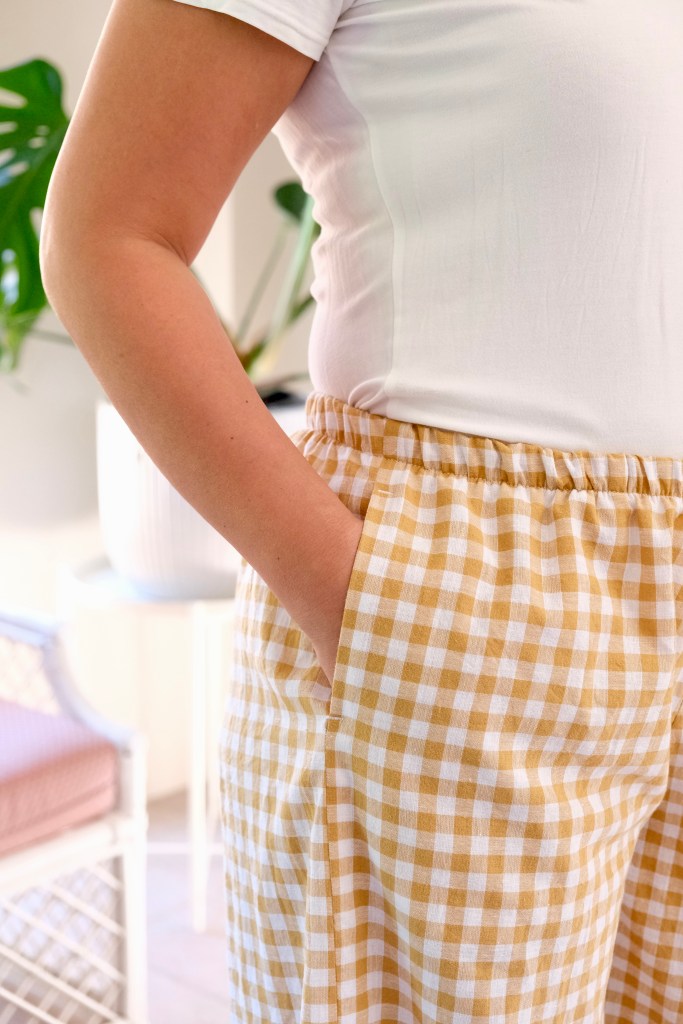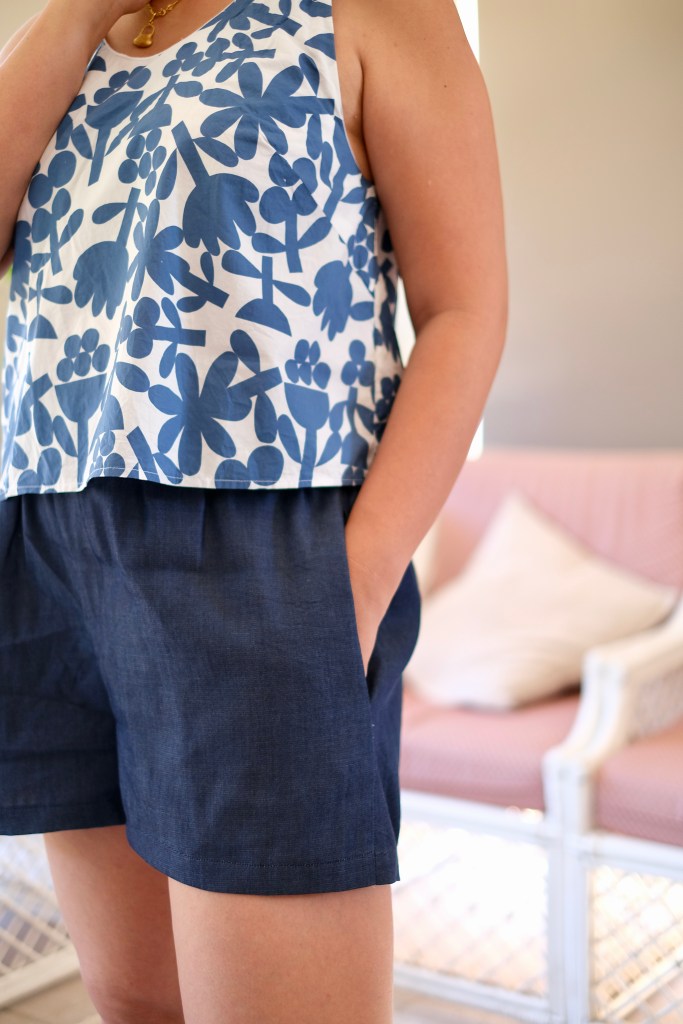
Ayla Pants

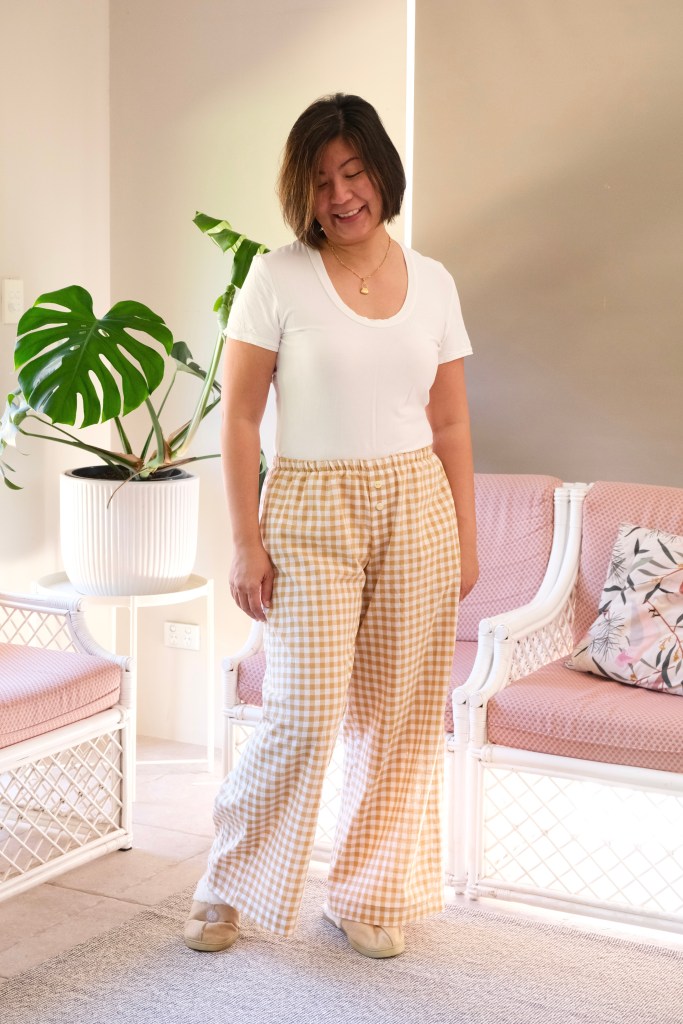
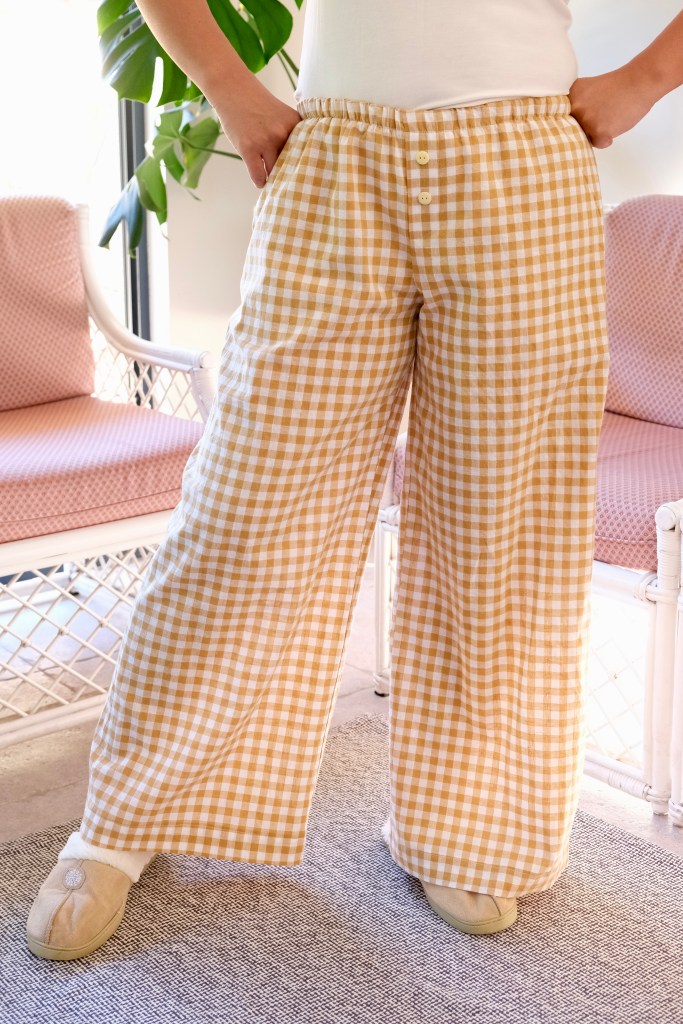
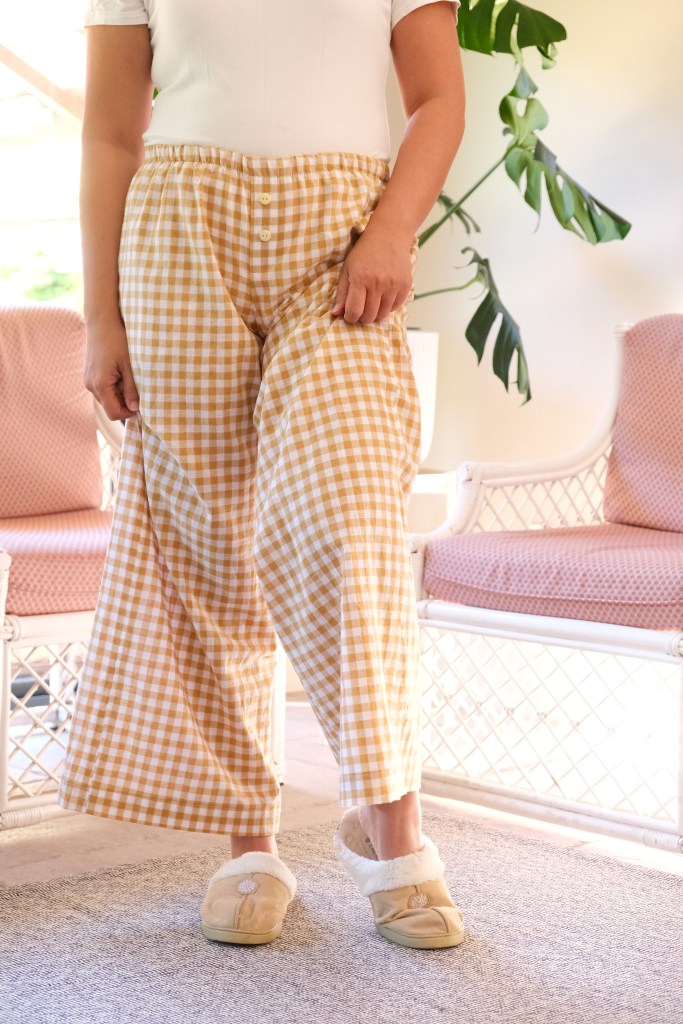
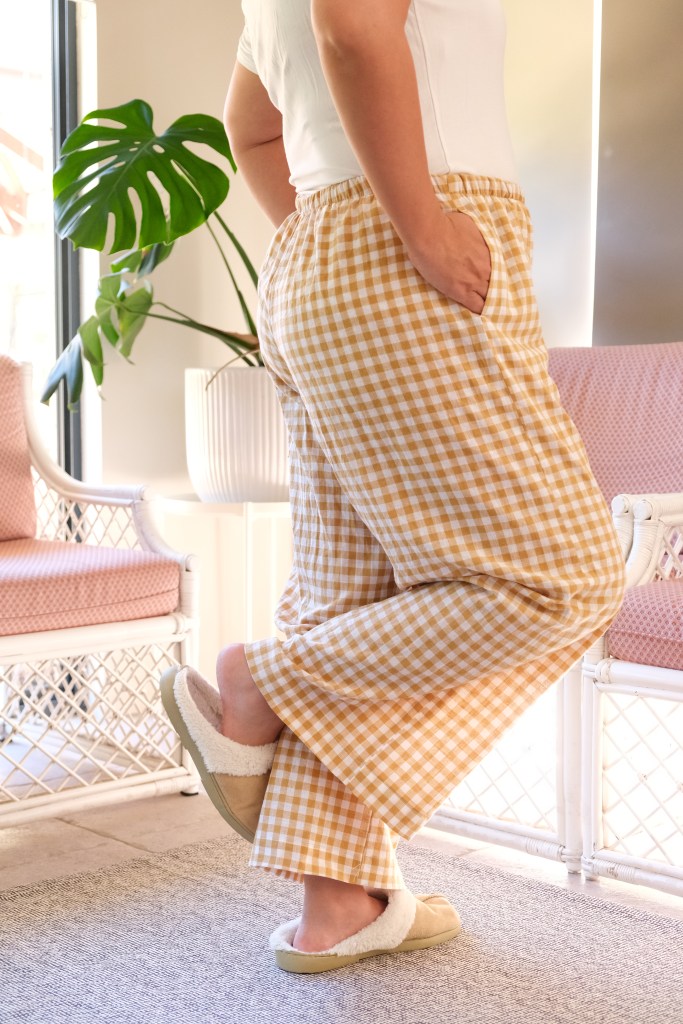
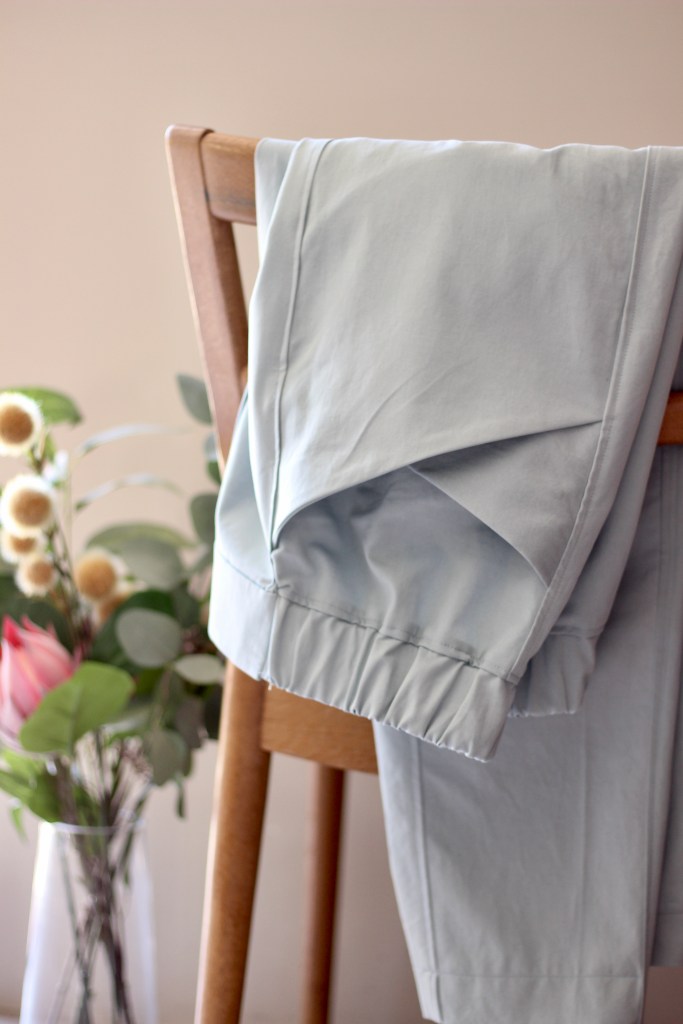
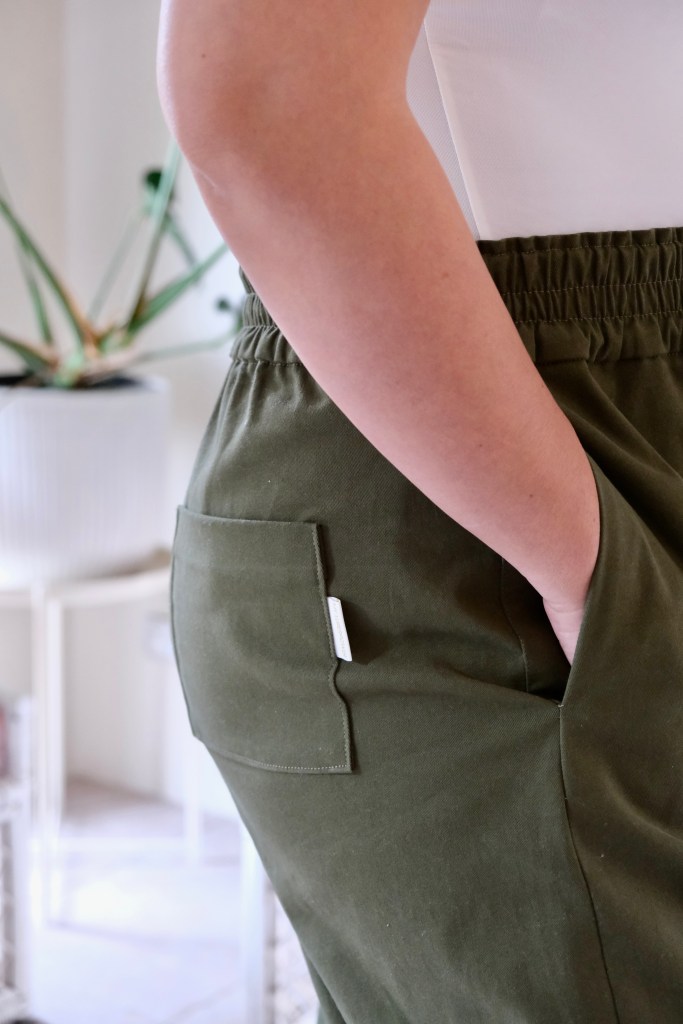
Sewing with knit fabric has always been an area that I find challenging. Initially, I believed I could simply steer clear of it, but as my sewing experience grew, I realised I would be missing out on many wonderful and comfortable additions to my handmade wardrobe. The Ayla Pants is the latest release from True Bias, and I’ve been lucky enough to be invited onto the testing team. It’s the perfect entry level knit garment to sew.

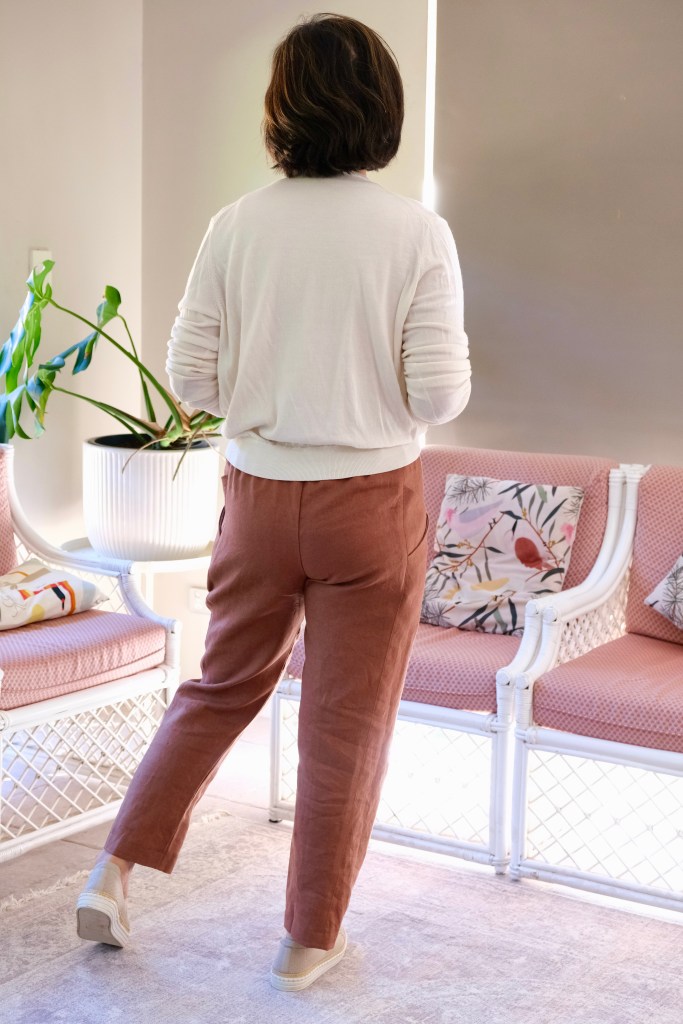
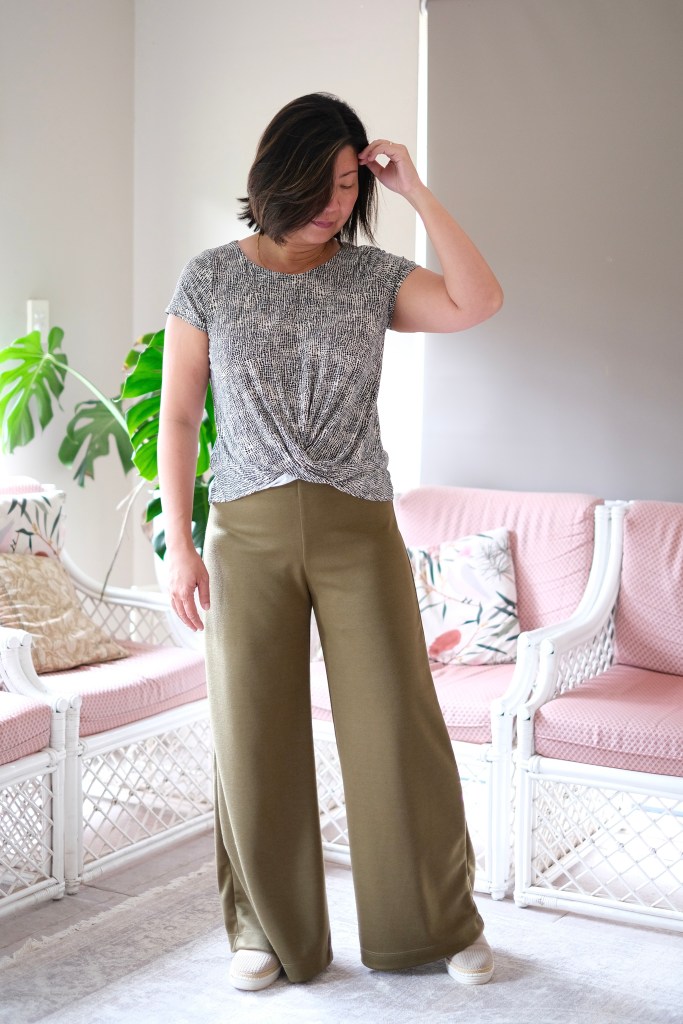
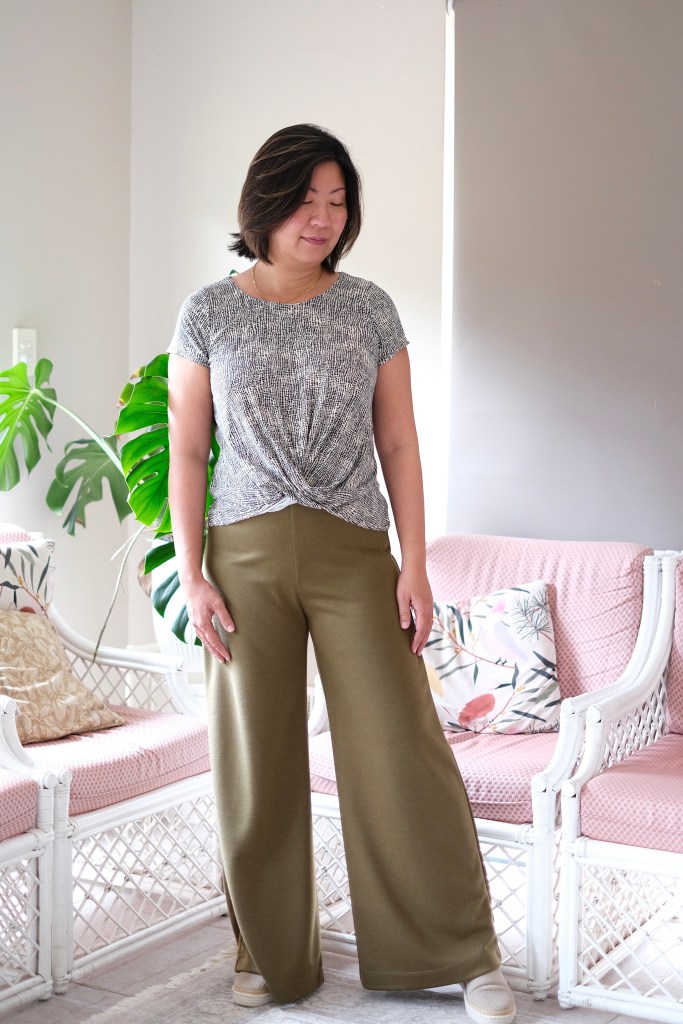
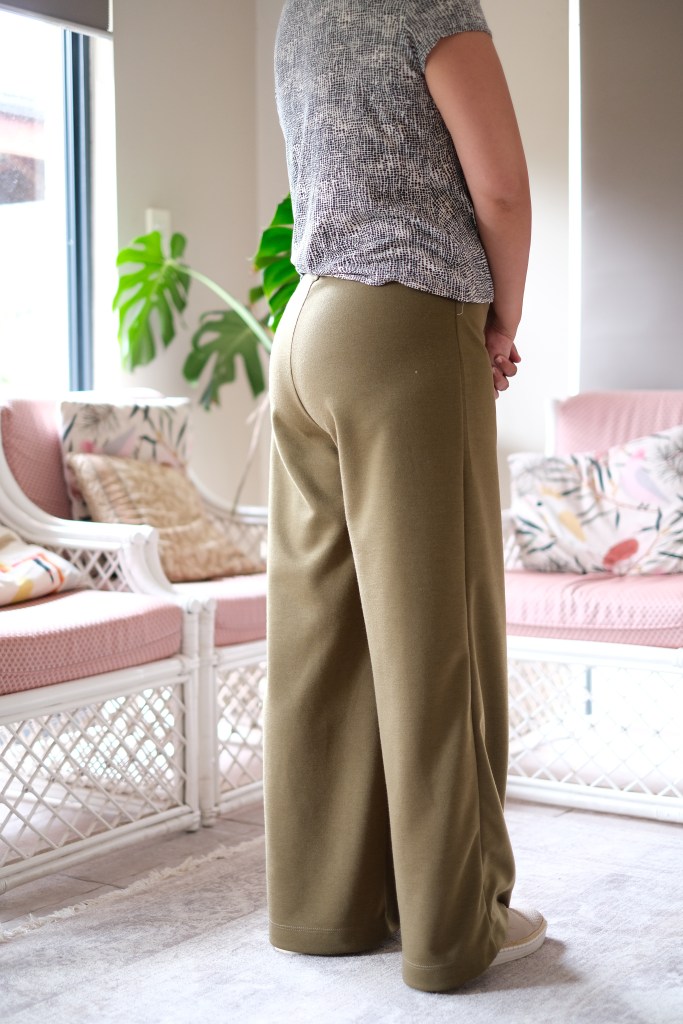
The Ayla Pants are wide leg, pull-on knit pants. There are two views, and I chose to sew View A which does not have the seam down the front and back leg pieces that View B has. It’s a very quick sew because there are only two pattern pieces and the waistband folds down from those pieces.

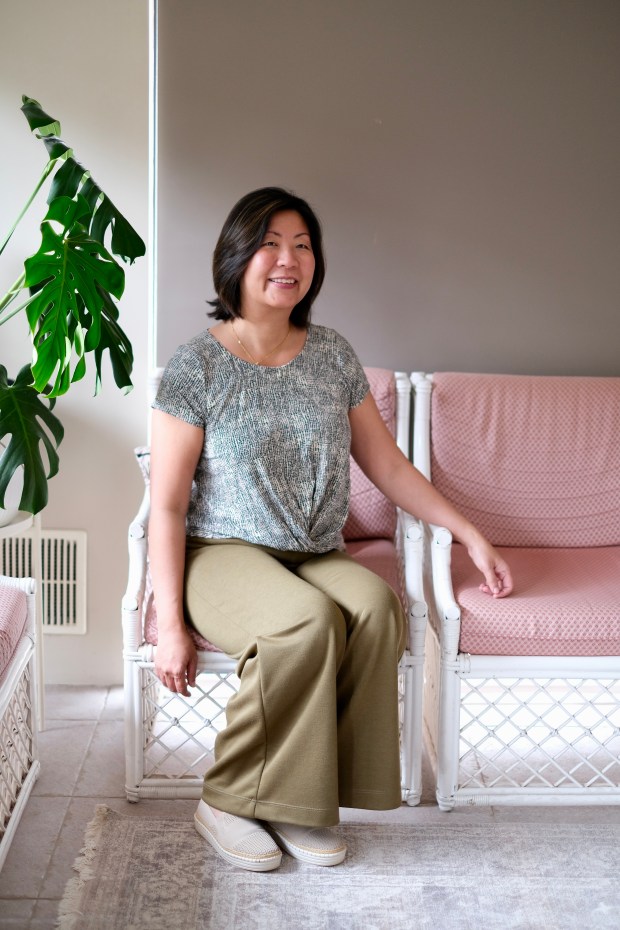
Knit fabric is still quite a mystery to me but I think the pattern really breaks down what sort of knit fabric to look for. There is a stretch ruler and a list of the types of knits that would suit the project. I found an olive-green Ponte which feels so soft to wear. It’s a thick double-knit fabric which is firmer, thicker and more stable than other knit fabrics. I think my choice of fabric is quite good for a more casual look so next time I would like to explore something for a dressier look, perhaps in black.

I chose to change my needle to a ball-point needle and sewed mine on my sewing machine and then used the overlocker to finish my seams, but it would be fine to use the overlocker throughout. I used the sewing machine with the instructed stitch lengths, and it really worked well! I also like to sew on the machine first in case I had to make any adjustments. Speaking of adjustments, I sewed the instructions as is and as this was a tester, I did not make any adjustments. I like to show the piece as drafted by the designer unless they have explicitly instructed us to change it. I think this gives clearer feedback. There has been a slight adjustment to the rise based on everyone’s feedback which is great because I’ve always found True Bias Patterns are very reliable on their sizing.

The size I tested was the size 12 which is my standard for True Bias. For my measurements of 33-inch waist and 40-inch hip, I found the pattern was true to size. I did give some feedback about where the waist landed for me. Again, True Bias always gets the pattern to a high standard before sending it out for testing which makes it so easy. The instructions were faultless. Illustrations were also included step by step which really helps a visual learner like me.

Although knit fabric sewing is still more challenging to me than sewing wovens, I’m glad I’m over my fear-avoidant phase when it comes to sewing knit. Knits are comfortable and easy to wear due to the stretch and flexibility of the material. It’s also durable and easy to wash and wear without needing to iron!

The Ayla Pants is such a stylish and comfortable pair of pants which can easily be dressed up or down. The wide leg design means that it can be worn with boots in winter or it can be easily paired with chunky sneakers and a tee for summer. I’m really looking forward to wearing this. Most importantly, I’m gaining valuable sewing experience because of fantastic resources that patterns like this provide for home sewists.

Thanks for reading and happy sewing!

X Em

Grace Trousers

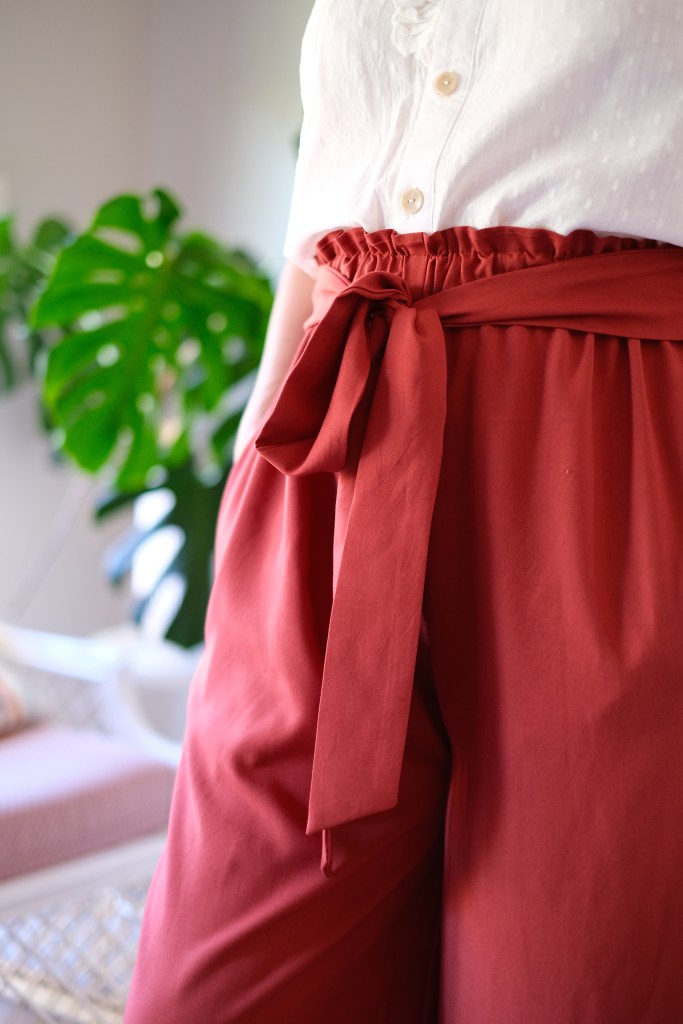
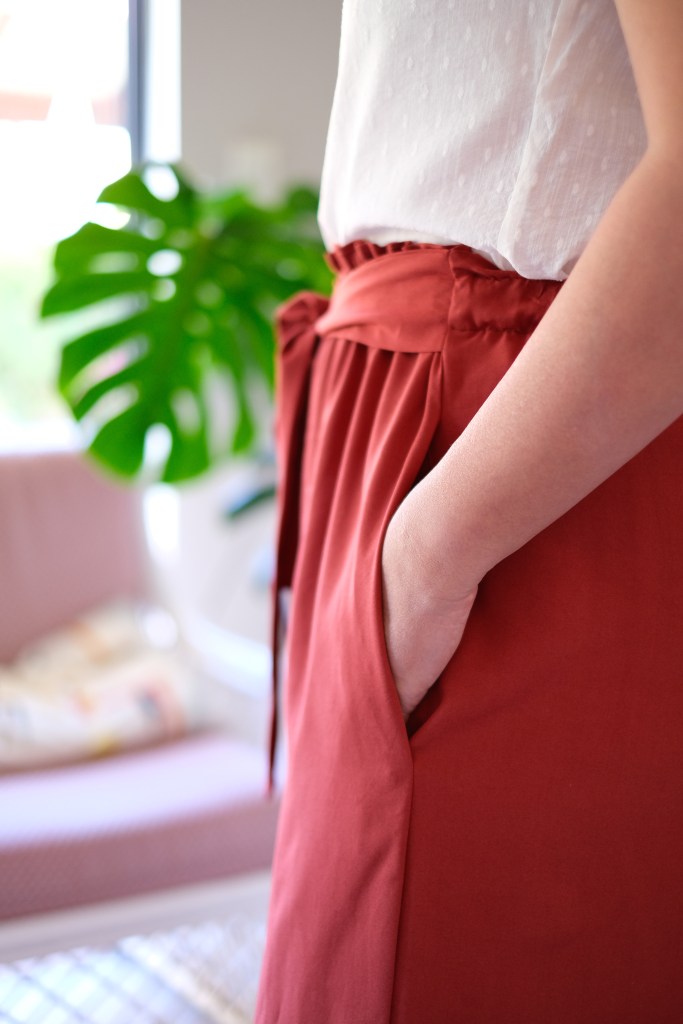
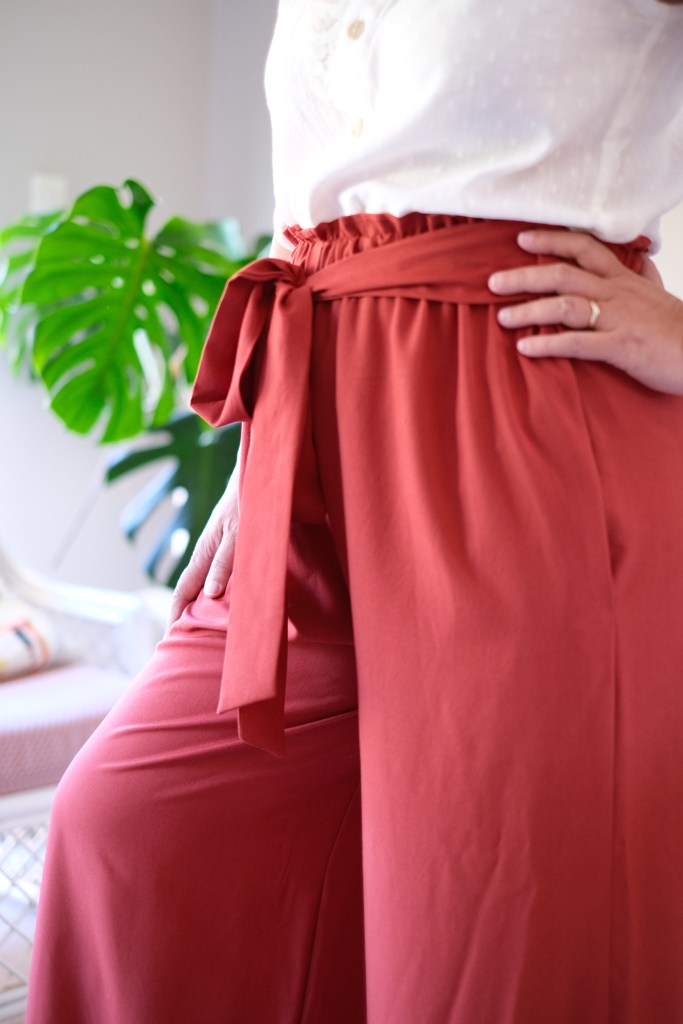
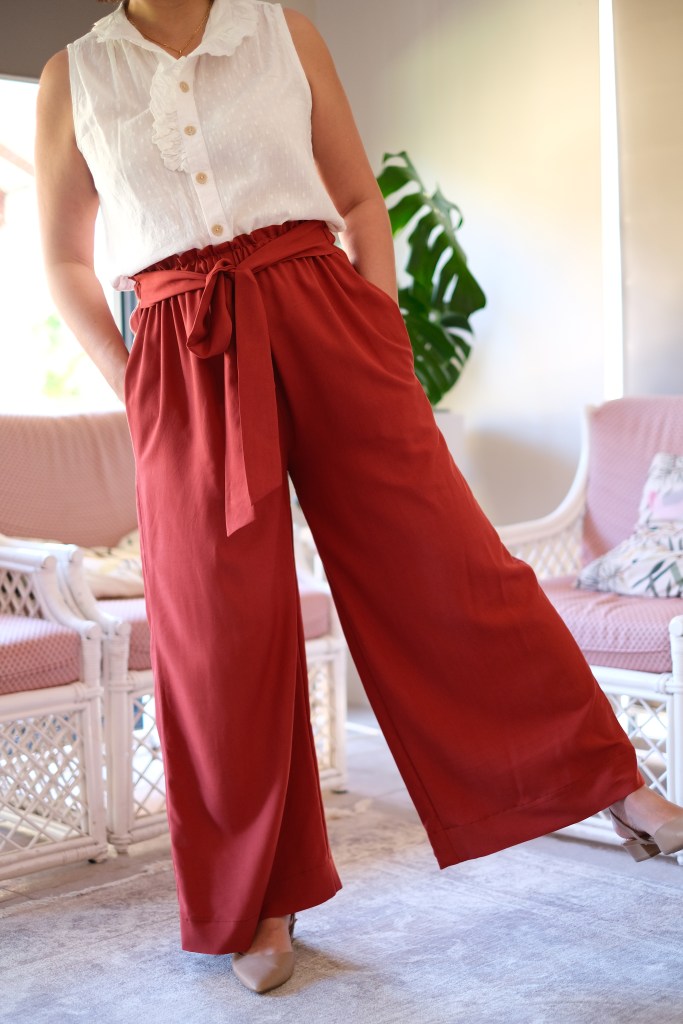
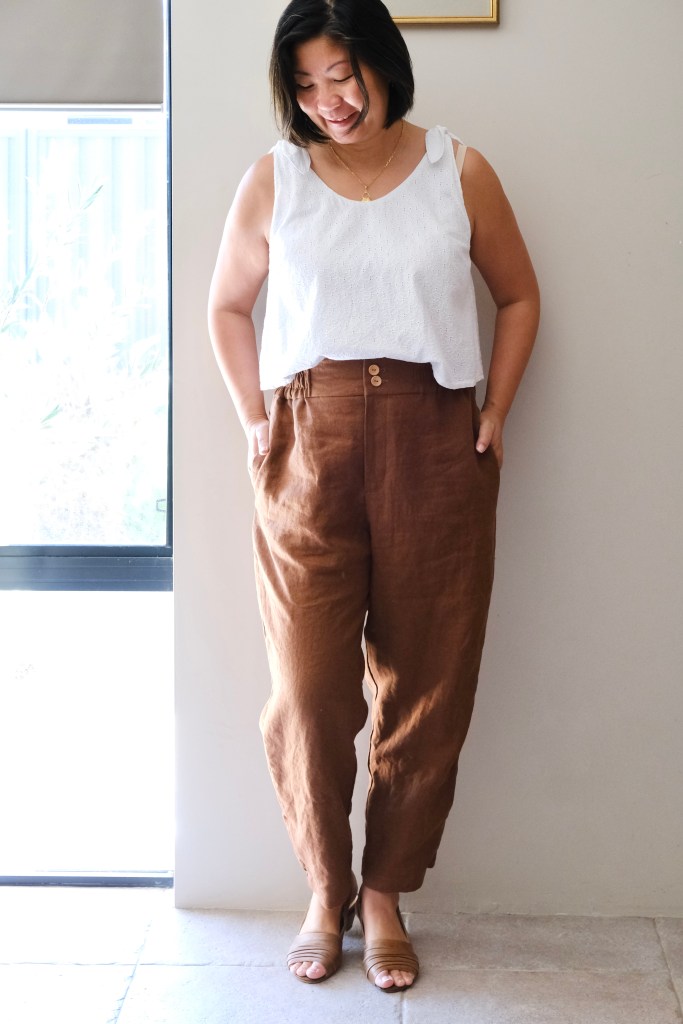
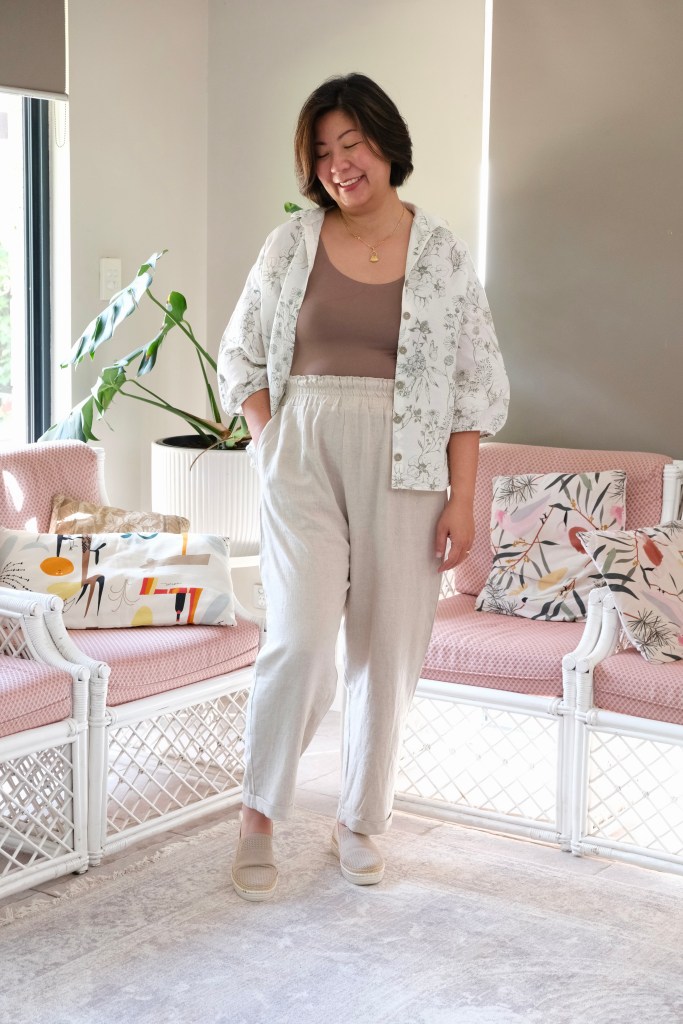
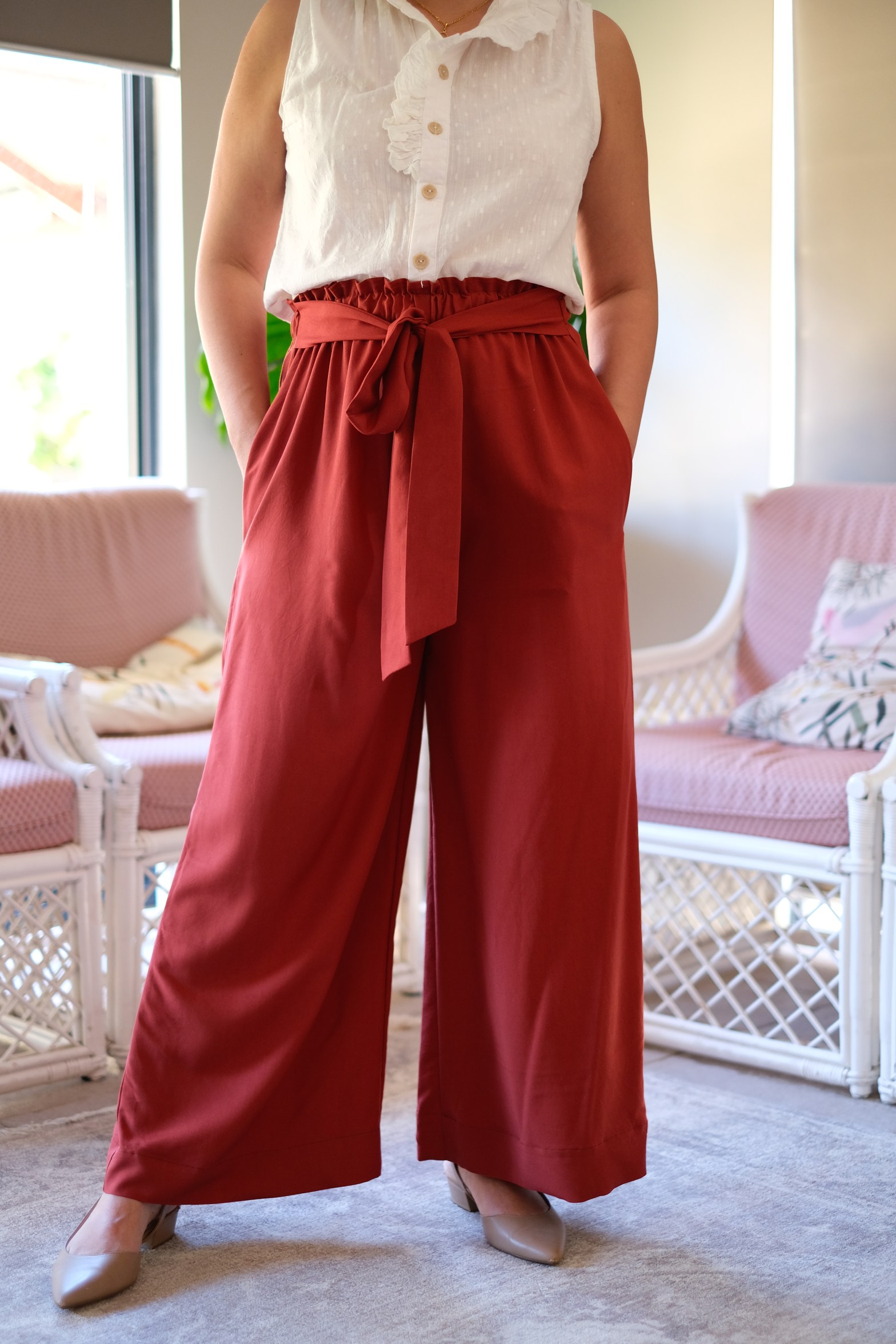
Summer is almost here, and I really need to cover some gaps in my wardrobe. I love dresses but I needed some tops and pants as well. This year A Sewing Life released their first apparel pattern. It was exactly what I was looking for. The Grace Trousers is a relaxed fit, flowy design with elasticated paper-bag waistband. It has a sewn-in tie belt in the front. It’s going to be so comfortable wearing these in summer.

When I bought the pattern, Lisa was kind enough to chat to me about fabric choices. The pattern is designed for woven fabric but needs something with a fair amount of drape. I wish I could afford silk but instead, I found some rayon which is known to be the poor man’s version of silk. I was happy to find 3 meters of this solid brick coloured rayon at my local Spotlight store. I think the solids will be a good match for some of the colourful tops that I’ll be sewing for summer.

My sizing fell between the Size 14 and 16 with my waist measurement of 33-inch and 40-inch hips. The fit instructions were to go with the bigger measurements but due to the ease in the pattern and the front rise measurements provided, I decided to sew the Size 14 without grading. I did a brief toile of the short version which helped me decide to stick to the size 14.

I couldn’t figure out from the different versions that I checked out on Instagram whether these pants were mid-rise or high-waisted. I love wearing everything high-waisted, so I’ve sewn mine to fit that way. I moved my belt ties up by 1cm to help lengthen my front rise. I’m not experienced with pants adjustment, but I thought this was just a simple way of adjusting the rise. I then had to sew the waistband down at 5cm not 6cm and when I stitched the waistband to make the ruffle for the waistband, I sewed it at 5/8-inch instead of 3cm. This probably doesn’t make sense unless you’re looking at the instructions of the pattern.

Speaking of instructions, they’re excellent. I think Lisa runs sewing classes, so everything is labelled and explained in simple terms. I think even without any sewing knowledge, you could easily understand the instructions and they have photos accompanying every step. One small part of the instruction which I would recommend revising is the first step. It says to overlock at the beginning however, the pattern pieces have notches that stick out in little triangles. Some patterns have lines which you snip into the fabric, but the Grace Trousers uses the method of cutting out from the main line of the fabric. If you serge the pieces then you would lose the notches, so I finished the seams only once the seams were sewn. I only mention this as the pattern is for absolute beginners.

My height is 167cm so with the provided measurements for inside leg and outside leg, I knew that I would have to shorten the pants. I just cut from the bottom by 2 inches. I left the extra length when I was cutting my fabric and only adjusted the pants when I came to hem them. I could have shortened the pant legs by more than 2 inches, but I wanted to sew a deep hem to weigh down the bottom of the trousers.

I’m very happy with my new summer pants. The Grace Trousers will get a lot of wear and I can’t wait to start matching it with some colourful tops.

Thanks for reading and happy sewing!

X Em
La Ciotat Skirt

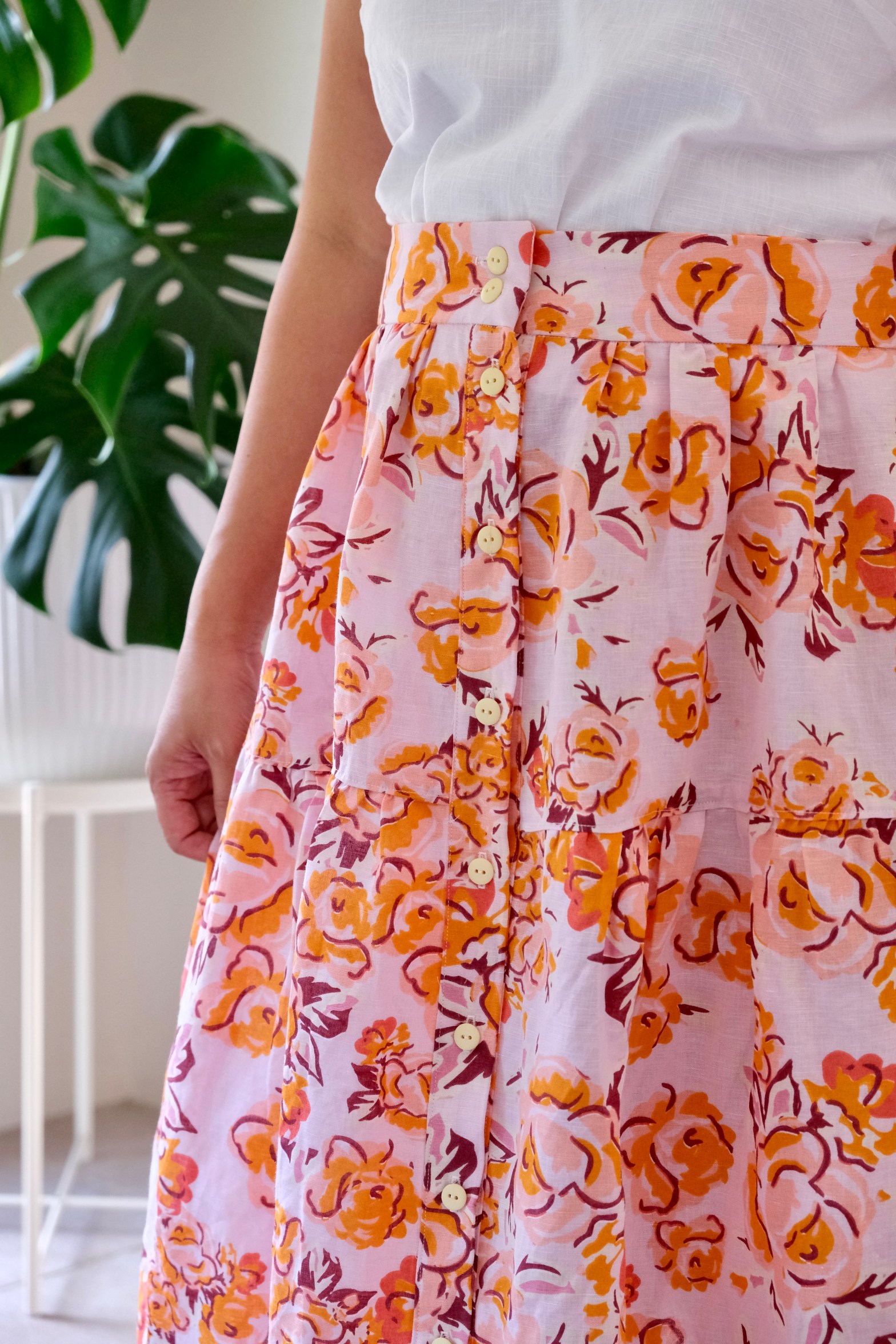
The La Ciotat Skirt stands out as a unique wrap skirt design, offering both style and practicality. Unlike standard wrap skirts, this one features a double front wrap, eliminating any concerns about wardrobe malfunctions. The addition of a flattering waist panel contributes to its elegant silhouette, and the two ties ensure that the skirt stays securely in place.

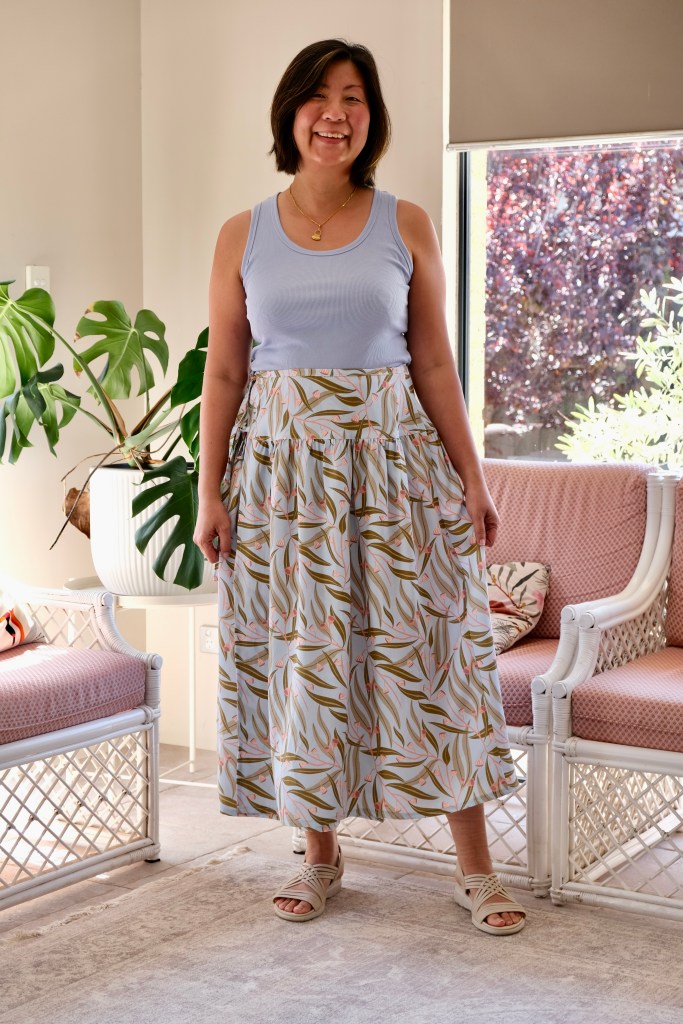
After purchasing the pattern, I spent some time searching for the perfect fabric. Eventually, I realised that the ideal choice was already in my fabric stash: two and a half metres of Tencel fabric adorned with a Christie Williams print. This fabric had been with me for about three years, cherished for its beautiful colours and its reflection of the distinctive Australian landscape. This project finally provided the perfect opportunity to use it.

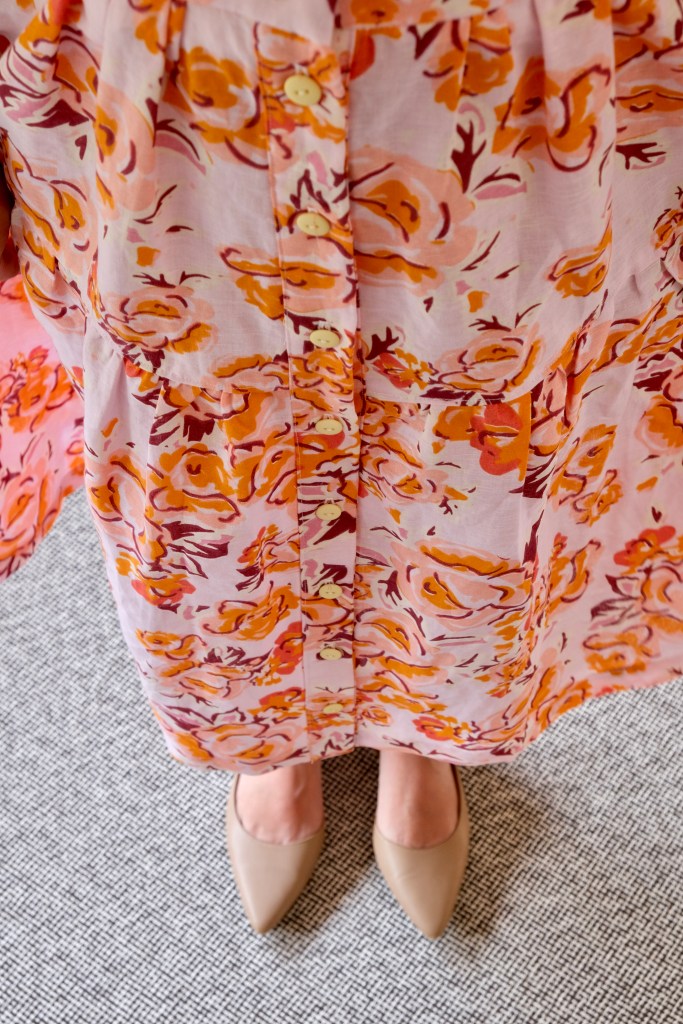
The La Ciotat Skirt pattern is comprised of rectangles for the main body and curved pieces for the waist panel. It offers flexibility, allowing sewists to either print the pattern or cut pieces directly from the measurements provided. I selected size L, which suited my measurements of a 33-inch waist and 40-inch hips. The finished skirt ends just at the top of my ankles, which I find to be a flattering length. I did not need to make any modifications to the pattern.

This pattern is straightforward to sew, featuring pieces that fit together logically and a flexible skirt style that eliminates the need for a toile. Beginners will find Sewing Therapy’s YouTube tutorials especially helpful, while the written instructions are clear and beneficial for more experienced sewists. I personally enjoy watching Sara’s videos while sewing; her teaching style is both relaxing and informative.

Every time I work with a Sewing Therapy pattern or watch one of Sara’s videos, I pick up a new tip or technique. For this project, I tried her suggested method for creating gathers. Rather than using the traditional double line of long stitches, I increased the stitch length and tension, as advised. This approach produced beautiful gathers, but I would recommend leaving very long thread tails for adjustments. I nearly ran out of thread tail, but fortunately, it all worked out in the end. 

My spring–summer handmade wardrobe is growing, and I’m becoming more confident in my creations. I’m looking forward to wearing my skirt on windy days and sunny days! I’m so excited to be getting around to using some of my “good” fabric.

Thanks for reading and happy sewing!

X Em
Palisade Pants in Linen

It’s been a nice slow start back into my sewing. I wanted to do some planning and organise my sewing in this second half of the year. Sewing ad hoc can be fun and spontaneous but during Me Made May this year, I realised that I was short on a few essential items. Also, before my travels, I was madly sewing trousers so I could pack them. I want this second half of my sewing year to be calm and I want to be prepared before the season starts. Another part of my planning involved looking through all my patterns. I’m hoping to sew the unsewn patterns and to return to some which brings me to this Papercut Pattern classic, the Palisade Pants.

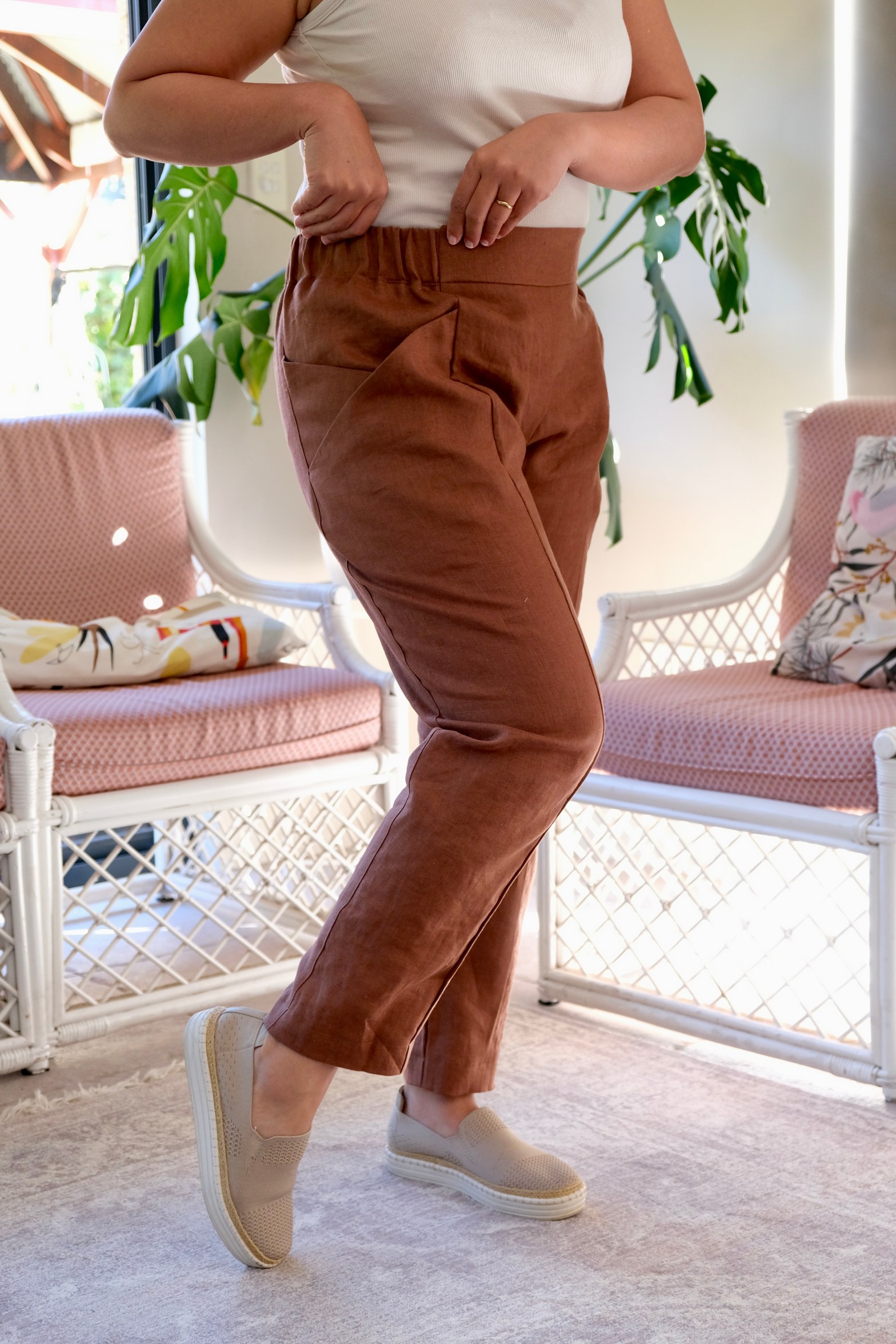
I made these about 2 years ago when I collaborated with Maai Design for their Lyocell Twill fabric. I get a lot of wear and have always meant to return to sew them. The unique pockets are the highlight of the design, and it is a popular pattern in the sewing community. The pants taper elegantly down to the ankles and is a slim fit but made comfortable by the semi elasticised waistband.

This version of the Palisade Pants is made with suiting linen. What’s the difference between linen and suiting linen you ask? Suiting linen is thicker and the weave is tighter. I didn’t realise the difference and have made trousers in the past from what I thought was standard linen, but they tend to lose their shape sooner and it isn’t as hard wearing as pants need to be. 

When I first sewed this pattern, I toiled it using the shorts pattern. In hindsight, it wasn’t a good idea because the shorts are wider at the thighs. The pants are quite narrow fitting with less ease so I should have used toiled using the actual pants pattern. I remember sewing the size 4 with the original version but had to narrow the inner leg seams to make everything fit. This time, I cut and sewed the Size 5 without any modifications except to shorten the pants by 2 inches. When I re-read my previous blog post about the Palisade Pants, I said I sewed the size 5 but when I looked at my pattern pieces, they were the size 4 so I must have mistakenly thought I made the size 5. I reprinted and used the size 5 this time for my measurements of 33-inch waist, 40-inch hips.

The pockets are not the only unique feature of this pattern. Instead of side seams, there are centre front and back seams. It’s an interesting feature and I think it works well in making a clean, slim silhouette. It also helps with the pocket feature. In past toiles, I would baste the side seams and inner leg seams so that adjustments are fast to make but following the pattern, I couldn’t use that same method. Luckily, the size 5 was true to size for me once I had made the length adjustment and the waistband was easily adjusted because of the elastic.

I have sewn a lot of Papercut Patterns for good reason. I feel that so many items match my style, and the instructions and fit are always spot on. I really felt good about this sew and happy to tick another item off my handmade spring capsule.

Thanks for reading and happy sewing!

X Em

A Trio of Dani Pants

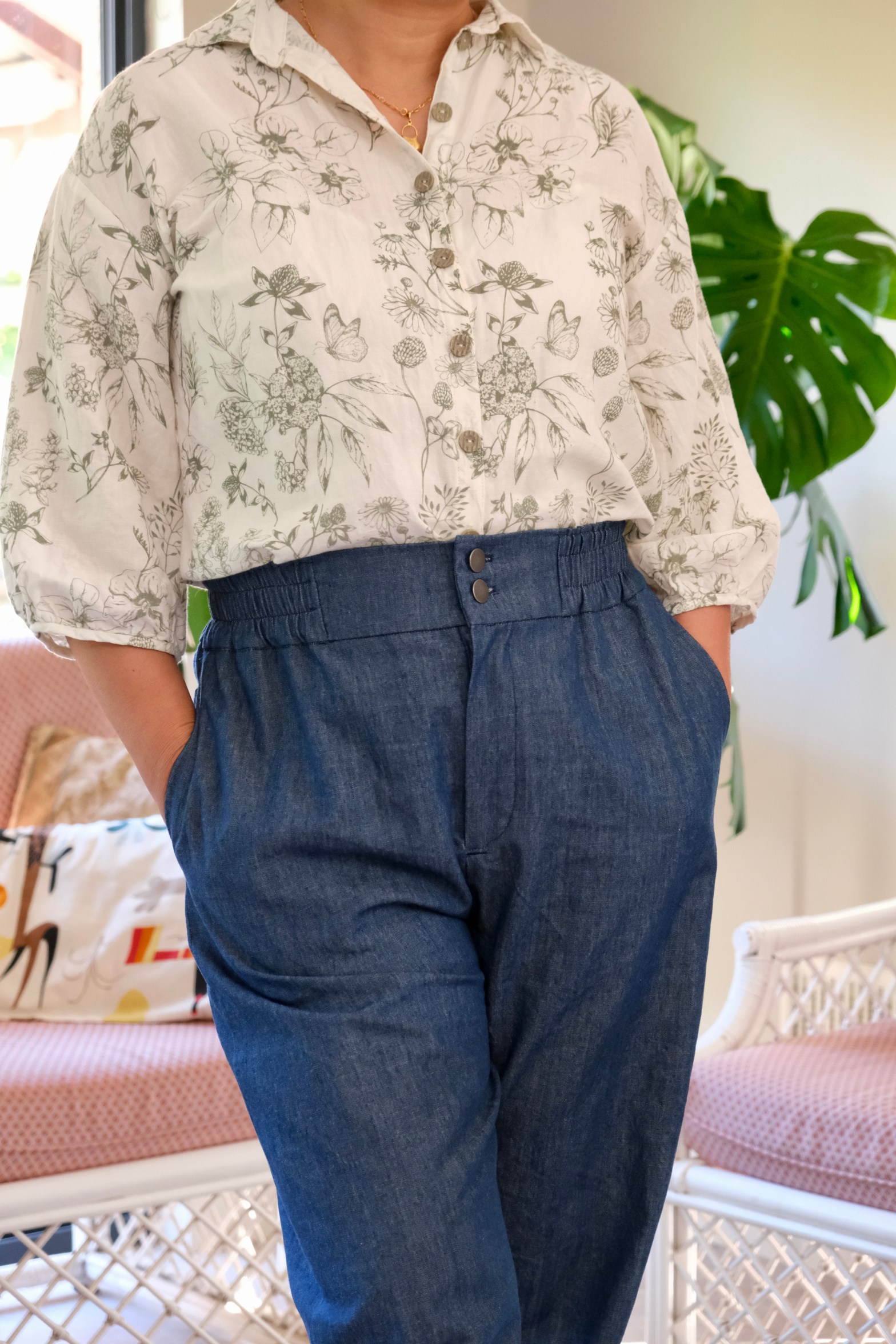
Me Made May has gone by in a flash this year! This year, I decided to record what I was wearing every day in a one take video which I shared to my Instagram Stories and saved in my Highlights. It is a very successful exercise which I use to review what I’m making every year. I realised that even though I am drawn to making dresses, my daily wear mainly consists of pants and shirts. Of all the pants that I was wearing, I found that I liked the True Bias Dani Pants for the style and the fit the best. So, for my upcoming travels, I decided to make three pairs. One in denim, one in a stretch drill and one in linen using Version D of the pattern.

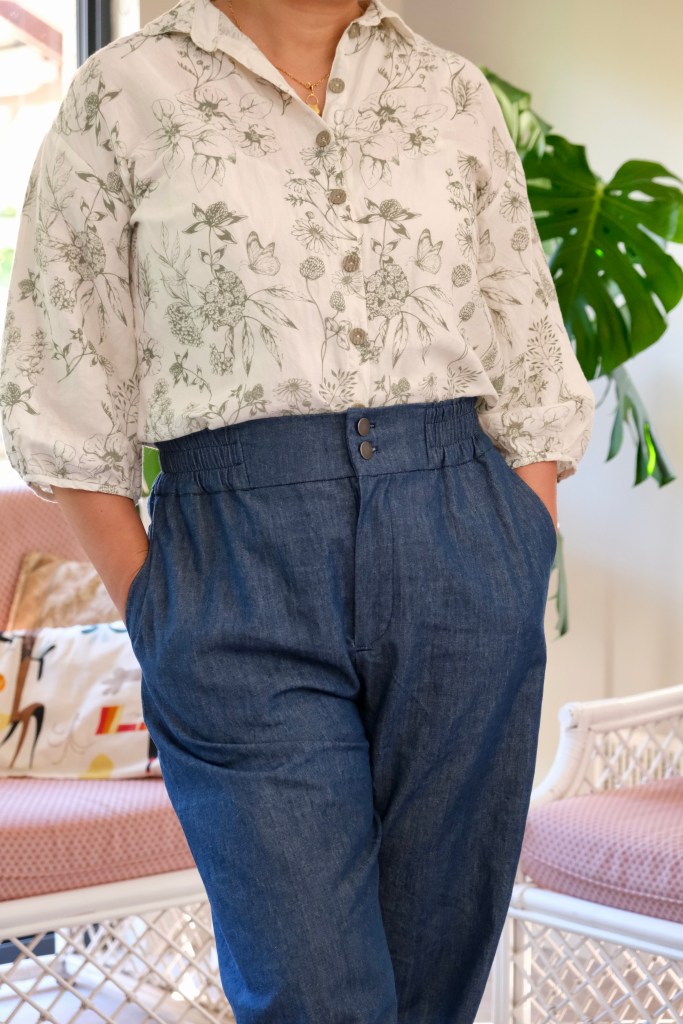
My very first pair which I made a couple of years ago was a linen version. I’ve worn it so much, but I felt that the linen I used was not the right weight and I can see some wear around the zip and seat area. This time, using version B again, I went for a 9oz weight denim which is lightweight enough to cope with the elasticised waistband but gave good structure to withstand the zip and button front. The buttons are jean buttons that were leftovers from making my Dawn Jeans.

This was also why I chose a khaki stretch drill for the second version. I love how soft this stretch drill feels. It was a real bargain find at my local spotlight store with only $10 per meter, the fabric only cost $30 which is pretty good for a pair of pants these days. Something I didn’t do with the stretch drill which might be a bit controversial is that I didn’t wash it before sewing. I only washed it after. I felt that the stretch in the drill, even though light, made the fabric less structured. I didn’t want to change the sizing for the pants, and I knew that I would be throwing these into the dryer with washing, so I didn’t mind if the fit was on a slight looser side to begin with. I’m not saying that it was a whole size bigger, but it was a loose size 12 and after washing and putting in the dryer, it has stiffened up to the perfect fit for me.

The final version was made with a drapey linen. This time I did wash the linen and popped it in the dryer before sewing. It really softened up the linen beautifully. I decided to make Version D which eliminates the button fly and zip. It has a full elasticated waistband. I thought that with travelling, it’s always good to have something you can pull on quickly that still looks smart. I loved adding the cuff and pockets to this. 

When I first made the Dani Pants, I found the zip fly quite difficult. It’s nice to come back to a pattern after two years to find that I can now confidently install a zipper and the zip fly easily. I could understand the instructions a lot better now that I’ve had more experience sewing. Slowly and without me realising, my sewing skills have been improving. It’s a happy discovery. I feel so grateful to pattern makers like True Bias who have put so much detail and effort into their patterns which have helped self-taught sewers like me to gain these skills.

There’s nothing like a bit of last-minute sewing to add to the excitement for an upcoming trip. It’s funny how packing for a trip now includes a bit of last-minute makes. I should also mention that all my pants were made in the size 12, shortened by 2 inches for my measurements of 33-inch waist, 40-inch hips and 164cm height.

Thanks for reading and happy sewing!

X Em

Nadine Skirt

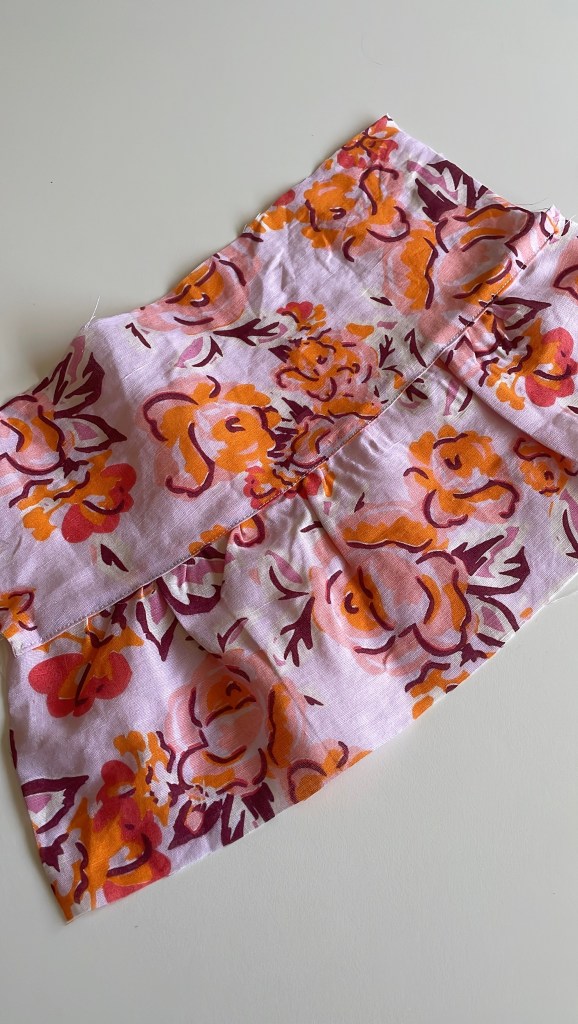
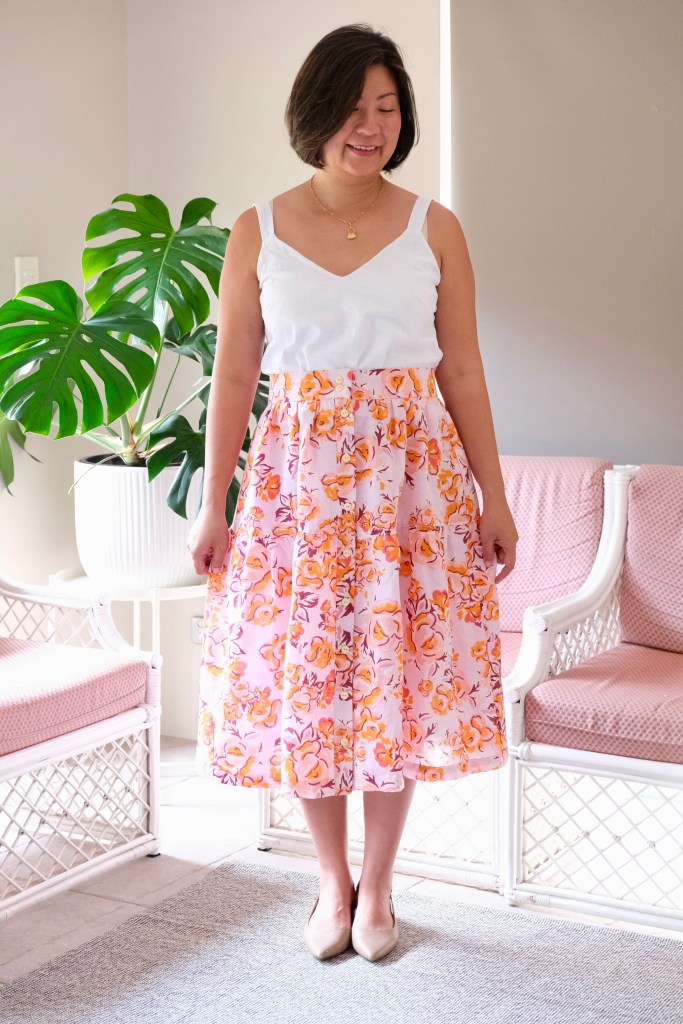
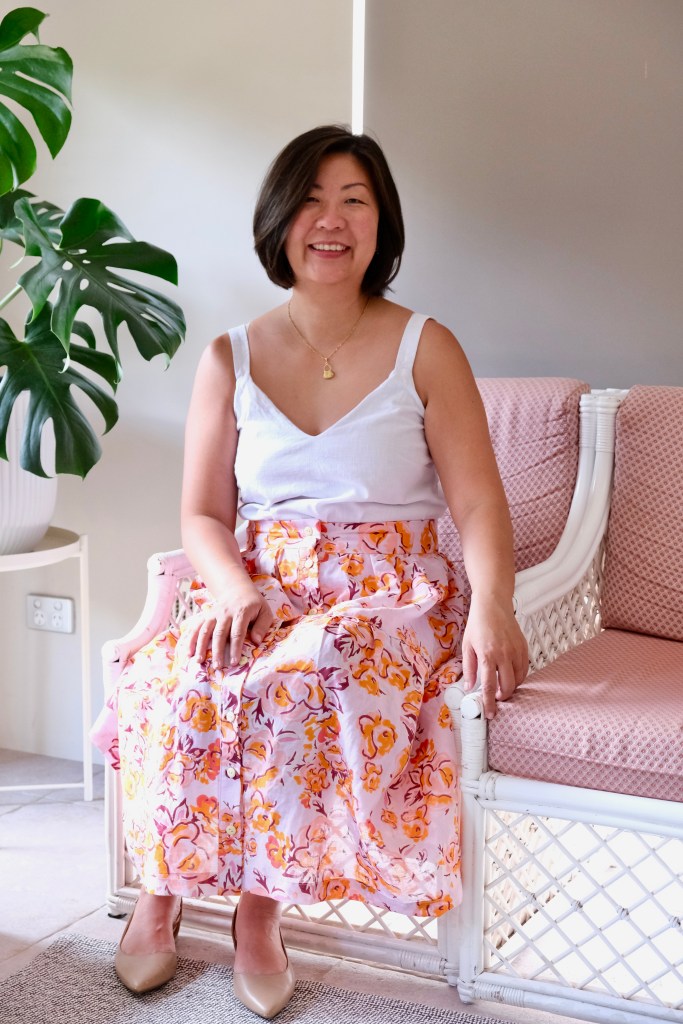
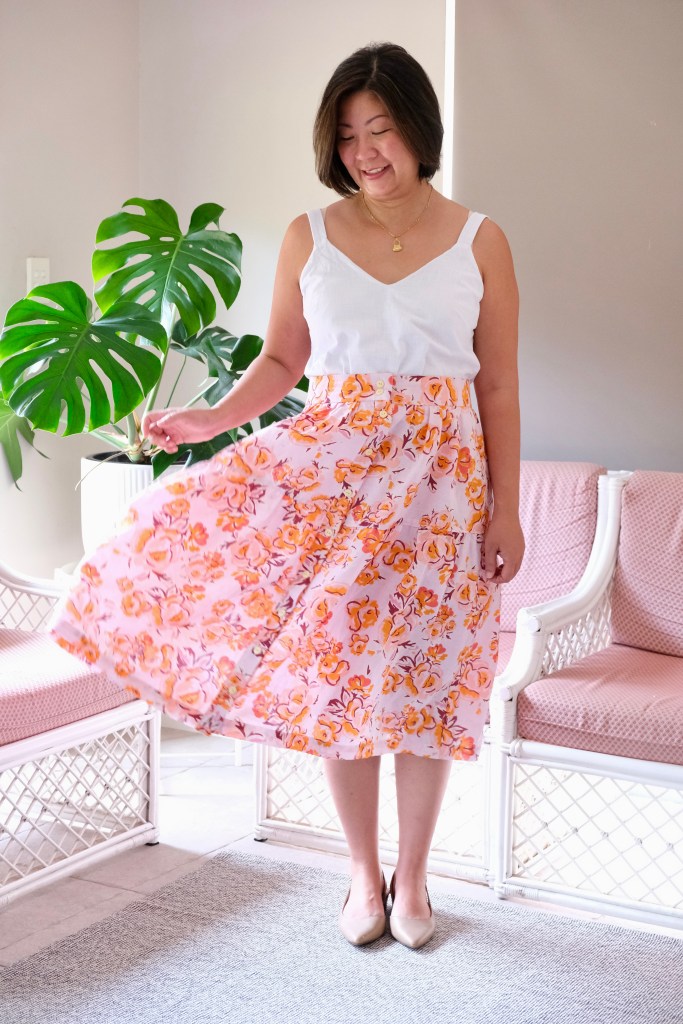
The Nadine skirt is the inaugural pattern released by The Maker Haus. Laural is the talented designer, and she says on her Instagram profile that she is sewing a Doen inspired wardrobe. I had to google Doen and I found out that it’s a Los Angeles based line of clothing that is inspired by the nostalgia of a decades past California. They feature touches of romantic, bohemian detailing like embroidery, ruffling and retro-inspired silhouettes. The Nadine skirt is a gorgeous skirt that has two variations. The first is a midi skirt which leaves off the ruffled hem and gathers. The second is a maxi that features those ruffles. I tested Version A. Both skirts feature gathered tiers, shaping around the hips and sits at the natural waist. There is also a button placket running down the centre front.

Laural was awesome to test for. She took her time modifying and correcting any fit issues and was quick to respond to feedback. She has worked hard and produced an outstanding pattern with detailed instructions and diagrams. I got a lot out of testing this pattern. The most exciting feature for me was learning about receiving tucks. Of course, like everyone, I usually buy patterns that I like the look of, but I always try to find something I can learn and progress my sewing with. 

My trial for the receiving tuck.

My skirt sizing is the size 14 waistband for my waist measurement of 33 inches because my sizing falls between the size 12 and size 14. I used the size 12 skirt pieces for my hip measurements of 40 inches. I made a toile to adjust the sizing. I could have graded between the two sizes and because it’s a fitted waistband, it is better to toile. I like the curved waistband but if you want a straight waistband, Laural has included instructions for adjustments to do this.

The Nadine skirt is drafted for woven fabric. It’s great for lightweight to medium fabric. I found a beautifully printed linen. I wanted to make my skirt summer appropriate, so I shortened the top tier by two inches and the bottom tier by one inch. Again, these adjustments were made on my toile when I was making the tester version so nothing to do with the fit of the pattern. In fact, when reading any post on tester versions, it’s important to note that the designer will share the final pattern with the Testers before launch but there might not be time to sew up the final version yet which is the case here.

I’m keen to return to the pattern and am currently keeping my eye out for the right fabric. I want to try Version B with the cute ruffles! This pattern is feature packed. I love learning how to do a receiving tuck which is such a neat way to finish the gathered tiers. In fact, the whole skirt now has instructions for French seams so it’s neat inside and out. It’ll be great for very lightweight fabric.

Congratulations to The Maker Haus for the launch and creation of a beautiful pattern! 

Thanks for reading and happy sewing!

X Em
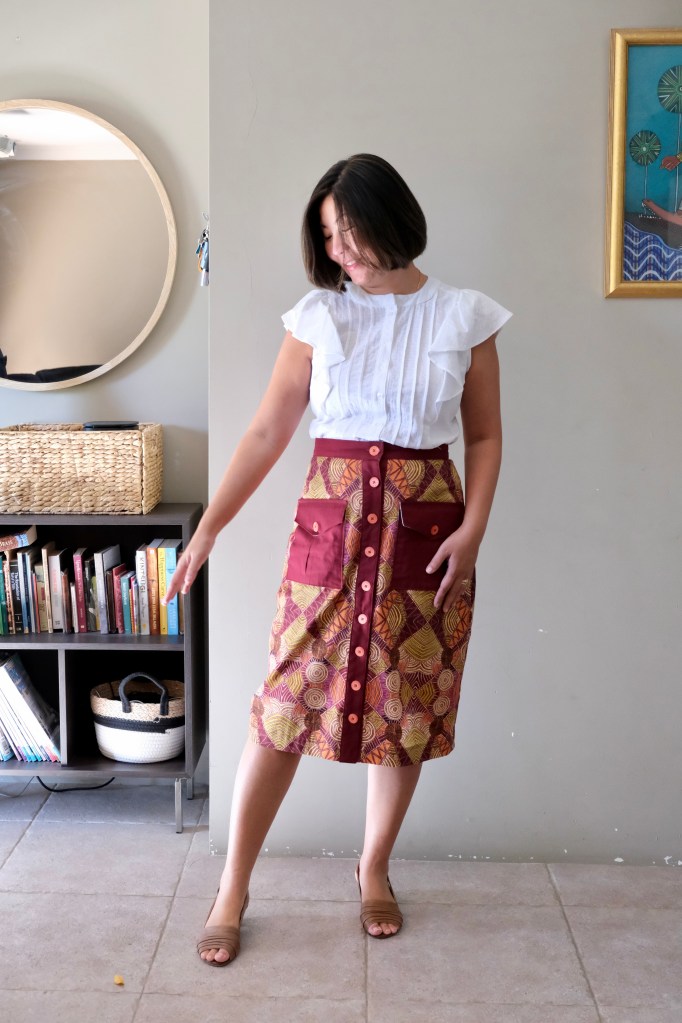
True Bias Blair Skirt

A while back, I was part of the testing team for this skirt. I really love the look. It was released for their autumn collection, but I think it looks great all year round. As part of a paid collaboration for Instagram, I was asked if I could make another version of the True Bias Blair Skirt

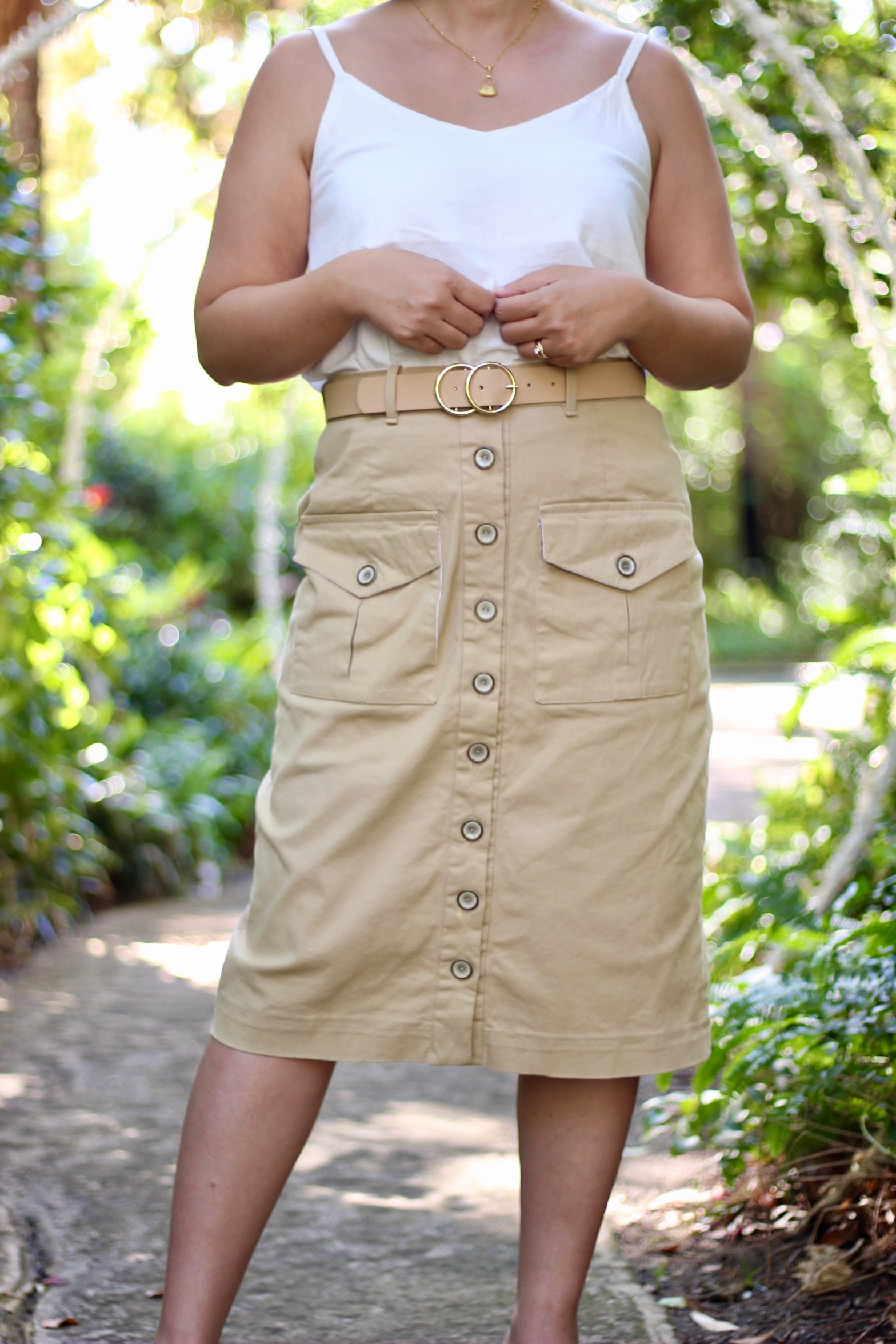
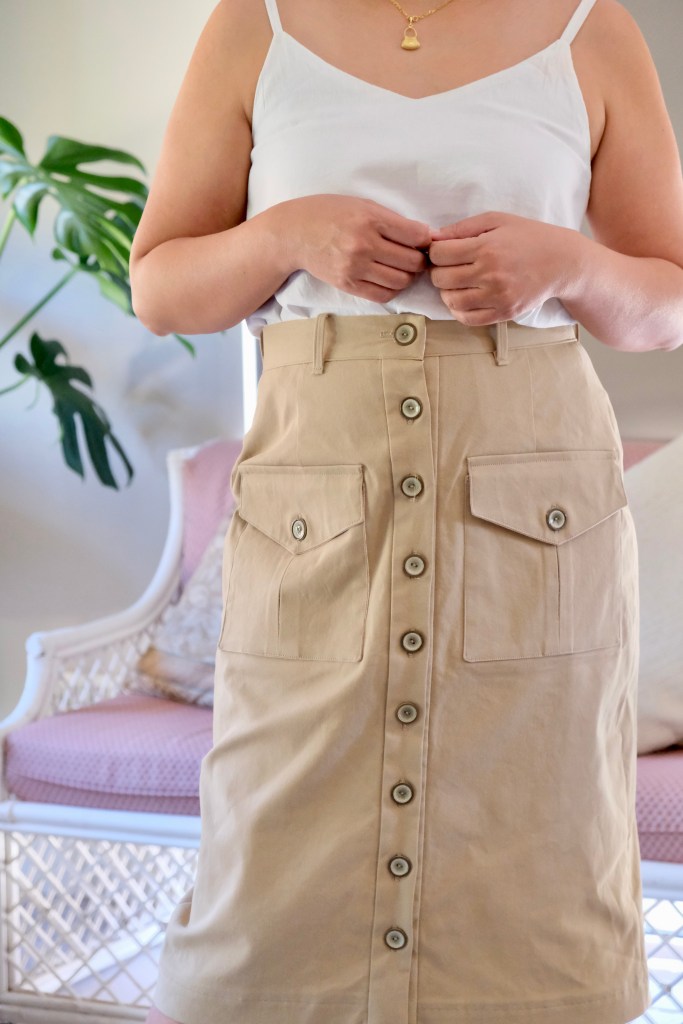
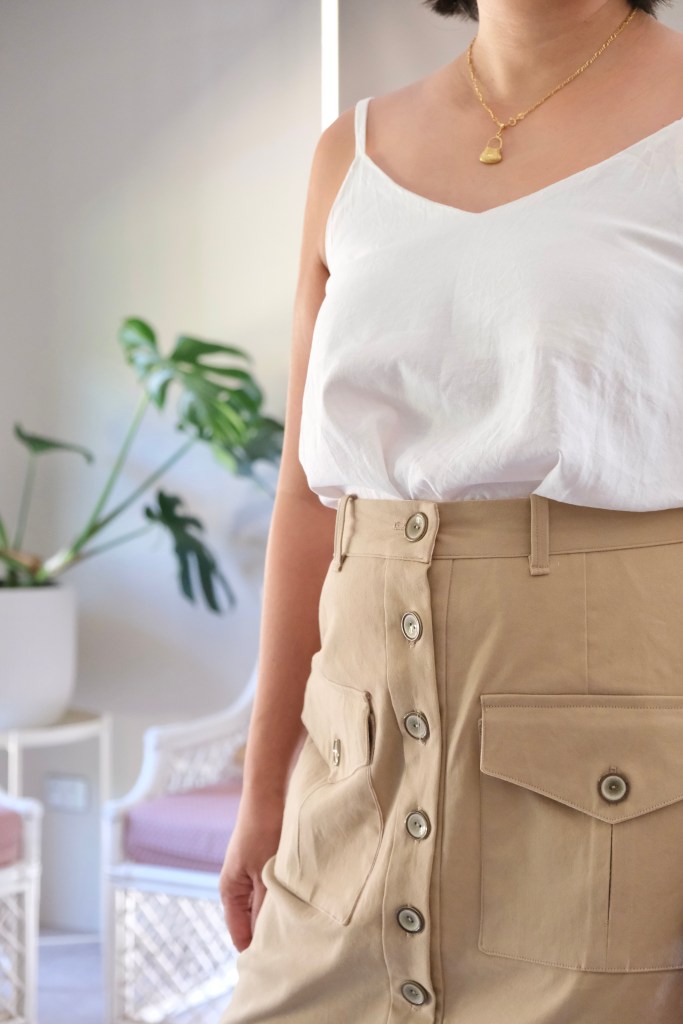
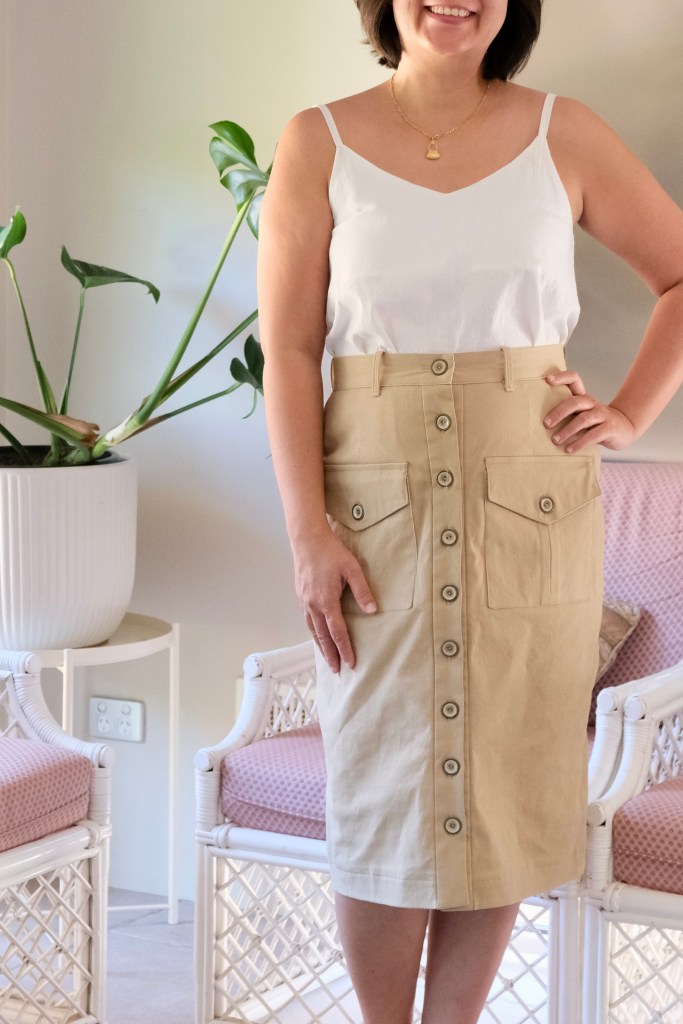
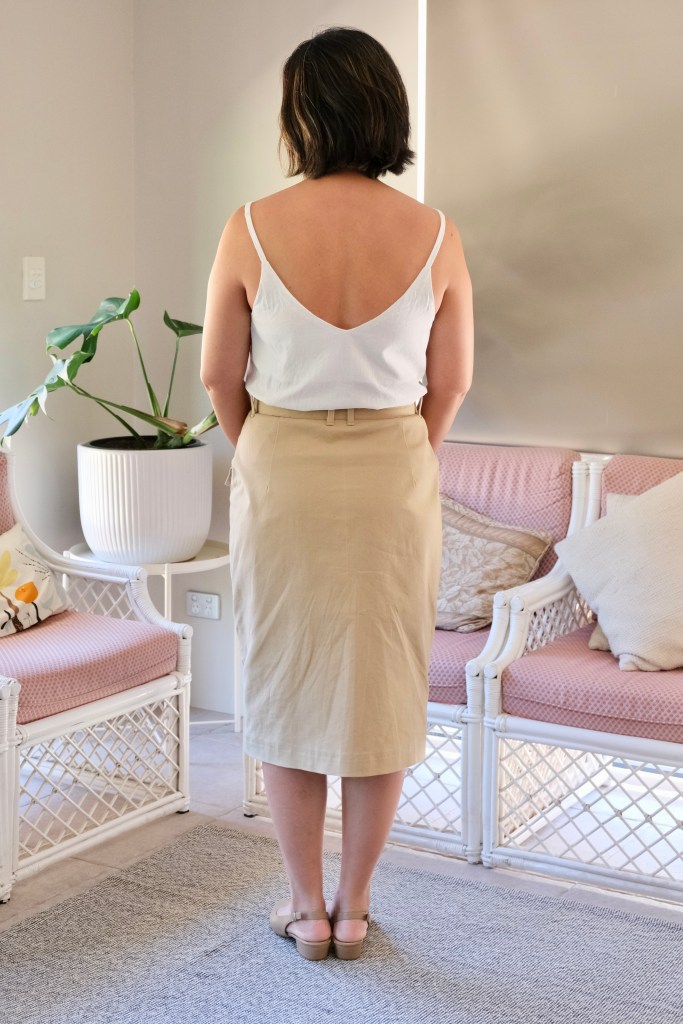
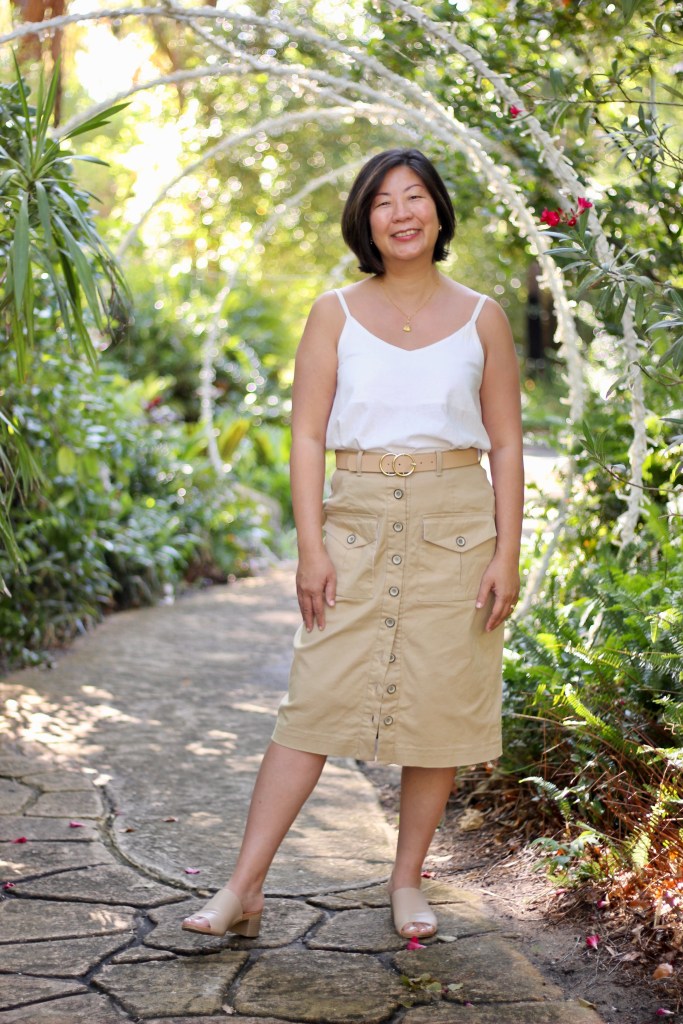
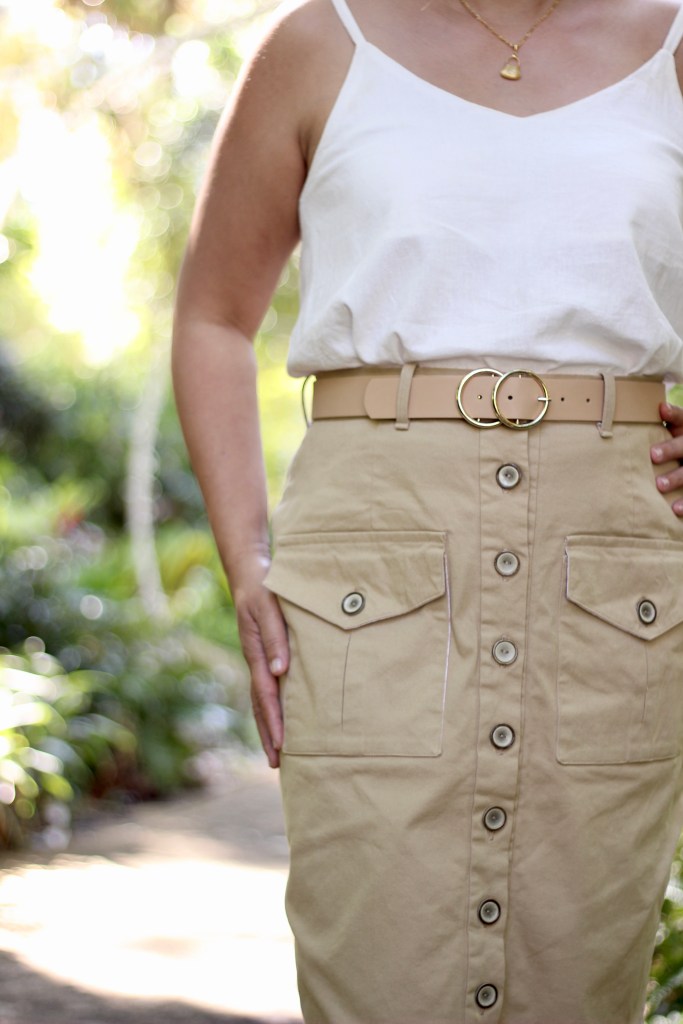
The skirt comes in three lengths, mini, midi and maxi. I’ve made the midi again because it’s versatile seasonally and I know I’ll reach for it many times. The general design is a skirt that is fitted over the waist and hips which then goes straight down to the hem. It has a front button placket and comes with the option of adding pockets with an inverted pleat, belt loops and a belt. I added all the extras! 

My sizing fell into the Size 12 range with my measurements of 33-inch waist and 40-inch hips and 167cm height. I didn’t feel that I needed to make any modifications. I think that the main watch point for fitting is the hip measurement because there is limited ease in the pattern. It’s true to say that I found the pattern true to size.

Fabric choice is quite straightforward for this pattern. Anything medium to heavy weight woven would be the way to go with the main fabric so I chose a light-coloured denim. This beige denim suits my style, and I wanted this skirt to be a staple in my wardrobe. I love colour and pattern but against a backdrop of something that is neutral. There is a bit of lining fabric needed for inner side of the waistband and the pockets. I used some beautiful scraps from Melco Fabric. It’s worth saving all the scraps from your sewing projects!

My skirt needed nine buttons for the button placket and two for the pockets. I feel I’m making some progress with button installation. I like how the pattern includes a guide for the buttonholes and button placement. It helps to take the guesswork out of the equation. I am tempted to get the button measuring gauge but wonder how useful it is. I’m starting to get quite a collection of useful sewing tools. Unfortunately, my buckles ordered from Amazon have not arrived at this time. When it finally arrives, I’ll be making the matching belt to go with the skirt. I’m quite keen to make my first proper belt!

Sewing the True Bias Blair Skirt was a pleasure. I’ve made many True Bias patterns and so glad I came across their patterns as a novice self-taught sewist. I learn so much from Indi patterns like these. No hiccups but also, I am learning that it’s important to go back and sew the patterns a few times. I feel that I could understand the pattern better and made some decisions of my own for my version. Simple things like using a blind hem stitch for the skirt hem, reversing the instalment of the button placket so I could stitch in the ditch because I preferred to minimise my stitch lines. My next version could be the complete opposite where I use top stitching to highlight all the stitching. The point is, sewing is such a superpower because we can customise what we’re making.

Thanks for reading and happy sewing!

X Em
Full Disclosure: Paid collaboration with True Bias for Instagram but all opinions remain my own.

Ele Skirt

It’s been a minute and a half since I’ve sat down to do some sewing. I decided that when my all my kids finally graduated from school, I would treat myself to extending some of my own education. It turned out to be extremely challenging but satisfying and was happy to pass my course. I’ve had to turn off all my social media just to concentrate and avoid the temptation to sit at my sewing machine. Now finally, I’m happy to be back sewing. I realised that I have come to rely on sewing to relax and decompress.

The pattern I chose to sew first was the Sewing Therapy Ele Skirt. I got it when it launched and it’s the perfect skirt weather with our weather warming into spring. It was a relatively quick sew and has great instructions. Again, Sara keeps all her instructions concise but detailed. She also includes great sew along videos on YouTube which I did watch.

I like the Ele skirt design of the flat front and elasticated back waistband. It’s more comfortable these days to wear items that have a bit of flexibility in the waistband. Hands up fellow endo sufferers and perimenopausal women. I want structure but comfort, if that makes sense. The fit is true to size. I made the size 12 with no modifications. My measurements are 33-inch waist and 40-inch hips. The pattern advises using the hip measurements to choose your sizing. 

The fabric I’ve used is a 100% cotton lightweight poplin. Even though I have largely stopped shopping ready to wear, I sometimes pop into Uniqlo to browse and I really love that style of shirt-fabric skirts that they stock. I’m happy with the choice except for a minor hiccup when I discovered that the narrow fabric did not fit the skirt’s pattern piece. To compensate, I trimmed the pattern piece and took a wedge off without affecting the hip or waist measurements. I’ll need to be more careful to find a wider piece of fabric when I make it again.

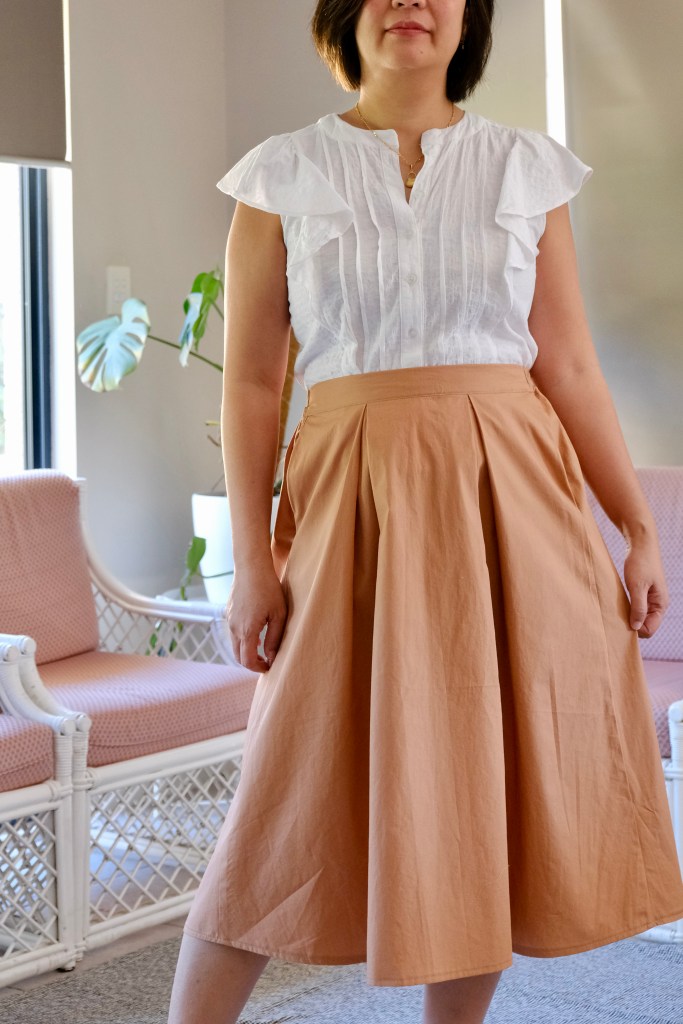
The pocket construction was one of my favourite features of the pattern as well as the list of options for the front pleats. I chose to make the big, inverted pleats but there was also a gathered option, knife pleats, reversed knife pleats. It’s fun when a pattern can be customised to your liking. The pockets are large enough to fit you hand and phone. Very useful indeed!

Another successful pattern from Sewing Therapy. I’m embracing neutrals and solid colours currently. I’m trying to make things that would match and balance out my more colourful, patterned makes. 

Thanks for reading and happy sewing!

X Em

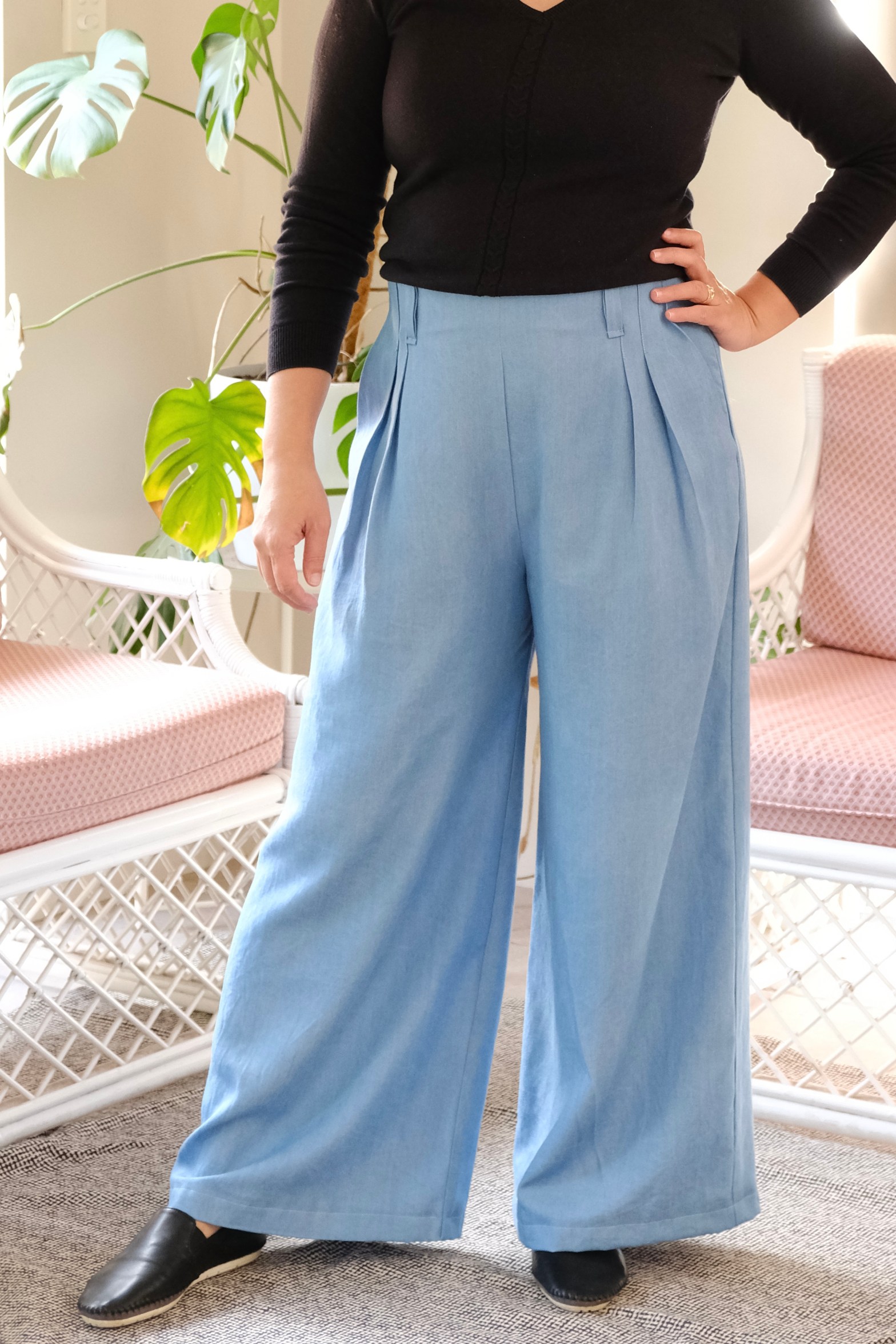
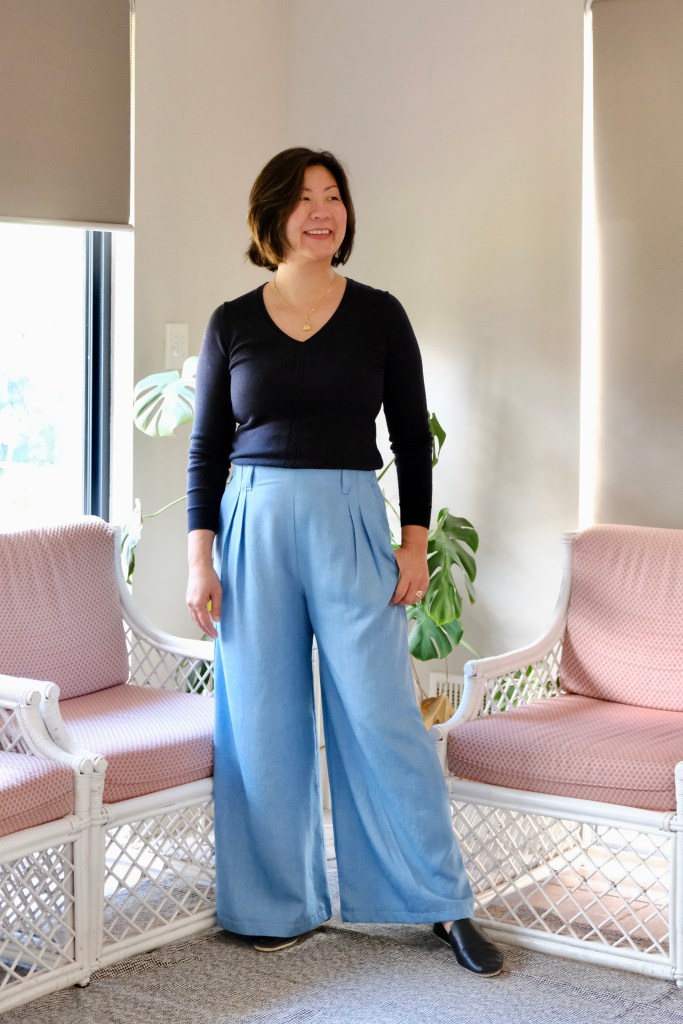
High Waist Pants

Sewing my first pair of jeans has now got me on a roll for sewing fitted pants. I feel that a lot of fear for sewing pants comes from fit issues. Well, at least that is the case for me. I thought this would be a good pattern to try because the fit is determined by a series of darts and pleats without a waistband. I also love the pattern for its classic tailored silhouette. As a Swimstyle Patterns Ambassador, I am gifted with the pattern, but all opinions remain my own.

This pattern is designed for lightweight woven fabrics, so I picked up a denim Tencel fabric which has smooth drape. I was a bit naughty and did not toile this pattern. I would usually have sewn the shorts version first but it’s winter here and I wanted to sew something I could start wearing straight away. The other reason I didn’t toile was because the darts and pleats can be adjusted to fit the waist. The wide leg style of the pants means there is quite a lot of ease which is easier to adjust. The bonus of the generous 5/8-inch seam allowance is that it’s more forgiving when trying to fit a pattern the first time. 

In the other Swimstyle Patterns that I’ve sewn, I have found the drafting true to size. My measurements of 33-inch waist and 40-inch hips means that my size falls between L and XL. I decided to sew the L and to adjust the seams if needed. In the end, I did not have to make any adjustments, and the L fitted me perfectly. The pattern does include belt loops which helps with sizing when you’re wearing the pants, but I can happily wear the pants without a belt. My only adjustment was the length of the pants. I shortened the pattern by 3 inches. This was done by trimming 3 inches from the bottom of the pants.

The sewing went smoothly with the fantastic instructions. Until the end. I realised when I was doing the final press of the pants that my front knife pleats were facing the wrong way! They were facing centre front rather than towards the side seams. It was an unfortunate time to find this mistake because I was out of motivation, I had already packed everything away and I could not face having to unpick the waist facing and trying to reattach it. The consequence of this mistake is that the front doesn’t fall the right way when I sit. I am not too bothered by it and will still wear my pants, but I will make sure I correct this in my next iteration of the pattern. My next pair of this will be in linen. 

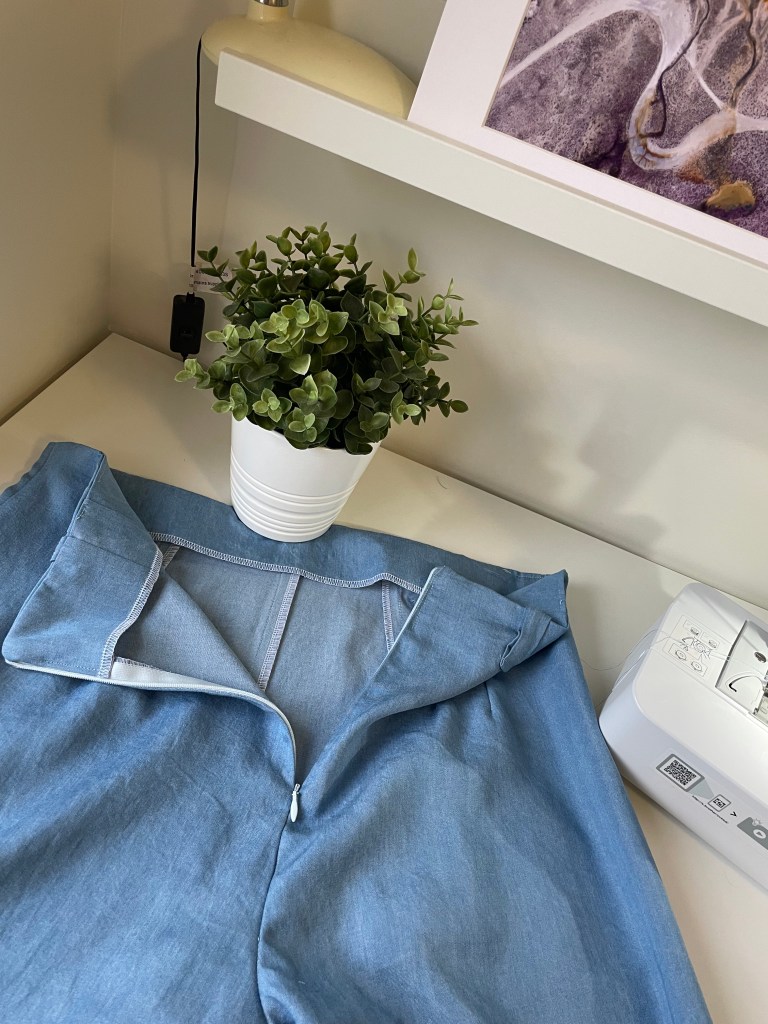
I’m so happy to finally have the confidence to sew pants. I was doing a happy dance with the installation of my invisible zip. I used to be so afraid of zips especially invisible zips, but I have worked out my favourite method which works for me. I’m so glad that I jumped in and I’m looking forward to sewing more pants.

Thanks for reading and happy sewing!

X Em
Dawn Jeans (Wide Leg)

I made jeans! I’ve had this pattern now for about three years. Each year, I take the pattern out to put on my “Make Nine” list and then chicken out and the whole cycle starts again the following year. The barriers have been slightly varied each year including needing a better sewing machine, needing more skill, denim can be expensive, so I didn’t want to outlay the cost only to be disappointed. In the end, this has been the right year for me to attempt this pattern.
The Dawn Jeans comes in four variations, and I’ve chosen to sew the wide leg version. There is also the straight leg version which I will return to sew as well. I love that everything is customisable and there are lots of suggestions on how to do this. I started out thinking I would use a contrasting brown topstitch but after seeing on the zip-fly, I decided to use matching thread for a more modern sleek look. This was also because it’s my first iteration of the pattern and I was more interested in making sure the fit was right.

So, the pattern has a vintage inspired fit with minimal ease at the hips and is high waisted. I was worried about fit because I’ve never had a comfortable “ready to wear” pair of jeans. I find that I often don’t fit into high waisted fitted pants because of my belly. Measuring myself just at the waist and hips does not really give me a good guide to how my body would fit so I went to the Cashmerette site and used the measuring guide for the Creston Jeans. I haven’t made those jeans yet, but I love the guides on fitting that Cashmerette provide. I’ve put my measurements in the table below, but you can also check out the Cashmerette Blog for their guide. I used the elastic band method to get my measurements. 

Natural Waist33”
At Waistband36”
Crotch length27 ¾”
Rise12”
In seam28”
Hip40”
My Measurements

Using those measurements, I decided to grade the Dawn Jeans from a size 14 waist to size 12 at the hips and to use the regular full inseam. The sizing options cater for tall and crop inseam as well. I couldn’t decide if I should sew the shorts first as a toile, but impatience made me jump into the deep end.

The pattern is drafted for non-stretch denim, so I chose a rigid ring spun 6oz (200gsm) denim. It’s a lighter weight denim which still holds its shape but easier on the sewing machine. I’m ordering a 10oz (338gsm) vintage denim for my next attempt. 

Making jeans was not a weekend project for me. It took several weeks to work through all the details which made it thoroughly enjoyable. I love how the first thing you tackle in the pattern is the zip fly. I’ve only ever done this once before when I made the True Bias Dani Pants. It was a lot easier this time. I haven’t made a comparison of the methodology, but my zip extension sits very neatly, and I was so happy with the result. I think slowing down also helped. 

I did attempt to topstitch but the sound that my machine made stressed me out. I did learn that to have neat topstitching I needed a longer stitch length and a slight increase in tension. It would also be handy to use a second machine for the topstitching. This will be something I return to in the future. The instructions for the topstitching are incredibly detailed and it will give it a “classic jeans” look. Instructions throughout the pattern were very comprehensive with illustrations. I found the online photo tutorials were very helpful and referred to them often. Luckily, I had saved the initial email sent when I bought the pattern with all the links because I couldn’t find them by myself on the website. It’s because the Ash Jeans are used for the Dawn Jeans as well.

Attaching the shank jean button was not as difficult as I thought it would be. I bought the button kit a while ago when I bought the Dawn Jeans pattern. My pattern came with a few options and a separate instruction booklet for these options. There’s a button fly, exposed button fly, and zip fly options. My toolbox did not have an awl, so I used a nail which worked fine.

There are a few things I would like to improve the next time I make this pattern. There are instructions to clip into the curve of the front pant seam. I followed the instructions, but I regret this as I think this will weaken the seam and might disintegrate with laundering. I wish I had left it unclipped. Would anyone know why this was instructed? I’m going to try the contrast stitching but using two spools or maybe I’ll be brave and use the topstitching thread on my spare machine. Oh! Also, I put the coin pocket on the wrong way so now it’s a secret pocket. It faces inwards instead of out. I was so sure that the instruction says to put the pocket facing and pocket bag wrong sides together, but it was too late to correct it by the time I realised. I’m not too upset, I think it’s handy to have a secret pocket.

I’m not going to wait so long to make this again. I’ve really enjoyed the challenge and the details of this pattern. Hopefully this will give you a push if you’ve been wanting to try sewing jeans.

Thanks for reading and happy sewing!

X Em