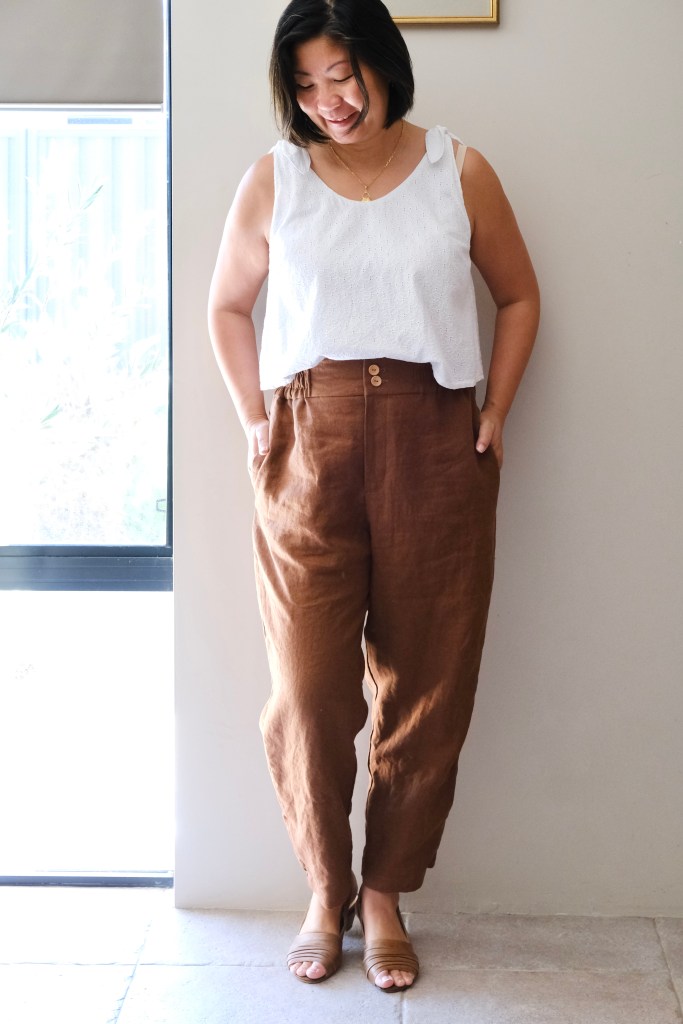
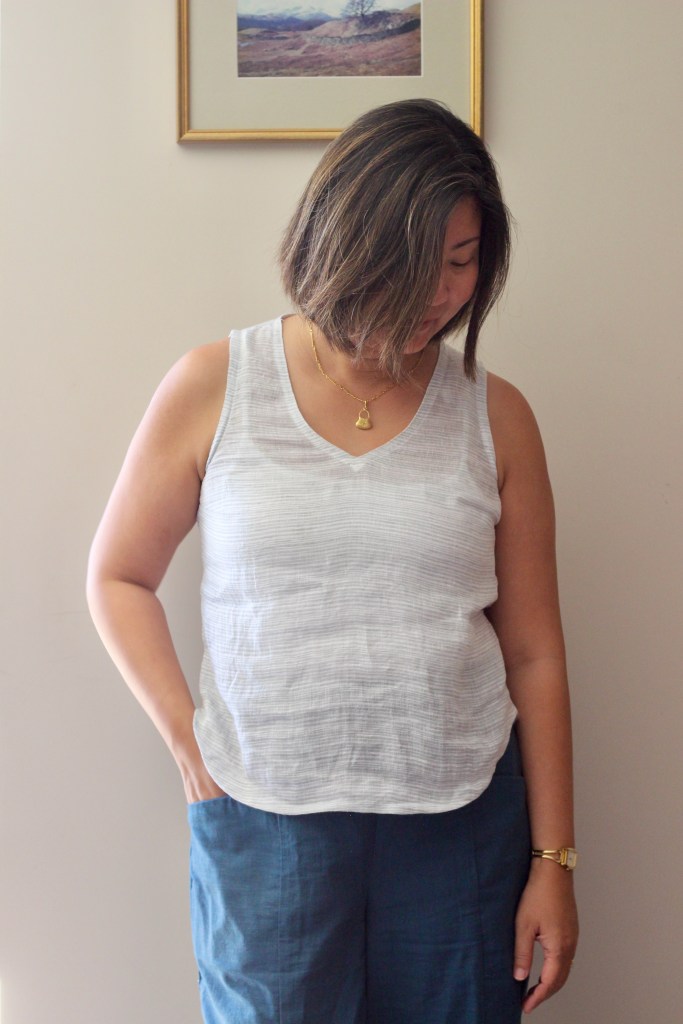
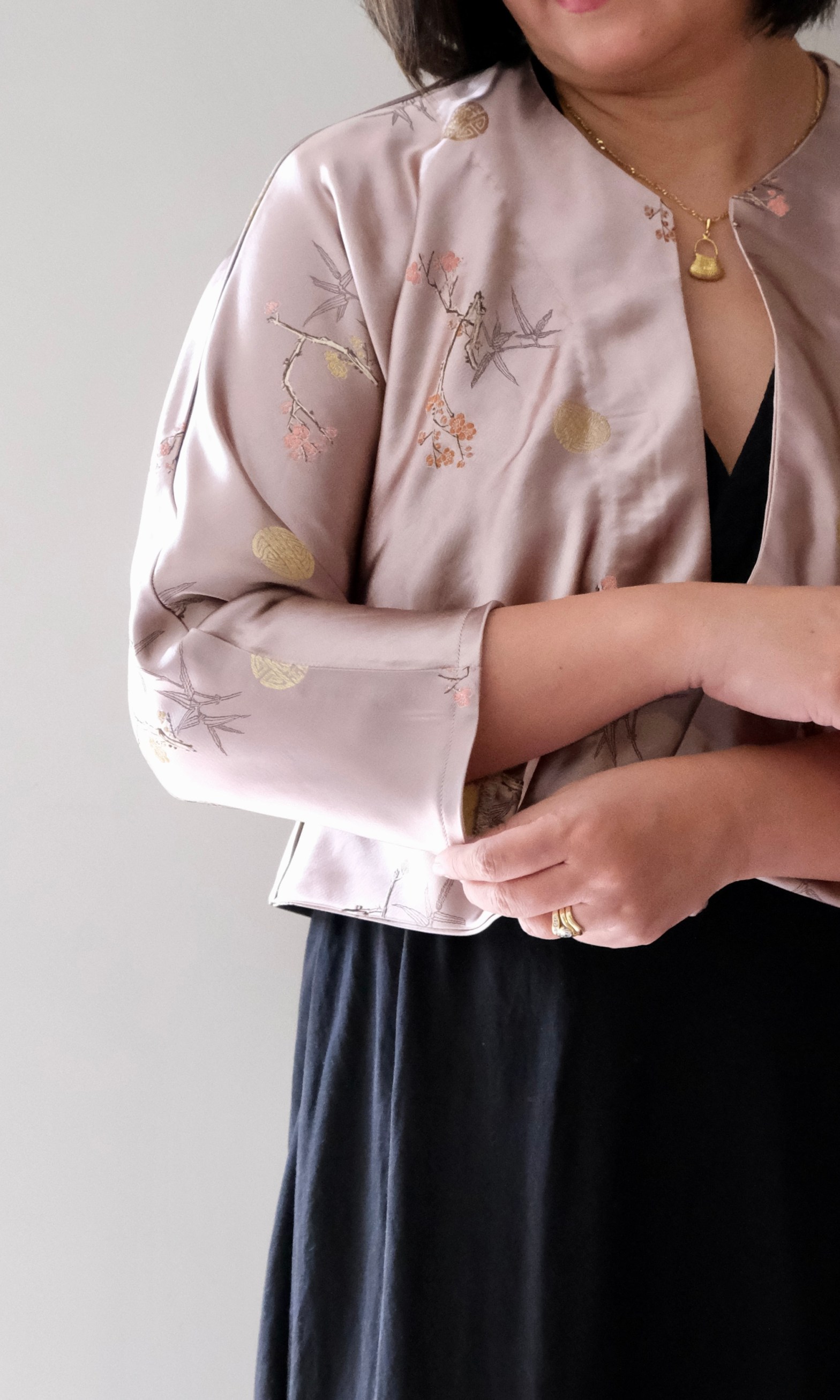
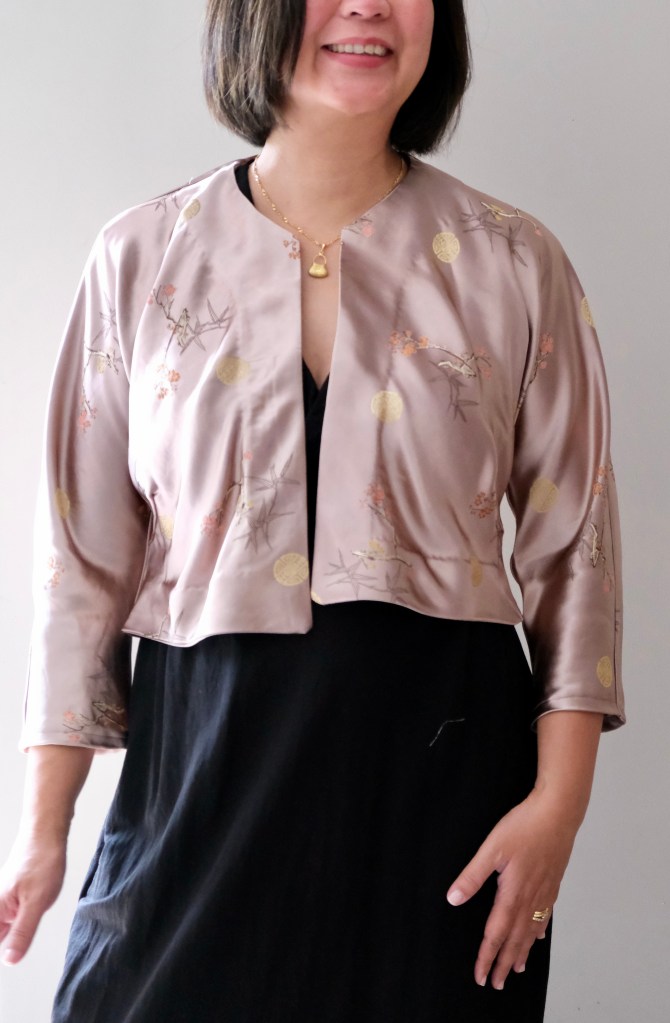
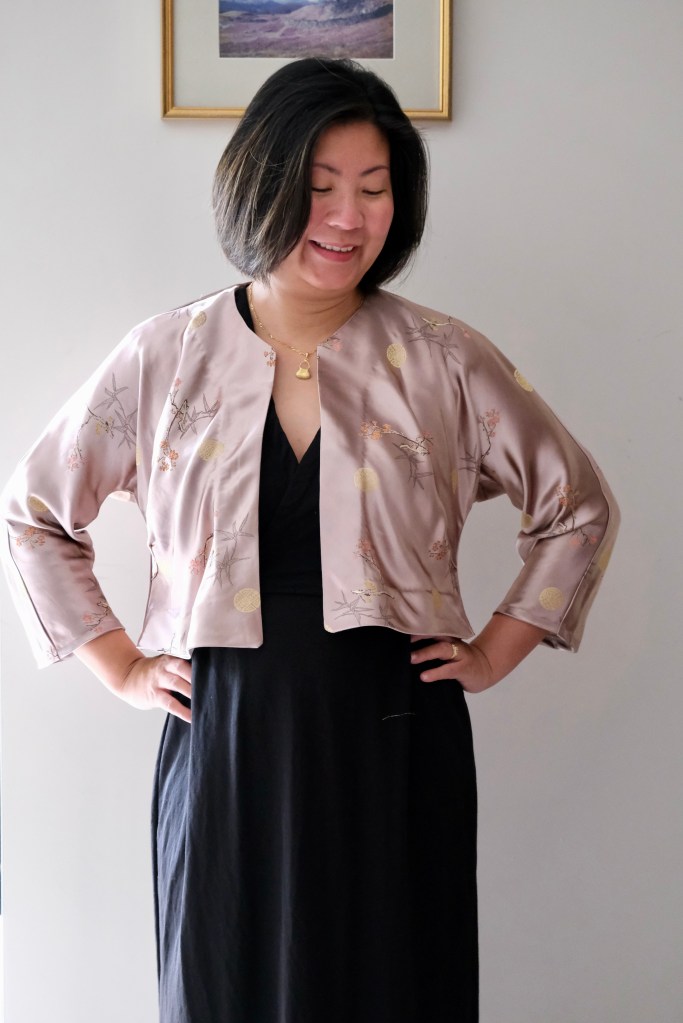
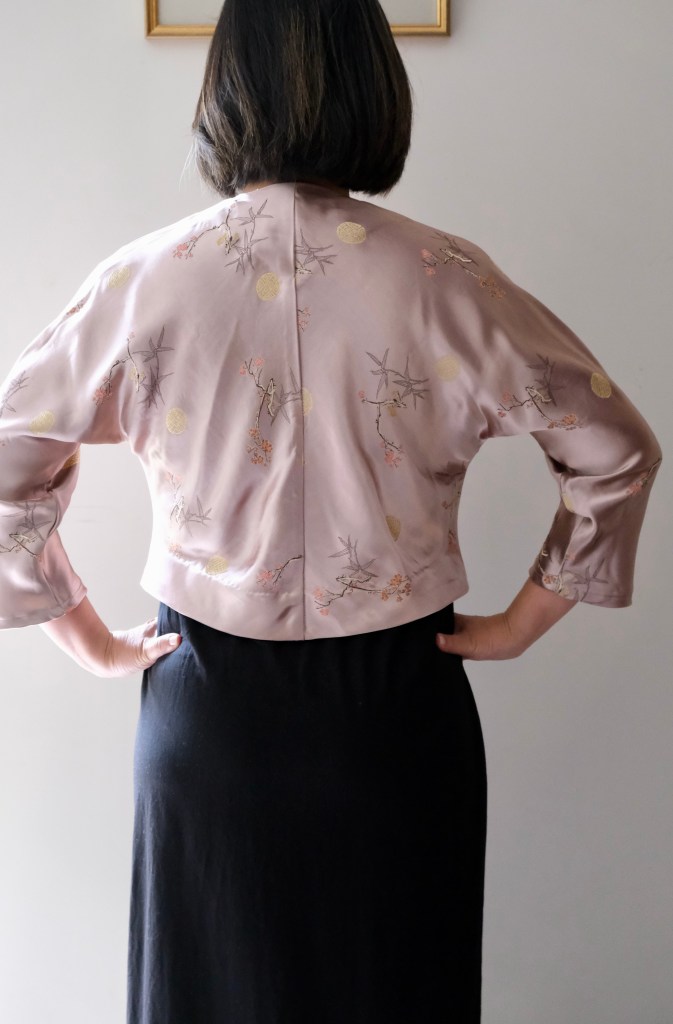
Sewing Therapy Hanbok Dress

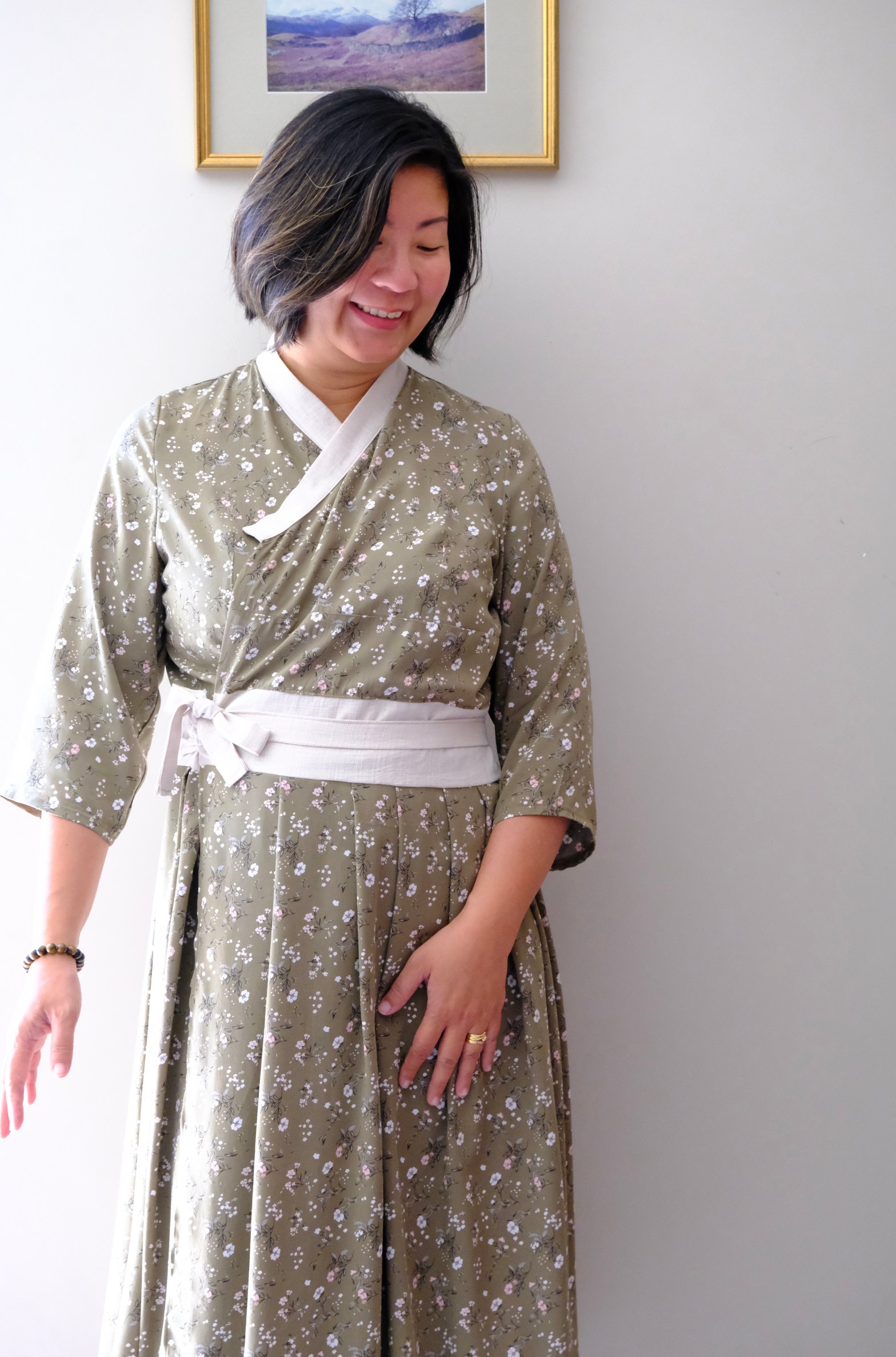
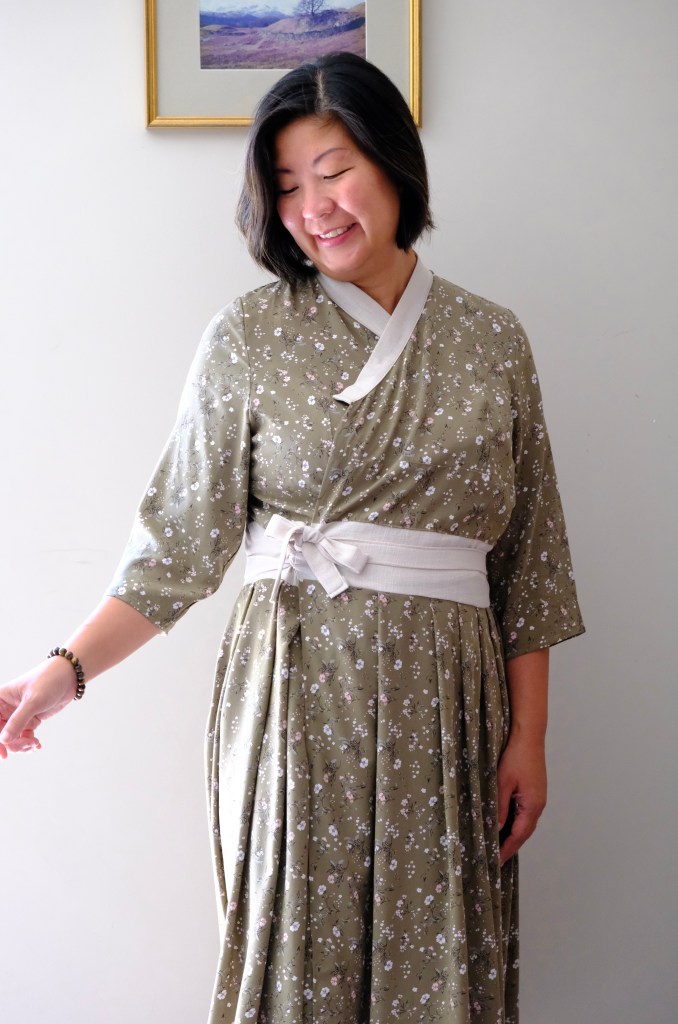
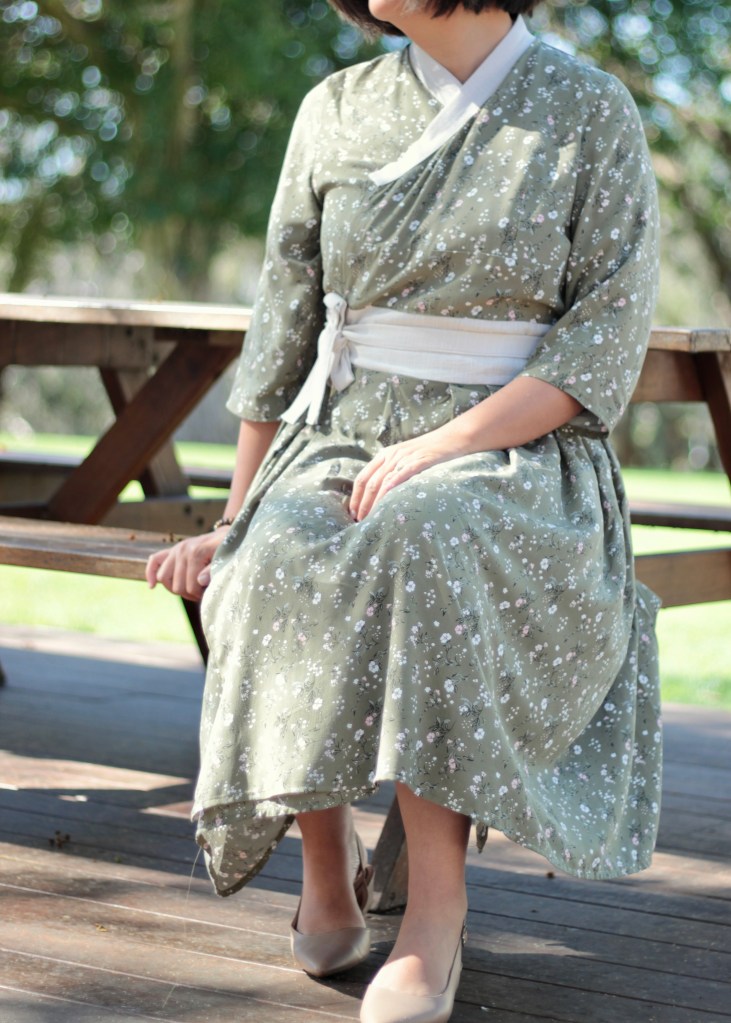
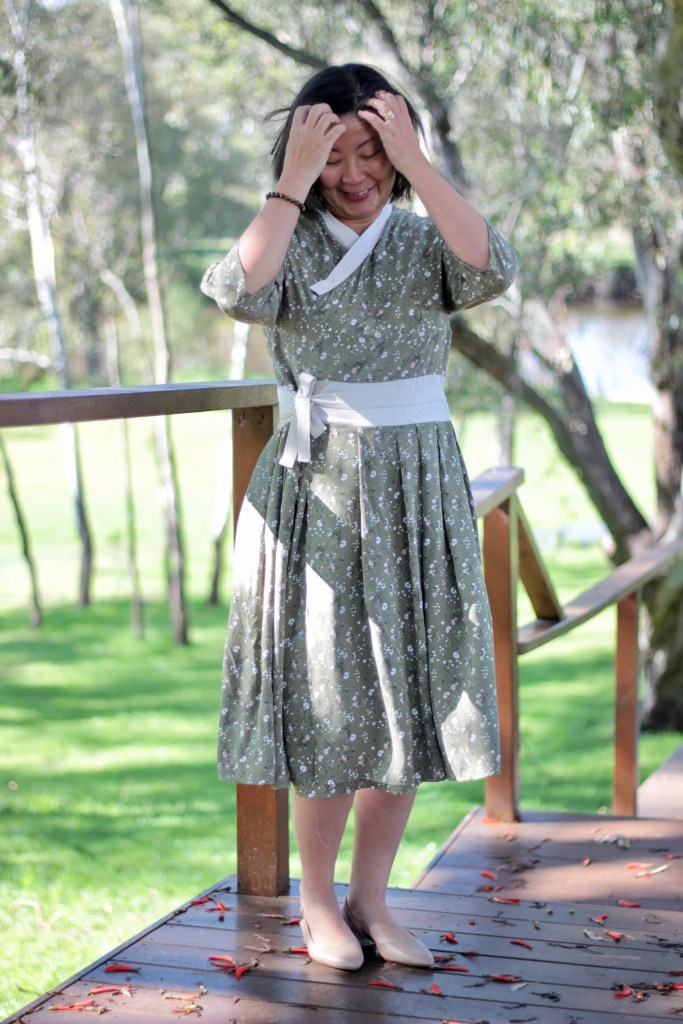
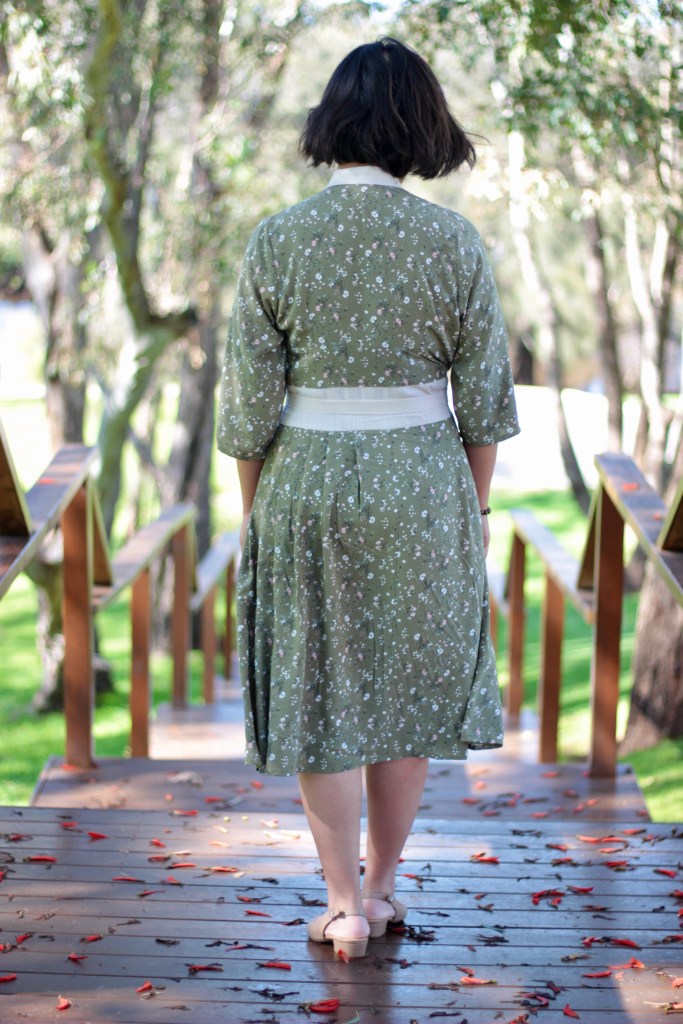
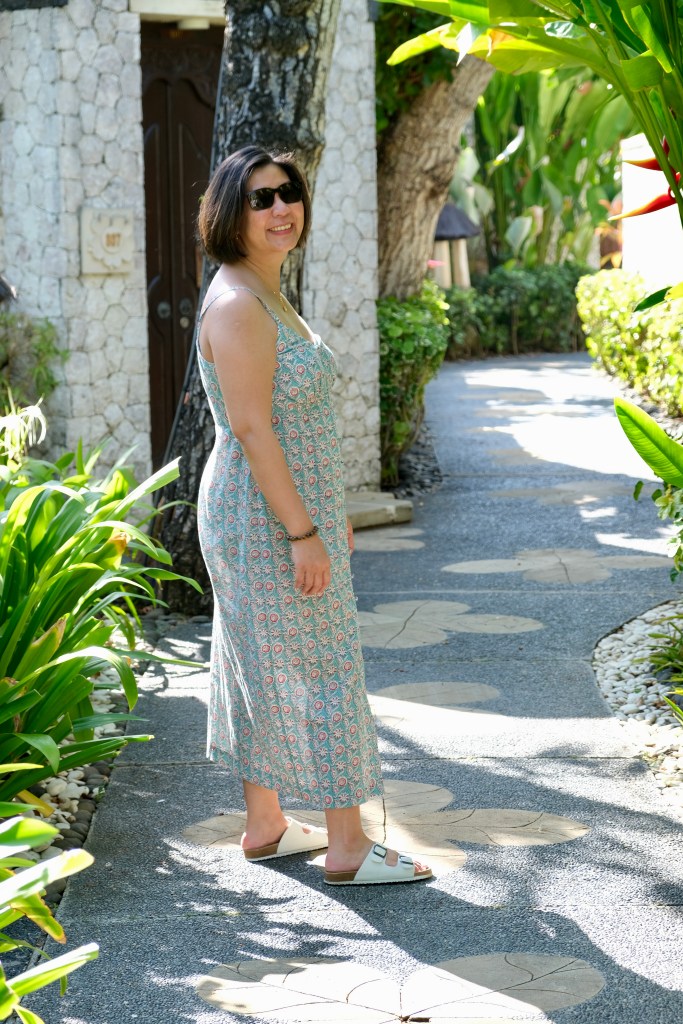
When Sara from Sewing Therapy put out the call for testers to help with her inaugural pattern launch, I was so excited for her and put my hand up to help. Sara has designed a modern version of the Hanbok Dress which is the traditional dress of Korea. It’s in a style of a wrap dress with a full skirt cinched by a waistband. It’s beautifully elegant and I love the style.

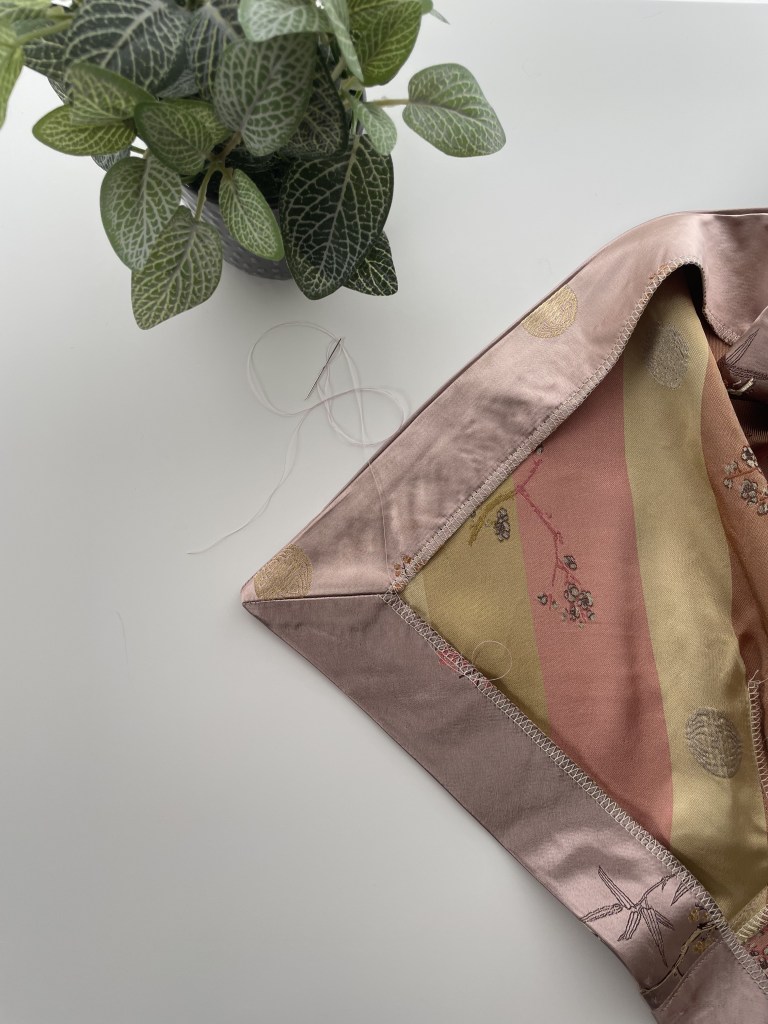
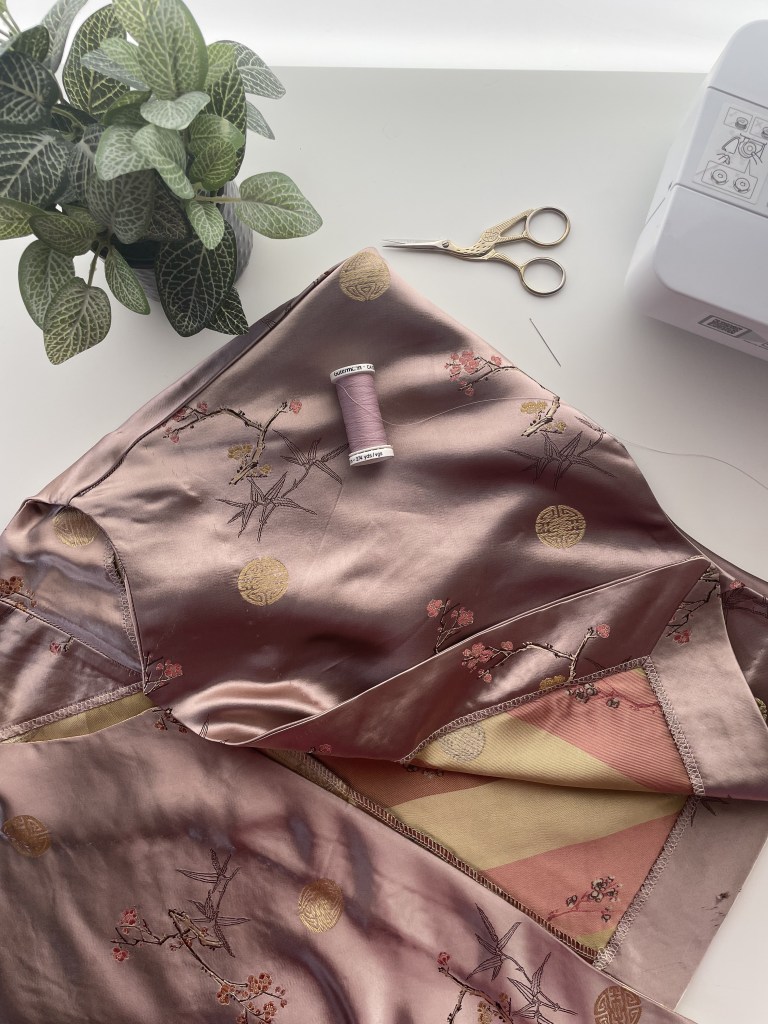
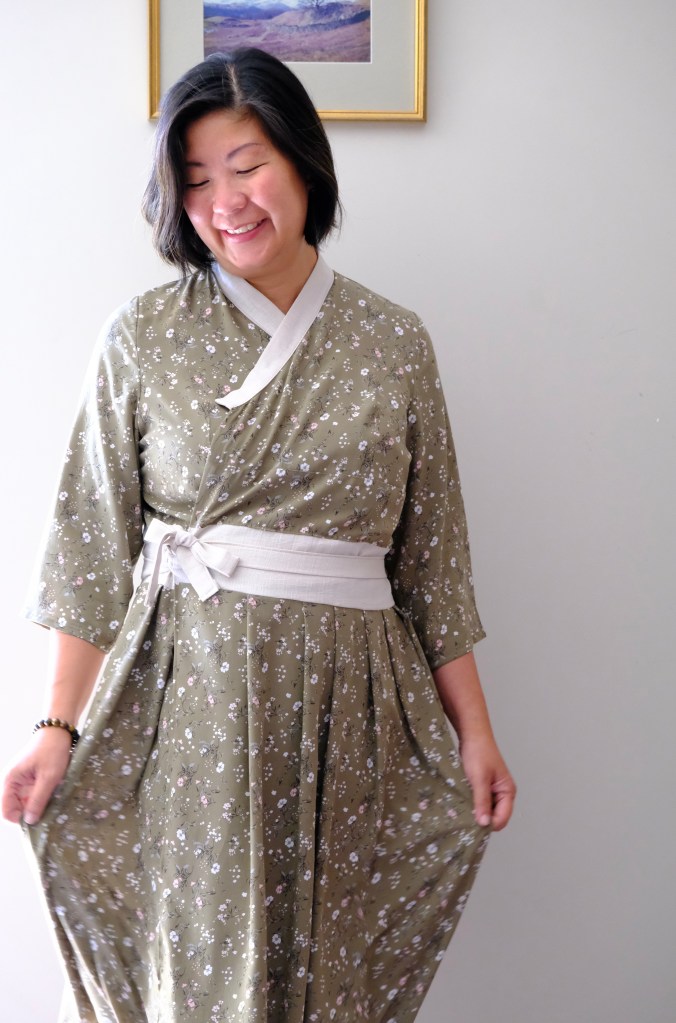
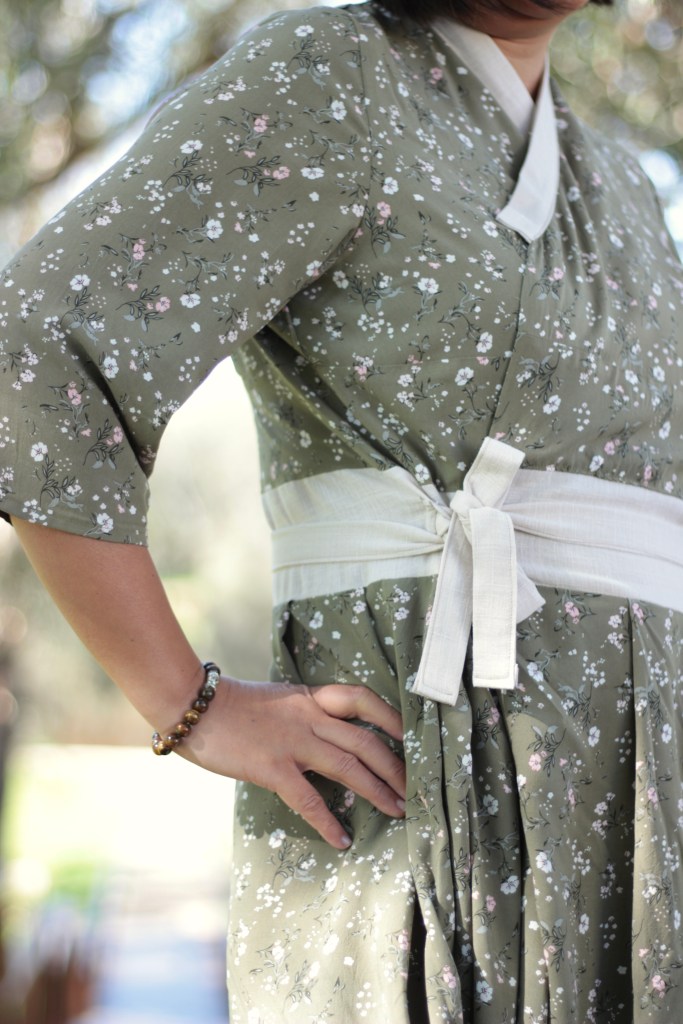
This pattern is for woven fabric. The pattern test was done in a short time frame, so luckily, I already had three meters of rayon in my stash. To help accentuate the features of the dress, I contrasted with beige linen for the neckband and the waistband. The construction of the wrap and the full skirt is more suited to lightweight or mediumweight woven fabrics such as linen, rayon, silk, or cotton. The pattern is geared towards creativity so the use of contrasting fabric and the fullness of the skirt can be altered depending on preference.

My Sewing Therapy Hanbok Dress is a tester piece, so a few changes have already been made for the final pattern release. I made the size L which fits my measurements of 37-inch bust, 33-inch waist and 40-inch hips. Wrap dresses are very forgiving with fit so often, grading isn’t needed. To choose the size, I mainly used my bust measurement.

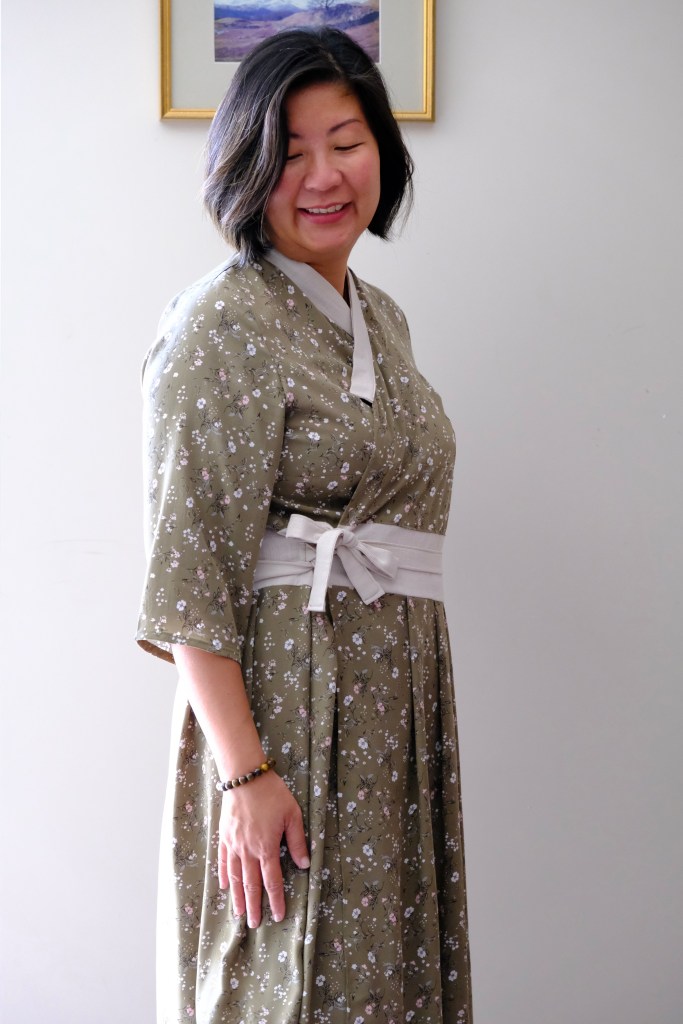
I thought that wearing a Hanbok Dress would be like wearing any other dress but there is a big difference in the way the bodice sits. The high neckline means that there is never a chance for a gaping neckline. It makes it so comfortable to wear. Also, the skirt overlaps very well over the front so there’s little chance of exposure with a strong gust of wind.

Finally, the outer tie is secured over the waistband in the style of an obi belt (I’m sure there’s a Korean term for it which I haven’t yet found in my research). This is a flattering feature as it helps to define the waistline and helps to hold the weight of the skirt portion of the dress. Excitingly, there is also a way to tie the waist ties for a more relaxed fit.

The pattern includes an instruction booklet and a layered PDF pattern which is standard for most patterns however, this pattern has the added bonus of video sewalongs. The pattern is geared towards a confident beginner and an intermediate sewer. The instruction booklet is quite concise and does not have illustrations, but it would be fine to follow if you have enough sewing experience. Sewing Therapy is a YouTube Channel with lots of sewing content and the videos are high quality. Sara from Sewing Therapy has a background as a sewing instructor, and I’ve referenced many of her videos when I’ve needed help with my sewing. 

It’s been a while since I’ve done a pattern test. This has been an enjoyable process. I’m always a bit stressed if given a deadline but it’s also fun to challenge myself once in a while. 

Thanks for reading and happy sewing!

X Em

Tropical Holiday Dresses

Bali is one of our favourite holiday destinations. It’s not just the warm climate that I enjoy but one of my grandmothers was born in Indonesia, so it has echoes of a homecoming. I enjoy the beautiful hospitality of the Balinese people and the chance to practice speaking Bahasa. I was planning to share some content during my stay but after a day of spa, eating and sea-side lounging, I was so relaxed that I didn’t pick up my phone until I was leaving. 

My lovely husband did manage a few snaps of some of the dresses I packed for the trip so I thought I would share those. Bali is tropical but August is dry season so it’s not too humid. There is always a sea breeze blowing with a temperature range between 24 degrees to 30 degrees which is so comfortable. I love packing dresses for holidays as it’s a great space saver. Also, with the right fabric and design, dresses can easily transition from day to evening wear.

Most worn was the Celestia Dress from Papercut Patterns. This dress was so versatile and so comfortable as it can be worn braless! I also love the roomy fit as there was a lot of local cuisine to enjoy like satay lilit, bebek betutu, urab and all often accompanied with a side of sambal matah.

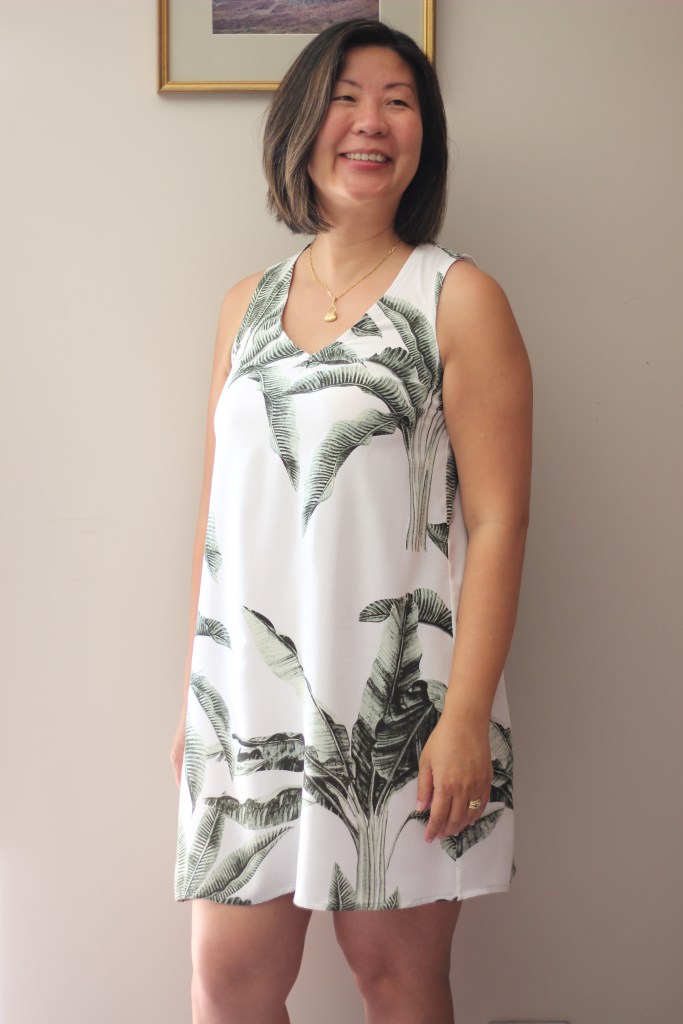
Tide Dress from Papercut Patterns was another dress I packed. I probably did not wear this dress as much as the others as I found that the linen was very crushed, and I didn’t have ironing facilities. Also, I find linen a bit scratchy when it’s newly made, and it needs a bit of seasoning with a few washes and wears to soften.

I did wear it for a very interesting Balinese Opera Show, Dramatari Arja. The whole drama was sung by a chorus of about 15 singers which had a very hypnotic effect with the narration by a solo performer singing an operatic soliloquy. Worth it if you visit Bali.

The most comfortable fabric was this Nani Iro cotton-silk blend from DIY district that I used for my Patternscout Studio’s Flora Dress. It was so soft and cool to wear. Just a little mistake I had made was sewing the straps too far out and I found that the strap kept falling down my shoulders. I’ll need to unpick and move the straps closer as I think my shoulders have a narrower profile. Apart from that, the design allows for the dress to be pulled over the head which was so easy to wear. 

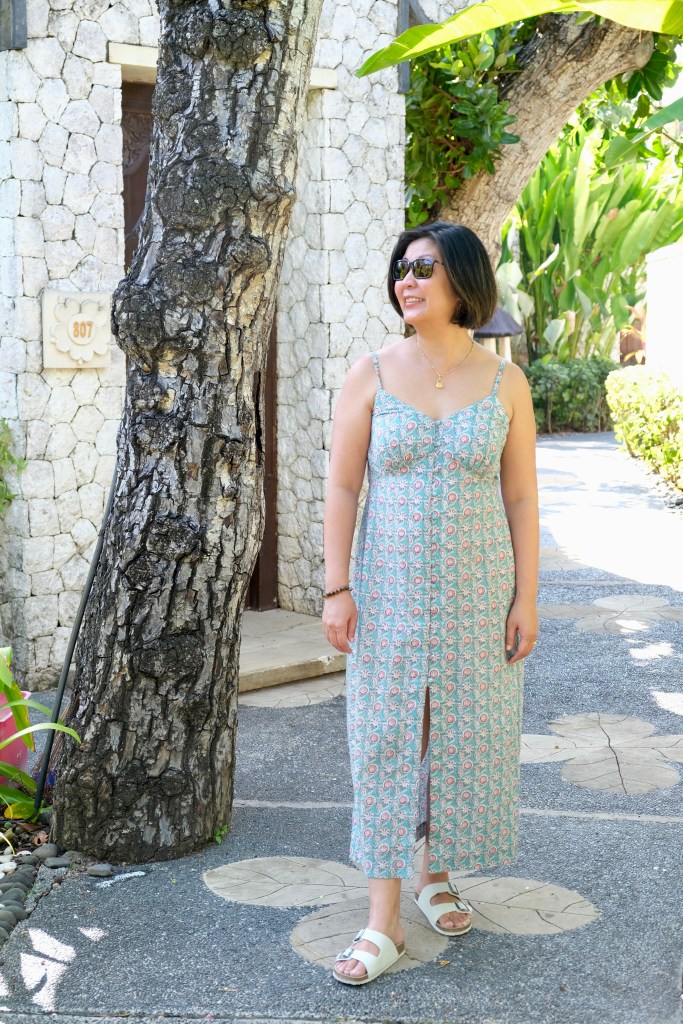
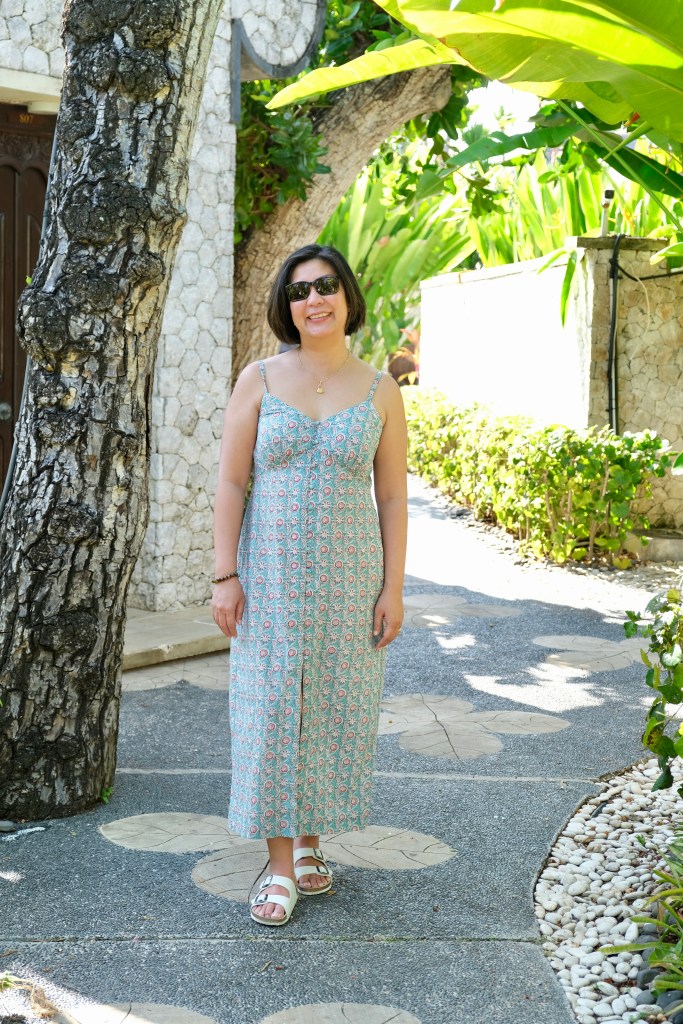
Lora Dress from True Bias was a real favourite for the sunny days.

It’s a perfect summer dress and matched the beautiful gardens!

It was an easy style to wear and kept me cool in the midday sun. It’s been a gloriously relaxing holiday with a lot of lounging and uninterrupted reading. Feeling refreshed and looking forward to a bit of summer sewing.

Thanks for reading and happy sewing!

X Em
Tide Dress

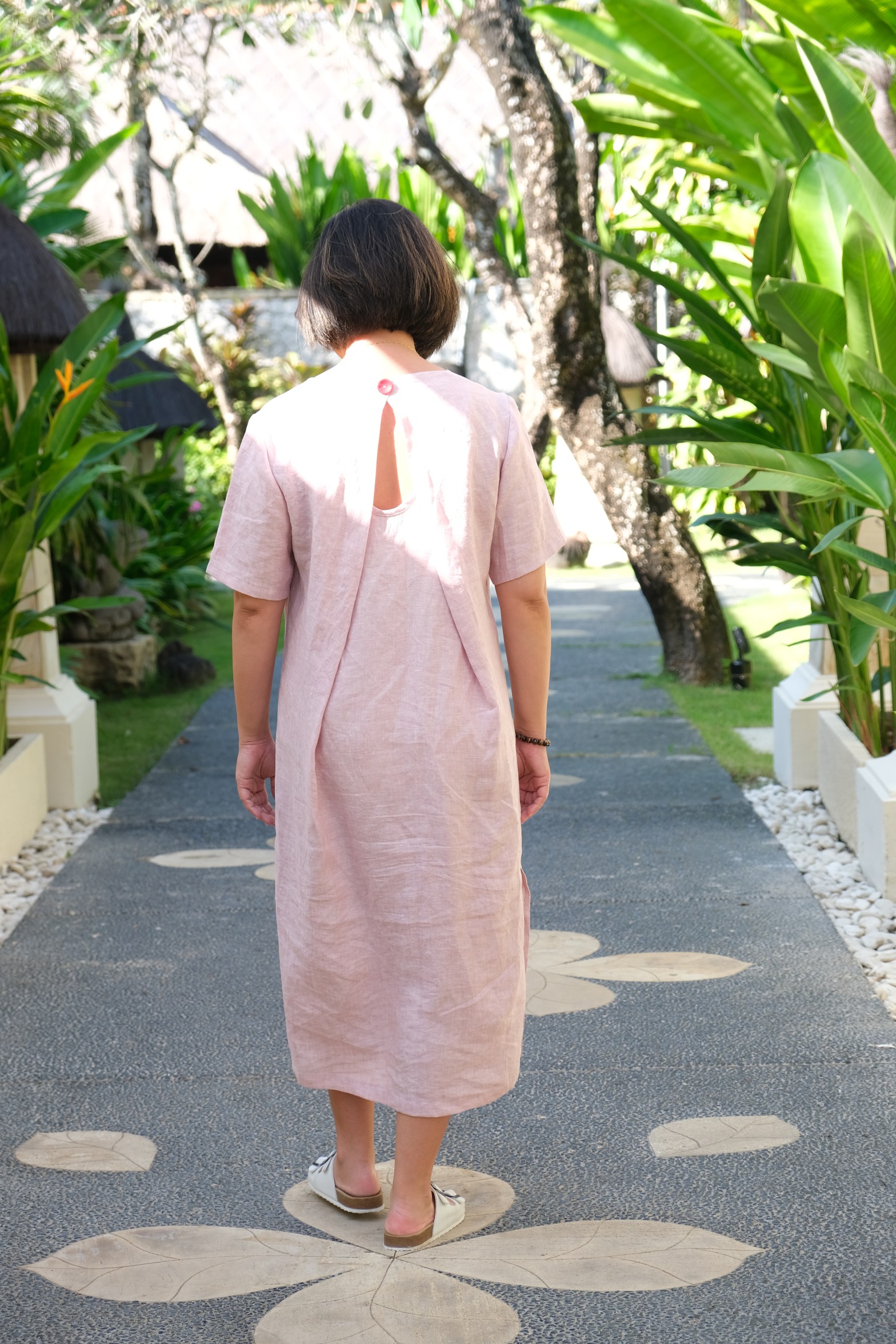
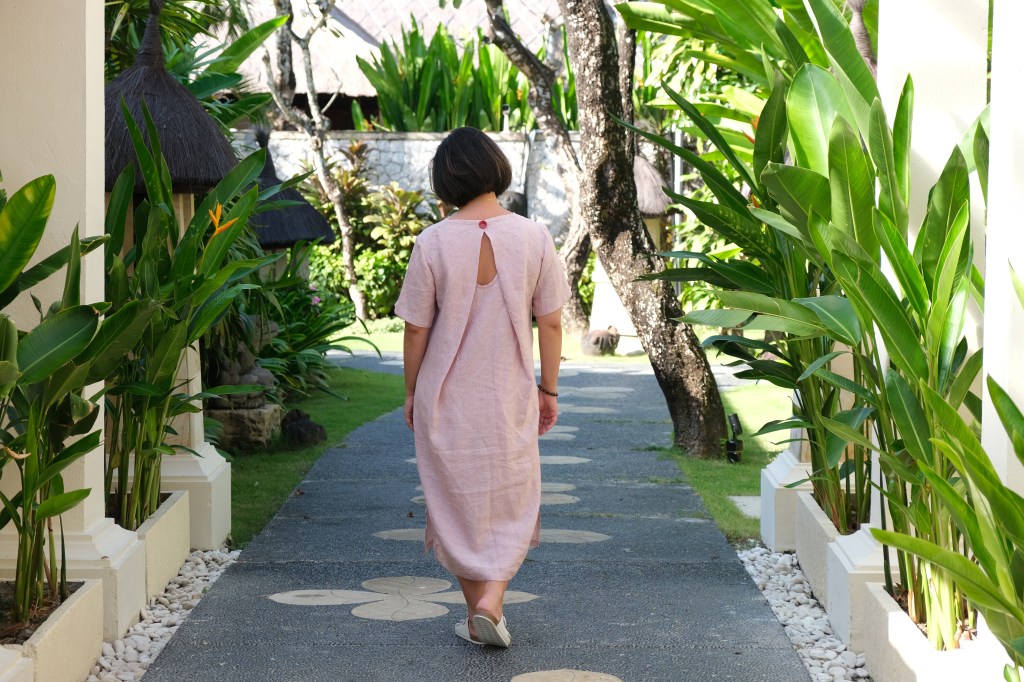
Another beautiful design from Papercut Patterns. The Tide Dress looks like a simple shift dress from the front, but my favourite feature is in the back of the dress with the keyhole neckline that is overlapped by long pleats joined by the button.

I’ve had this pattern in my stash since it’s release but haven’t had a chance to sew this up. It’s on the “Make Nine List” which is my attempt to plan my sewing at the start of the year. Usually, the list consists of makes that gives me an added skill or has a feature that intrigues me like the back of the Tide Dress. I love the shape of the dress and it really fits into the style of my wardrobe.

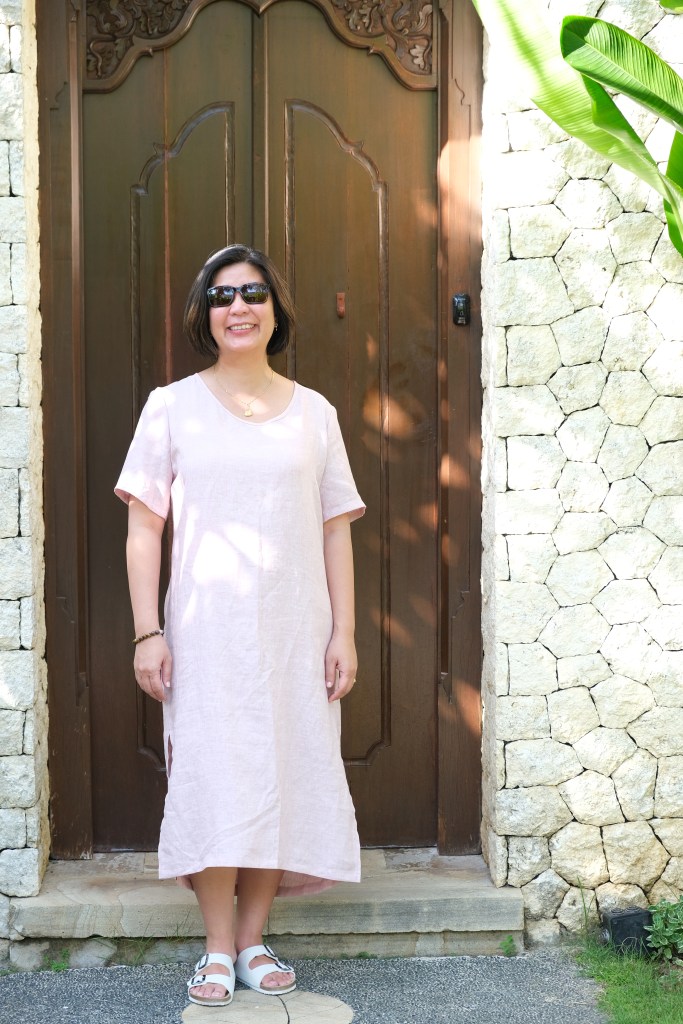
The sizing of the dress is quite flexible. My measurements (37B: 33W: 38H) sit between the size 4 and size 5. Looking at the finished garment measurements, I felt secure that I could sew the size 4 without needing to grade as there is a lot of ease in the waist and hip so I could base my dress on my bust measurements. The dress variation stops about mid-calf in length with slits along the side seams. 

When I was selecting fabric for this sew, I was hoping to use a piece of check linen that I’d had in my stash from a time when Megan Nielsen still had her shop open. I had bought two meters of this beautiful fabric and was waiting for a pattern like this to match it with. Unfortunately, even though the fabric is a wide 150cm in width, I still did not have enough of it because the back piece of the pattern requires quite a bit of fabric. I tried every combination and played pattern piece Jenga for quite a while before succumbing to the fact that it just wasn’t going to fit. Going back on the search for the right fabric, I came across this lightweight pink linen. I bought three meters this time and the pattern fitted without a hitch. 

Most Indy patterns come with greatly detailed pattern instructions but there’s just an added layer to Papercut Patterns which make them so interesting to sew. I love how there’s always a twist to the pattern which gives you the pleasure of working out a puzzle. In this case, it was the pleating for the back of the dress. It felt like I was folding a bit of origami and as I was following the instructions, my mind was uncertain about the outcome but the surprise of the reveal hits you at completion! I love that element of surprise in a pattern. The other element that I appreciate in Indy patterns is the cultivation of learning. With this pattern, I learned a different way of attaching a sleeve. I’m used to sewing my sleeve with the sleeve piece top side, but the instructions explained that stitching with the sleeve on the underside will allow the differential feed to work in any ease on the sleeve. It was so much easier and faster too.

It’s still winter here in the Southern Hemisphere but I’m adding this dress to my holiday capsule which is coming up. It’s going to be a staple in summer too!

Thanks for reading and happy sewing!

X Em
Milla Dress

Featuring Cotton Lawn from DIY District

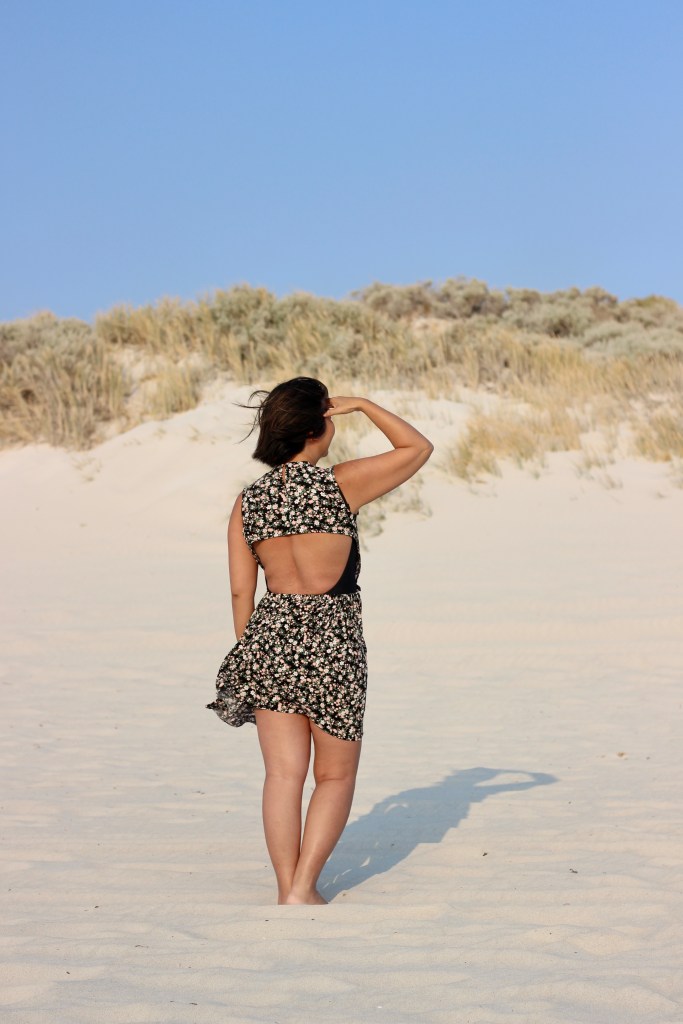
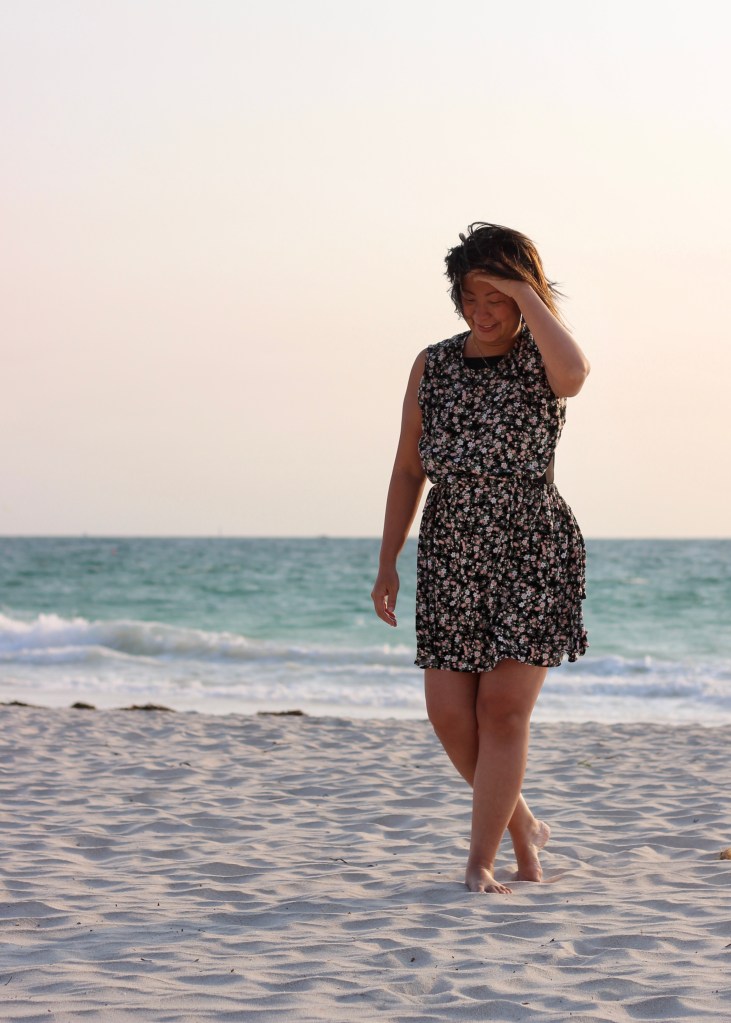
The bohemian style of the Milla Dress from Slow Morning Studios caught my eye with the interestingly lined bodice panel surrounded by gathered sleeves and skirt pieces. It’s honestly the biggest sleeves I’ve ever sewn. This is a pull-over-your-head dress, so no zips or buttons needed. I’ve used the beautiful floral liberty-style cotton lawn sent to me by DIY District and I’m so happy with the combination. The cotton lawn is a non-stretch lightweight woven which suits this pattern. In fact, with the size of those sleeves and the amount of gathering, I would choose an even lighter fabric next time but for this make, I’m love the vintage vibes with this lovely liberty design.

The pattern comes with simple instructions for construction. I like that there is some assumed knowledge in the instructions. Nothing important is left out and all the illustrations are clear. This can be seen with the construction of the neckline. The neckline is not exactly a V-neck but has a V-keyhole feature and there is an option to add ties which I’ve done. The instructions are to match the bodice outer shell to the lining and then to sew and turn inside out to finish. The assumed knowledge is the sewing into a V-neck. The added instructions would be to mark the midline, then baste the seamline to the mark on both sides to the point of the V. This will act as a stitching guide for the neck seamline. Once stitch, it’s important to cut into the V stopping at the stitch line then trim to the point of the V. I love how so much detail and technique it can take to make something like a V-neck look sharp. If you don’t sew, you never appreciate the skill and knowledge it takes to make something look so seamless!

The dress is a lovely loose fit. There’s obviously a lot of ease in the pattern so sizing is straightforward. My measurements of 37-inch bust, 33-inch waist and 38-inch hips fit between the size38 and size 40 so I made the size 38. I’m comfortable with the fit. The pattern comes as a dress but also a blouse and has long or shorter sleeve options. I’ve chosen the longer sleeve option which has elasticised sleeve hems.

Talking sleeves, I have to mention that I cut the sleeves crossgrain. Cross grain runs at a 90degree angle to the fabric. The width of the fabric was narrow at 110cm so the fullness of the gathered sleeve pattern would not fit. Cutting crossgrain was my only option. I think for sleeves, cutting crossgrain is fine as there isn’t much strain on the fabric but I would be wary of doing this on a pair of trousers as the fabric is weaker. If you tug at the fabric that is cut on a crosswise grain, it will have more “give” than one that is cut straight of grain.

The liberty style cotton lawn is an easy fabric to sew as it’s a stable woven fabric. I’ve used a 75/11 size machine needle. It would also be okay to sew with a universal needle. I have chosen to finish all the seams with overlocking which is nice and quick. In fact, the whole sewing process was quick. It’s a great project if you need a dress quickly as it can be done in an afternoon. I’m definitely squeezing another one in but next time I’m going to shorten it for a beach dress and make it with super lightweight fabric. With this heavier cotton lawn, I’m wearing it more as a winter dress and it’ll also be great for the in-between seasons. I would style it with a denim jacket and boots to make it cosy to wear.

Here are some Australian winter beach photos!

Thanks for reading and happy sewing!

X Em
Flora Dress

Featuring Nani IRO Rakuen silk and cotton in black

The Flora Dress is a new release from Pattern Scout. I was excited when I saw the release because she had detailed this dress on her YouTube channel last year. It was just made from rectangles of fabric with pleats. The simplicity of the dress is exactly the style that I love Pattern Scout patterns for. With the pattern release, the rectangle fabric concept is still there with a bit more refinement in the neckline but still retaining the wide tucks to fit the bodice.

The dress is made for lightweight woven fabrics that do not have any stretch. It was so lucky that I had the Nani IRO Rakuen fabric from DIY District. This fabric is a blend of silk and cotton with a composition of 70 percent cotton and 30 percent silk. It’s beautifully soft and lightweight at approximately 129gsm (a bit under 5oz). “Rakuen” translates to “paradise” which is depicted by the flowers and birds in a garden in what the description describes as a black background but, I would say that it’s more of a midnight blue background. I’m not disappointed as I prefer this colour.

Construction begins with sewing these pleats or tucks in the front and back pieces. It was a very satisfying exercise once you get into the rhythm of matching the notches of the tucks, folding, and marking the lines for the length of the tucks, sewing, and pressing the tucks and then repeating the whole process until the fabric was shaped into a fitted bodice that flared out into a flowy skirt. I guess the process reminds me of origami which is quite meditative and rhythmic when forming the shapes with the process of folding. It also requires the accuracy of origami, so I made sure that I measured the distance of the top and bottom of each tuck.

My sizing fell between the size 12 and 14 with a full bust B Cup. I did a toile of the size 12 because looking at the final measurements, there is a fair amount of ease in the waist and hips. I prioritised the bust measurements in choosing my size which worked out perfectly. To make the toile, I cut the tank top pattern pieces only which saves fabric. I used some of the remnant cotton lawn pieces from various previous makes. When making a toile, I find it’s important to use similar fabric. I’ve learnt this the hard way in the past!

Sewing with the beautiful Nani IRO cotton/silk fabric was lovely. Again, due to the fine nature of this fabric, I sewed with a 75/11 needle to make sure the fabric wouldn’t catch when sewn. I also pre-washed my fabric with an organic detergent (no enzymes) in a cold wash and air dried it. I remember shrinking some rayon once because I thought I would cheat and skip the pre-washing. Bad mistake! It shrunk so significantly that I couldn’t wear the top. That was in my first year of sewing and I’ve not made that mistake again. The other tip I can give regarding sewing with this fabric is to be careful when pinning the fabric. I used my quilters clips at times rather than making holes with my pins. I need to invest in some finer pins like what they use for bridal dressmaking, and I need to sort the blunt pins from the pincushion.

Amazingly, I did not use my overlocker in this make. Pattern Scout is great for their instructions for French seams. I decided to follow those instructions and I’m getting more skilled using French seams. It’s a satisfyingly neat finish. The neckline is finished with bias tape which there are also great instructions if you want to make your own. I used some pre-made black bias tape which saved me a bit of time and fabric. 

As you can see from the photos, I’ve sewn the long midi version of the dress with wide straps, and I left out the pockets. I know everybody loves pockets but with the finer fabric, I did not want to risk the outline of pockets and to be honest, I never use pockets in a dress because I’ll always have a bag. It’s a great inclusion in a pattern but I decided to skip it which made the construction even easier. The last thing to point out is the side slits of the dress. Slits are an important inclusion if you want to stride out or ascend stairs with a natural gait!

The Nani IRO fabric is another beautiful gift from DIY Fabric. This is another item sewn for my holiday capsule. I’m looking forward to wearing the beautifully soft and breezy fabric in the heat. It will be good for the evenings where I’ll need something a bit dressier for dinner but will remain cool to wear. There is also a light sheen from the silk in the fabric which probably hasn’t been captured in the photos. It gives the dress a luxurious quality and feels amazing. I can’t say enough how beautiful this fabric is to sew and wear.

Thanks for reading and happy sewing!

X Em

Helmi Blouse II

Featuring Nani IRO Lei Nani Organic Cotton Lawn Fabric from DIY District

When Diep from DIY District Fabric reached out regarding their online fabric store based in Kyoto, Japan, it was hard to choose only a few pieces with the wide selection of high-quality premium fabrics on offer. This beautiful Nani IRO Lei Nani Organic Cotton fabric in red was kindly gifted from DIY District in exchange for an honest review. It is made from one hundred percent organic cotton and is beautifully sheer and lightweight being around 100gsm (3.5oz) which made it perfect for another Helmi Blouse. I was drawn to the vibrant red of this cotton lawn. The fabric reminds me of a watercolour painting with a red background and a random distribution of blossoms in white and a hint of shimmery silver through the blossoms.

I had made the peter pan collar version with ¾ sleeves previously in a lightweight muslin fabric. This time I’m sewing the full sleeved version featuring ruffles along the shoulder seams and a stand collar. I thought I would focus my blog on sewing with this lovely fabric.

As mentioned, this fabric is 100 % organic cotton, so my usual procedure is to overlock the two cut ends of the fabric before washing. To avoid shrinking the cotton, I made sure to only use the cold wash with an organic detergent. I then air dried the fabric and once dry, I ironed it with a medium heat iron. Impressively, there was no loss of colour and the fabric has kept it’s shape well after washing.

Moving on, I prepared my machine by threading a matching red cotton thread. Due to the fineness of the fabric, I changed my needle to a 75/11 needle which is great for lightweight fabrics like cotton voile, silk, synthetics, Lycra, and Spandex. It’s always nice to start with a fresh needle with a new make which ensures there’s little chance of the fabric snagging. 

The Helmi Blouse requires about 2.6m/2.9yards of a fabric measuring 114cm/44inch in width. Now, here, it’s important to take note that the Nani IRO Lei Nani Organic Cotton Lawn Red has quite a wide selvedge which means that the pattern measured only 99cm which is narrower than the 110cm mentioned in the description. Luckily, I was sent enough of this gorgeous fabric with a bit to spare.

Instructions of the Helmi Blouse are great because it covers a variety of fabric types including sheer fabrics like finishing with French Seams. Testing the fabric, it also stood up well to overlocking, but I preferred the French seams with the finer fabric. I’ve made the size 36 with the medium bust as my measurements are 35-inch High Bust, 37.5-inch Full Bust, 33-inch Waist, 38-inch Hips and it’s a comfortable fit without any modifications needed.

This time, I used the keyhole neckline finished with binding and included the ties rather than a button closure. I made the binding from the same fabric by cutting a 2cm strip on the bias. I found it easier to pre-press the bias strip, first in half then inwards by half to the midline. Using the pressed line as a guide, the bias strip was sewn to the keyhole opening. It was easy with the pre-pressed line to fold over and finish the binding. I also made sure I reduced the stitch length to 1.8 to sew around the curved keyhole. The rest of the sew went pleasantly with everything fitting into place.

This Nani IRO lightweight cotton lawn is incredibly smooth and untextured compared to other cottons that I’ve worn. It’s very breathable but at the same time has a crisp finish. This will be great to wear in spring and summer. In fact, I’m packing this for my tropical getaway where it can get very hot and humid. When I first received this fabric, I thought it might have been a silk blend because of the slight sheen and silky-smooth feel of the fabric. I think this texture must be due to a very high thread count. I find the weave of this cotton lawn is tighter than the muslin fabric which I used for the first version of the Helmi. I hope this will mean that the blouse will be more durable without the thickness and rough texture of ordinary cotton.

Even though this fabric was gifted, I can say that I would purchase this fabric from DIY District without hesitation. The quality and the service were incredible. From the time of ordering to receiving the fabric was a matter of days and it was easy to reach out via their website which is in English as well as French. As mentioned, this fabric was gifted but all opinions remain my own.

Thanks for reading and happy sewing!

X Em
Selwyn Top

[This blog post contains an affiliate link, but all opinions remain my own.]

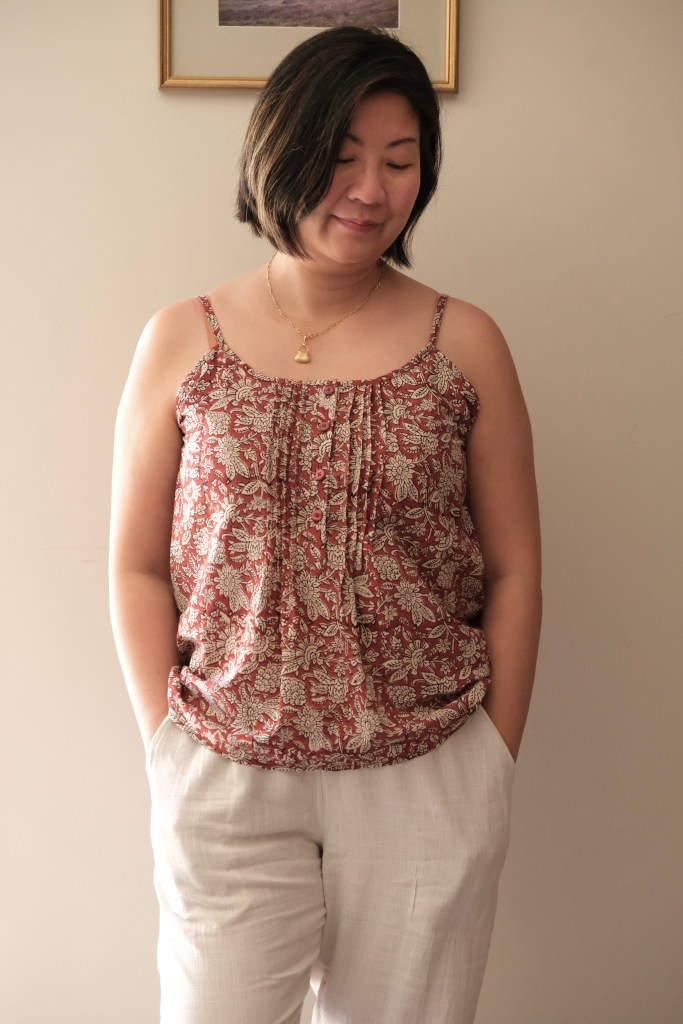
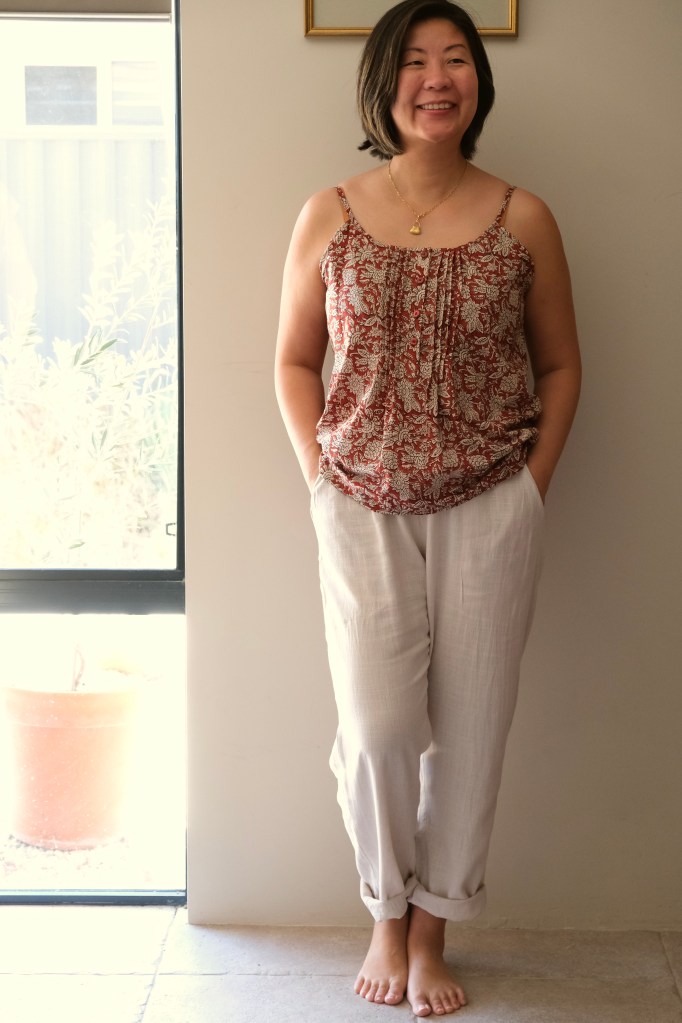
When I first started sewing, I searched for simple lines with few details and avoided zips and buttons when possible. Now as I rack up a few more hours of sewing, I find myself seeking those exact features in a pattern. The Selwyn Top which is the latest pattern from Cashmerette Club is full of beautiful details like pintucks, ruffles and a banded collar as well as the gape free button placket. 

This top is made for lightweight woven fabrics. I’ve used a textured white cotton voile. This is an addition to my tropical getaway capsule which I’m counting down to with the cold weather now setting in! The fabric is slightly sheer and very breathable so it’s great for humid weather. 

The sizing was easy. I didn’t use the sizing calculator this time, but it is a very handy tool to know where to start in the toiling process. Talking about toiling, I must confess that I did not toile this blouse. I’ve been sewing Cashmerette Club patterns now since February, so I felt confident about the sizing. I guess that is one of the many advantages of joining a club. Because all your patterns come from the same source, there is consistency in the fit and also there is familiarity in the pattern sizing. I sewed the blouse in a size 10 without any alterations, there is a good amount of ease in the pattern otherwise my usual alterations would have been to grade the size 10 bodice to a size 14 waist with a 1-inch small bust adjustment. I’m happy with the size 10 and I’ll be making it in the same size in the future.

Cashmerette instructions for construction are of a very high standard. I have truly found that my fitting skills have improved since joining the club. There are a lot of handy resources that I’ve accessed on the club as well as the lovely tips from other members. I have been given a discount link to share with my sewing community which I will share below if you’re considering joining. 

Overall, this is a make I’ve relished from start to finish. Even better, it’s a comfortable wear. The one detail I varied was that I left off the button in the collar band. Only because I know that I would never use it and I might even wear it with the first button undone. I also wanted to talk about button installation. I’m not sure if it’s just my machine but I always find the top buttonhole a pain to sew. I think my machine is extremely sensitive to a change in fabric thickness and it tends to get stuck. If you’ve had the same issue, my solution was to turn the blouse around so that the collar is facing you and this gets it out of the way and evens up the presser foot. My first buttonhole is not the best so don’t look too closely!

As I have disclosed in previous posts, Cashmerette Club membership was kindly gifted to me in exchange for photography of three previous club monthly patterns. I’ve been a very happy club member so I was happy that Cashmerette has set up this discount link for my readers. Feel free to use it if you are considering joining. This is an affiliate link which means that I will make a small amount from a purchase which helps support my blog. See information below from Cashmerette regarding the offer.

Thanks for reading and happy sewing!

X Em

The All Access level of Cashmerette Club is 25% off during Cashmerette’s June sale, which runs June 12th through June 19th. The discount is applied automatically, so no coupon code is needed for that.

And if you sign up during the June sale with my special link, you can get 25% off All Access AND a free regular Cashmerette PDF pattern of your choice. Here’s how it works:

  1. Go to cashmerette.com/emsewhappy and add the free gift to your cart
  2. Then go to cashmerette.com/club and add All Access to your cart
  3. Complete the checkout and within a few minutes, you’ll receive an email with a coupon code that you can use for a free PDF pattern

This offer is only available for new All Access members and only through June 19, 2023.

Lora Dress

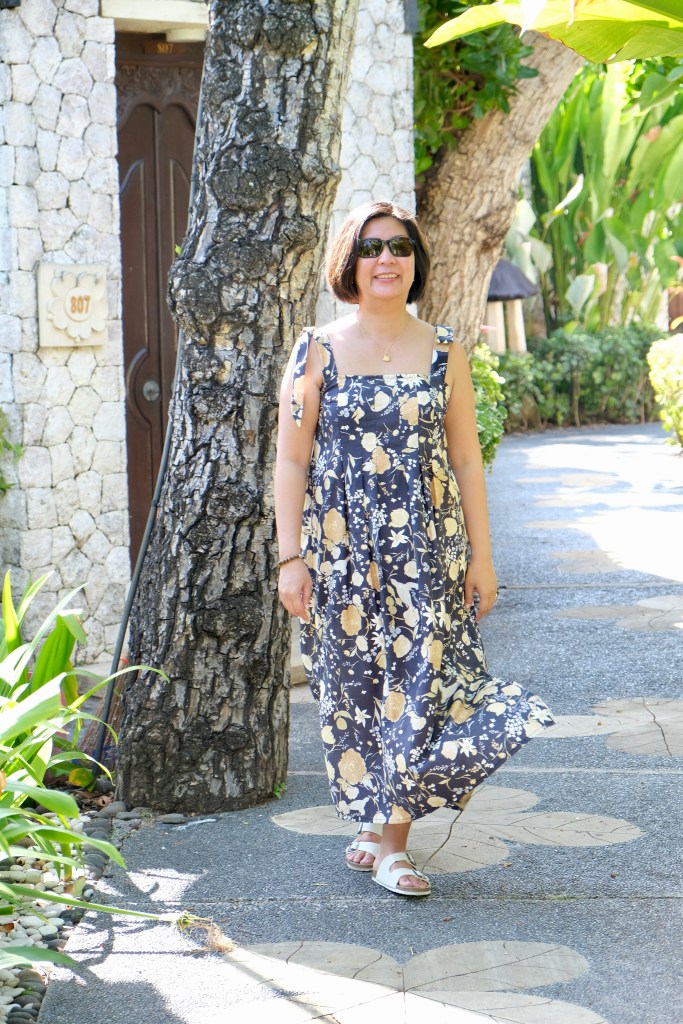
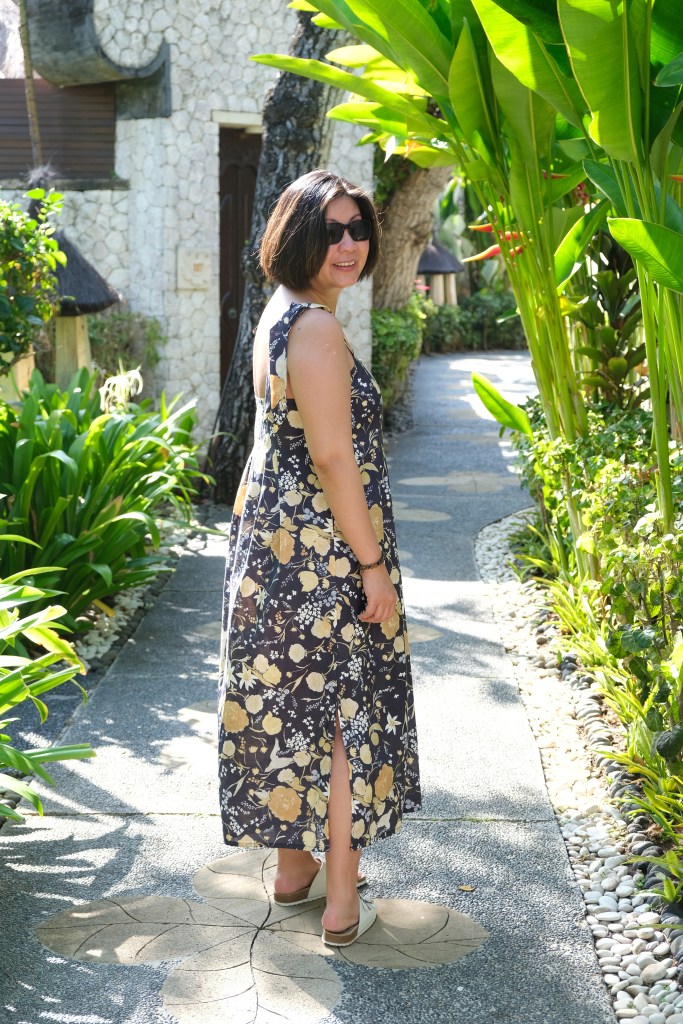
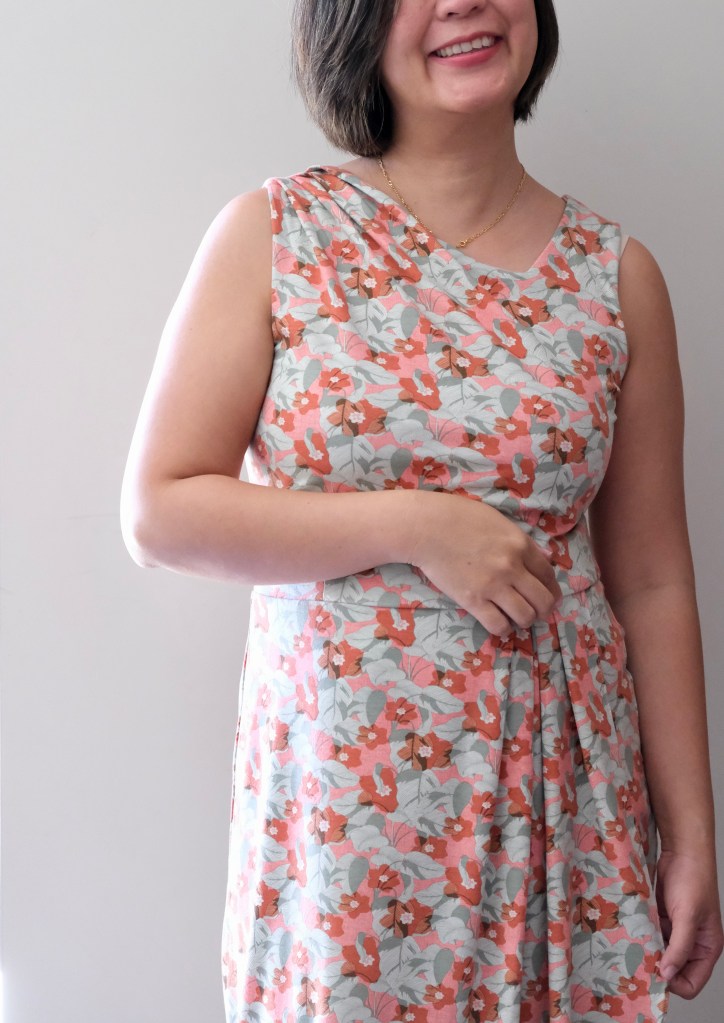
Even though we are approaching cold weather here in the Southern Hemisphere, I really appreciate this new dress pattern from True Bias because we are planning a tropical getaway at the end of winter. The Lora Dress from True Bias * is a really flattering empire waist dress and can be sewn in two lengths. I’ve chosen the longer length here but I’m also keen to sew the knee length version. The dress has buttons all the way down the centre front which stops just above the knees. My version of the dress has the spaghetti straps but there is also a full sleeved version. All views are lined at the bodice which have underbust gathers.

Before cutting into my fabric, I toiled the bodice up to the hips because this dress is fitted through the waist and hip area and the bodice should finish snugly under the bust area. My measurements of 35-inch high bust, 37-inch full bust, 33-inch waist and 40-inch hips sat between the size 10 and size 12 on the Size Chart. I was also considering if I needed a small bust adjustment (SBA) as the cup size for the dress is a C-Cup which is a three-inch difference between the high bust and full bust. I ended up adjusting the bodice from a size 10 to a size 12 waist/skirt and shortened the spaghetti straps by 1 inch. I didn’t end up with an SBA as I felt the cups sat comfortably.

The pattern recommends light to medium woven fabric. I was grateful to be able to have a good chat to Kelli who is the lovely Director of True Bias. We discussed how the gathers of the underbust meant that the fabric would need to be lightweight like under 5oz, but it was also good to choose a fabric that had some structure like a linen or cotton. If choosing a rayon, then the dress lining would need to have some stabilising qualities like a cotton lawn as rayon can “grow” and stretch out. I had wondered about Tencel twill as well especially for the sleeved version but thought that Tencel can be quite thick and heavy which might affect the gathers. In the end, I found the perfect Hand-block/Batik Fabric which is lightweight. It’s 100 percent cotton which will be so breathable and easy to wear in hot weather. I’ve chosen to line the bodice with white muslin fabric which will not interrupt any of the gathers under the bust.

This pattern also calls for 12 shank buttons as there are twelve loop buttons along the centre front. I had made buttons before in a previous project, so I was keen to try again. In my previous attempt, I had a very easy “press-in” technique version, but I was disappointed that the cap kept falling off whenever I used the buttons so this time, I searched for a better kit to use. I found a “sewn-in” kit which I would highly recommend because the caps stay firmly in place once made. Of course, there are shank buttons that have been listed on the True Bias website or you can also use normal buttons which have been covered in a tutorial by True Bias.

I have sewn quite a few patterns from True Bias and the instructions are always logical and easy to follow. I also find that the techniques are educational, and I often refer back to True Bias patterns. Sewing and construction went very smoothly. I especially loved sewing the button loops and I also loved constructing the bodice and found it very satisfying to hand sew the bodice lining. It’s all the details that really make the pattern so unique.

Counting down now to enjoying this dress in the tropics! 

Thanks for reading and happy sewing!

X Em
*Full Disclosure, this was a Paid Collaboration for Instagram Posts with True Bias Patterns but all opinions remain my own. There was no expectation to write a Blog Post.

Hampden Dress

This was a jam-packed sewing experience! The Hampden dress is the newly released monthly pattern from Cashmerette Club*. I was so excited by the design because it would be my first princess-seam dress. It’s a lovely style of dress with the button placket which I soon found out was a faux placket so no gaping to worry about. It also has an elasticised back waistband which makes for the most comfortable sundress. 

Using the Cashmerette sizing calculator, I needed to sew and grade from a size 10 bodice to size 14 waist to size 12 hips. This is for my measurements of 35-inch high bust, 37-inch full bust, 33-inch waist and 40-inch hips. I would also need to make a 1-inch small bust adjustment because the pattern is made for c-cup upwards which usually accommodates a 3-inch difference between high bust and full bust. 

To begin with, I made a toile of the bodice but only adjusted the grading (size 10 bust to size 14 waist). I sewed this up and it did confirm that I needed to make a small bust adjustment (SBA) because there was excess fabric over the anterior portion of the bodice. This was where the fun began. I’ve never attempted an SBA before, so I looked at several tutorials. I found one that suited an adjustment for a princess seam which I will put in a different blog as it would take too long to describe here. I’ll be truthful and say that it did take me an afternoon to figure this part out, but it has been very rewarding to get the adjustment to the fit of the dress and now I’m able to transfer the knowledge to other patterns!

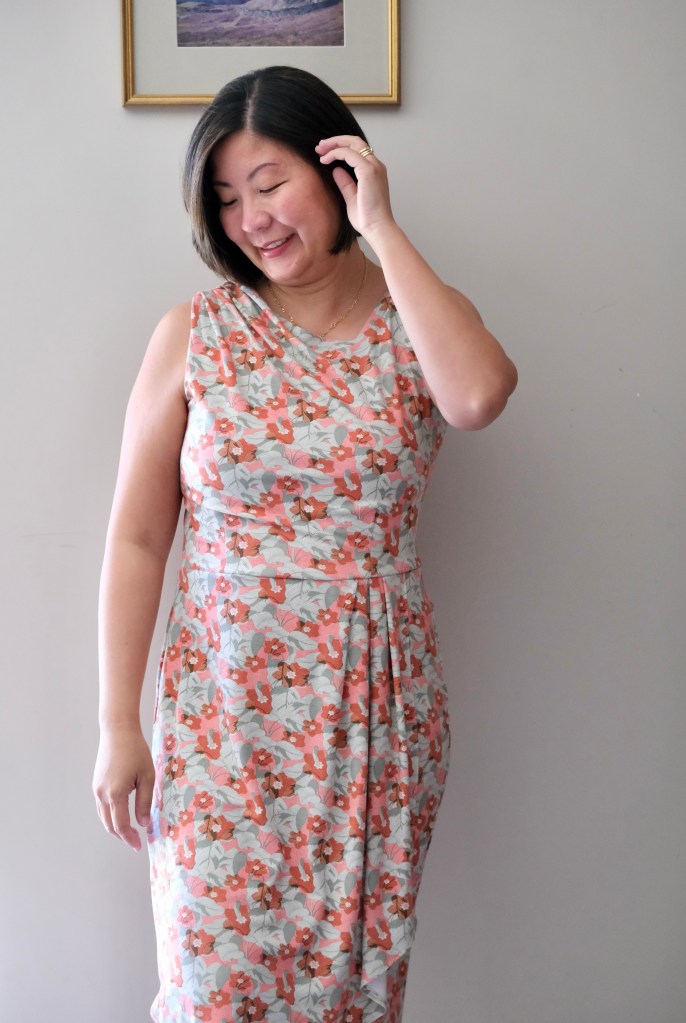
The pattern is for woven fabrics. I ended up making two dresses. I firstly made the straight out of the box version and then for a second version, I combined the Hampden Dress and the Holyoke Dress. For the first version, I used a coral pink lightweight linen fabric and for the second, a soft rayon fabric with a macrofloral pattern.

The pattern came together very fast once I had sorted out the fitting. It was a pleasure to sew which is another reason why I had decided to sew two versions. They are both beautiful dresses to wear and I feel so lucky that I was included in this collaboration and could sew this dress before anyone.

Upon reflection, there is one detail of the pattern that I could improve. If I were to make this dress again, I would lengthen the bodice by an inch. I had to take out that length when I made the SBA, and it didn’t occur to me to check the bodice length because everything matched up once I had done the SBA. This is an area that I could learn more in and hopefully with more experience, will be able to judge this better.

Thanks for reading and happy sewing!

X Em

*Cashmerette Club membership was gifted as part of the collaboration.

Helmi Blouse

When Forget Me Not patterns released the Helmi Blouse, I didn’t hesitate in getting the pattern. I’ve loved the return of the peter-pan collar. The blouse is slightly fitted and ends at the top of the hips. It’s easy to pull on over the head with the slit opening at the neckline. I’ve chosen to sew the three-quarter sleeve option.

Also, I’ve made this blouse in time for the sewing challenge #SewAprilBlouse23 which is hosted by Gabrielle @Cloth_Edit and Ruan @TheYorkshireSewGirl. This is a fun sewing challenge with lots of great prizes but the reason I love this challenge is I love seeing the beautiful blouses that everyone is sewing up and I find it good inspiration for my sewing.

The fabric I’ve used is a soft light brown muslin. I had thought to use it for lining when I bought it a while ago, but I love wearing the lightweight fabric so decided to use it for this blouse. This pattern is made for lightweight woven fabrics such as my muslin, but it can be sewn with sheerer fabrics. There are great instructions included in the pattern for this.

Currently, my sizing falls between the size 36 and size 38 with my measurements of 37-inch full bust, 33-inch waist and 38-inch hips. The pattern comes in three bust sizes and my measurements fell into the medium bust size. I decided to sew the size 36 without grading and the fit feels perfect.

I’ve never sewn a peter-pan collar before. I like the flat collar with its rounded corners. The collar is a golden classic and reminiscent of sweet and simple times. This version was an easy construction and is attached straight onto the bodice. The pattern has another option of collar with ruffles and a collar stand which I’d love to sew up in the future.

I made a slight mistake with the slit opening at the neckline. I wanted to sew the slit with a button closure at the collar, but I misunderstood the instructions and cut the opening too wide. If sewing this again, I would mark the opening but attach the facing before cutting the slit. As a result, I have a slightly odd-looking keyhole opening rather than the slit I was aiming for. Oh well! A good excuse to sew another one.

Thanks for reading and happy sewing!

X Em