Arcadia Dress

It’s always exciting to get onto the Sew to Grow testing team. Lindsey designs sewing patterns that are stylish and easy to wear for daily life. Among her many talents, she is also a sewing teacher so her patterns are always logically constructed and made to fit beautifully. I’ve been sewing her patterns from the start of my sewing journey and have learnt so much from them. 

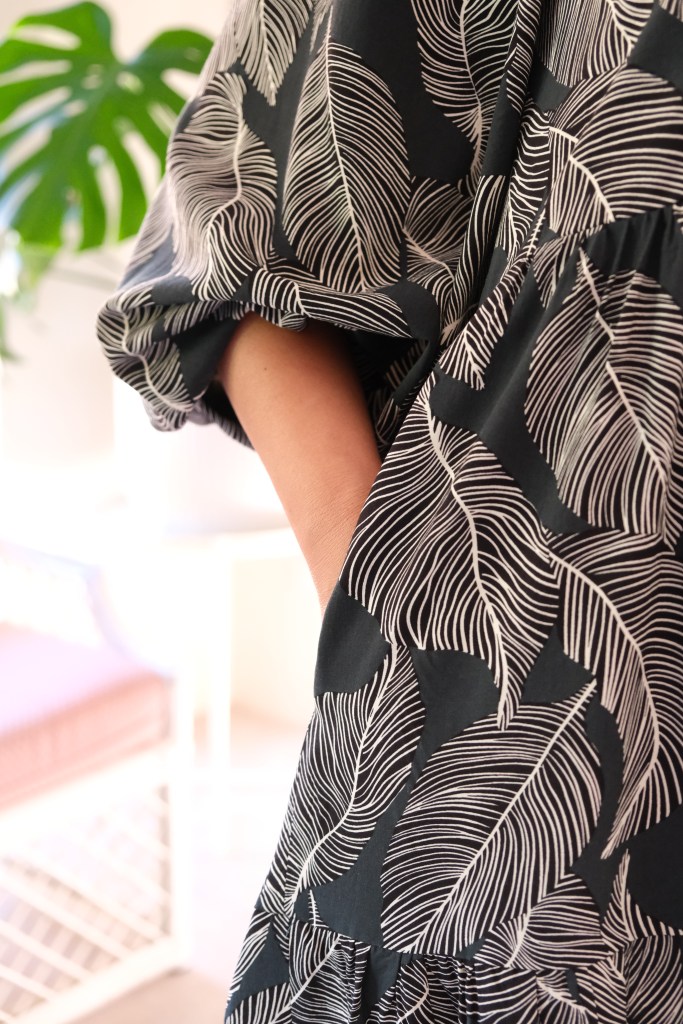
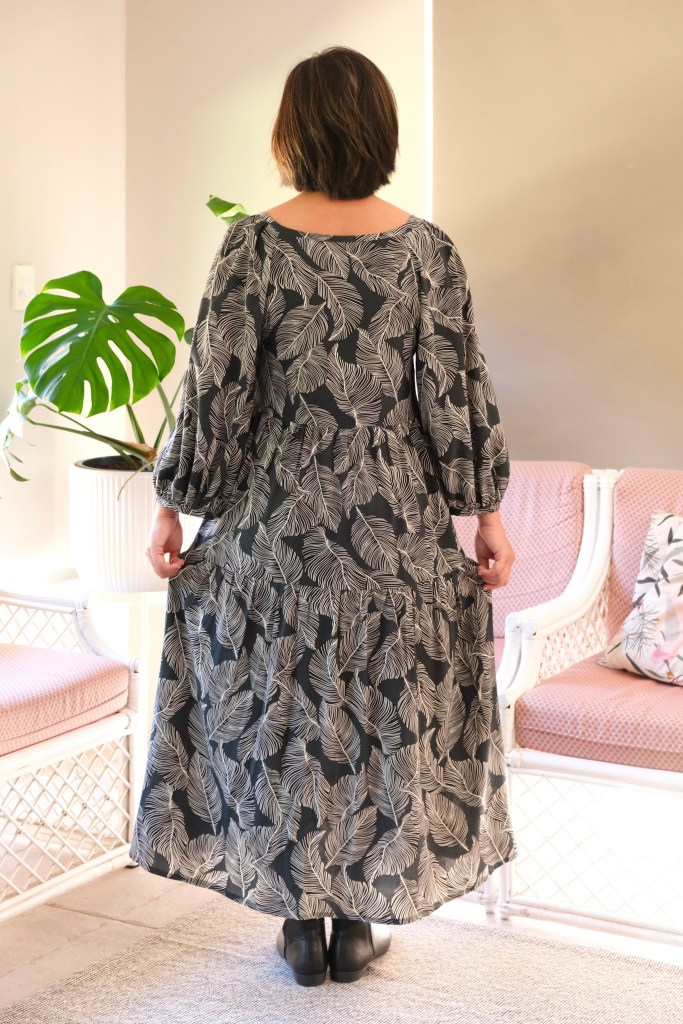
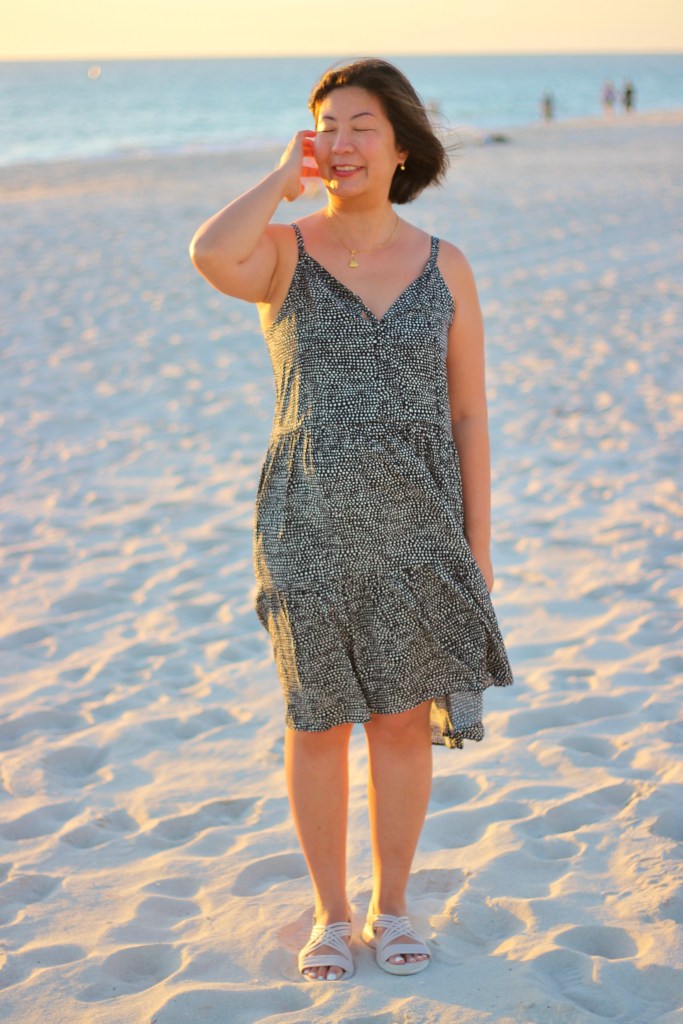
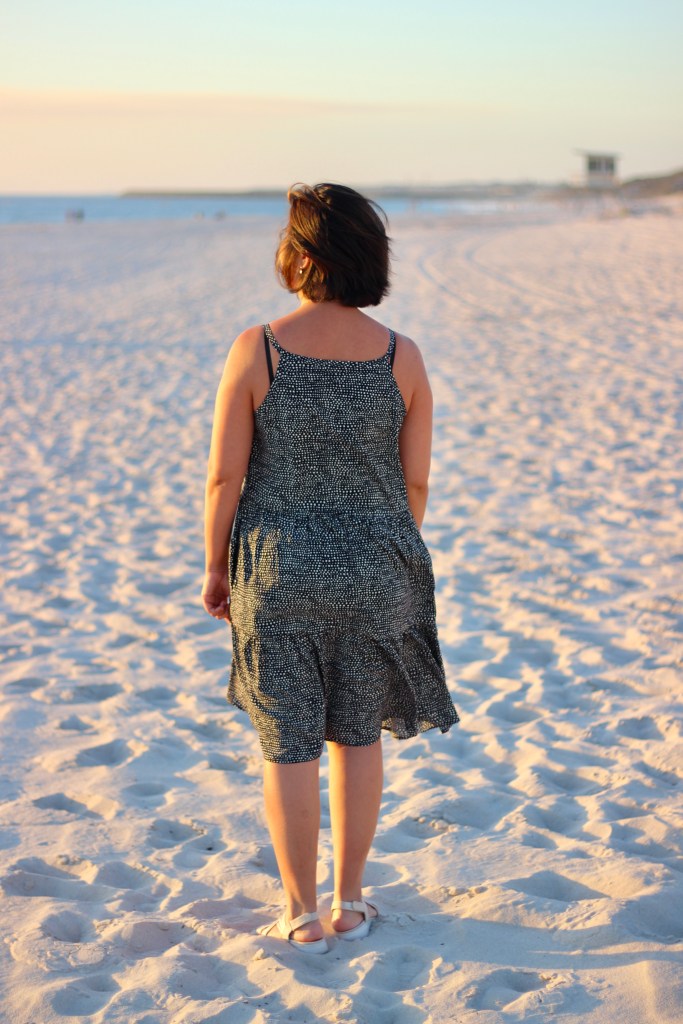
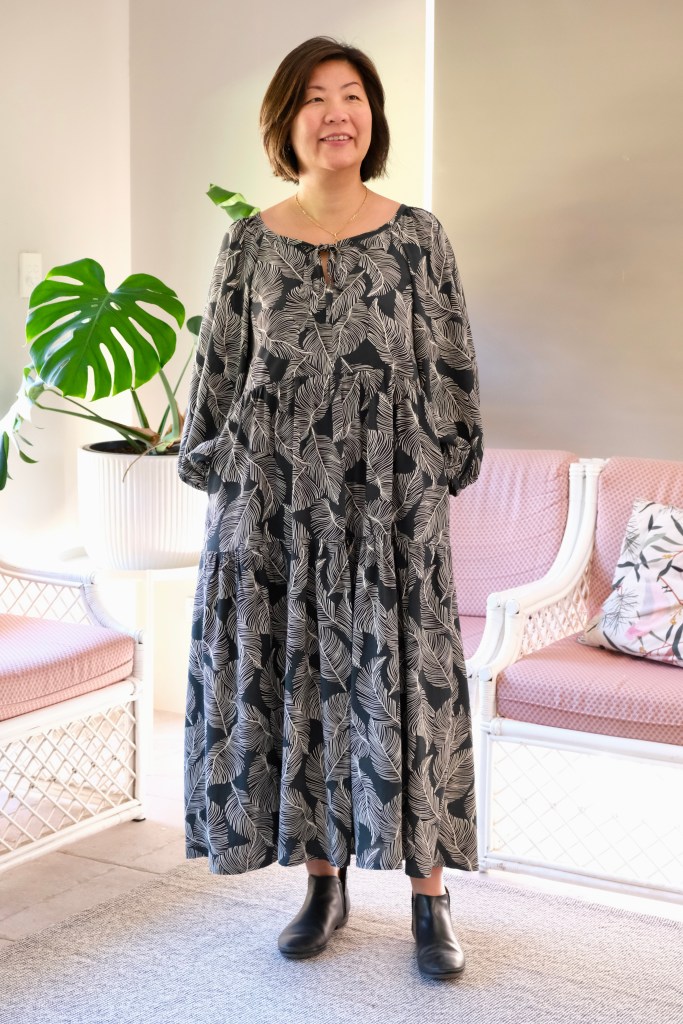
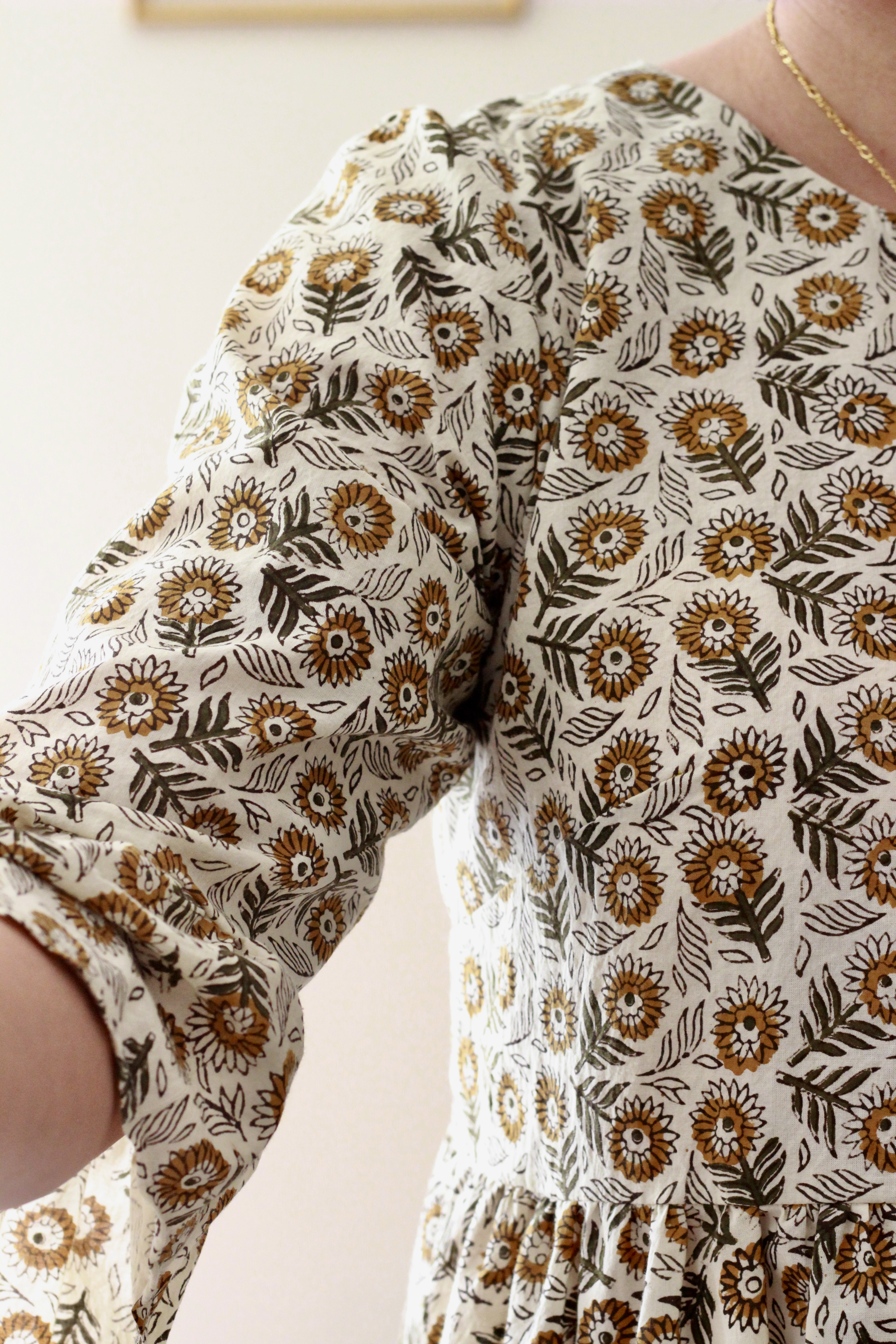
The Arcadia Dress is a versatile pattern that comes as a top and a dress. It can be sewn as a sleeveless or long-sleeved tiered dress with a front tie on a lined split V bodice. I made two versions, a sleeveless short version and a long-sleeved maxi version. I love the relaxed vibe of the pattern and it’s such a versatile pattern.
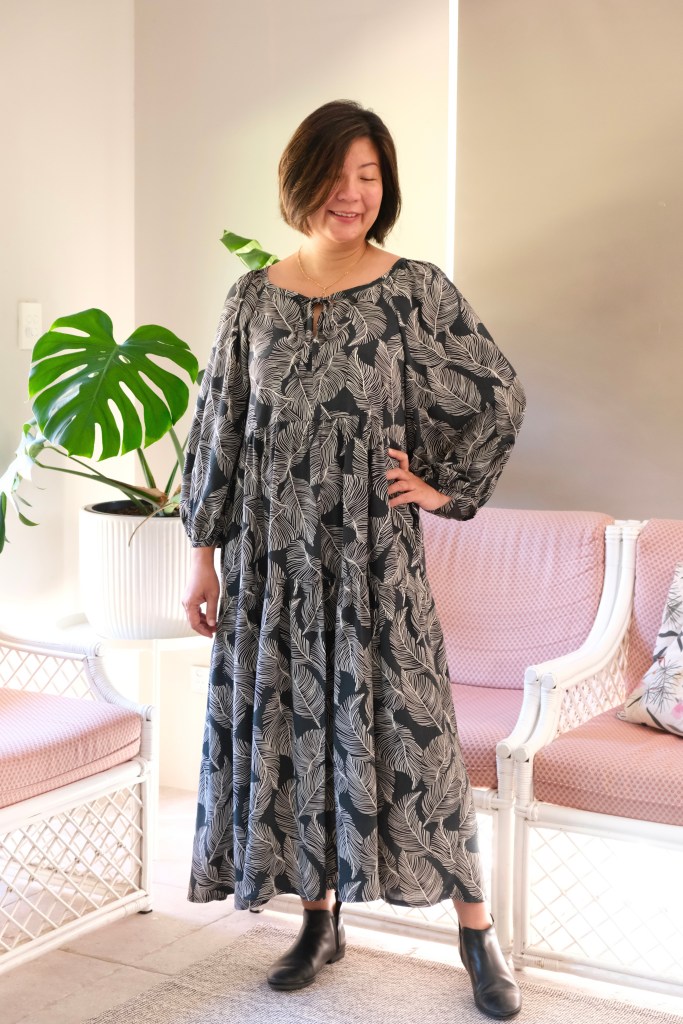
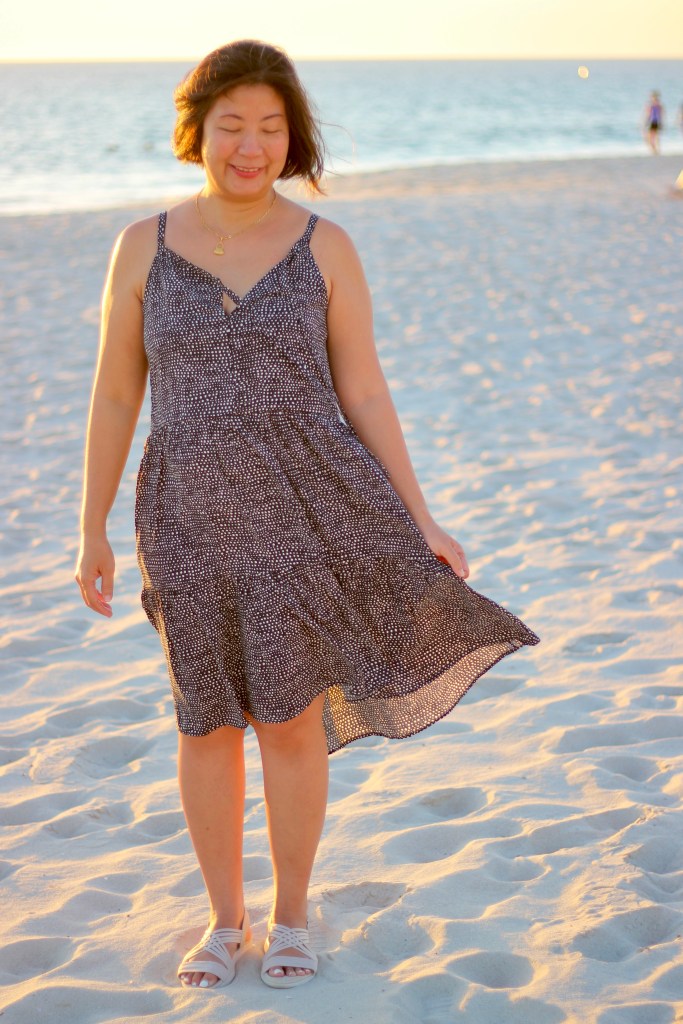
I sometimes find tiered dresses to be very oversized and worry about swimming in volumes of fabric, but the Arcadia Dress is sized to fit in a flattering way. My measurements of 38-inch bust, 33-inch waist and 40-inch hips fit into the size 12 and I found the pattern true to size. No modifications were made except for my maxi version. To achieve the maxi length, I doubled the width of the bottom tier. 

The sleeveless dress used about 2.5 meters of fabric and my maxi version required about 4 meters of fabric. Luckily, there was a good sale on rayon fabric at Spotlight! I decided on rayon because the pattern is made for woven fabrics, and I thought the patterns would be showcased best by something lightweight and billowy. I also generally find rayon to be so comfortable to wear in the Australian climate. I think my sleeveless version will get a lot of wear in summer, but my maxi dress will get worn all year round.
There are so many positives of the pattern. I’m often pulling up straps with my sloping shoulders so I’m always trying to modify straps to sit on my shoulders. Well, I think I’ve found the perfect strap design because I haven’t had to worry about that with my Arcadia Dress. My straps on the sleeveless version stay put because the straps join onto the neckline with a long length of bias binding, and they seem to sit perfectly without any chance or length for them to slip off the shoulder.

Another nice feature is the v-opening with the ties which eliminates need for zip or button instalments. It’s a great dress to slip over the head and go. The bodice is lined too which gives the dress a beautiful quality finish. It’s these little details that make sewing your own clothes so worthwhile.

I’ve loved seeing the other tester versions emerge and there’s been a few tops that have been made. I’d love to come back to this pattern in the future to make one. This will be added to my TNT (tried and true) patterns. Lindsey was such a pleasure to test for. It was nice help her bring this pattern to life.

Thanks for reading and happy sewing!

X Em

Ritual Dress

Featuring Fabric from the Devonstone Fashion Summer Abroad Collection by Lindsey Rae

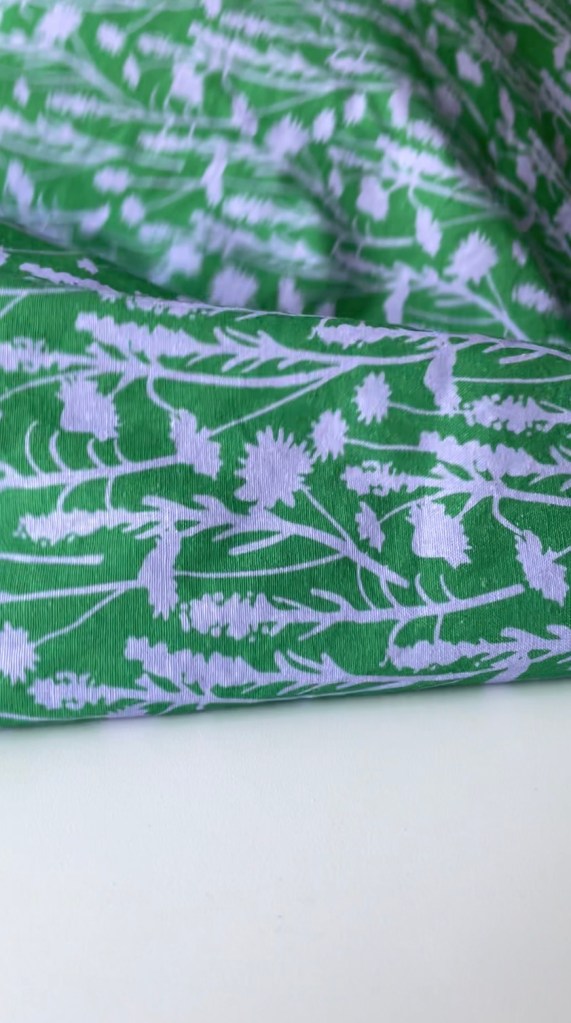
So excited to feature the latest fabric collection from the immensely talented Lindsey Rae @sewtogrow. It’s currently available for wholesale through Devonstone Fashion. It was hard to pick which design I wanted but I settled on the Cornwall Oceanside Print in a luxe linen cotton blend. It is fifty-five percent linen and forty-five percent cotton, 180-185 gsm and 145cm wide. The pattern is reminiscent of wildflower fields. I love the riot of colour in this collection. Best of all, it will also be available in a variety of substrates like rayon, poplin, and jersey to name a few.

Cornwall Oceanside Print

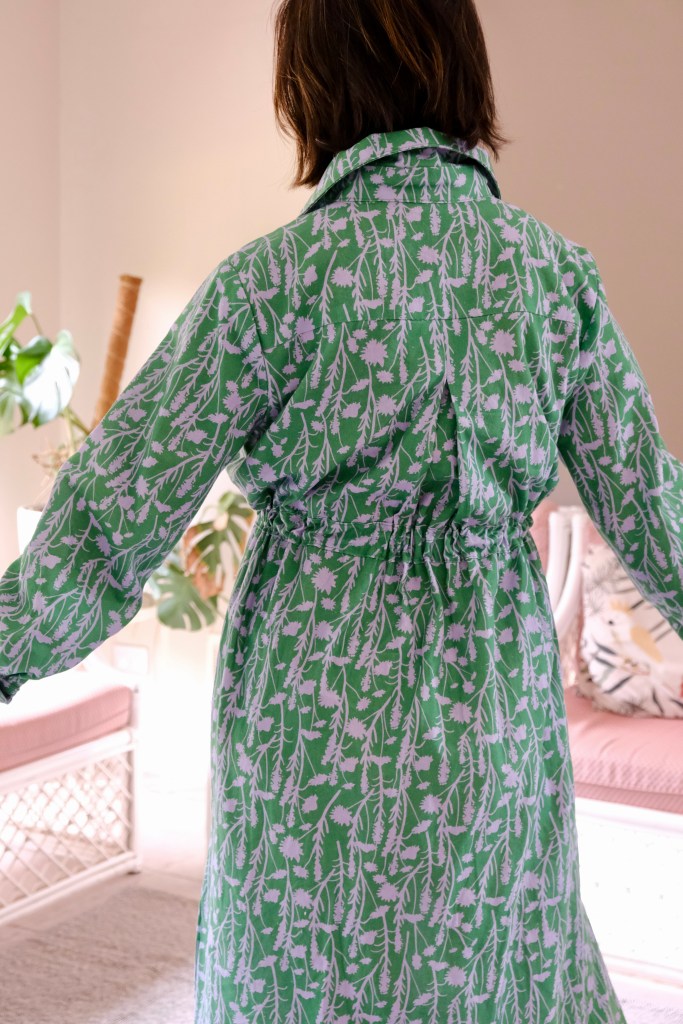
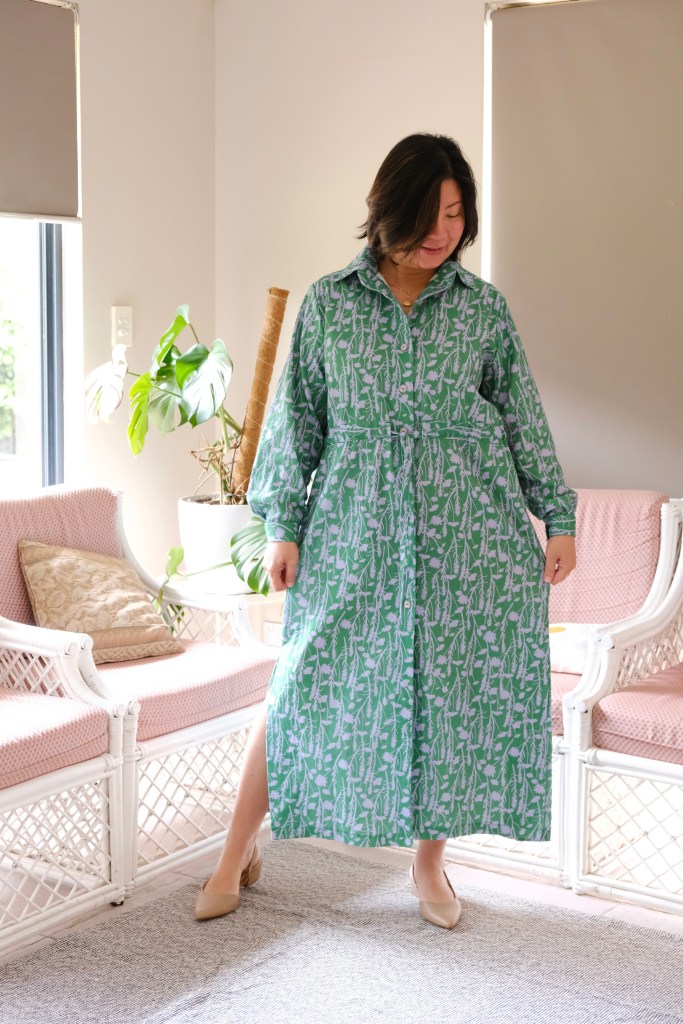
The pattern that immediately came to mind when I received the Cornwall Oceanside Print Linen was the Swimstyle Ritual Dress. I had bought this pattern last year but was waiting for the perfect fabric to match it. It’s basically a shirt dress but with the additional features of the drawstring waist casing in a maxi length. I haven’t had the opportunity to sew many collars and cuffs, so this was another consideration in my choice. The instructions for these are superb for entry level sewists.

As with any other sew, I washed the linen cotton on a cold cycle and popped it on the medium setting in the dryer. There was no noticeable shrinkage and no fading of the dye. I like how the addition of the cotton to the linen helps to reduce wrinkling and cuts down the time it takes to iron. I do appreciate that relaxed vibe that wrinkling in linen can give but I prefer to start wrinkle free and earn the wrinkles along the way.

Of course, I also checked my needle. I left it on the universal 90/14 gage needle that I had been using. I matched the fabric with the Gutermann CA 02776 thread. I’m not sure the colour of the print shows up in the photos, but the print consists of shadows of mauve flora on a background of green. 

The Ritual Dress has quite a lot of ease in the pattern sizing, so I chose my usual Size L for my measurements of 38-inch bust, 33-inch waist and 40-inch hips. I did not make any modifications. My height is 167cm. I felt the pattern was true to size and fitted comfortably. Perhaps the sleeves could have been shortened slightly but I wanted to have the full-length sleeve and a properly maxi dress. I guess I’m great at sewing summer outfits, but I really need to make items that will see me through the cooler weather. I think this dress fits the bill nicely.

The collar and cuff instructions were great if you lack experience in this area. It’s really made for novice level and can highly recommend it. The Summer Abroad linen cotton has been such a good quality fabric to sew with. It still has that slight stiffness that linen starts with so it feels a little bit course on the skin but that will soften with a few washes. I know that’s sometimes a concern with linen, but it really doesn’t take long for it to season to a soft and pliable garment.

Hopefully, the Summer Abroad collection will be available for purchase soon from your favourite fabric store! Currently, it’s available for wholesale through Devonstone Fashion. Keep your eyes out for it from the Sew To Grow newsletter.

Thanks for reading and happy sewing!

X Em
Lanti Swing Dress Again

I can’t believe it’s been almost two years ago when I was a tester for the release of this Sew to Grow Lanti Swing Dress pattern. I’ve always meant to come back and sew it again because I do wear the two that I’ve made a lot especially my flax-coloured version. I have really enjoyed coming back to make the pattern as I knew the modifications I wanted to make, and I was already familiar with the sizing. Also, the pattern pieces are already put together which meant I could get into the sewing part faster.

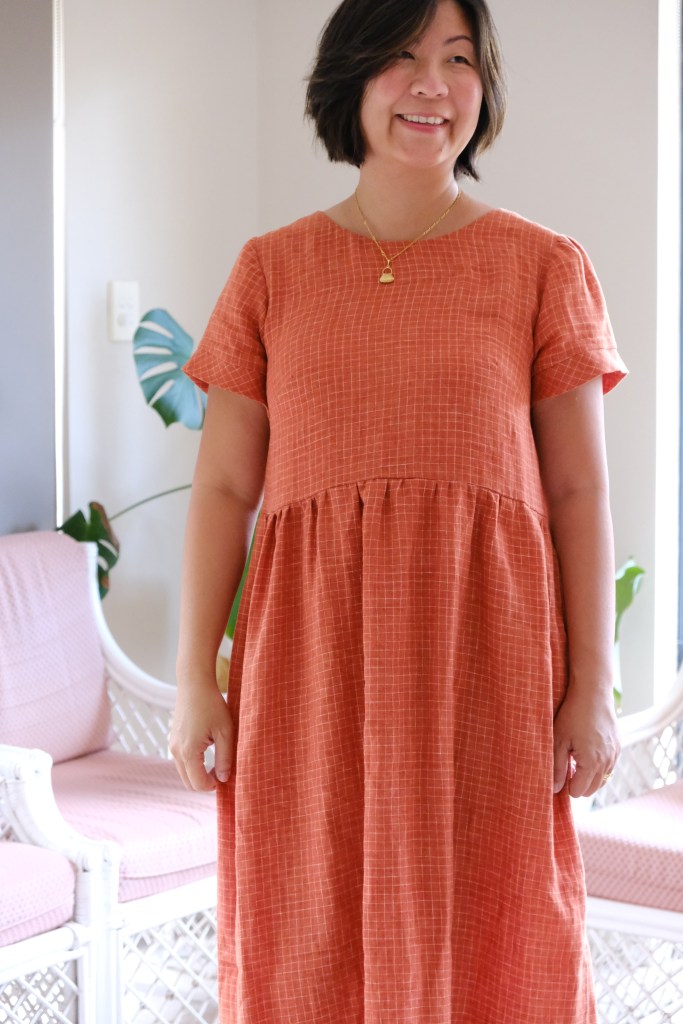
For this version of my Lanti, I wanted to use this Yarn Dyed Linen Grid Check which I bought from Megan Nielsen Patterns when she still had a shop. It’s such a beautiful quality linen that I have been hesitant to use it and also when you buy fabric ahead of time, you have to see if the pattern’s fabric requirements match your available fabric. I had 2 meters x 150cm available. The Lanti Dress comes as two versions, one is the smock style dress and the other is an A-line version. Initially, I thought I would take the opportunity to sew the A-line however, it would have wasted ¼ of the fabric. After looking to Pinterest for inspiration, I decided I wanted to make the smock style but add quite a lot of length to the skirt and to make it with short sleeves. 

The smock dress has an empire waist with a boxy bodice. I kept to the size 12 that I previously made for my measurements of 38-inch bust, 33-inch waist and 40-inch hips. I modified the pattern by lengthening the skirt to 30 inches and narrowing the width of the skirt by 4 inches. I wanted to make the dress a midi length and I needed to narrow the width because the linen had a bit of body to it. It probably sits between the light and medium weight gage. Another small modification was to swap a button and button loop closure for a tie closure.

The instructions and illustrations with Sew to Grow patterns are well set out and written. However, I found myself deviating and sewing the pattern from my own preferred construction. I think that is a natural progression as you gain experience. Small things like pocket construction, seam finishes or attaching facings can all be sewn in different ways with the same outcome. 

Needless to say, I’m happy with the outcome. My new Lanti Swing Dress will be easy to layer with leggings or with a cardigan thrown over. I was also experimenting with shoes. Chunky white sneakers or something neutral. The dress is so versatile and I’m looking forward to adding it to my autumn/winter capsule wardrobe.

Thanks for reading and happy sewing!

X Em

Near and Far Rayon Fabric from Sew to Grow

Featuring: Hannah Dress

Rayon is my favourite fabric for spring and summer. It’s so soft, has beautiful drape and stays cool and comfortable in the heat of the warmer seasons. It’s also super absorbent so it’s great when the humidity of summer sets in. I was so excited to be invited to collaborate on the re-launch of the Near and Far Fabric Collection from Sew to Grow. I adore the beautifully vibrant Oeko-Tex certified fabrics featured in the collection. I’m sewing “Market Place” which is reminiscent of Lindsey’s travels to many marketplaces on her travels. 

I’ve matched the Hannah Dress with the rayon fabric because the fullness of the gathered skirt required a floaty and drapey fabric. Usually, patterns that need something breezy and loose are the best match for this fabric. It is great for summer because of its softness and how breathable it is. These are all features of the Near and Far Rayon. It is a bit heavier at 150gsm (normally rayon sits at 113 gsm to 142 gsm) which, in my opinion, gives even better drape. I noticed that there is a twill weave in this rayon which gives the fabric more strength compared to a plain weave.

To begin my sew, I made sure that I washed my fabric. Rayon can shrink and it’s not a fabric that recovers well (you can’t rewash and re-stretch it after). I also overlocker my fabrics before washing but you can choose to skip this step if you wish. I tend to airdry my fabrics but if your dryer has a cool setting, you could also risk putting it in the dryer. I then go over the fabric on the wrong side of the fabric with the iron. I must be especially careful as my iron only has one heat setting and if you overheat rayon fabric on the right side, you could leave a shiny residue on the fabric. I was really happy to note that there was no shrinkage after the cold wash and the fabric remained brilliantly colourfast!

Next, I made sure that I inserted a sharp new needle. I used a 10/70 needle to avoid snags in my fabric. The Hannah Dress is a gorgeous wrap dress from By Hand London. This required a bit of staystitching on the wrap front and the back neckline. It’s a good idea to staystitch when you use rayon because it can stretch out when you’re sewing. A great feature of rayon is the drape of the fabric, but it also means that you need to stabilise the fabric. It’s the same treatment you would give for fabrics sewn on the bias. 

The other tip when sewing with rayon is to make sure you transfer all your markings accurately and you need to use as many pins as it takes to match your markings. This was the case when I was fitting the sleeve to my Hannah Dress. I’m making the dress with the bishop sleeves this time and I found that I had to ease in the sleeve fabric to ensure that the markings matched up. You can also sew a line of gathering stitches to help ease the sleeve in, but it was easy enough to use some pins.

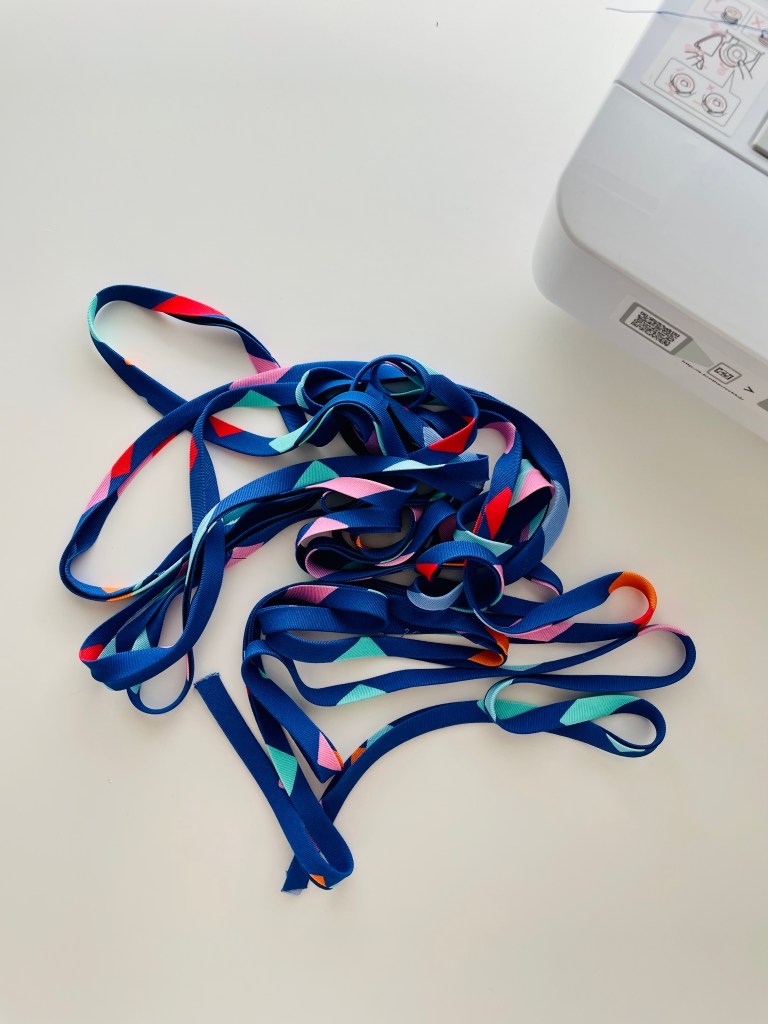
Next, I used the fabric to make some biased binding for the neckline and front bodice. This was my first experience of making bias binding using the continuous method. This is by far the best way to do it! 

Bias binding

Overall, I can honestly say that sewing with the Near and Far Rayon from Sew to Grow did not disappoint. All my pattern pieces stayed in shape, and it was enjoyable to sew with. It has a beautiful quality with the slightly heavier weight. Wearing the rayon is even better. I love the drape and here are some pictures from the Spring Festival! Oh! Final tip, don’t forget to let it hang for a day or two before finishing the hem.

Thanks for reading and happy sewing!

X Em
Full Disclosure: Fabric was gifted in exchange for review and sponsored Instagram Post but all opinions are my own.
Lanti Swing Dress

When Sew to Grow put a call out for testers, I was quick to apply as I’ve been keen to challenge myself to sewing to a time frame and I have found testing to be invaluable experience especially when interacting with other more experienced sewers. Lindsey, the founder of Sew to Grow, is a sewing teacher so I find all her patterns have a quality of thoughtfulness and caters well for all skill levels from beginners or those who are trying to advance their skills in sewing. The Lanti Swing Dress was initially designed for her classes and with a beginner in mind. Now it’s been made available for everyone!

The Lanti Swing Dress is a versatile pattern that comes with three options. Option A is a smock dress, Option B is an A line dress and Option C is a blouse. There are also sleeve options for short sleeves with cuff or three-quarter sleeves with frill.  This dress is also a great wardrobe basic with potential for hacks which is what I did with my second make.

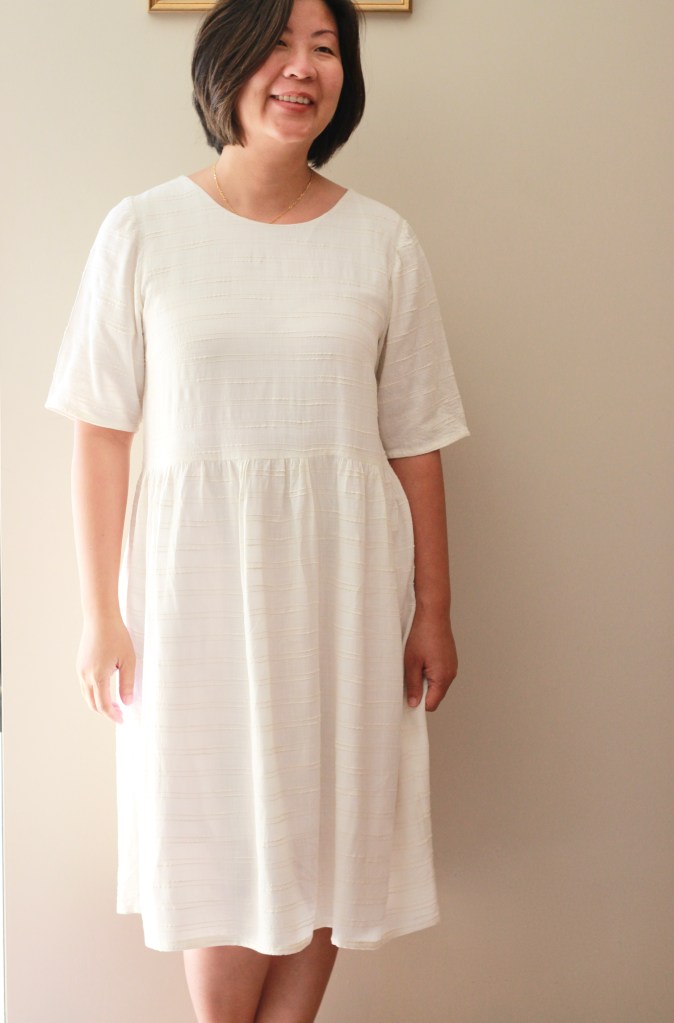
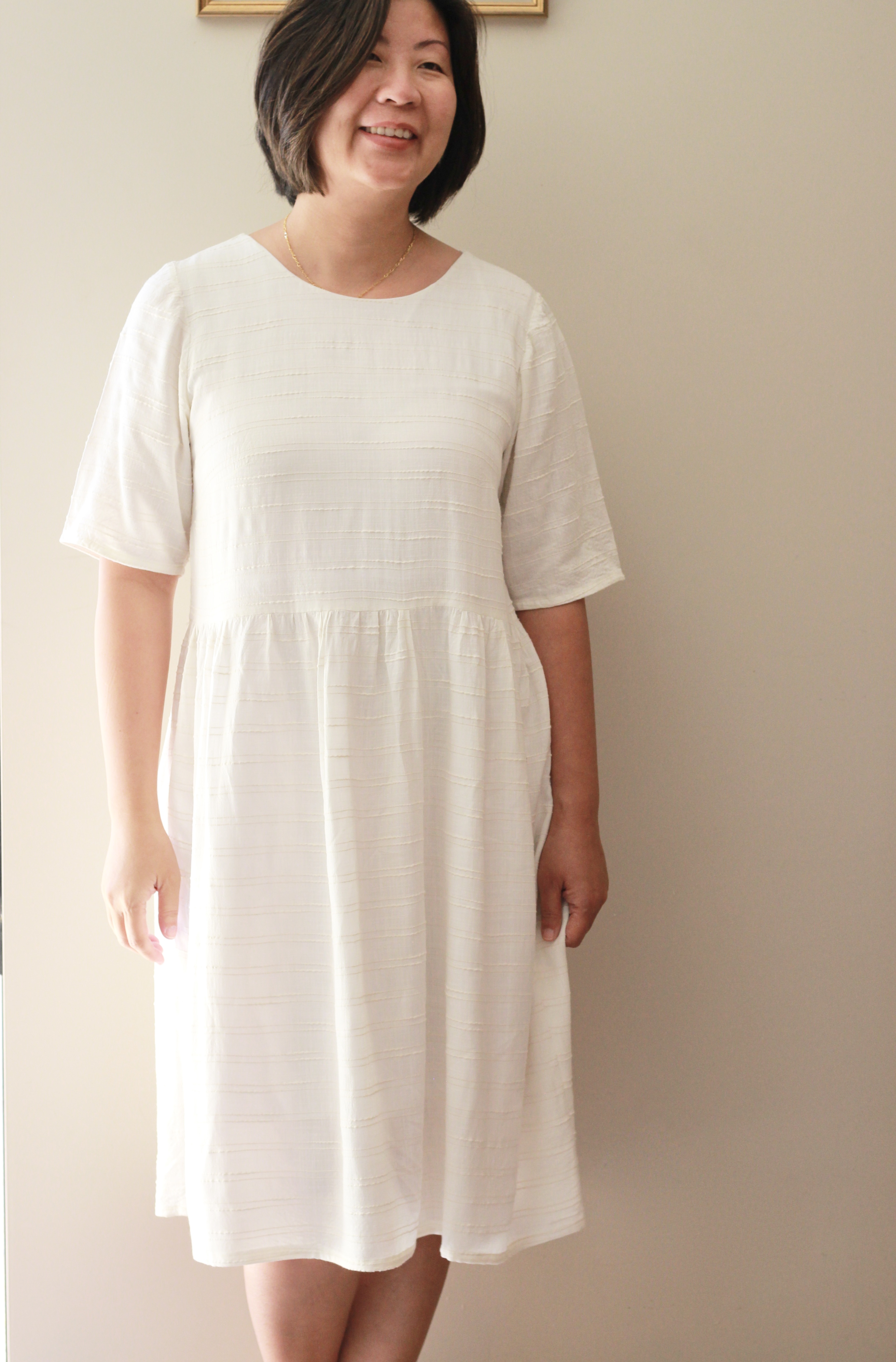
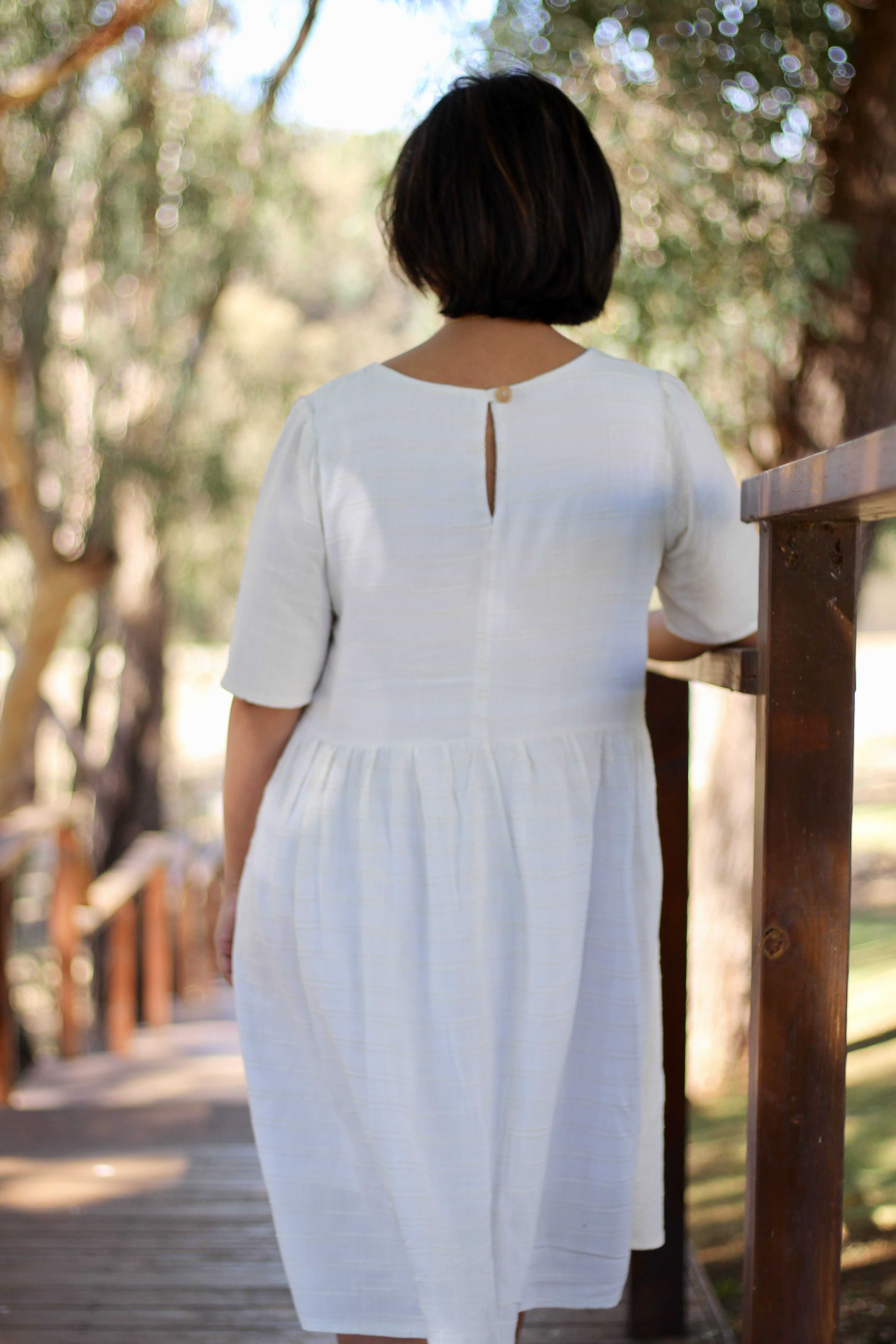
The first dress I made for the test was Option A and using the three-quarter sleeve but without the frill. I love making dresses but found that I lacked a neutral basic dress. The Lanti Swing Dress is a great core item dress which is designed to be versatile and a foundation piece for dressmaking. The fabric I used was a beautifully sheer flax coloured cotton which is lightly textured by a weave of beige coloured tread in a stripe pattern running horizontally. This dress can be styled with sandals for summer or layered with a jacket for autumn and spring. It can be left loose for a boho look or cinched at the waist with a belt for a stylish work outfit. 

My test was for the size 12 as my measurements of 37.5-inch bust, 33-inch waist and 38-inch hips fit well into that category. There wasn’t any need for adjustments, but I left out the pockets and the sleeve frill. My fabric was very sheer so instead of a facing, I fully lined the dress with a muslin which also served as the first toile of the pattern. The Lanti Dress is a great dress to practice installing a lining as the closure is a simple button closure at the back so no tricky zippers to line. In order to line the dress, it’s a case of using the bodices and skirt pieces but with your lining fabric which is often a lighter weight fabric. The bodice pieces are sewn up and the same instructions given for attaching the facing were followed. Once the bodice outer shell and lining pieces are attached, it is turned the right way and the skirt shell and lining can be attached separately. I should also mention that I lengthened my outer shell hem by 2 inches.

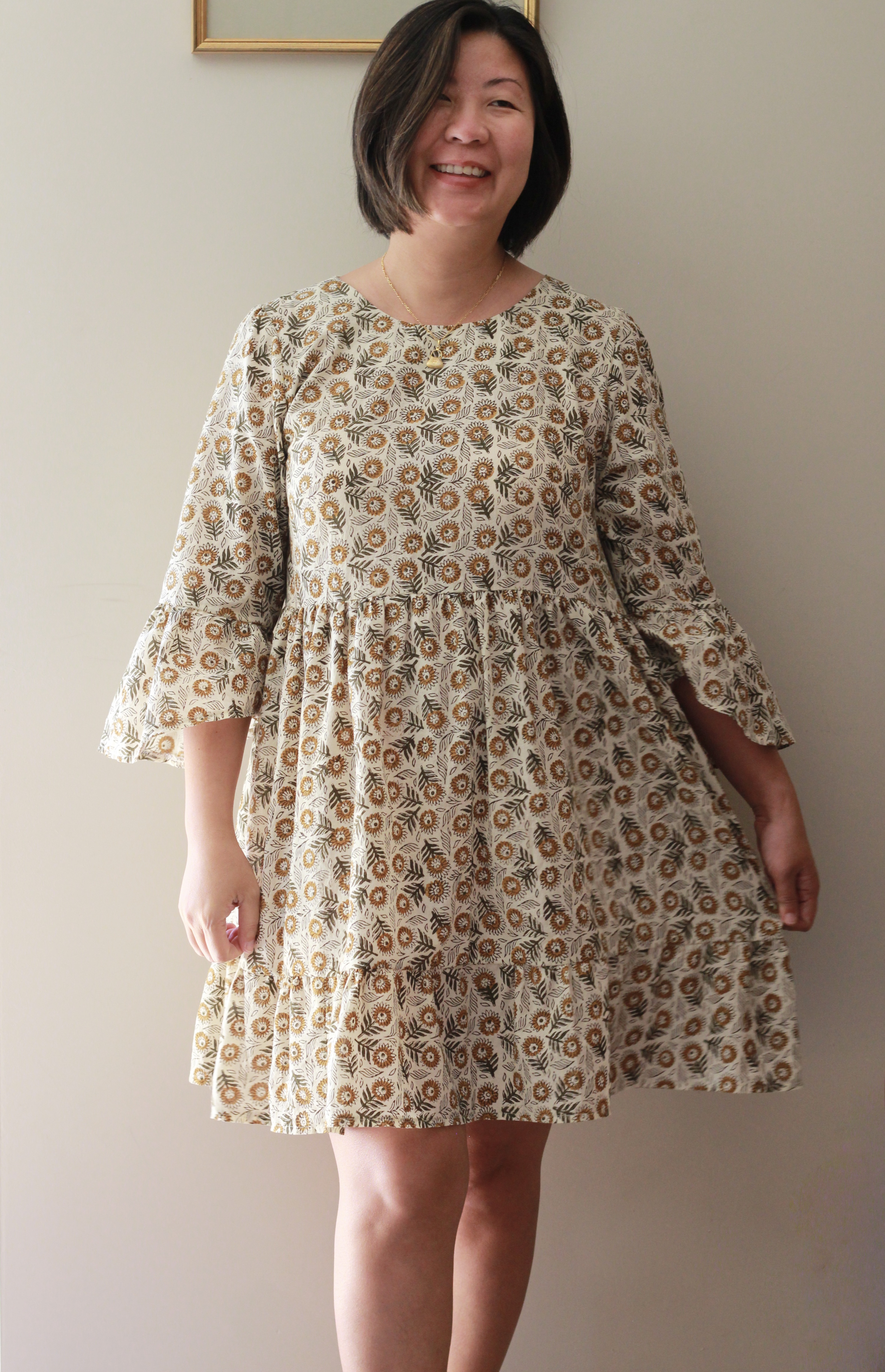
It was such a pleasure to sew that I made a second dress but this time with a fun hack and I wanted to try making those pretty frill sleeves. Again, the pattern is great to play with for a hack as it is drafted to be versatile. To make this hack, the bodice was shortened by 1 inch. The skirt was left the same width for the upper two-thirds and the bottom one-third was widened by 10 inches. This time the frills were added to the sleeves. The result is a fun party dress which can be dressed up or down.

It was so much fun to test for Lindsey of Sew to Grow and it was a lovely team of testers to join. She made it stress free and was always quick to give feedback when we needed it. It was also nice to have a bit of interaction with the other testers and see their beautiful creations. If you can, you should check them out.

Thanks for reading and happy sewing!

X Em