Grace Dress

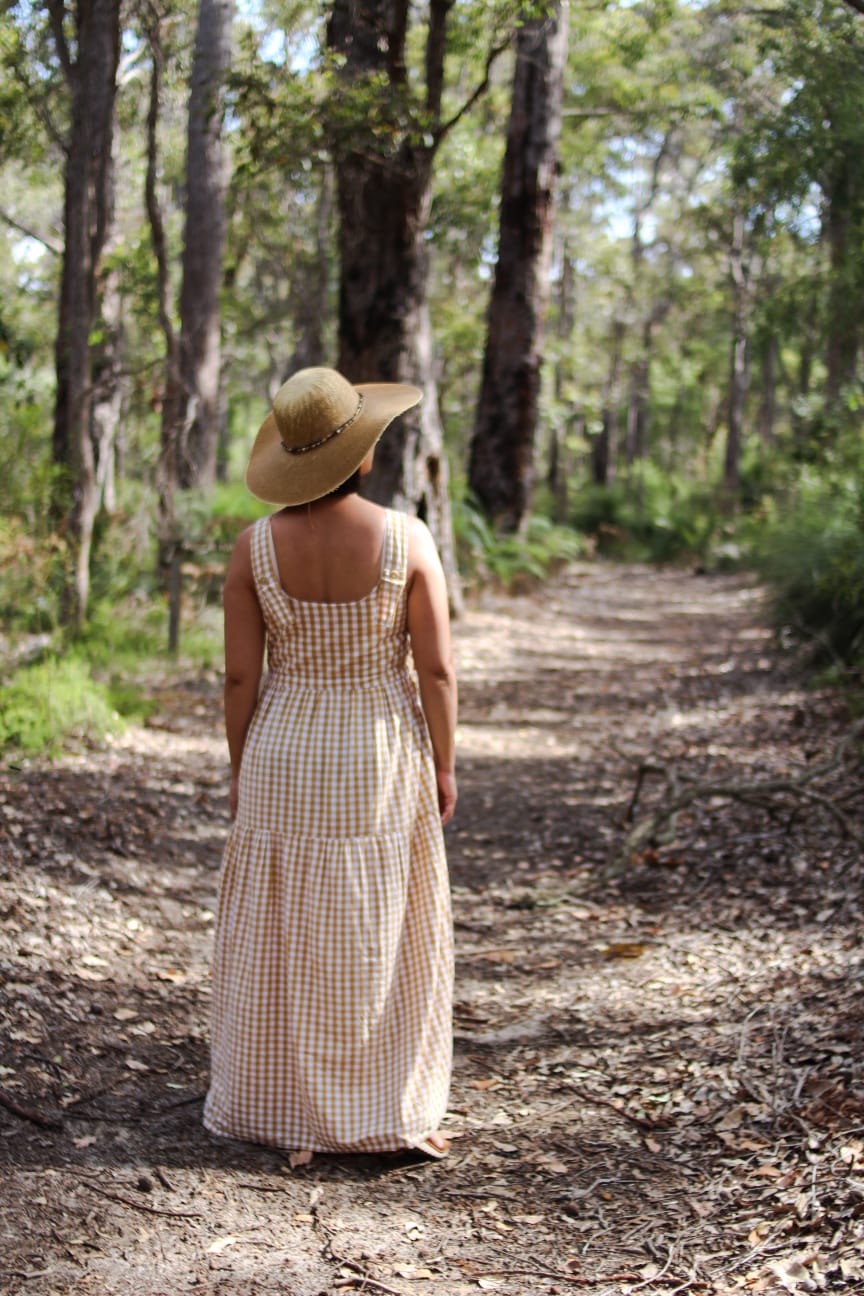
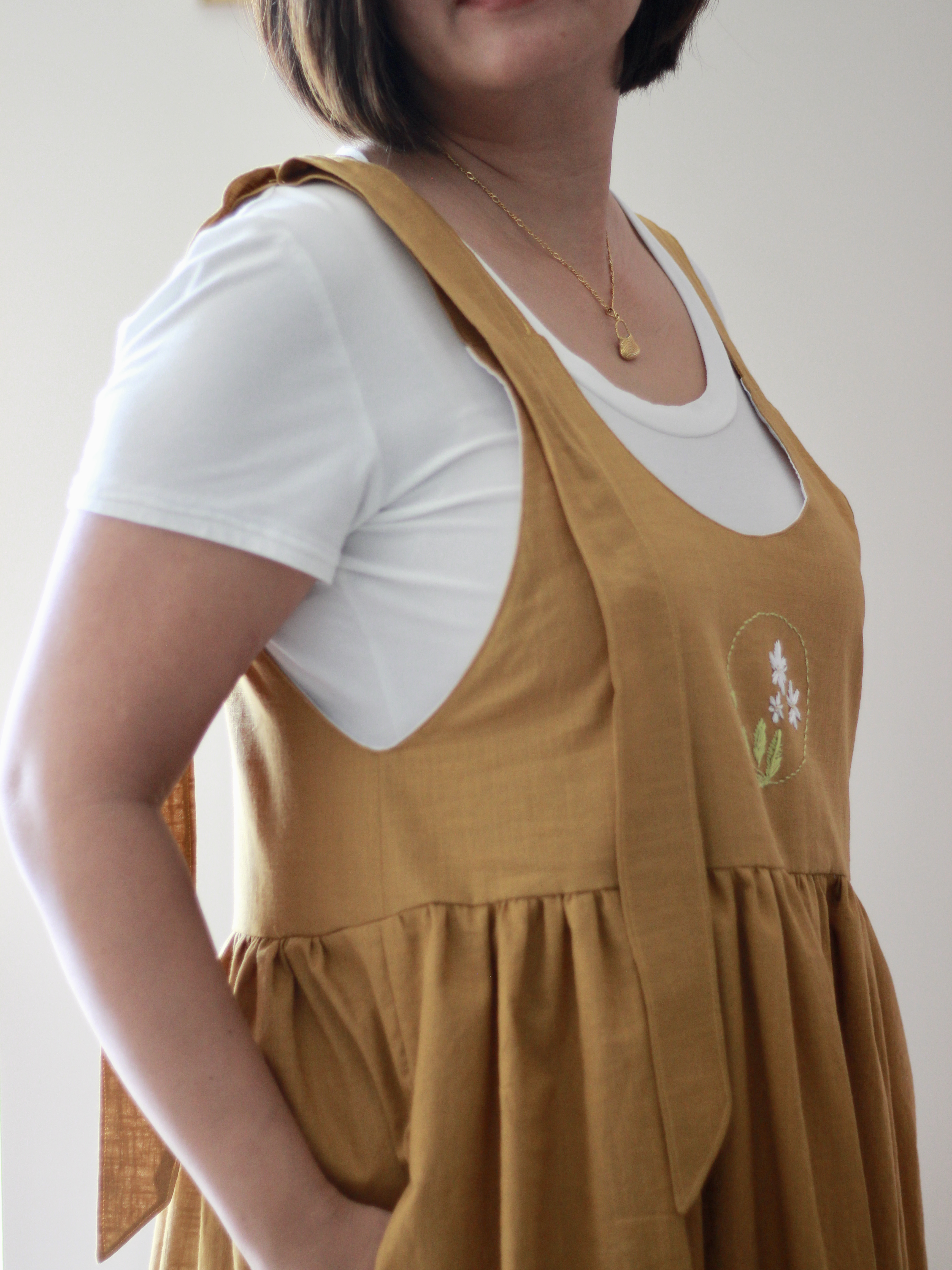
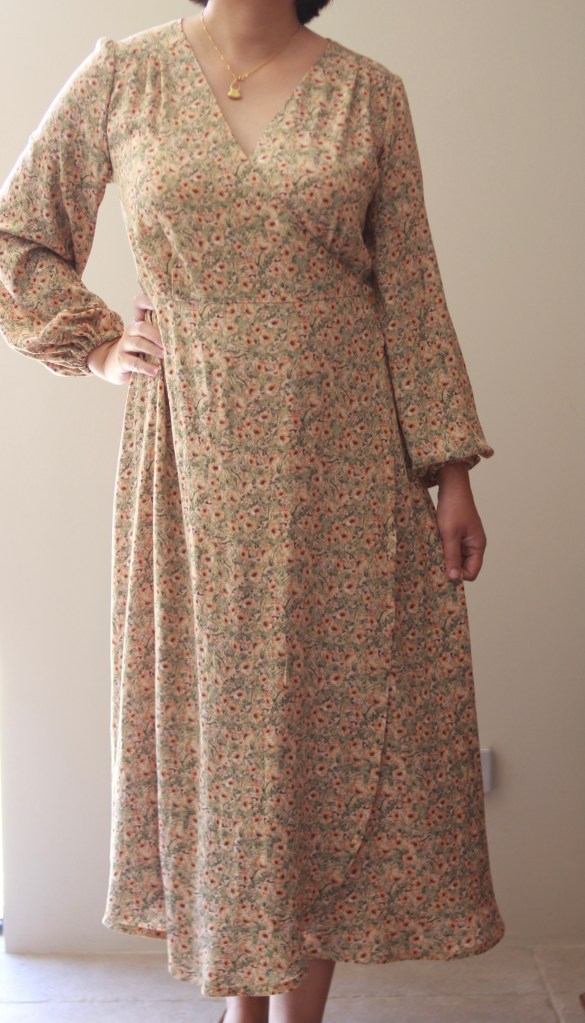
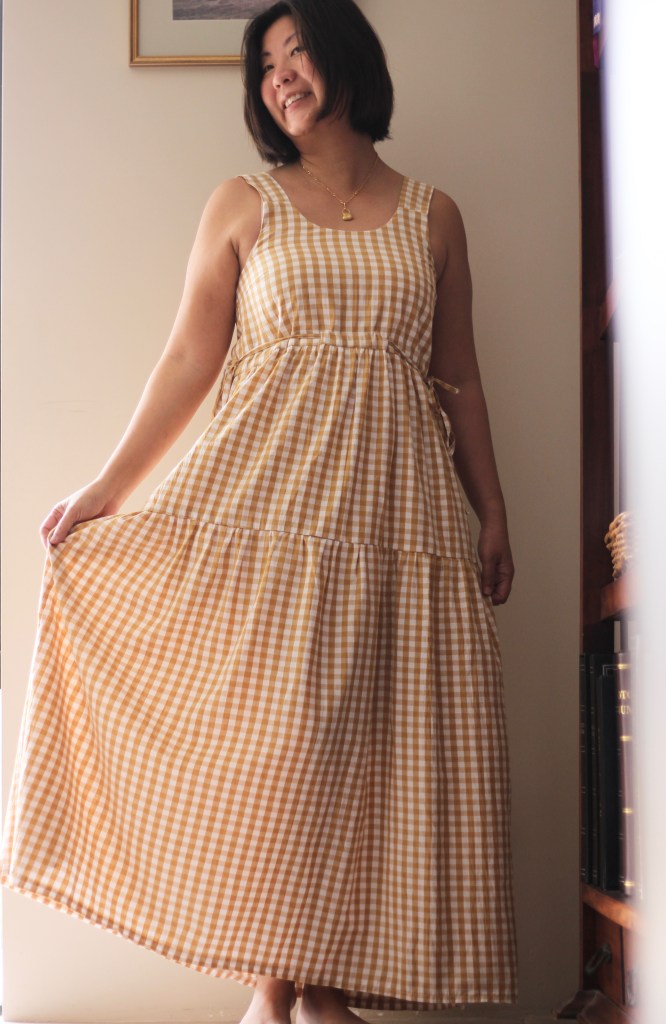
“Cottage core” is a term that I was introduced to by my daughter when I started to point out these beautiful dresses reflective of an idyllic rural lifestyle which have recently become more popular since last year. I’ve read that it’s society’s reaction to recent global events, making a wholesome, clean lifestyle more attractive. The Grace Dress definitely falls into this category with its vintage vibes. It’s what you imagine wearing if you had a field to roam in carrying a basketful of wildflowers with a backlighting of sunshine (inspiration for my picture).

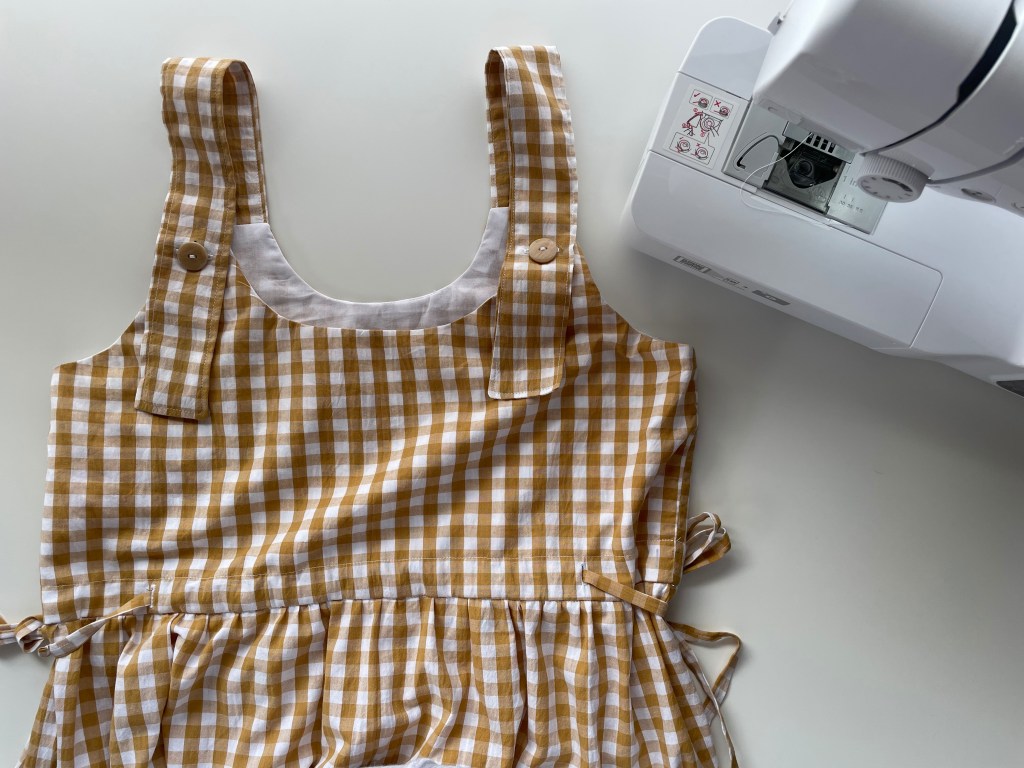
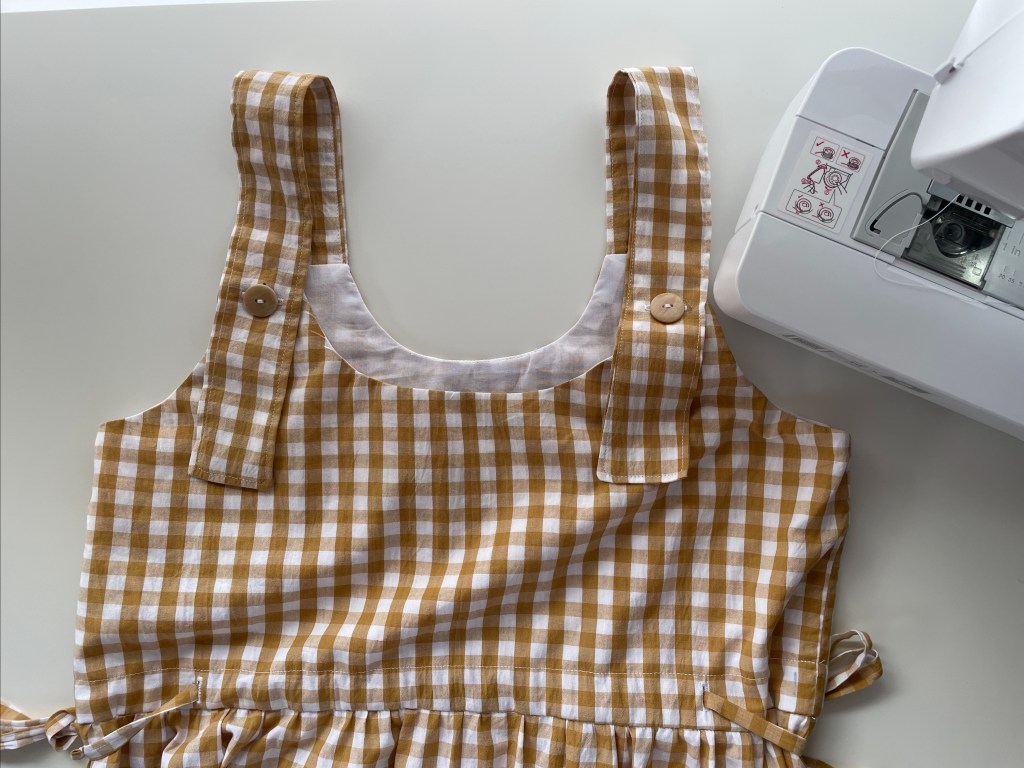
The Grace Dress is a collaboration between Taree from @marshastyle and Abby from @abby_sews. When they started promoting this, I immediately saved it and waited for the much-anticipated pattern release. I’ve sewn the View B of the dress which has a multi-tiered gathered skirt, buttoned shoulder straps and a casing for some waist-ties (very flattering). Oh! I also have to mention that it has generous pockets!

I made the size 8 with my measurements of 37 Bust, 33 Waist and 38 Hips. It has a great size range from 31:24:34.5 to 59:52:62.5 and after saying that I usually try to make a toile in my last blog post, I must confess that I just went straight into it without a toile with this sew because of the ease in finished garment. I’ve used this mustard yellow gingham fabric from Spotlight Stores. Gingham adds to that idyllic county aesthetic that I wanted with this dress. 

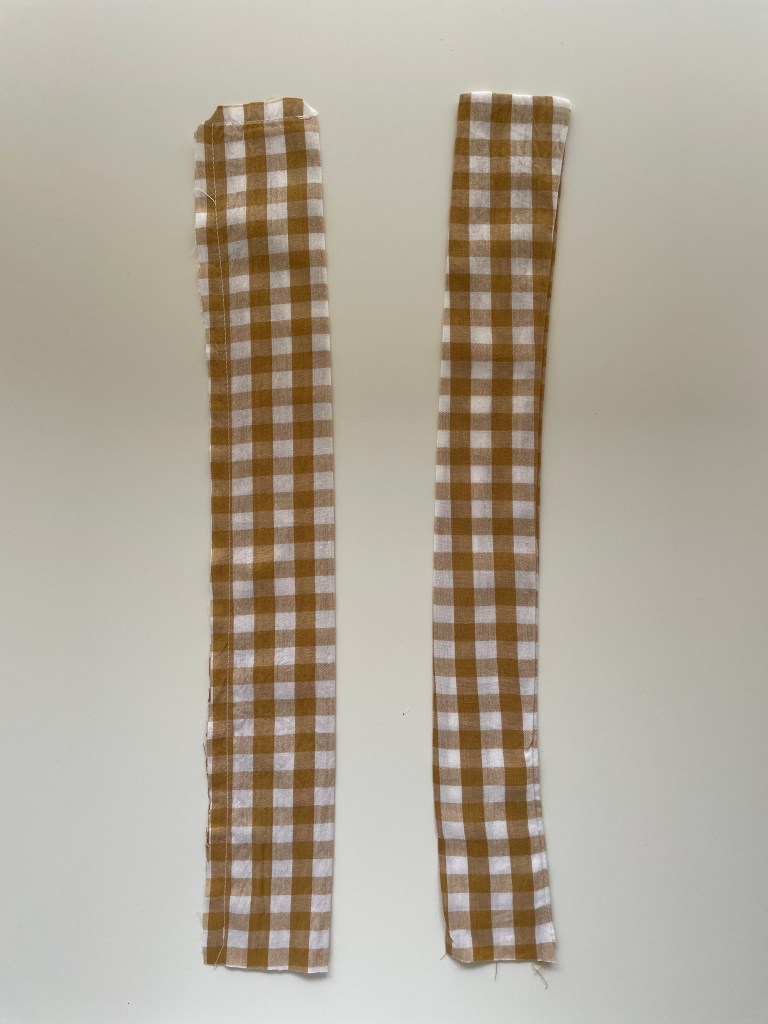
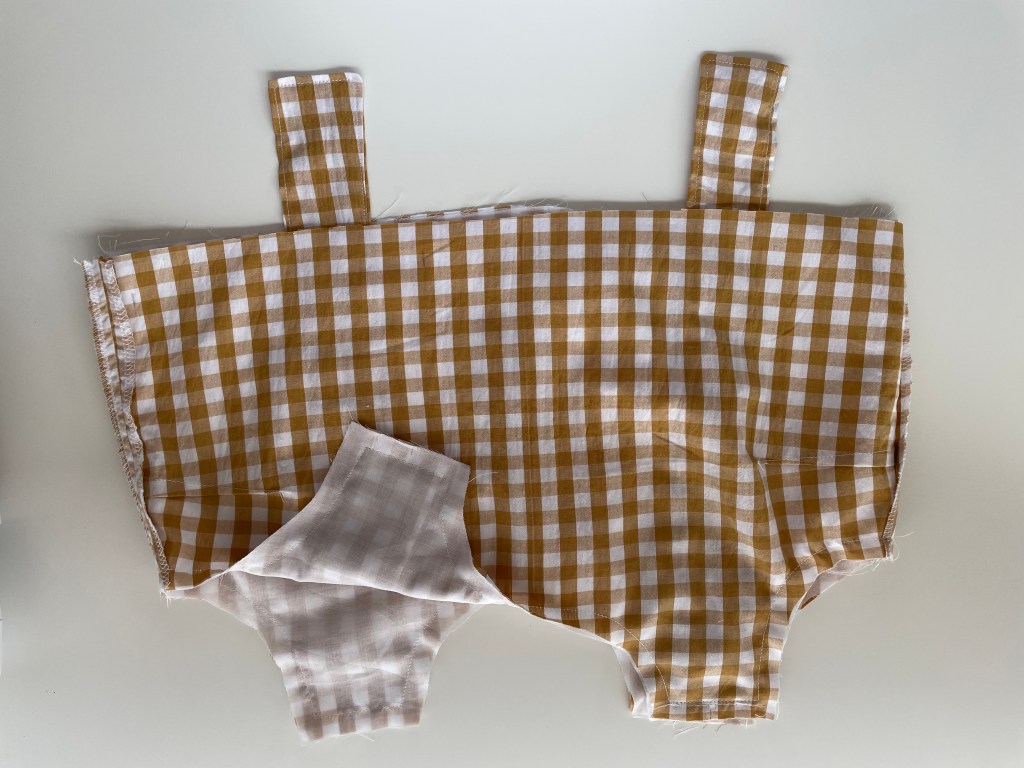
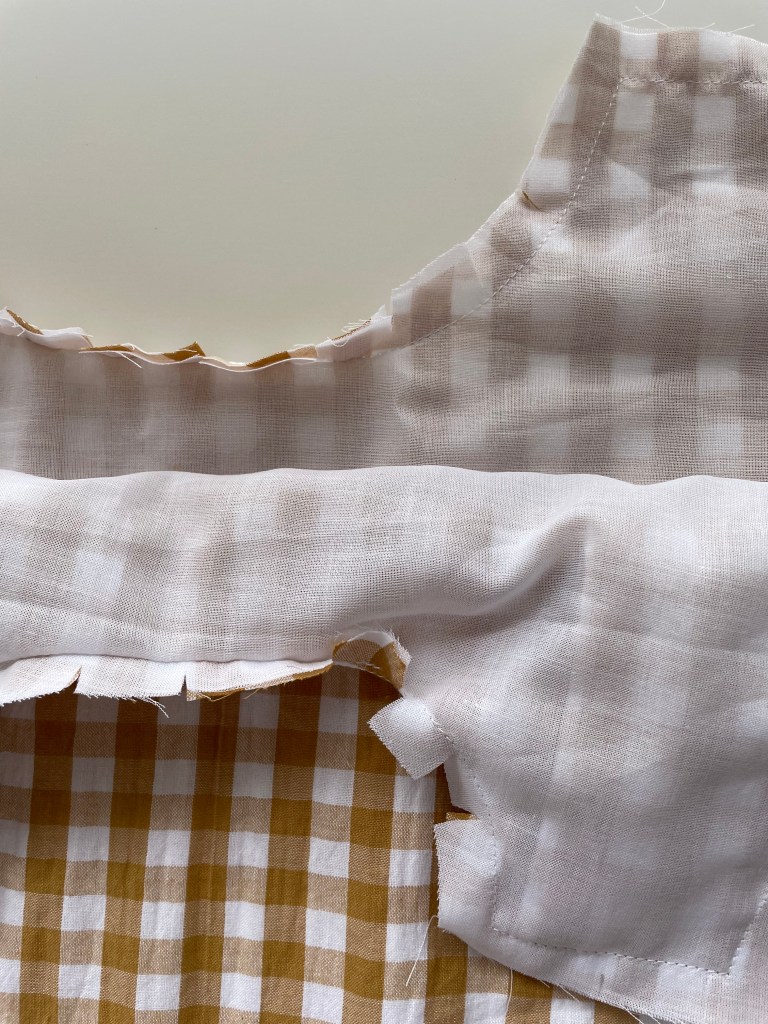
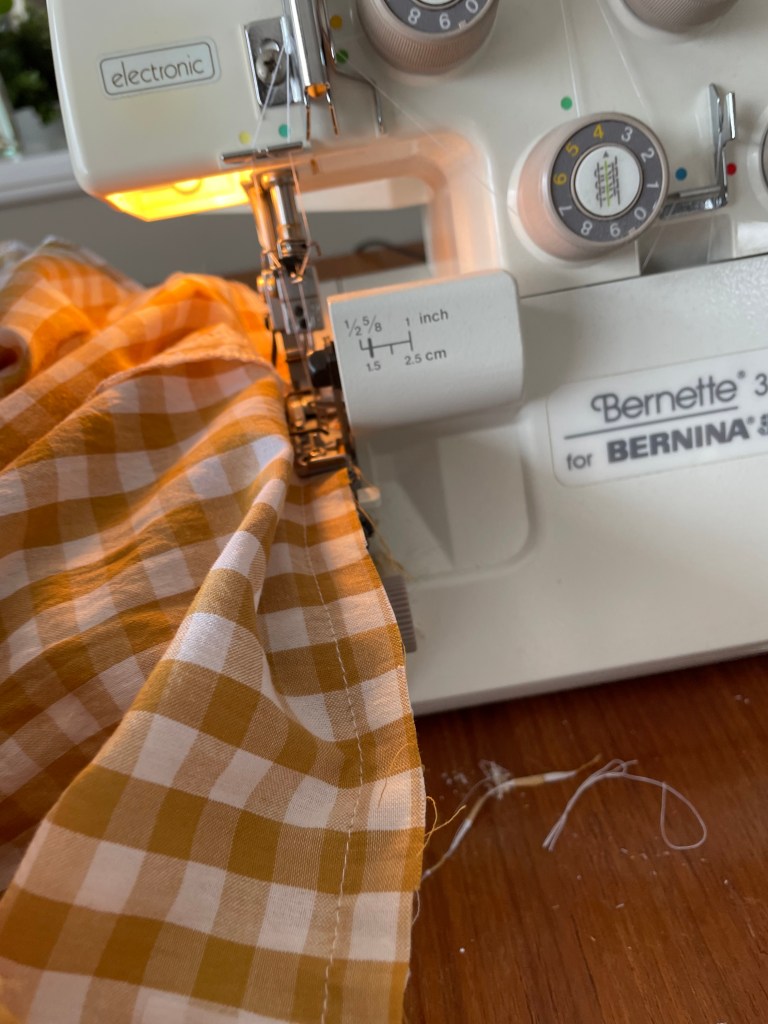
To start the sew, I prepared the straps and put together the bodice. Pretty standard construction with darts for the bodice. I used a white muslin for the lining pieces. The Grace Dress Pattern has lovely instructions for French seams, but I decided to finish with an overlocker. 

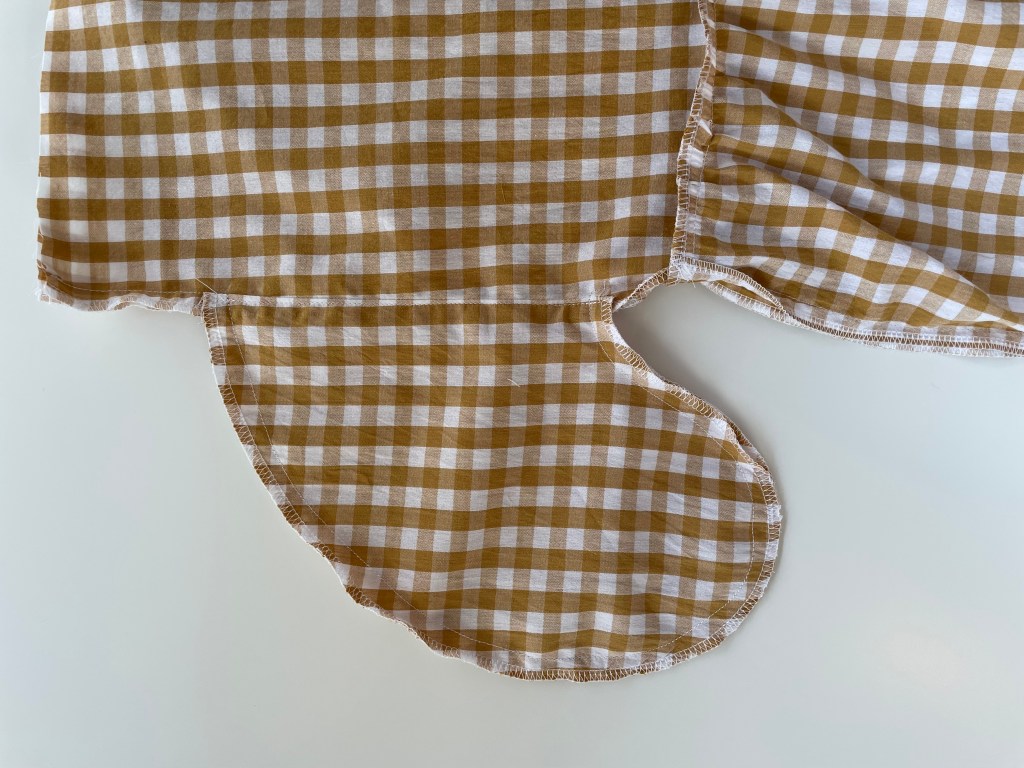
When you move onto the skirt, you’re putting in the pockets from the side seams. As mentioned above, I’ve decided to use an overlocker to finish my seams. To do this, I neaten my pocket pieces and neaten the skirt side seams on my overlocker. Then I attached the pocket pieces to the skirt pieces – make sure you keep the paired pocket pieces on the same side and be careful that you have the pocket markings at the same level for the front and back skirt pieces otherwise you’ll be frustrated by wonky pockets.

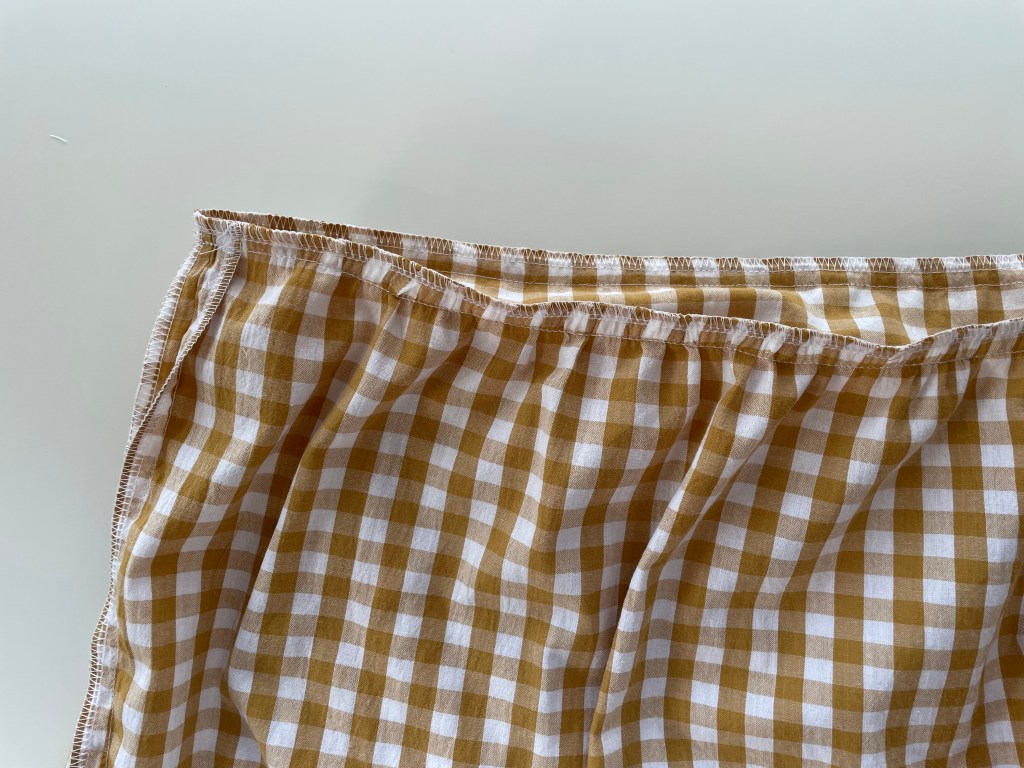
Skirt pieces are then gathered, and the longer bottom tier is attached to the top tier of the skirt. Now, how long is too long? This is a pattern made for 5’7 height which I did not modify. I really wanted a maxi dress and crave that swishy feel of a long skirt. 

The most interesting part of the dress in View B is making this channel for waist ties. Skinny straps and ties are the bane of my sewing life. Yes, I have a loop turner. No, it doesn’t make it any easier. Yes, it still took me about an hour and a lot of swearing. Anyway, that doesn’t take away from this interesting little feature. This little feature sets it apart of from other tiered dresses as it cinches the fabric in at the right spot to make a very flattering silhouette. I chose to hand baste the lining before using the stich-in-the-ditch method to finish. 

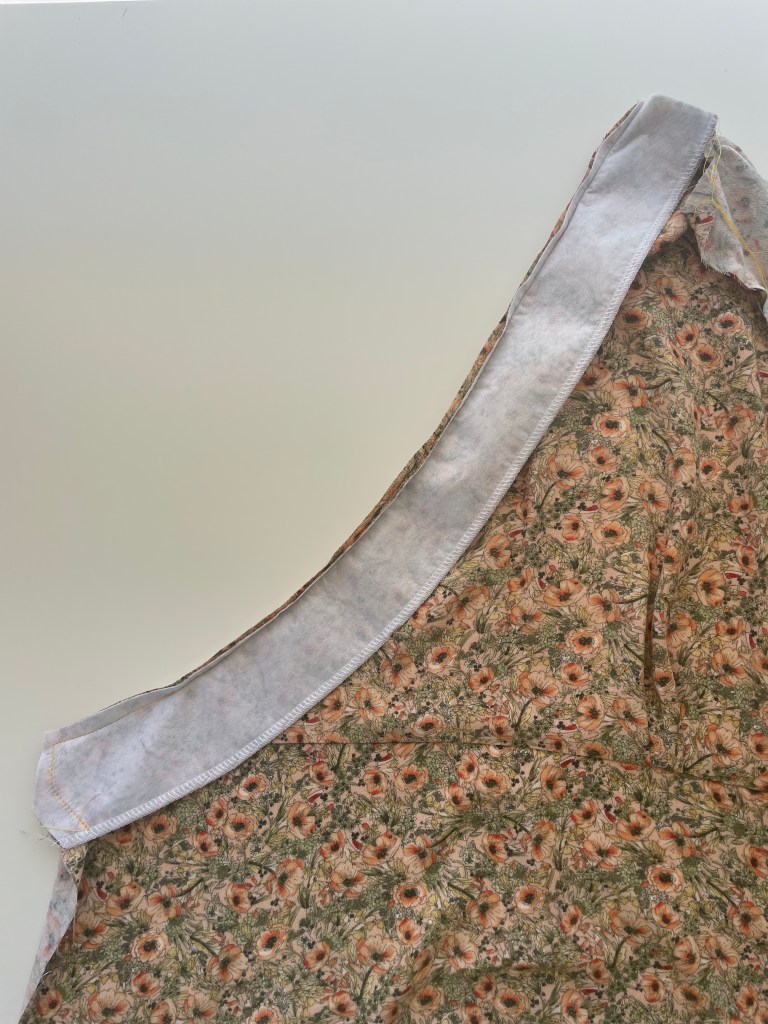
The final part was to sew the buttons in to finish the shoulder straps. In my initial try-on of the dress, I realised that I have slightly sloping shoulders which made the straps gap quite badly. After some thought, I decided to sew the straps on a slight angle which also ensures that there won’t be any wardrobe mishaps. I’ve still attached the button as I had already sewn the buttonholes.

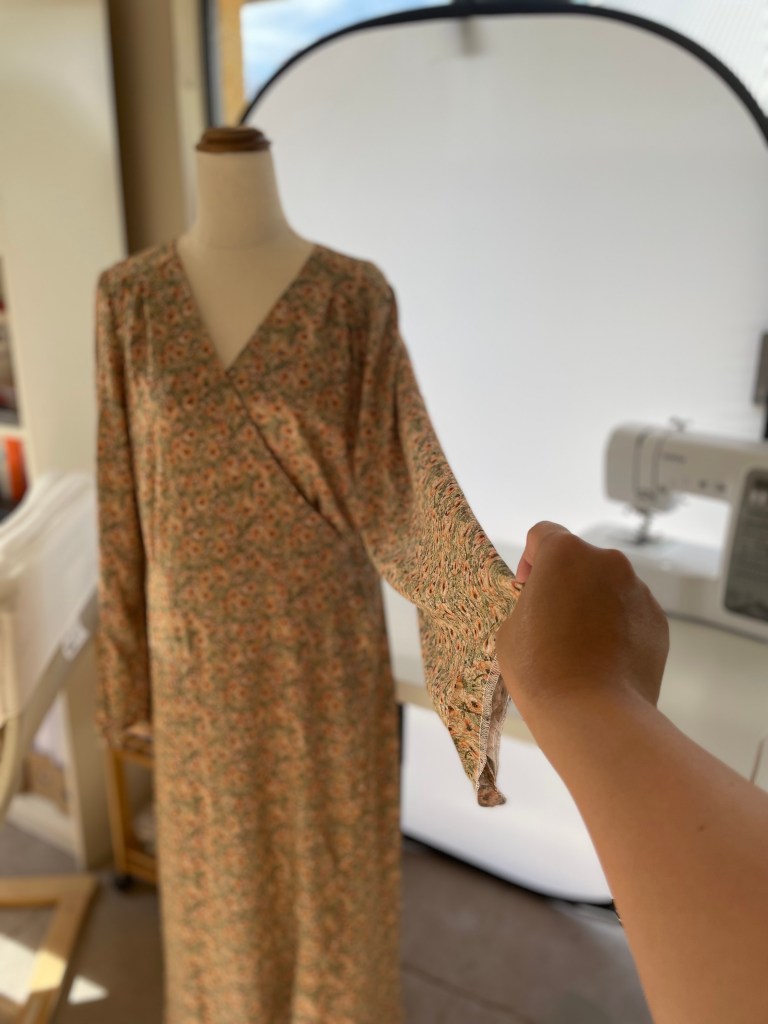
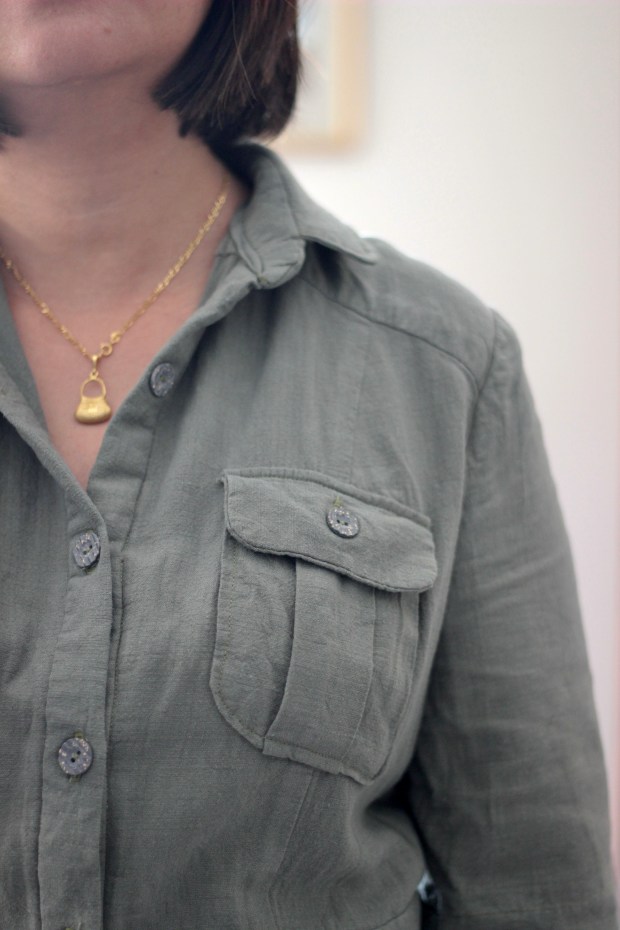
Here are some close-ups of the beautiful Grace Dress!

Thanks for reading and happy sewing!

X Em

Meridian Dress

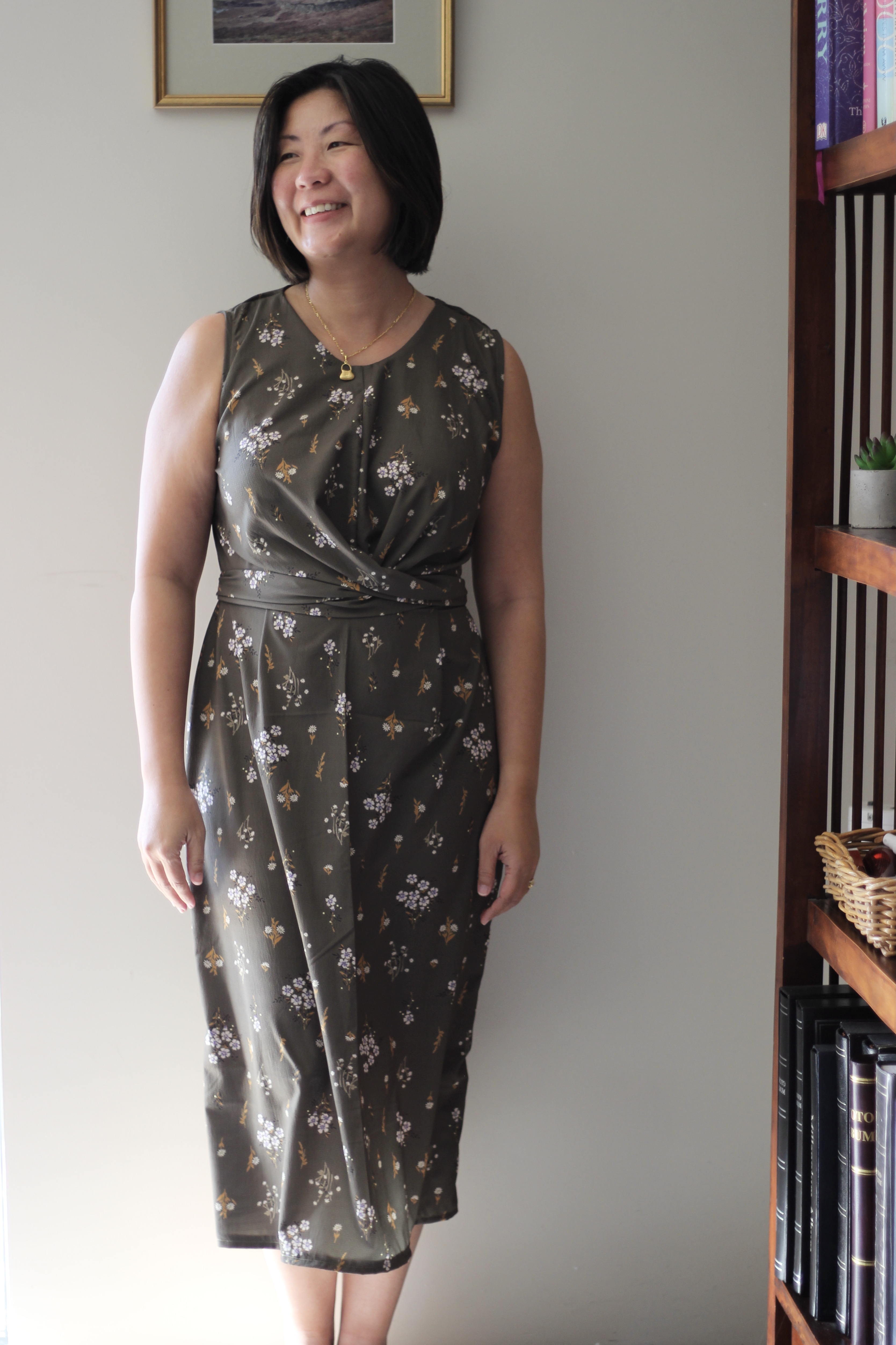
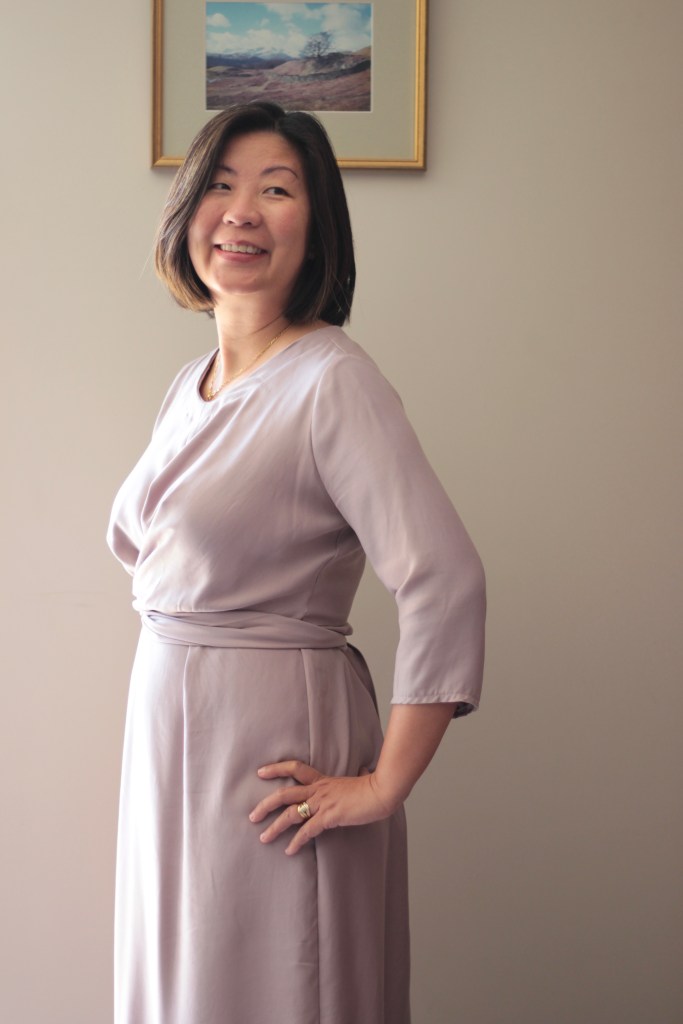
With the onset of spring here in Perth, I thought I would tackle The Meridian Dress by Papercut Patterns which has been on my Make Nine Sewing Challenge List. The dress has a beautiful silhouette with an easy to fit wrap front. I jokingly told a friend that I was making this dress to go to dinner parties with because the wrap front makes it easy to adjust for a full belly! But actually, it really does work to make it a very comfortable dress to wear. Like most women my dress size can go between two sizes in one month – I work in women’s health and this is a common complaint. This is also often why we’re sometimes caught out with, “nothing to wear” when a last minute event pops up and we haven’t had a chance to check the current fit of a “going out” outfit.

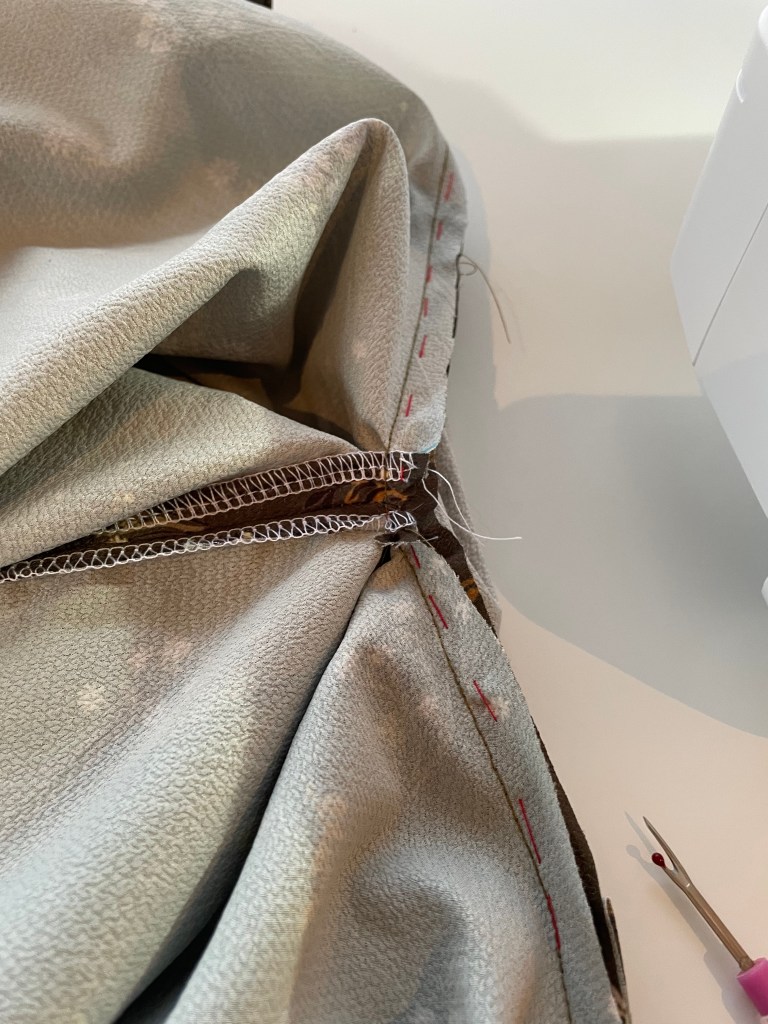
I’ve sewn the size 4 for my measurements of 37 Bust, 33 Waist, 38 Hips. The finished measurements range from B34.6:W24.4:39.2 to B51.2:W40.9:H55.7. No adjustments were needed for my sew. The front wrap bodice had a very interesting construction and the main thing to watch out for is the attachment of the front bodice to the skirt. There is a chance of a hole if you miss catching the panels of fabric where the wrap meets so just go slowly and I also hand basted that part with a coloured thread to make sure I wouldn’t miss it.

The fabric I used was a thin polyester crepe which was a beautiful green with small flowers. I chose it because of the wrap front. I felt that a bulky fabric might spoil the silhouette. This also meant that I had to modify how the facing was sewn. It was attached in the usual way at the neckline and zipline, but I didn’t sew down three inches from the edge. Instead, I stitched in the ditch at the waistline and the shoulder seams.

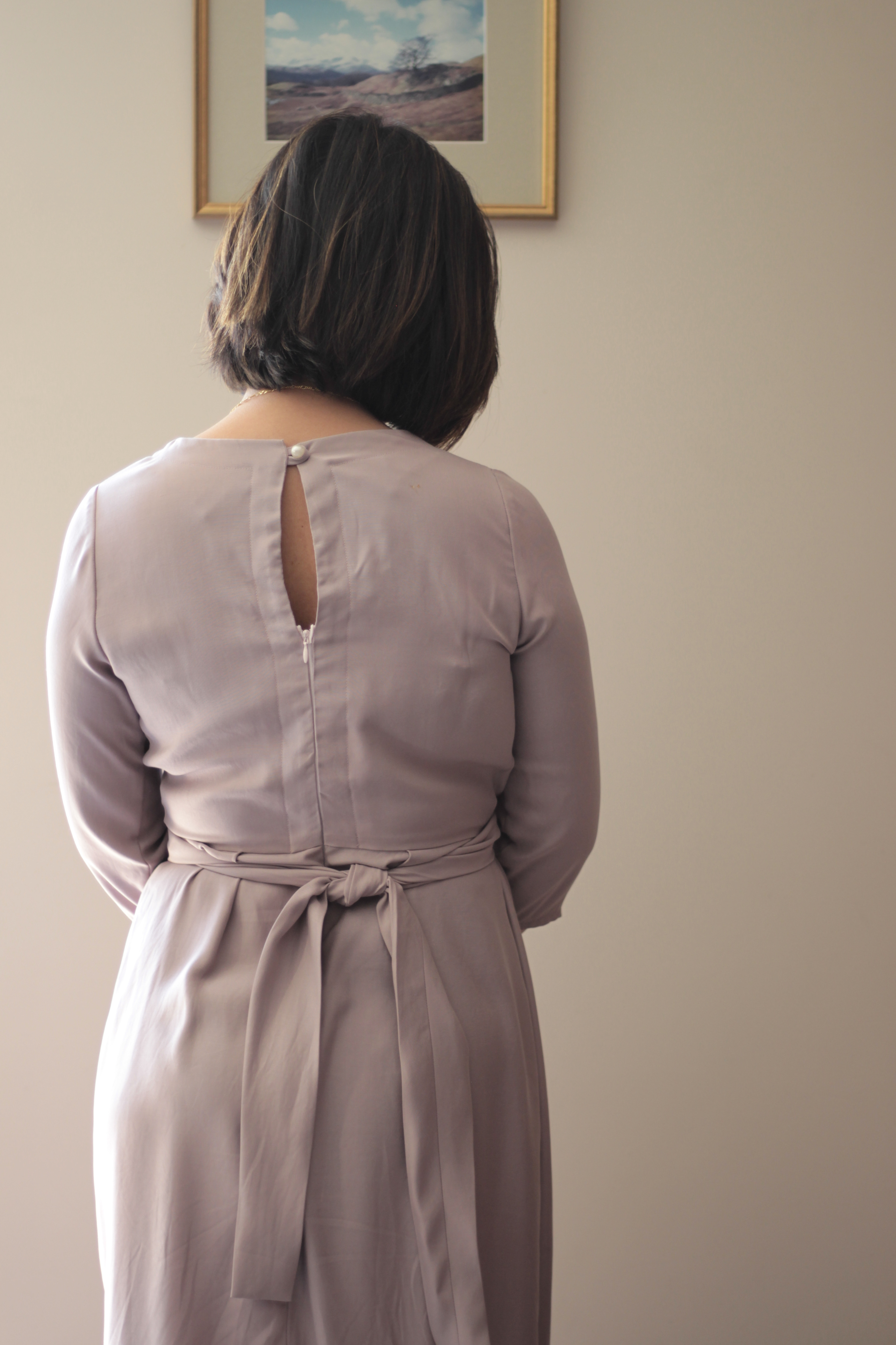
Also, I think it’s time I invested in an invisible zip sewing foot. I’m still attaching mine with a normal zipper foot and I found it a bit difficult this time. It might have also been the needle as I was using a 70/10 for the fine, delicate fabric but perhaps should have sewn the zip with a heavier needle. Do you change your needles when sewing? Comment below. Anyway, it came together in the end and I love the back view of this dress. I’m hoping to find a prettier button for the dress in the future.

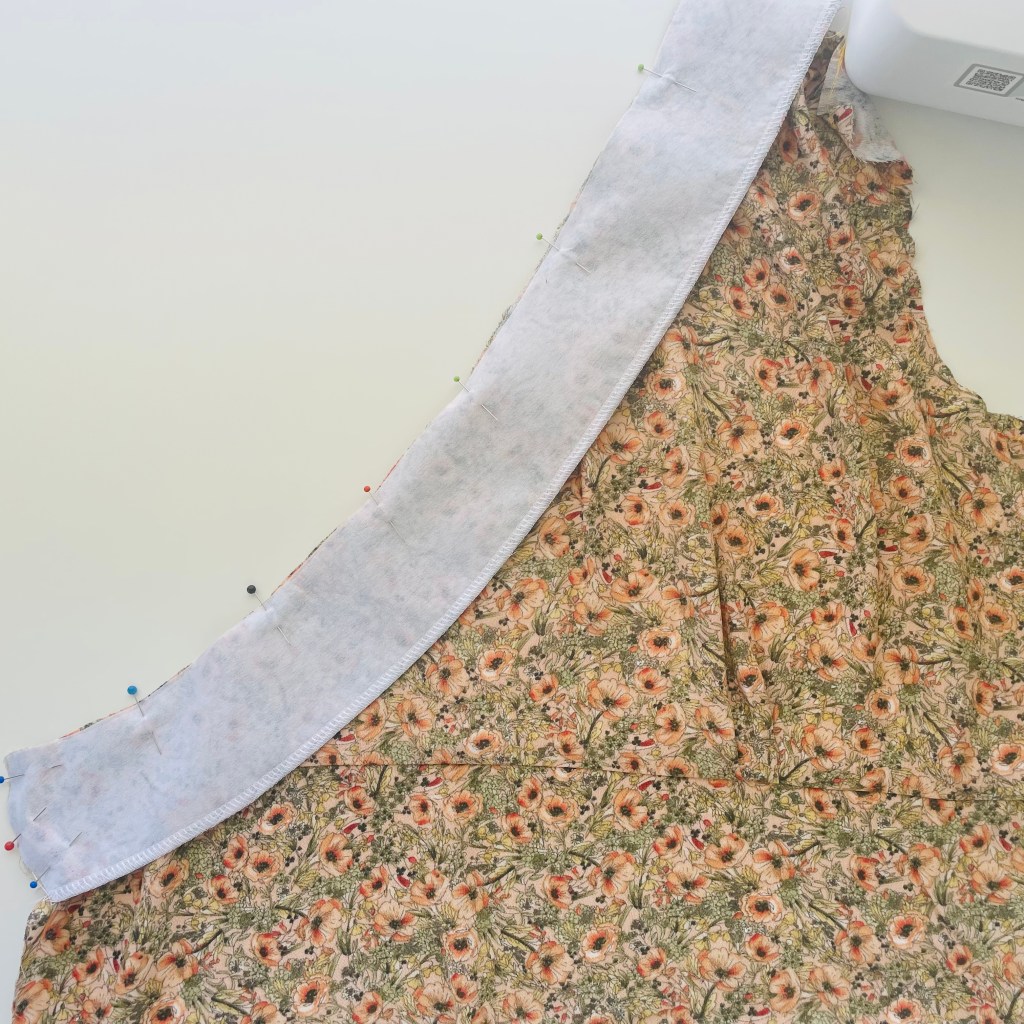
So, this is actually my wearable toile for this pattern. Sometimes I toile with spare cheaper thrifted fabric and sometimes I dive in with a cheaper fabric that’s wearable but I try to always toile. This fabric was a real bargain at $9 per meter from Spotlight Stores so I bought about two meters. I only had enough for the dress without sleeves which I’ve ended up really liking. I wear cardigans all the time, even in summer so sleeveless is often more comfortable for me. I will be making this dress again and I will be attaching the sleeves in the next one. To finish the armscye, I made some bias binding. It’s such a satisfying process! 

The Meridian Dress is such a flattering, elegant dress and I’m definitely giving it 10/10 for design and instructions. A very satisfying sew and good for an advanced beginner.

Thanks for reading and happy sewing!

X Em
Fern Top and Dress Hack

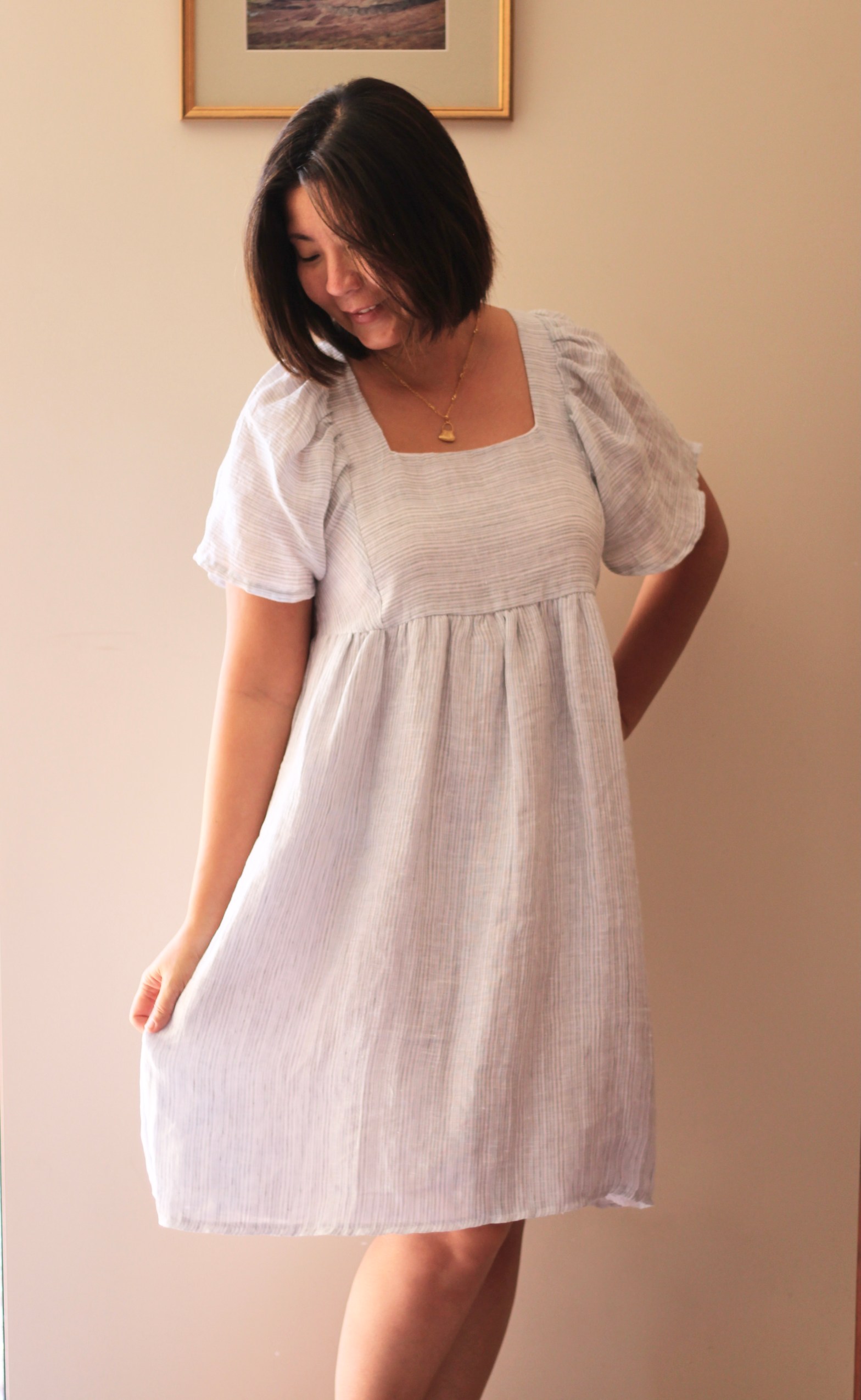
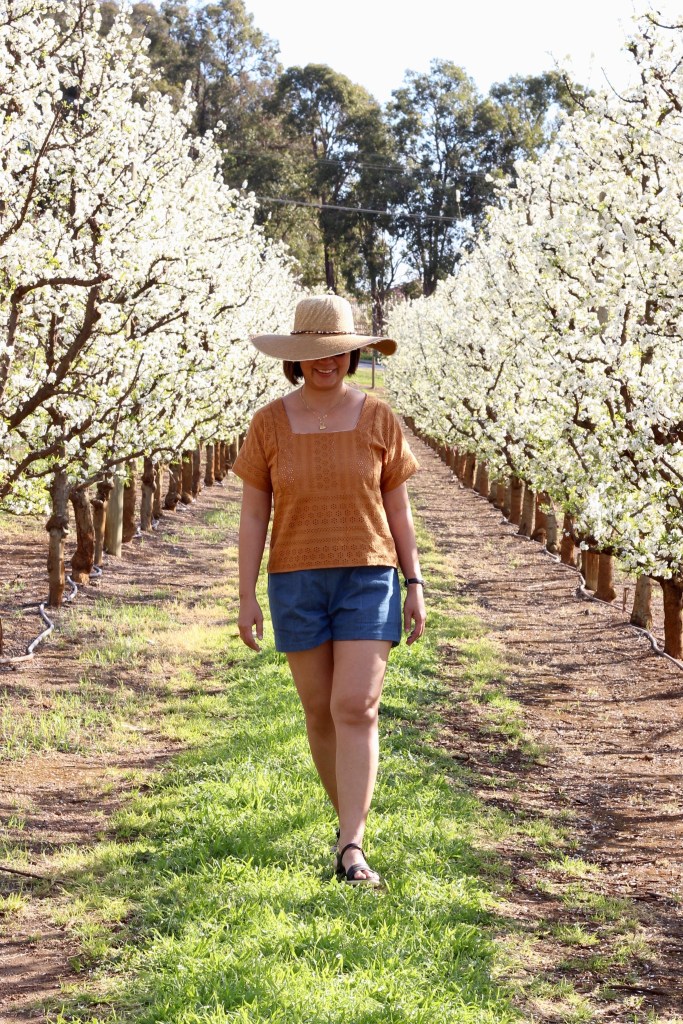
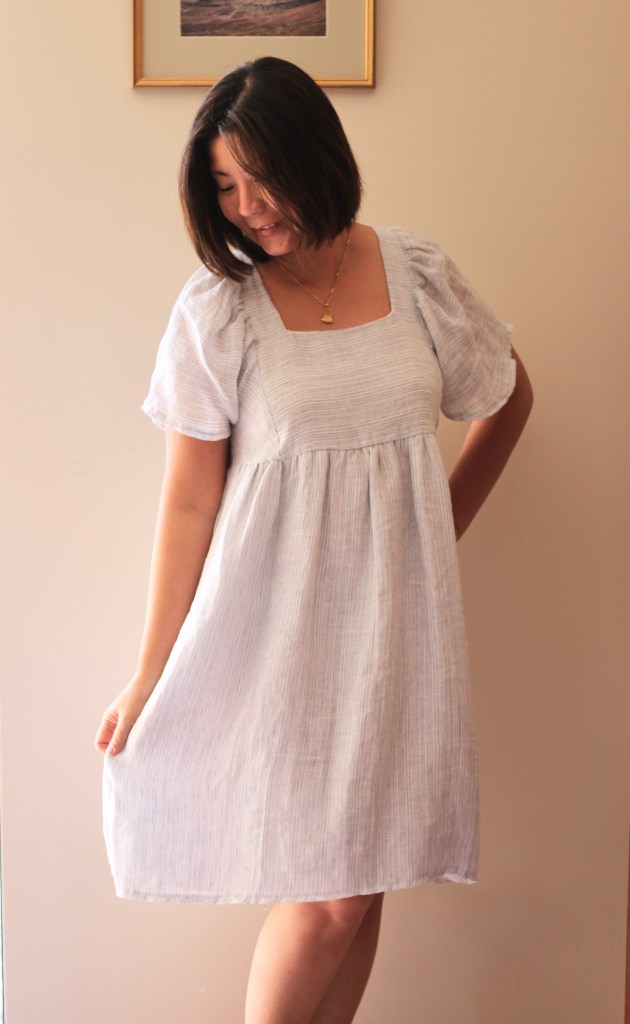
September brings with it the promise of sunshine and finer weather. So, naturally, I’m starting to think about a summer wardrobe. I do often wonder if I should start working on my summer wardrobe in winter and sew up my cold weather wardrobe in summer. Anyway, I had always meant to sew up another Fern Top from Pattern Scout Studios. I then saw a mention of a dress hack so I decided to go ahead and do this!

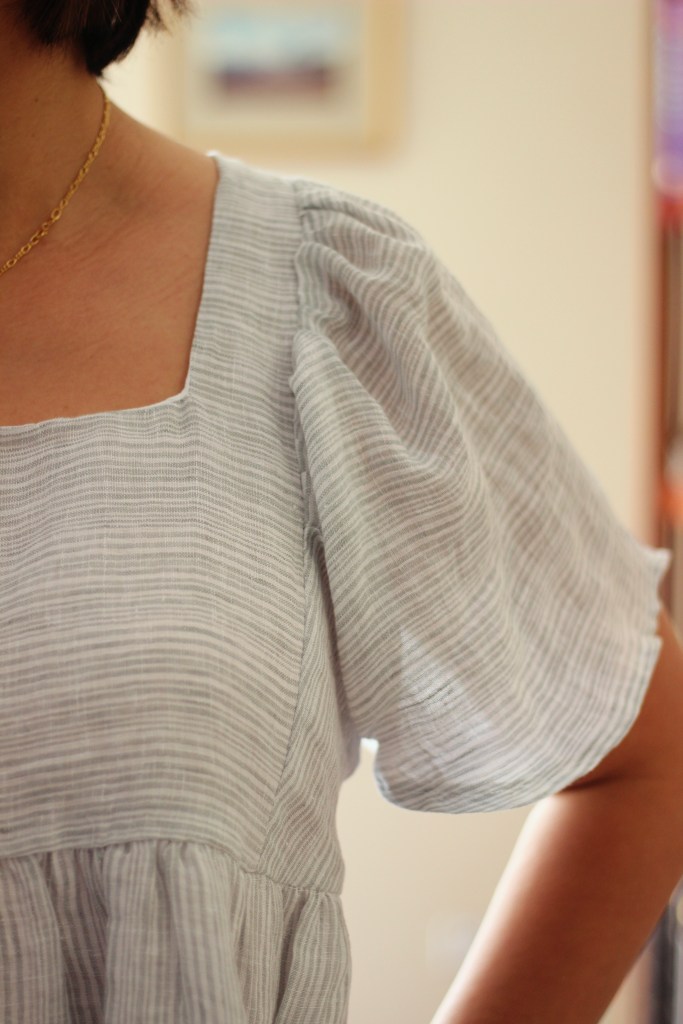
The original pattern is a pretty top that has a central panel with a round collar which the dolman sleeve pieces attach to. Then Pattern Scout released the square neck extension pack which was what really sold me. I really love a square neckline! So, my first version of this pattern was the square neckline version of the top. 

This time I’ve sewed the square neckline again but decided to use the free tutorial for the flutter sleeves. So, most of the hard work for this hack was actually done! I just added the skirt by using two rectangular pieces and gathering the top of the skirt and attaching this to where the “skirt” of the top would’ve attached to.

I should also mention that I had fully lined my dress with muslin. I used a divinely floaty, sheer, lightweight “seaweed stripe” linen that I was lucky enough to score at the in-store sale at Megan Nielsen’s shop in June. I didn’t know at the time what I was going to make out of the fabric but it was too good to pass up and I’m only just starting to feel confident enough to invest in my fabrics. I bought two meters of this linen which was just right for this make. So, getting back to the sheerness of the fabric, it’s beautiful and light but quite see-through so for modesty’s sake and so my family don’t disown me in public, the muslin was a perfect pick to line the dress with.

This dress is so comfortable to wear. It’s not quite warm enough yet but the baby-doll style is great for those sticky and humid summer days. Hopefully this will inspire someone to give it a go! The Fern Top is great as-is but such a wonderful bonus with so many options to customise it.

Thanks for reading and happy sewing!

X Em
Pietra Pants

Just for something different, I thought I would write about my sewing process. I first came across the Pietra Pants by Closetcore Patterns last year and hadn’t really tackled sewing any trousers. Sewing pants is intimidating because of some of the fit issues that I’d read about but it was recommended to me because it has a fitted flat front look but fit issues are less of an issue because of the half elasticised waist. This is Version A and is the cropped version.

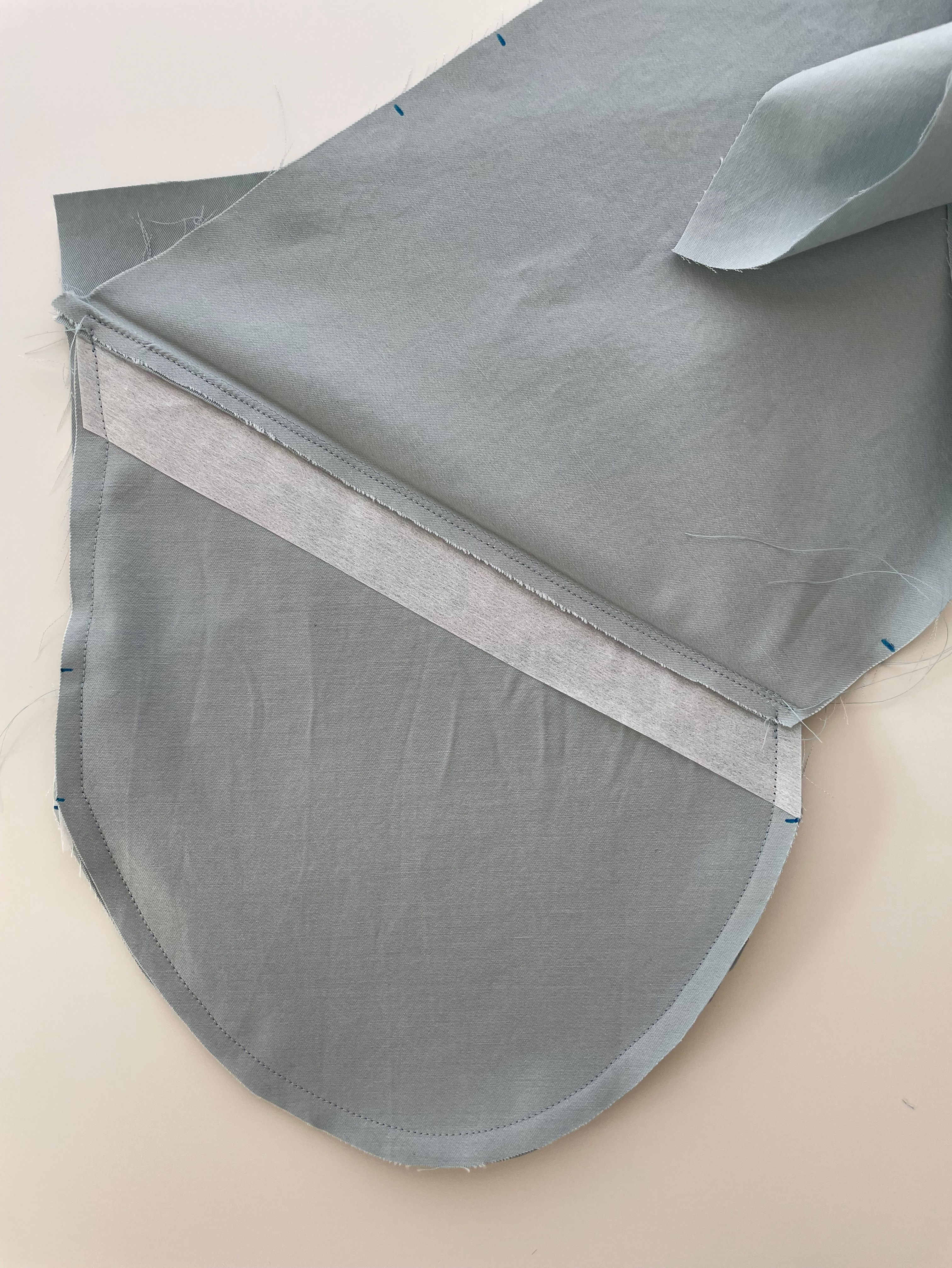
So, the sew starts with the interesting pocket construction. When I sewed this last year, I felt like it was a bit of a puzzle or origami but seemed straight forward in this sew. This is about the fourth time I’ve made this pattern so I should’ve worked it out by now.

Once the pockets are attached then it’s a simple matter of attaching the two front panels together.

This is then added to the front waistband which is made up of three pieces.

We now then move onto the back panels and sew them together and then attach this to the back waistband. At this stage, I was a bit panicked thinking that I had chosen to sew the wrong size as it looked rather large but just remembered that it is elasticised so most of the volume will disappear!

The next part is to attach the front panels to the back panel. I’ve taken a few more pictures of the waistband here because when I first sewed this, I had to read the instructions about ten times. I’m still not sure I have it exactly correct but it worked out so I’m happy. Also, when you attach the elastic on, just remember that to check that you haven’t accidentally flipped it causing a twist in the elastic.

The elastic is then encased in the waistband with some blind stitching. This used to freak me out because when I first started sewing I had a very basic machine without any speed control. So, I would line up the seam and hang on and pray for a straight line. Now, I’m blessed with a new machine my husband bought me for my birthday (that I dropped about a hundred hints for) which comes with speed control so I just take it very slow here. To help get a neat finish I also hand baste the waistband.

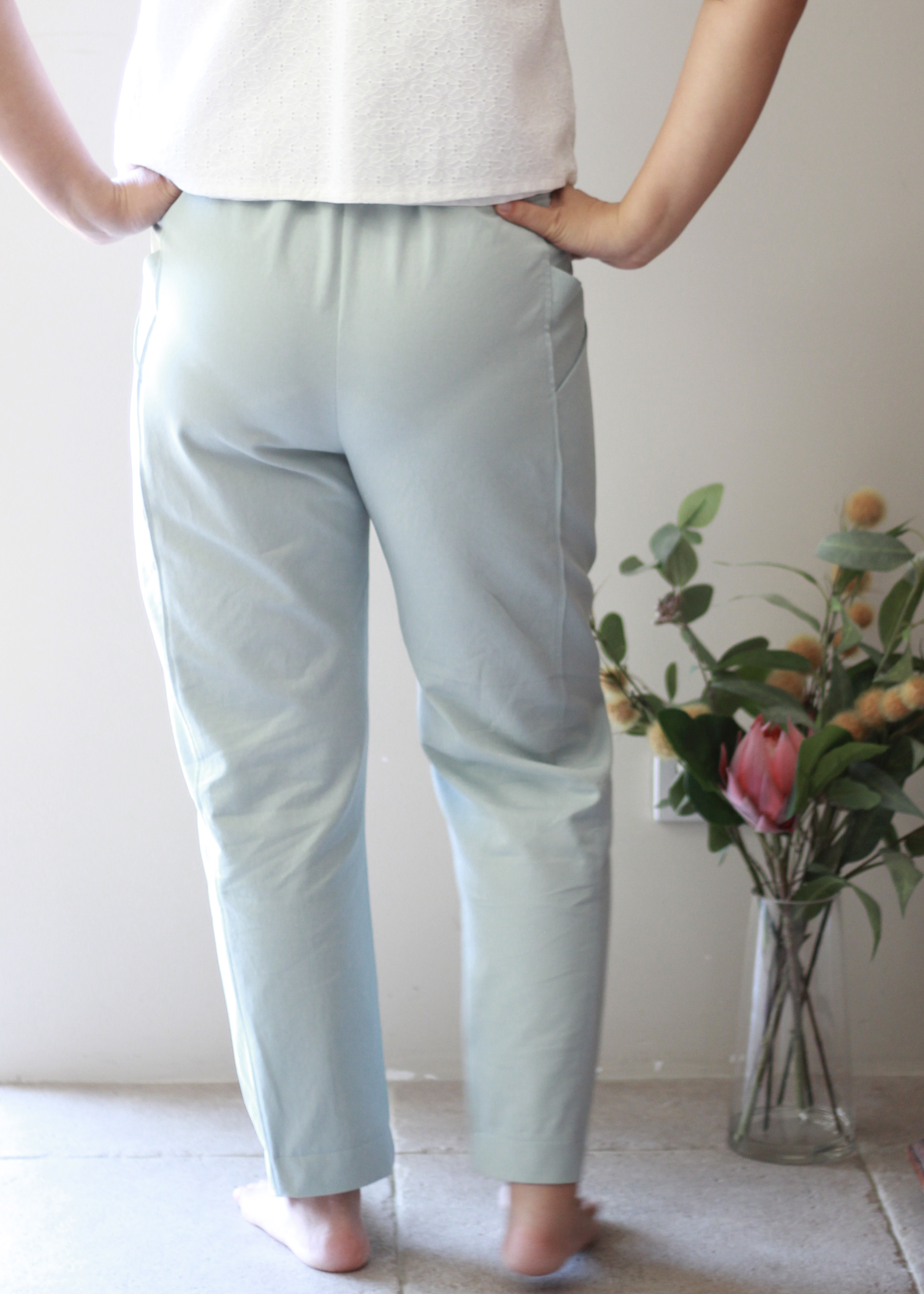
Finally, before hemming the pants, I sew up the elastic as pictured. Definitely not something to skip because it helps to shape the back of the pants. 

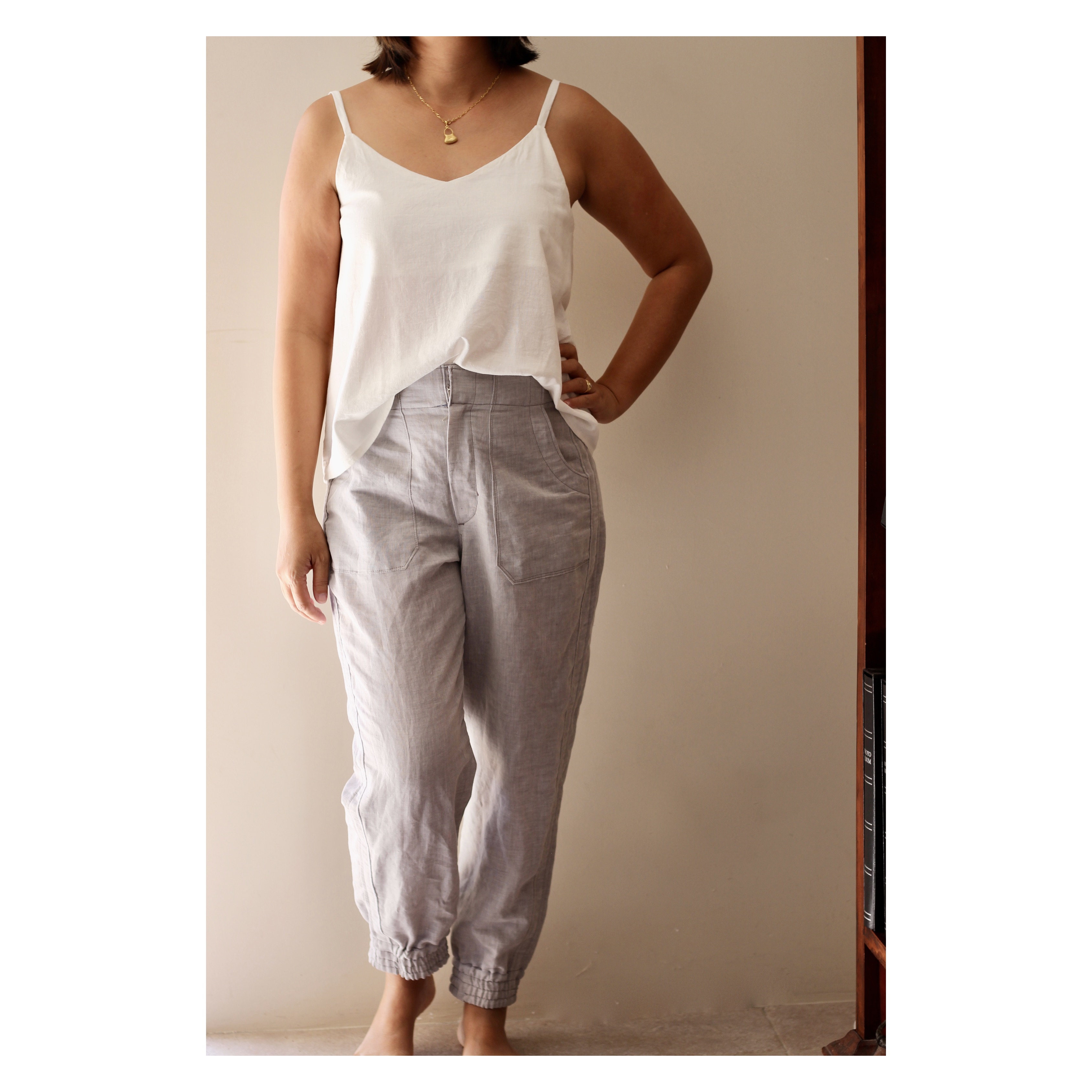
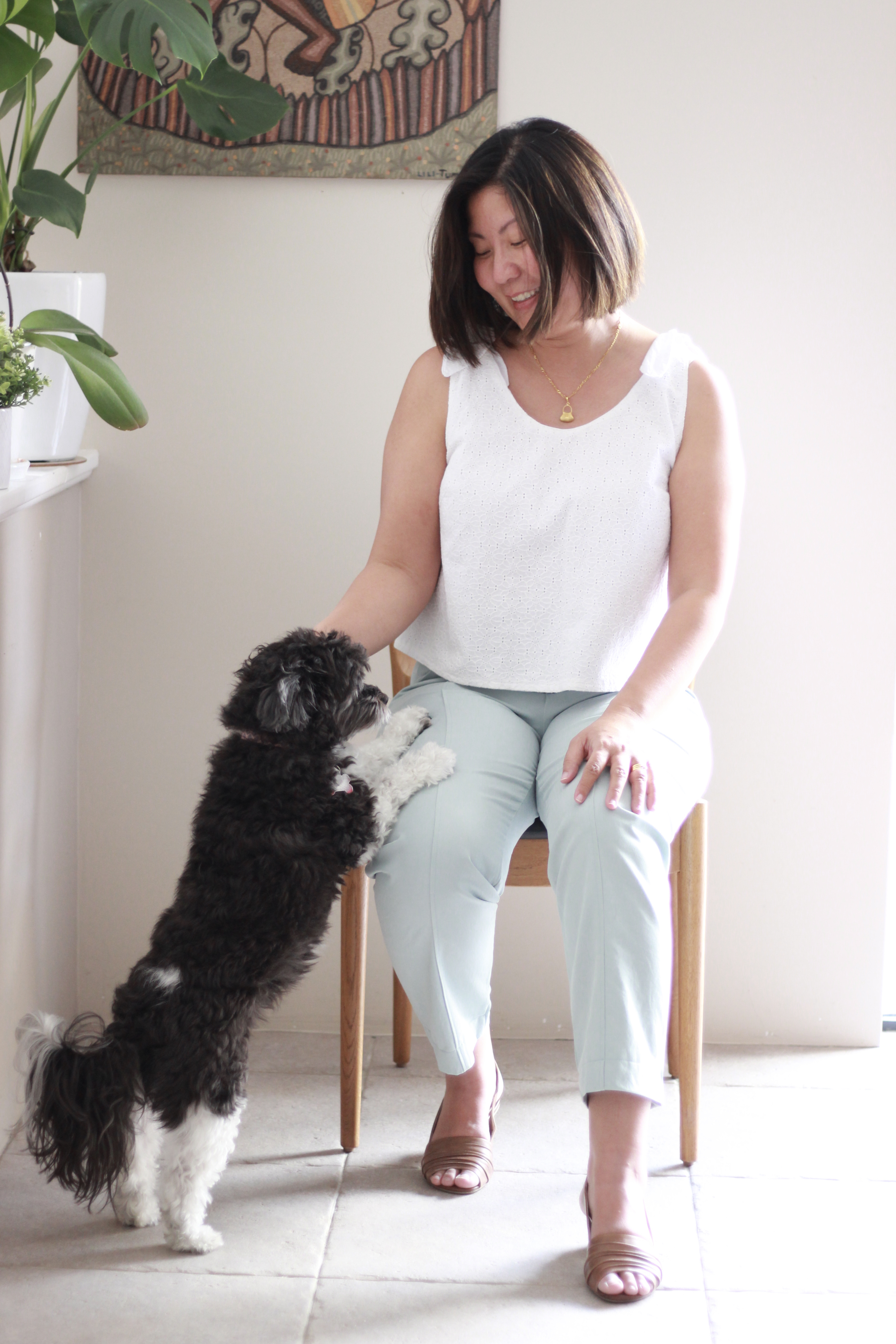
So excited to have this in my Spring/Summer wardrobe! I’ve paired it here with my Frankie Tankie. It’s going to be a great staple especially in this neutral colour.

Thanks for reading and happy sewing!

X Em

Sandeep Dress

Lately, my sewing has had to take a backseat to other commitments. Sewing has become my go to activity for a bit of “me-time” so in the face of a busy month, I decided to pick a pattern that I could sew a little at a time but also something a bit different and challenging. By Hand London is well known for their beautiful dresses. I recommend it to anyone who needs a special occasion dress! From BHL, the Sandeep Dress,“ has a close fitting bodice with V shaped darts, raglan flutter sleeves and a square faced neckline. Two asymmetric circle skirts are joined to a straight underskirt at the waist and mid thigh …”. For me, this pattern falls into the country chic, prairie chic or cottage core aesthetic. 

Okay, this pattern uses a lot of fabric. I ended up using about 5 meters! So, needless to say, a toile was essential. I decided to toile the bodice. My measurements of 37 Bust, 33 Waist and 38 Hip put me in the Size 14 (UK) range. The bodice fit well but the raglan flutter sleeves needed a slight adjustment. I brought the front sleeve seams in by 1 cm and that made it sit well without the sleeves falling off my shoulders. I love all the tips given in the pattern on adjustment and sizing. The BHL website also has great free resources. Despite these tips, I still managed to make a big rookie mistake which was that I didn’t realise I needed to iron the rayon crepe fabric before sewing! Also, another mistake was that I’d made the toile in a different fabric. I used a cotton for a toile which was stiff so initially I thought my sizing was a UK size 16. This resulted in a bodice that was too big so I had to restart the dress (a couple of weeks lapsed before the restart as I tried to figure out how to fix it and realised that restarting was the only way to move on).

I’m thrilled with the dress! It was worth all the effort and I really enjoyed taking it slow with my sewing and working on all the details. I love styling the dress with these ankle boots. It’s a little bit of a juxtaposition being paired with such a feminine dress. 

Thanks so much for reading and happy sewing!

X Em

Ogden Cami

We’ve just seen a close to the end of Ogden Cami Month. It’s been so inspiring to follow along the True Bias blog. This is such a well-loved pattern in the sewing community. There is a plethora of clever hacks for this pattern. From the True Bias website, the Ogden Cami is described as, “The Ogden Cami is a simple blouse that can either be worn on its own or as a layering piece under blazers and cardigans. It has a soft V neck at both center front and center back necklines, and delicate spaghetti straps. The neckline and armholes are finished with a partial lining for a beautiful, high end finish.”

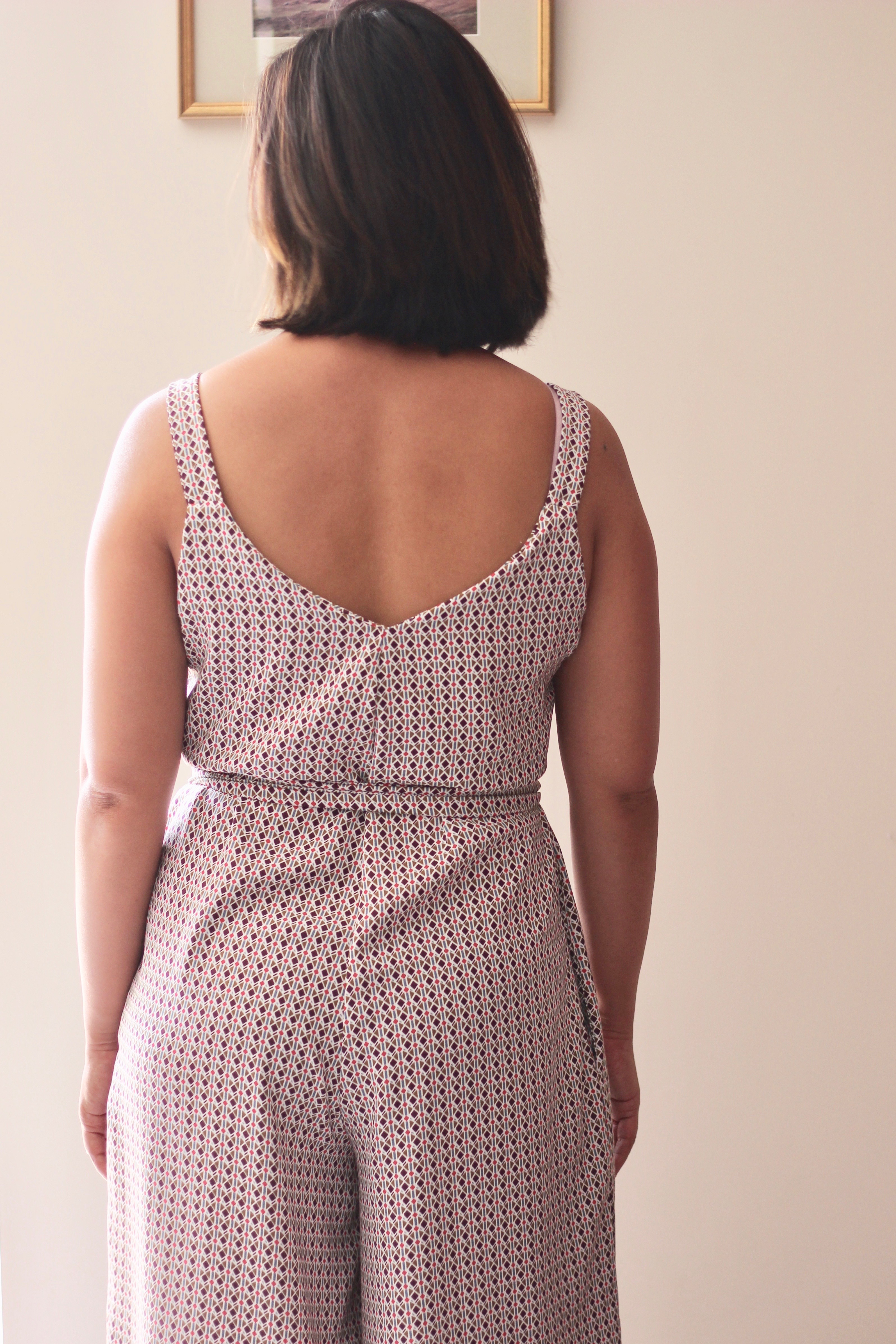
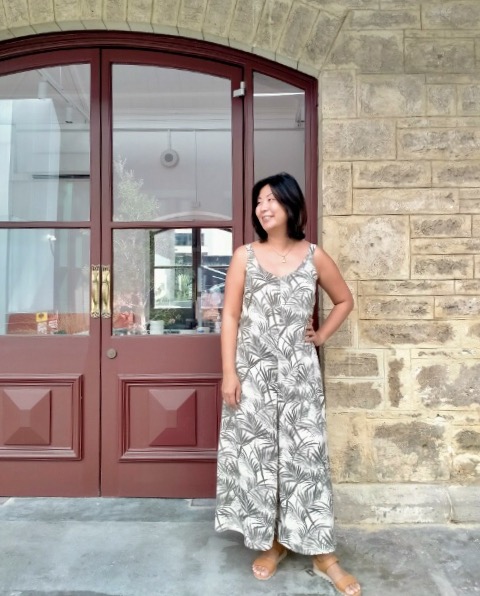
I’ve loved wearing the cami as a layering piece, but I’ve also loved it as a stand-alone piece on those really hot, sticky humid days. I’ve made three of the Ogden Camis with linen which is so breathable and such a great fabric for those days. I’ve also hacked the Ogden into a summer dress using very lightweight rayon for both.

The sizing was spot on for me. There were no adjustments needed which was great! I sewed up the Size 8 and my measurements are B37:W33:H38. When deciding on sizing, I usually look at the sizing chart and in addition to that, the finished garment sizing. It’s also handy to consider the fabric you’re sewing with. I could have possibly sewn up a size if I had chosen a very stable fabric but I found that linen “grows” so you can end up with a slight increase in the “give” of the fabric. On the finished garment chart, the sizing range is from bust size 33 inch to 59.5 inch but be aware the sizing is divided to two ranges.

It’s definitely great core item for your closet and it’s a pattern that keeps on giving! After this Ogden Month, I’m even more inspired for a few more creative hacks for next year.

Thanks for reading and happy sewing!

X Em

Hana Dress in Ankara Fabric

Last year, I had been keenly following Ankara Appreciation Week on Instagram which was hosted by Lena King @thatlenaking and Juliet Uzor @julietuzor_  so, when it came around again I was keen to sew something in this beautiful fabric.

Close up of my Ankara Fabric

Briefly, Ankara Fabric is a wax print cotton fabric which is deeply cultural to Africa. It is called by different names depending on where it comes from so Ankara mainly refers to the wax fabric from West Africa. The prints and the patterns themselves can have symbolic meanings. I bought my fabric from Mapalo Store and when I asked to buy some Ankara fabric I discovered a fellow sewing enthusiast! Her family owns the store and she was so kind in telling me about the fabric. We eventually ended up on her Pinterest looking at some ideas on what I could do with the fabric I had chosen. The main point that stuck in my mind was that with Ankara Fabric, it’s the pattern which determines what you sew up. Pattern matching is crucial to making the most of the fabric. Sewing is such a universal language! I was so touched that she took the time to give me some tips on how to sew up the fabric and now that I have a little experience, I’ll definitely be going back for more fabric to sew up.

Keeping those handy tips in mind, I ended up choosing the Hana Tank Dress by Pattern Scout. The Hana Dress has simple lines so I felt it would let the fabric “shine”. It’s also a dress that I loved wearing in summer and was one that I wanted to sew a few more of for the coming summer. I sewed the size 12 and the only modification I made was to lengthen the dress.

The Ankara Fabric I chose had these cascading repeating blue eyelet pattern on a red background. The blue eyelets actually remind me of peacock feathers. Cutting the fabric was a challenge as I initially thought the pattern was mirrored exactly symmetrically but it wasn’t. Once I realised this, I found a central point of the fabric to coincide with the waist and centre front of the dress. I also made sure the length accommodated to the cascading “feathers” to end with a band of red background around the base of the dress.

Choosing the centre point

The Ankara cloth is such a great fabric to sew. It behaves very well so it’s an easy fabric to sew. It is light but still has structure to it. It’s a very bright fabric so it surprised me when I found it hard to tell the right side from wrong side! Have a look at all the great makes on Instagram under the hashtag #sewankarafabric21

Thanks for reading and happy sewing!

X Em

Frankie Tankie Dress Hack

It’s winter in Perth but I just couldn’t wait to sew up the Frankie Tankie which is a pattern by Vanessa Hansen Studio. Vanessa worked for many years in the London fashion industry and she has posted some of the designs she has been involved in on her Instagram Page. She is extremely talented and her patterns are one of a kind. 

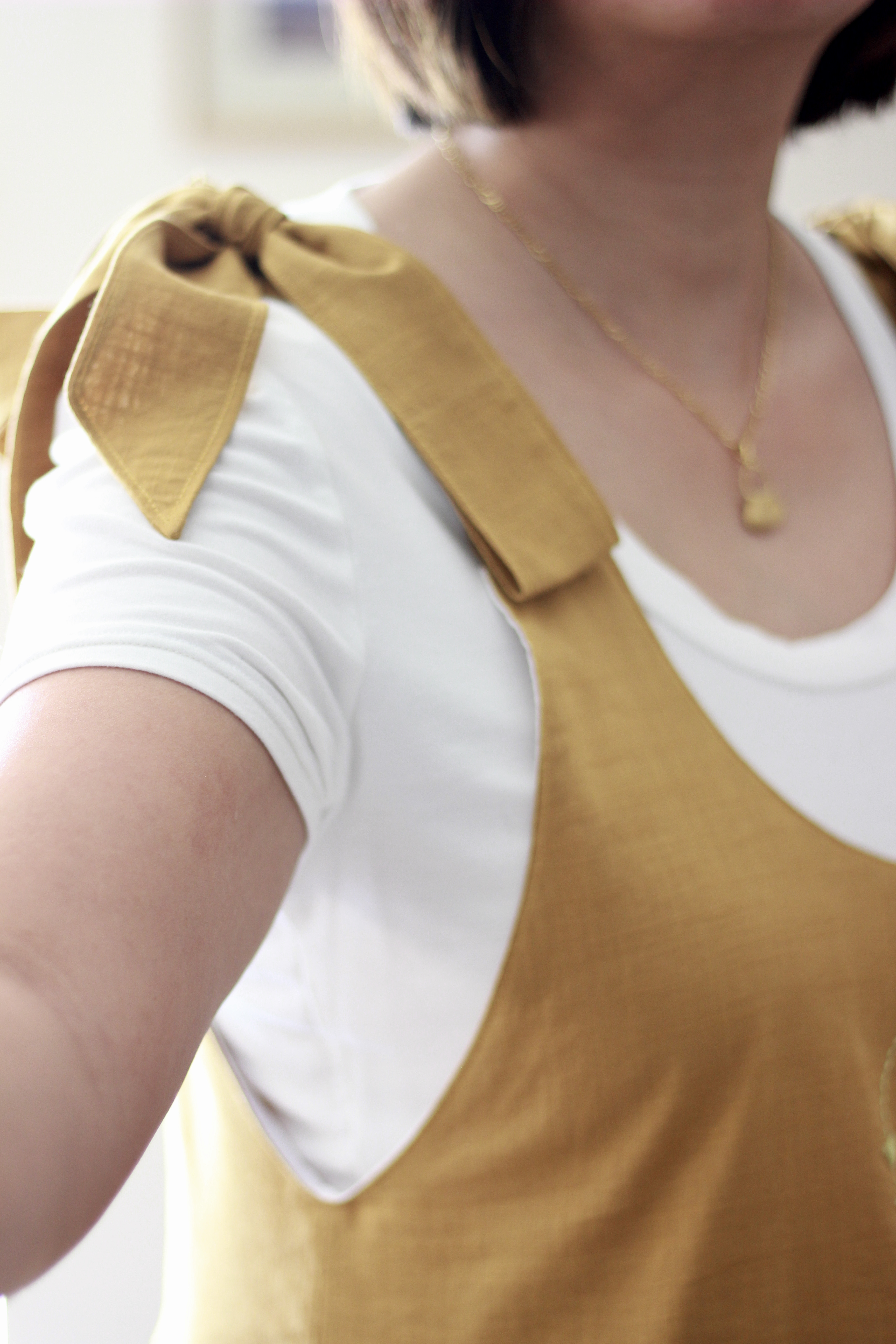
The Frankie Tankie is so cute with the tied strap detail. I’ve made the hacked shift dress version but I can see myself making this pattern a few more times! It’s just one of those patterns that will be easy to refresh and reinvent. Vanessa has acknowledged this by giving instructions for not one but TWO dress hack versions! This is such a cool inclusion in a pattern. 

Cute Shoulder Tie Detail

The pattern is beginner friendly. She has very detailed instructions with lots of explanations. It feels like she is holding your hand through the sew with easy-to-follow tips along the way and includes a bit of humour which makes it fun to follow. It felt like she looked into my brain when one of the steps said, “… do not use your scissors to push even if it is tempting”.

My dress version was simple to do. I’ve just increased the length of the tank by 15 inches. The lengthen and shorten lines are included on the pattern pieces which makes it easy to do this. In fact, there is quite a lot of detail for different options which I enjoy. Choices are given for if you want to use a facing, a lining or to make it double sided.

Sizing was spot on. I made the UK 12 B Cup. My measurements are 37 inch bust, 33 inch waist, 38 inch hip. No modifications were needed. Size range for garment measurements are from 34 ¾ inch to 41 ¾ inch full bust, 38 ¼ inch to 45 1/8 inch waist. The pattern is drafted for three different sewing cup sizes A, B and DD.

I really can’t wait to sew this again. I used a light denim fabric with a ditzy daisy print to make this version of the Frankie Tankie dress. I’d love to make another with an even lighter drapey woven like cotton lawn, silk or rayon. The options are endless. Definitely one that I’ll enjoy wearing on a hot summer day.

Thanks for reading and happy sewing!

X Em

Wooster Jacket

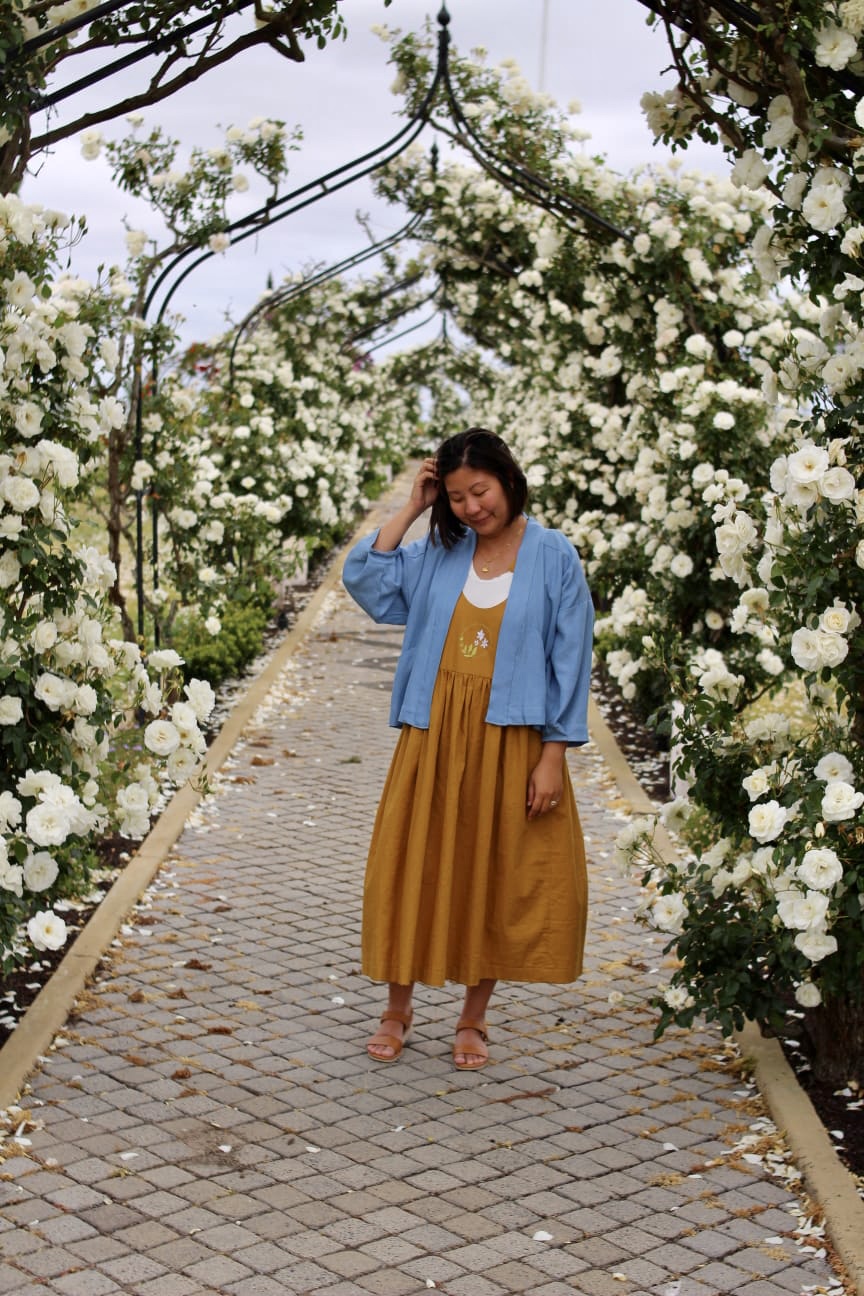
The Wooster Jacket is a timeless addition to any wardrobe. I was lucky enough to be gifted this beautifully designed piece by Sewing and the City. The description of the pattern is, “The Wooster is a loose-fitting unlined jacket with yoke detail, front slit pockets, bracelet length sleeves and a wide neck band.” This is my first time sewing a pattern from Sewing and the City and I daresay it won’t be my last. 

Sewing and the City offers tutorials for those who may be just starting out in their sewing but I found the instructions comprehensive enough for the short time I’ve been sewing. I decided to challenge myself to sew this jacket in a “Sew Everyday” challenge where I sewed for 15 minutes daily. This was such a fun way to sew and it helped me plan and understand the processes of putting this piece together. Here was my sewing process for the jacket:

  1. Complete all stay stitching
  2. Attach pockets to front panels
  3. Join front top and bottom panel
  4. Join yoke to back panel
  5. Sew on sleeves
  6. Sew side seams
  7. Sew hem
  8. Add neckband
  9. Sew sleeve hem

Just a few notes from my version, I sewed the size M which fit exactly as I liked. This pattern has a size range from 42 1/2 inch bust to 55 1/4 inch bust. I used a wool blend fabric to make my Wooster Jacket as it’s an unlined jacket so I chose a fabric that would sit softly against the skin. This fabric has a bit of polyester in the mix which made it hard to press and so when it came to attaching the neckband I stitched-in-the-ditch rather than topstitching it on. Also, there are no indications in pattern of when to overlock / serge the seams so I just noted where to do this when I read through the pattern. Other than that, it turned out exactly as the pattern promised! 

Thanks so much for reading and happy sewing!

X Em

Meridan Knit Dress

Sew To Grow is an Australian based pattern maker. I came across her designs with her famous Bondi Dress and Sydni Dress on Instagram. However, I really wanted to continue to explore sewing with knit fabrics. I had been hoping to find a dress that wasn’t a wrap dress or a T-Shirt dress which seems to be the most popular beginner pattern for knit. This is why I was so excited when I came across the Meridan Knit Dress. On the website, it’s described as a knit dress, “with the beginner in mind.” The design is quite classic with a fitted bodice attached to a straight skirt. It has variations with sleeve length, rounded or squared hemline and vee-neck or rounded neckline. It’s so great when you have so many variations in one pattern.

The pattern has very clear instructions to start with a toile so I decided to make a wearable toile. I’m glad for this advice because I think the type of knit fabric chosen could significantly impact the sizing. I was told early on in my sewing journey that the pattern is only a template and fitting the pattern is the skill that makes the outfit.

You can see in my toile that I chose to sew the size M as my measurements (B:37 W:33 H:38) were in the range but it was too big and I had to bring in my seams from 3/8 inch to 5/8 inch. I did not sew down a size because I felt that the fit around my neckline and bustline were comfortable and I didn’t want that tight feeling under the arm which can happen when you size down. Perhaps, if I had chosen a more stable knit fabric, there would be no need to change the seam size. A little customisation was made by shortening the elastic and only attaching the elastic to the back of the dress leaving the front flatter but gathered between the pockets.

The fabrics that I chose to sew the Meridan Knit dress were both Rayon Spandex. This fabric has great drape and is so lightweight and comfortable to wear. It’s also wrinkle free and won’t need ironing. I could not resist this beautiful Jocelyn Proust Design with beautiful honeyeater birds. Honeyeaters are frequent visitors in my garden and provide so much entertainment with their energetic flittering from branch to branch and lively chatter.

The instructions were very clear and concise in this pattern. There was some slight confusion on the order of the instructions like hemming the sleeves and skirt before attaching to the bodice. I realised later that this would have given a neater finish if I had done it this way. For efficiency, because I had to change to a twin needle for the hemming, I had left the hemming of sleeve and skirt to the end which worked out fine as well. The bias binding for the neckline stumped me a little but that’s down to my learning style as I’m a visual learner so I decided to sew a band method to finish the neckline which I was already familiar with and liked the look of. Luckily, if you need to, there are sew-along tutorials you can access if you subscribe as a Sew To Grow Club member (monthly fee applies for subscription) and there are a lot of free tutorials loaded onto the Sew To Grow site.

The Meridan Knit Dress was an enjoyable sew and knit fabric is a breeze to work with once you’ve got the hang of it. In fact, it seemed to take less and less time with my toile taking me a couple of days to complete and my last dress only taking me half a day to whip up!

I’ve been wearing them on repeat and have had so many people ask me where I bought my dress. It’s been so rewarding to be able to sew myself something as lovely as this dress and by the way, it has pockets!

Thanks for reading and happy sewing!

X Em