Ruffle Tote

There are moments when undertaking a small, manageable project provides the perfect boost for motivation and delivers quick satisfaction. The Motif Studio Ruffle Tote is an ideal example of such a bite-sized project, offering both a sense of accomplishment and enjoyment in a short amount of time. 
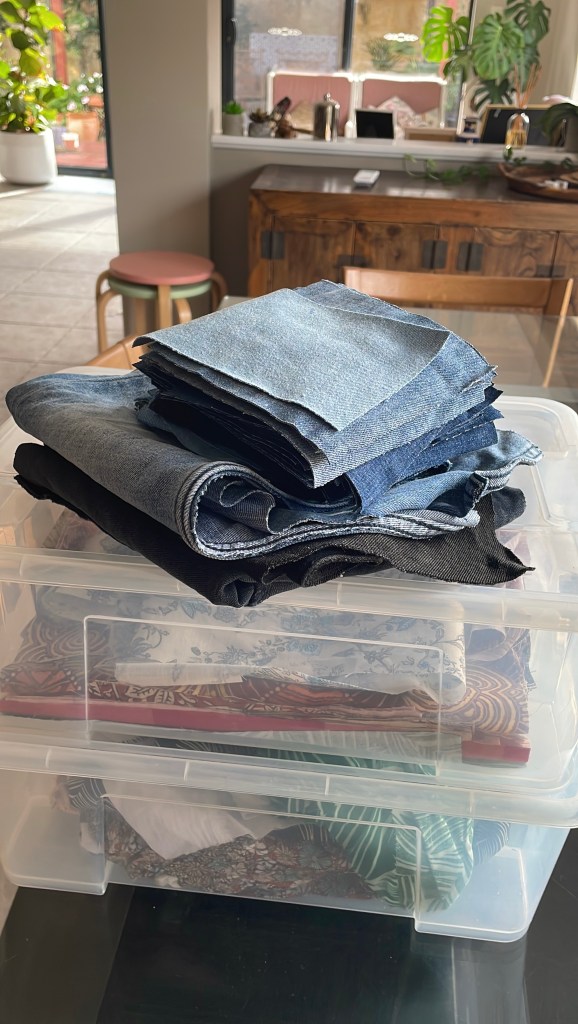
This project is ideal for utilising fabric scraps efficiently. My goal was to repurpose small pieces of fabric and offcuts from previous garment sewing projects. Consequently, the initial stage involved creating the material required for the tote’s exterior. To refine my approach, I consulted the Instagram Sewing community and incorporated several valuable suggestions and recommendations. The following guidelines emerged:

  1. Use fabric of consistent weight.
  2. Join fabric pieces with ¼ inch seams.
  3. Attach all pieces to a backing such as interfacing, lining fabric or batting.
  4. Once assembled, use a quilting ruler (available in various sizes) to trim the fabric to the required dimensions.
  5. Sew the trimmed squares onto interfacing, then stitch the seams at ¼ inch.
  6. Press the seams as you progress.
  7. After completion, trim and press the seams flat.

I am grateful for the valuable advice and support provided throughout this project. The tradition of quilting, passed down through generations, is clearly reflected in the thoughtful guidance I received. I sincerely appreciate the encouragement offered as I worked on my project.

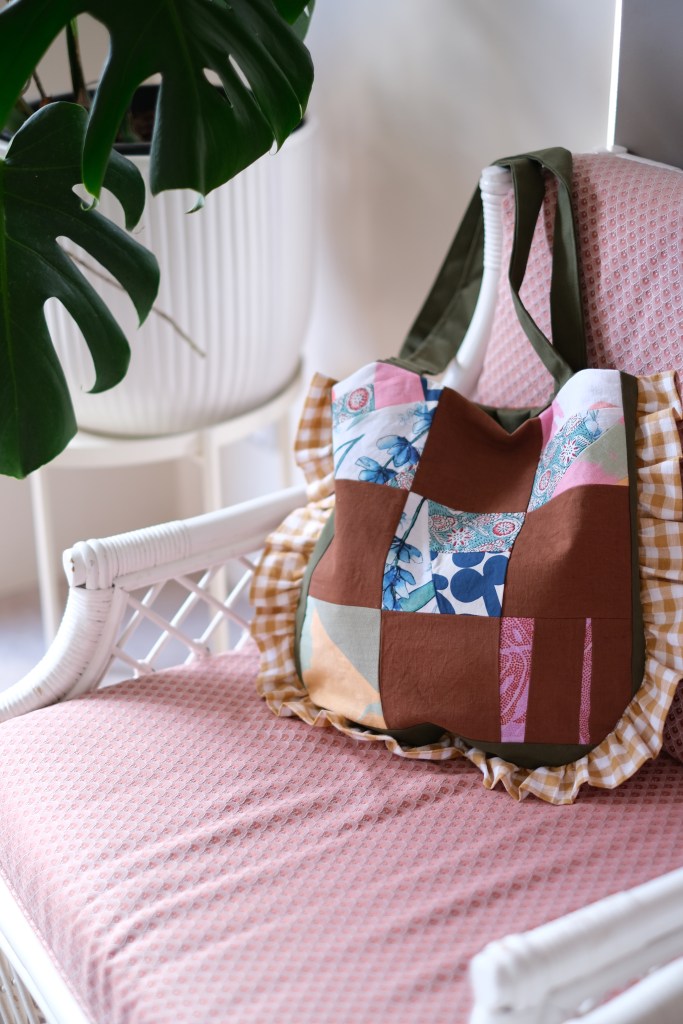
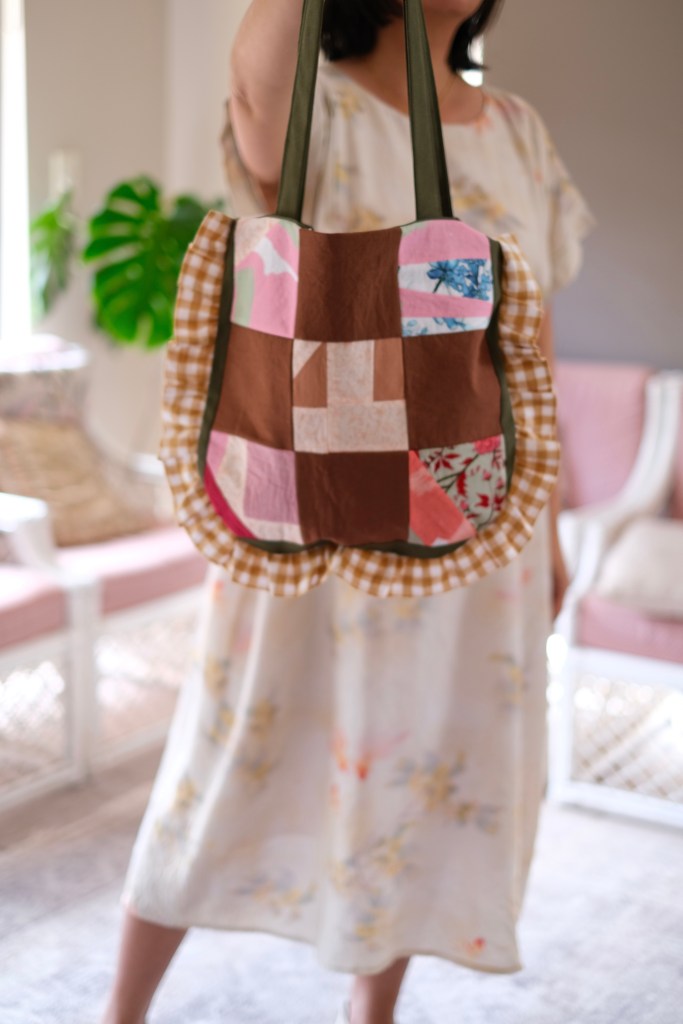
The Ruffle Tote is fully lined on the inside and has an internal pocket. It has two long handles and an optional tie which I skipped. I used some leftover green cotton drill for the lining and handles and a remnant piece of linen from my scrap collection. The ruffle was made from leftover gingham.

The Ruffle Tote comes in three sizes. I chose to make the medium size. I’m keen to now try the large size as I can see myself using a large one for the beach. The sewing experience was excellent due to the superb instructions. I tend to use the instructions off my computer because there are photos that accompany the written instructions. These would be excellent for true sewing beginners.
Perhaps this will encourage anyone feeling stuck with sewing to start a small project. Sewing has brought me a lot of happiness, and I truly value the relationships I’ve built through it.

Thanks for reading and happy sewing!

X Em

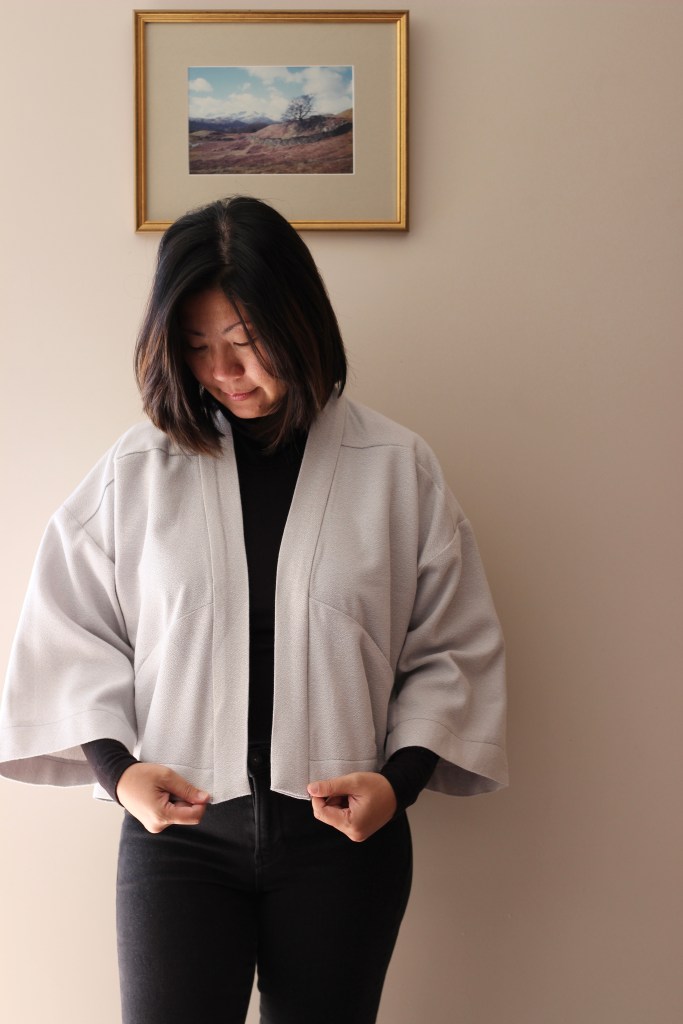
Nova Coat for Frocktails

Still recovering from Frocktails 2025 which is an annual gathering of sewing enthusiasts and is hosted in many different locations around the world. It was a fun night of delightful sewing banter, finally meeting familiar faces from social media in real life and getting to fondle a lot of fabric (with permission of course!).

The process of making or thinking about what to wear for the night started many months back. I wasn’t specifically thinking about Frocktails at the time, it was just that my growing hoard of sewing scraps had been bugging me, and my husband had cleaned out his closet and found some old pairs of jeans that were not fit for donating. I think there was also a sewing challenge based around upcycling that started me down this path.

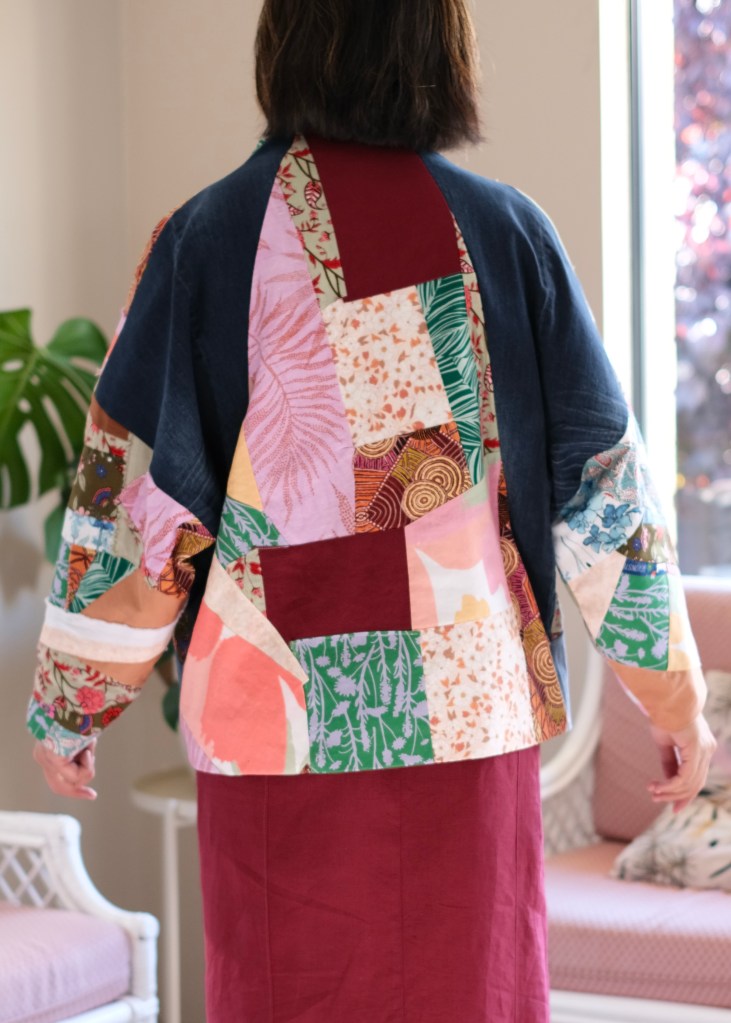
I was initially planning on only using the denim to make another Papercut Nova Coat. In this version, I wanted to make the shorter version and size down a few sizes. I have a lovely long wool version, but I’ve always needed something in a lighter weight for the in-between seasons. As mentioned, I was trying to complete a sewing challenge, but inspiration and motivation was lacking as I started to cut into the denim. So, I stopped. I’m glad I did because I don’t think I would have achieved something that I love as much as the jacket I’ve ended up with.

After a pause of another couple of months, I started to envision the jacket I wanted. I have a lovely memory of my friend Hiromi, who gave me a gift in a box that she had covered in little bits and pieces of washi paper. The gift was a beautifully folded crane, but I fell in love with the box that housed it. Each piece was thoughtfully placed but irregular. There were no regular shapes, yet it felt cohesive. To my ten-year-old eyes, it was like a multifaced piece of jewellery. I wanted my jacket to have that thoughtful but irregular placement using my scraps, but I wanted to ground the scraps with pieces of denim so that the eyes have something to rest on like an outline in a painting.

Once inspiration struck, it was easy to work out what to do next. I started by reprinting my Nova Coat pattern pieces. Last time, I had sized down from a size 4 to a size 3. I went down another two sizes to the size 1. The main consideration is the bust measurement, the sleeve length and the length of the coat. I was sewing the shorter version. The finished garment measurements are so helpful and accurate. My measurements are 38-inch bust, 33-inch waist and 40-inch hips.

The next thing I had to work out was how to place and secure my scrap pieces. Since I wasn’t making traditional quilting blocks, I decided to cut a “base” for the scraps to rest on. If you’re cringing at my lack of technical knowledge as an expert quilter, I am putting a disclaimer here that I have no experience in quilting. Do not use this as a tutorial. Mine was a joyfully creative process. Once I had the pattern pieces cut out of an old bedsheet, I could place and sew on my pieces. I made sure everything was irregular but was cohesive with the colours and contrast I was trying to create. I cut the side back panels, and pocket pieces directly from my upcycled denim without needing to sew them onto a base. It was then easy to sew everything as instructed. The Nova Jacket is fully lined. I used another old sheet for this lining. The beauty of using old sheets is that everything is so soft from being washed in. 

The jacket matched my True Bias Quinn Dress which I wore for the night. I was so happy with the outcome and comfortable on the night. I’ve found this process of using my sewing scraps to be fun and creative. It’s quite an addictive process and I made the Motif Studio Origami bag using the same process. I’ll be searching for more ways to use up my scraps. I’m glad that I’ve been keeping everything, no matter how small. It’s also a lovely reminder of all my past projects.

It was so inspiring to see the beautiful outfits but also to be in a space where women support women. Lots of compliments and chatter about outfits and fabric. There was a man who came along and kudos because he won best dressed! It was an inclusive space which felt welcoming. I’ll definitely be marking it in my diary for next year.

Frocktails 2025

Thanks for reading and happy sewing!

X Em
Fiske Pajama Set

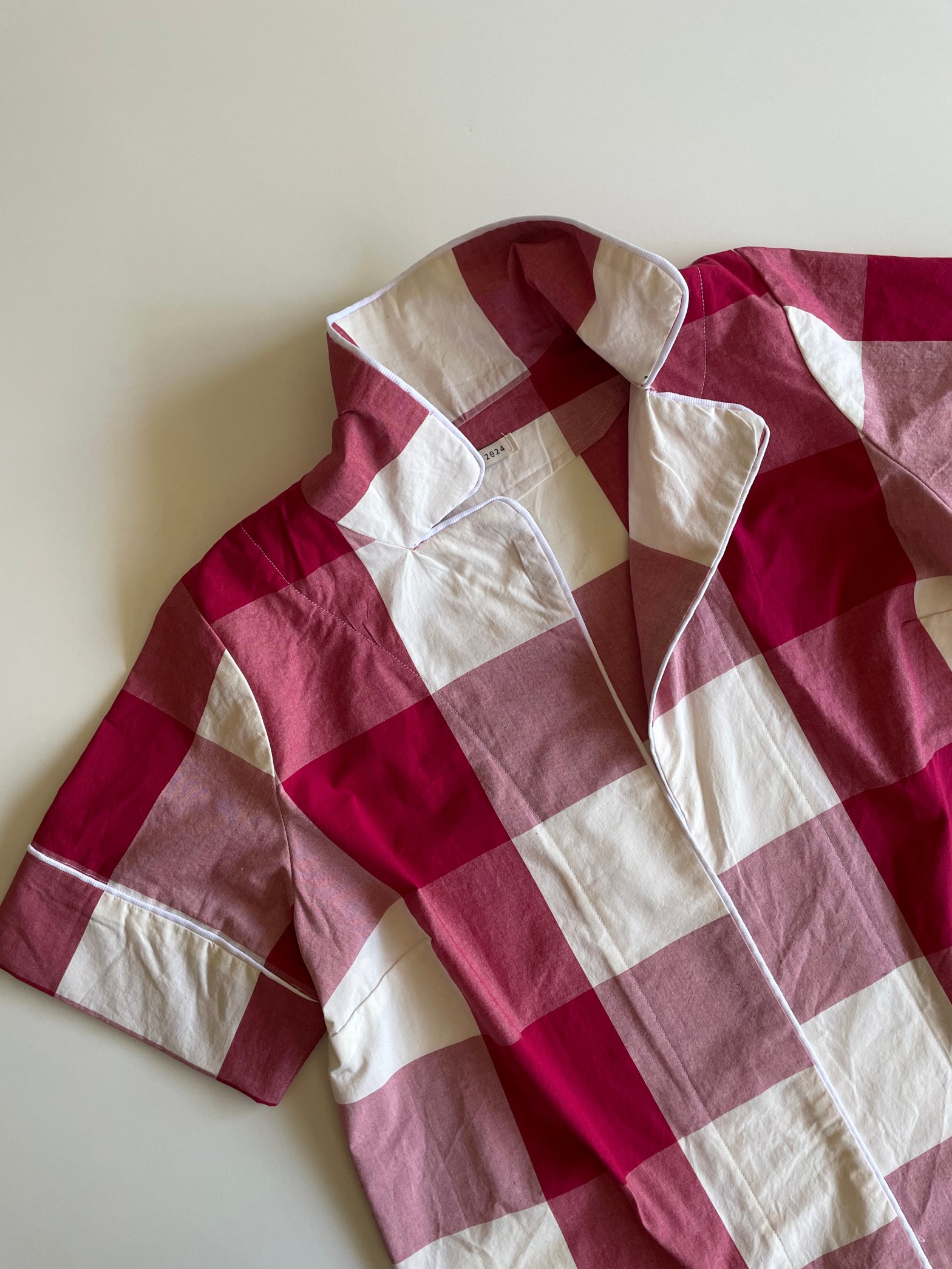
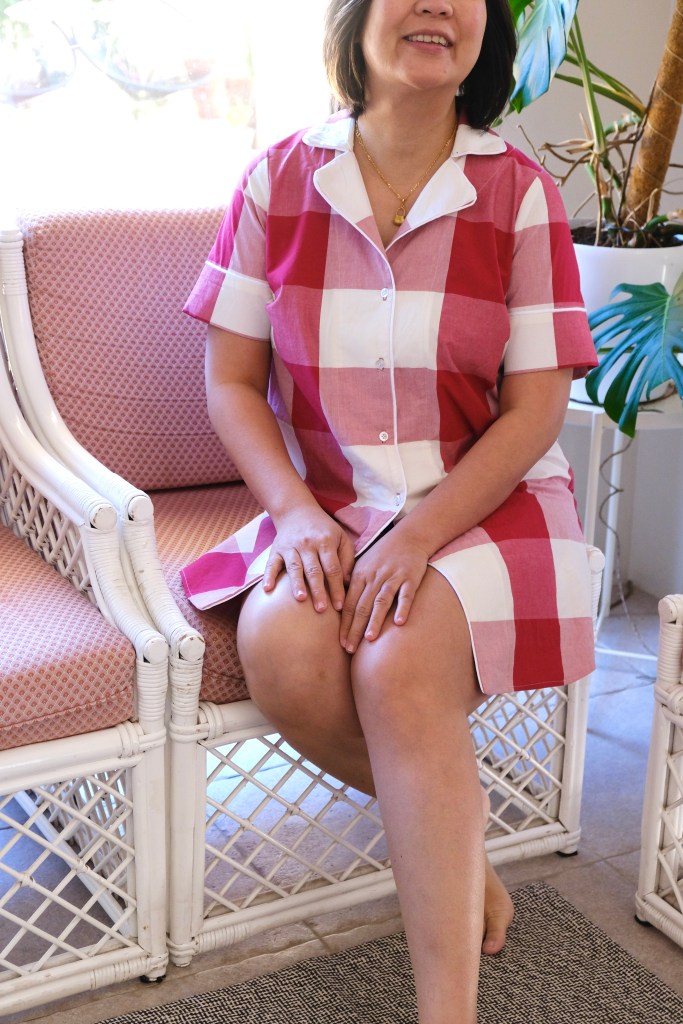
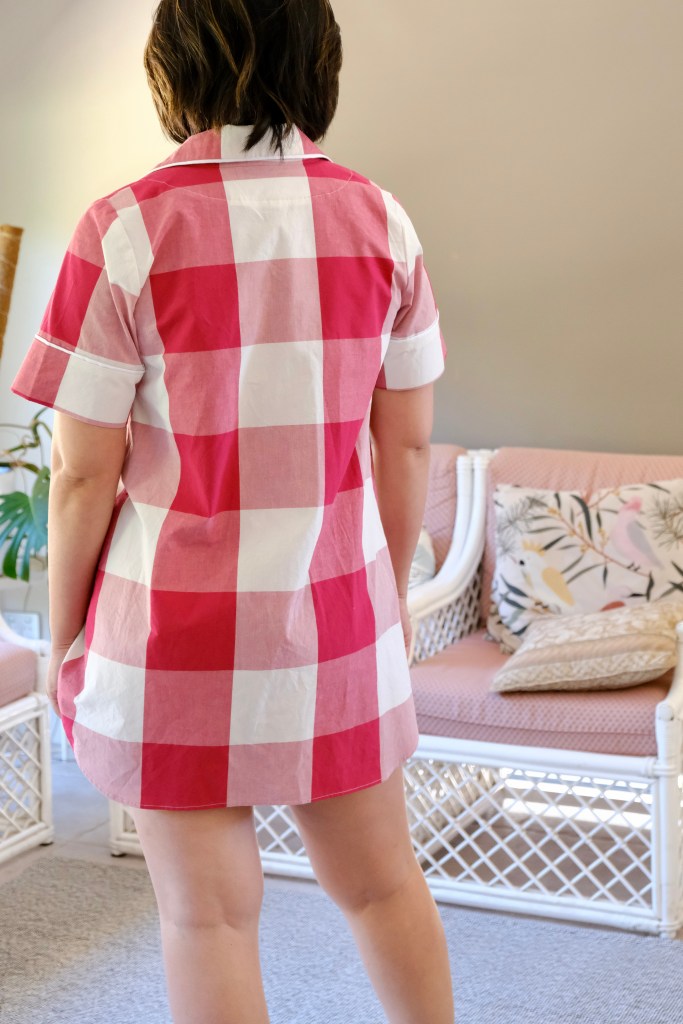
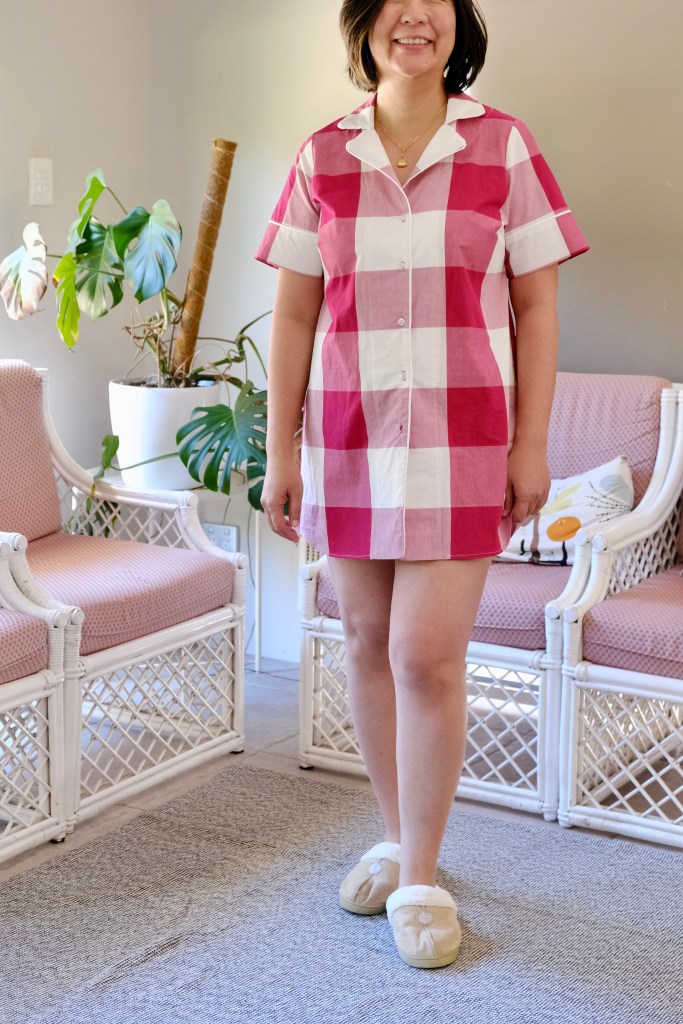
Cashmerette released the Fiske Sleepwear Set which was packed full of options. There is a camisole and nightgown, there is also the classic pajama set with nightshirt option and to top it all, a gown as well. This time, I chose to sew the Fiske nightshirt with pajama shorts. Even within the set, it came with a lot of options. The detail I was most interested trying was the piping.

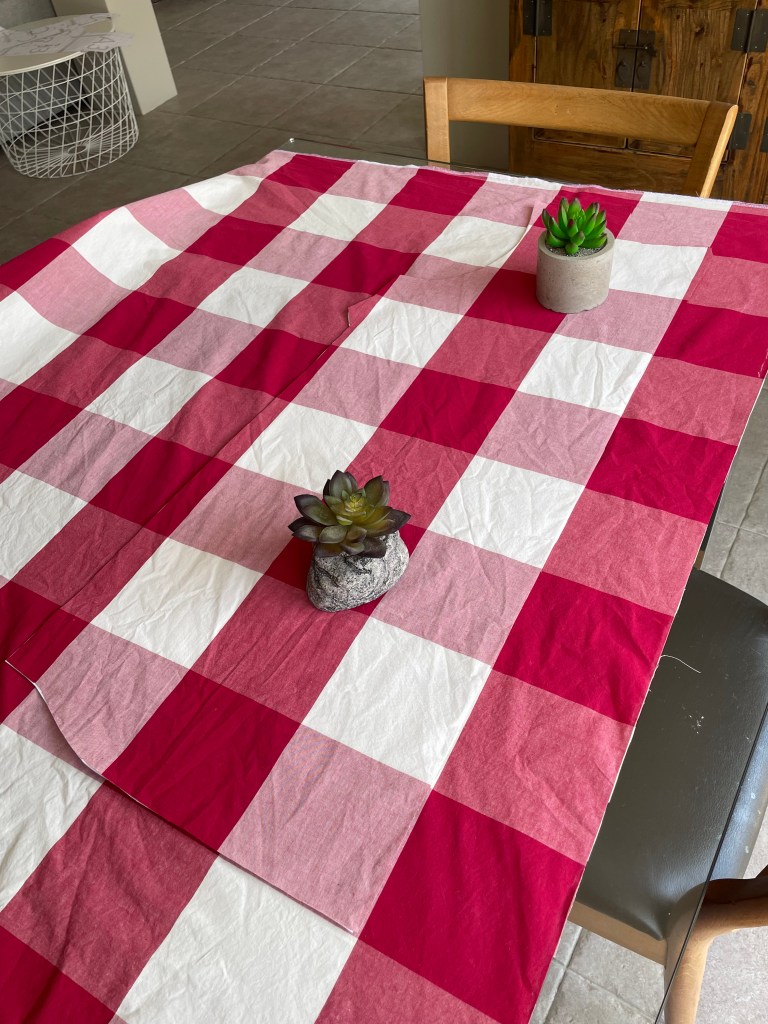
The pajama set is made for woven fabric, so I was looking for something comfortable for sleepwear. I was drawn to this XL gingham from Spotlight Stores. It’s 100 percent cotton and softly lightweight. It did add a degree of challenge with the pattern matching but I really enjoyed taking the time cutting and thinking about pattern placement. Sewing mindfully is something I try to do so even though it added to the difficulty, it also adds to the enjoyment of the project. My tip with pattern matching is to make sure you buy a little bit more fabric than suggested. My fabric width was 114cm and I bought 3 meters. I think I ended up using 2.5m for the nightshirt and used the rest to sew up the pajama shorts without cuffs.

I’ve sewn quite a few Cashmerette Patterns now so I can judge my sizing quite easily. There is a Cashmerette Sizing Tool available, and I used this consistently when I first started sewing their patterns. For my nightshirt, I chose to make the size 10 for my measurements of 38-inch bust, 33-inch waist and I made the size 12 for the pyjama shorts (33-inch waist and 40-inch hips). Both fit very comfortably and I find them both true to size.

The instructions were easy to follow and were both written and illustrated. There was only one point of confusion which was when I got to sewing the shorts. My waistband did not fit and was too long, so I ended up removing about 5cm from both waistbands which worked. I haven’t had a chance to check on the chat forums in Cashmerette Club. I have a feeling that the waistbands might have been made to fit the shorts with the stripe which I did not attach. On occasions like this, I really appreciate the club chat forum! 

Fiske Nightshirt with Pyjama Shorts

The piping was surprisingly easy to attach. The instructions were very detailed, and everything was outlined step by step, so I think this went a long way in making it easy for a beginner. I had a moment around the collar and lapel because I hadn’t run the piping far enough around the dot marked on the pattern piece. It’s all in the instructions so I just had to follow more carefully.

So happy to be adding this to my Cashmerette makes. I’ll be trying out the other options included in this pattern bundle soon. I’ve been making Cashmerette patterns for a while now and Cashmerette have generously provided their collaborators a discount link. If you’ve been planning to try out a sewing club, you can use my link to get a discount for yourself! Please see below for all the details.

The All Access level of Cashmerette Club is 25% off through November 30th. And if you sign up my special link, you can get 25% off All Access AND an extra special gift: a bonus free Cashmerette PDF pattern of your choice! Here’s how it works:

  1. Go to  cashmerette.com/emsewhappy and add the free gift to your cart. (This is an affiliate link. If you choose to make a purchase after clicking this link, I may receive a commission at no additional cost to you.)
  2. Then go to cashmerette.com/club and add All Access to your cart
  3. Complete the checkout and within a few minutes, you’ll receive an email with a coupon code that you can use for a free PDF pattern.

Thanks for reading and happy sewing!

X Em

Darla Jumpsuit 

Featuring Fibers to Fabric Hand-blocked Cambric Cotton 

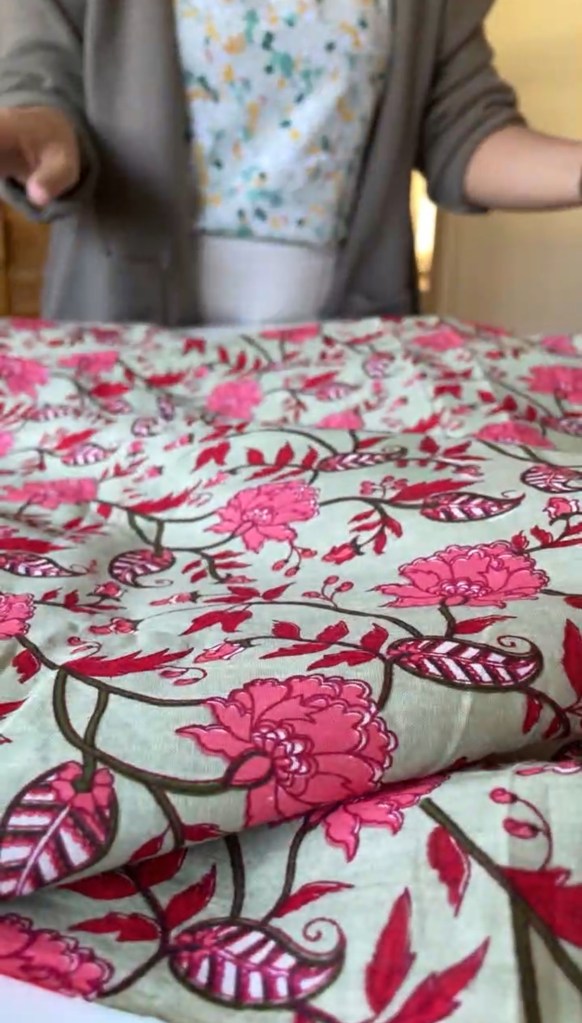
It was so exciting to receive this beautiful hand-blocked cambric cotton from Fibers to Fabric for a review. The first thing I had to find out was, what was cambric cotton? It’s sometimes known as batiste and it’s a beautifully sheer fabric that’s great for summer. It reminds me of the handkerchiefs my grandmother used to hand embroider. It’s a natural fabric and usually made from either linen or in this case, cotton. It’s popular because it can be dyed easily so it’s perfect for the Fibers to Fabric hand-block.

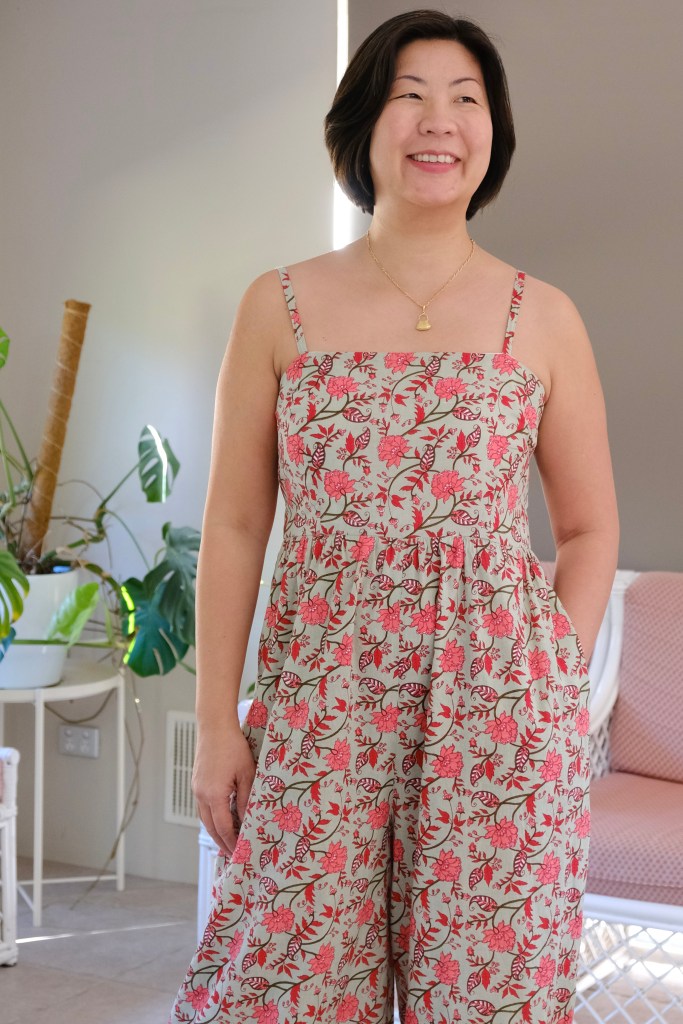
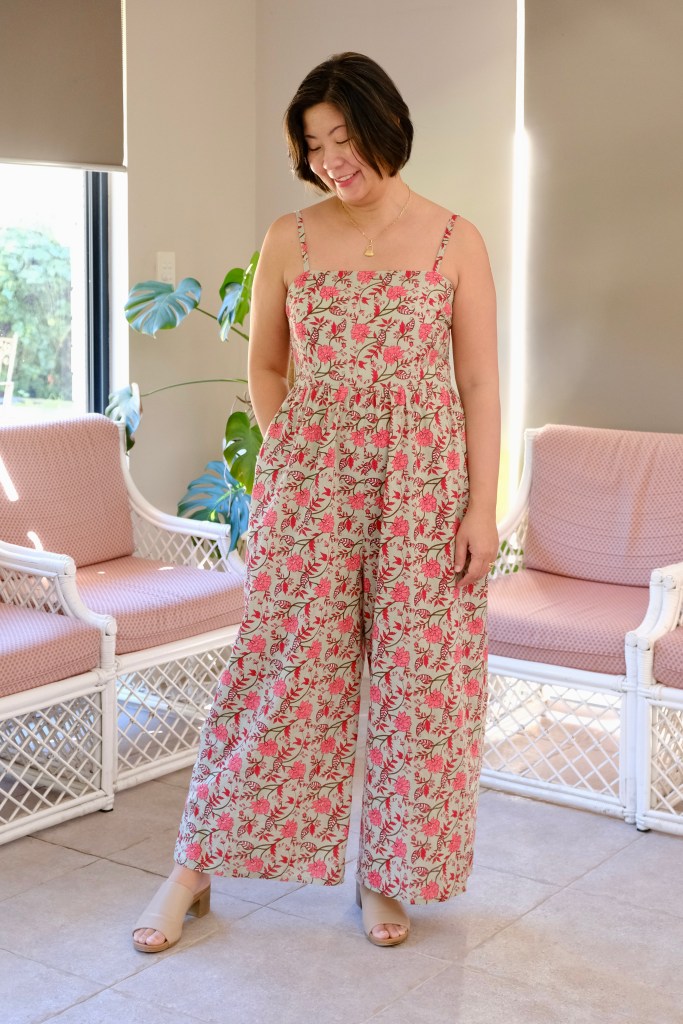
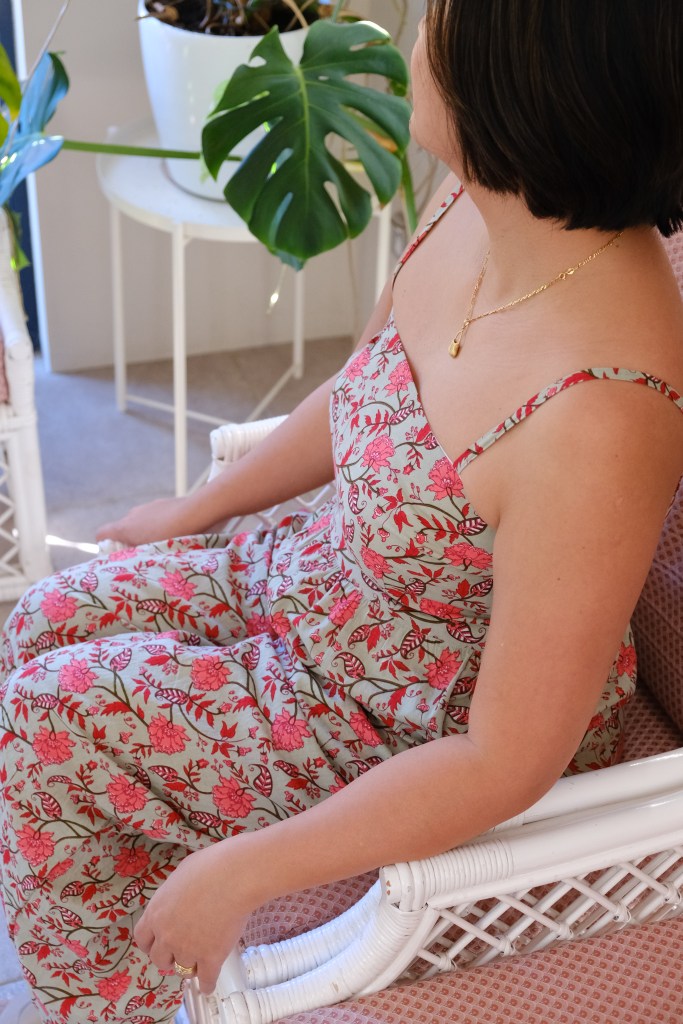
My first challenge was narrowing down what I was going to make with it. The fabric width is 42” (107 cm) and I had 3 meters. The design of the hand-block was non-directional. I narrowed it down to the True Bias Darla Jumpsuit because I wanted to maximise the use of every square inch of this fabric. With a bit of creative cutting and use of a white muslin for the liner, I managed to cut the maxi with classic bodice version of the Darla. Gloriously, this included the pockets!

To prepare the fabric, I overlocked both cut ends of the fabric before soaking and washing it in cold water. Once out of the wash, I air-dried it then finished with a warm iron. The benefit of cambric cotton over plain cotton is the tighter weave which makes it more resilient with frequent laundering. It’s stands up better to being washed without compromise to the lightness of the fabric.

While my fabric was drying, I gathered my supplies for my Darla Jumpsuit. There are four versions of this pattern. It can actually be sewn as a dress and comes as a maxi or mini. There are two bodice options. One is a tie back or the classic with the invisible zip. I decided on the classic, so I needed an invisible zip. When I was at Spotlight, I also bought the invisible zipper foot. The pattern calls for lining which can be from the same fabric. I used a white muslin and interfacing which was already in my stash. To prepare my machine, I changed my needle to a new size 10/70 needle which is great for lightweight fabrics.

Now, I’m not brave when it comes to cutting straight into “good” fabric with a new pattern. I toiled the Darla bodice with a remnant thin cotton and had to make some adjustments. I recommend this especially since the Darla has a fitted bodice. For my measurements of 35” HB:37.5” FB:33” W:40”H, I made the size 12 and I did have to adjust the bust. It says in the pattern that it is drafted for a C Cup so my measurements would put me between the B Cup and C Cup. The structure of the bust is made from two darts, one from the side (underarm) and one from bottom (under bust). Without going into too much of the math, the dart can be adjusted to be narrower for a smaller cup or wider for a fuller cup. I adjusted the side seam to compensate for the adjustment and I only adjusted the underarm dart. The main message is to toile, and I always adjust on my body and then measure. I’m terrible at doing it the proper way which would be more accurate. I find the Darla pattern true to size.

This hand stamped floral block print was a dream to work with. It’s very stable to sew and easy to handle. I used an overlocker to finish the seams which worked fine. Some finer fabric would need French seams, but the cambric cotton tolerated the overlocking. True Bias instructions and order of construction is excellent. It was a joy to bring together this pattern and the fabric. I just need a bit of sunshine and heat to wear it. Is it okay to book a tropical getaway so you can wear an outfit? Asking for a friend. 

Thanks for reading and happy sewing!

X Em
Full disclosure: Fabric was gifted for a review but all opinions remain my own.

Andi Set

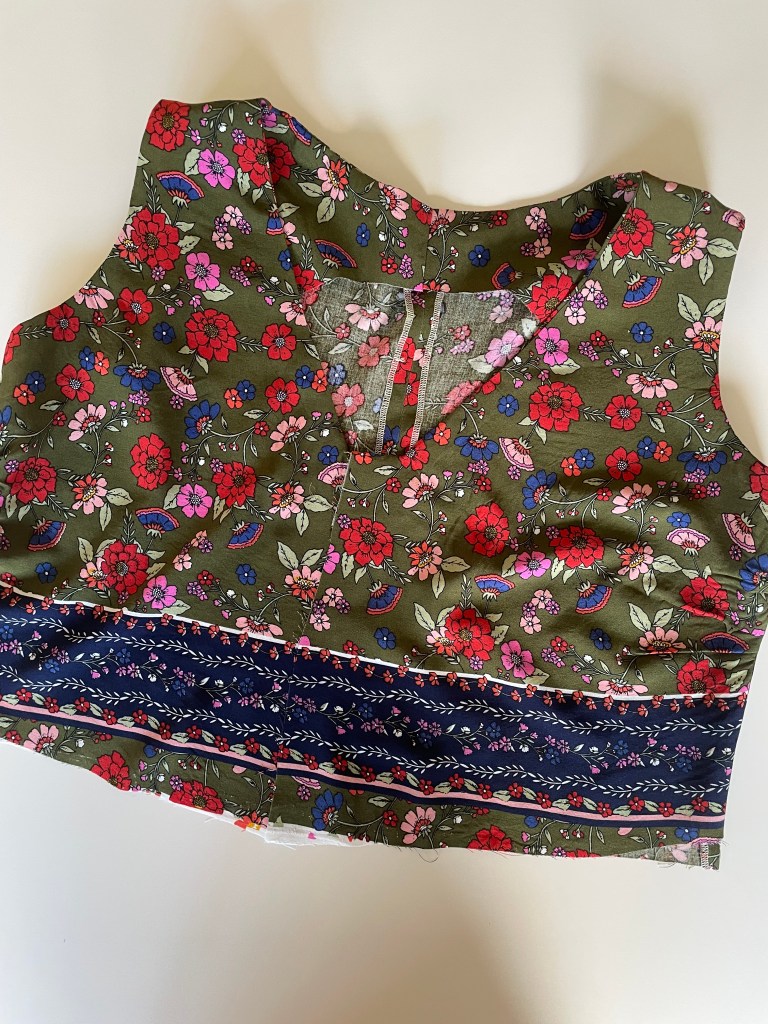
Brunching with other ladies who sew can be dangerous for the budget. It was during one of these brunches when I discovered East Coast Textiles and their fantastic selection of rayons. They also have other fabric, but I was mainly interested in the rayon which I bought three pieces at a bargain price. The one I’m featuring has a border print which I wanted to challenge myself with. Initially, I thought of making another pair of flint pants or a pyjama set but when I was sewing up my Andi Set Top, I thought of how this fabric would pair so well with a sleeveless version of the full Swimstyle Patterns Andi Set

So, I set about researching how to sew with border prints. First, I had to decide how to use the border print. Seeing as there was no seam running vertically in the front of the skirt, I decided to use the border to emphasise the bottom of the blouse and the skirt. I think this was a nice way of pairing the set and adds a bit of matching detail. 

The second challenge was cutting the fabric. The border runs along the selvedge on both sides, so I had to cut the pattern cross grain. We don’t usually cut cross grain because there is more stretch to the fabric this way but since the pattern pieces are not too heavy and allow for lots of drape, it’s okay for this pattern. 

This was good in theory but challenging in execution. It took me a whole afternoon to figure out how to align and modify the pattern pieces to fit the border nicely. Rayon is very slippery fabric so another challenge was cutting everything accurately so the seams would line up and not interrupt the border print. I’ll try to describe what I did. For the top, I lengthened it by 1 inch but when sewing the side seams of the top, I did not match the sides according to the notch provided but by the border print. This gave me an uneven bottom edge, so I then trimmed it to even it up before finishing the bottom hem. The side seam of the Andi Top has gathers on the front bodice piece, so this is how I was able to modify it. For the skirt, I cut the pattern as it is drafted but left the bottom of the skirt straight. When I had matched and sewn the side seams, making sure my border print had matched up, I trimmed the bottom raw edge following the curve of the pattern piece before finishing the hem of the skirt. There are probably a few ways of doing this but, I found that this worked best for me. This skirt has two side splits, so it wasn’t too difficult to use the border print for this.

The sizing was true to size. I sewed the Size L for the top and the skirt without any modifications. My measurements are 38-inch bust, 33-inch waist and 40-inch hips. I decided to make the long tie for the top. I finally worked out how to use my loop turner properly which make the process a lot easier and faster. I swear that the loop turner I bought came with gave me completely different instructions which is why I’ve struggled in the past! 

Instructions and illustrations are excellent with the pattern which makes it so enjoyable to sew Swimstyle Patterns. I have been gifted the pattern as part of their Ambassador Program, but they are excellent instructions and all opinions in this article remains my own. One small annoyance is that I think the pattern is made more for people who like to trace their patterns not the people who cut into them like I do! No hate please, do as you like but I tend to print the size or sizes I need and then cut accordingly. There are no size layers when you print and there’s also no differentiation of the cutting lines so it’s a bit easy to get lost. I mention this because I did! I started with the line for size L and then somehow was cutting the size M. Luckily, I had noticed quite quickly and could stick the paper to repair it. 

The design is superb, and you can tell that these patterns are designed and drafted by someone with a lot of experience. The set has a beautiful look and fit. Even though the skirt has an elasticised waist, it looks sleek and well fitted. I also love the elongated tie which is an elegant part of the design. So happy with how this set turned out. I love sets because of how versatile they are. Whether you wear each piece styled independently or together.

Thanks for reading and happy sewing!

X Em
Catskills Jacket

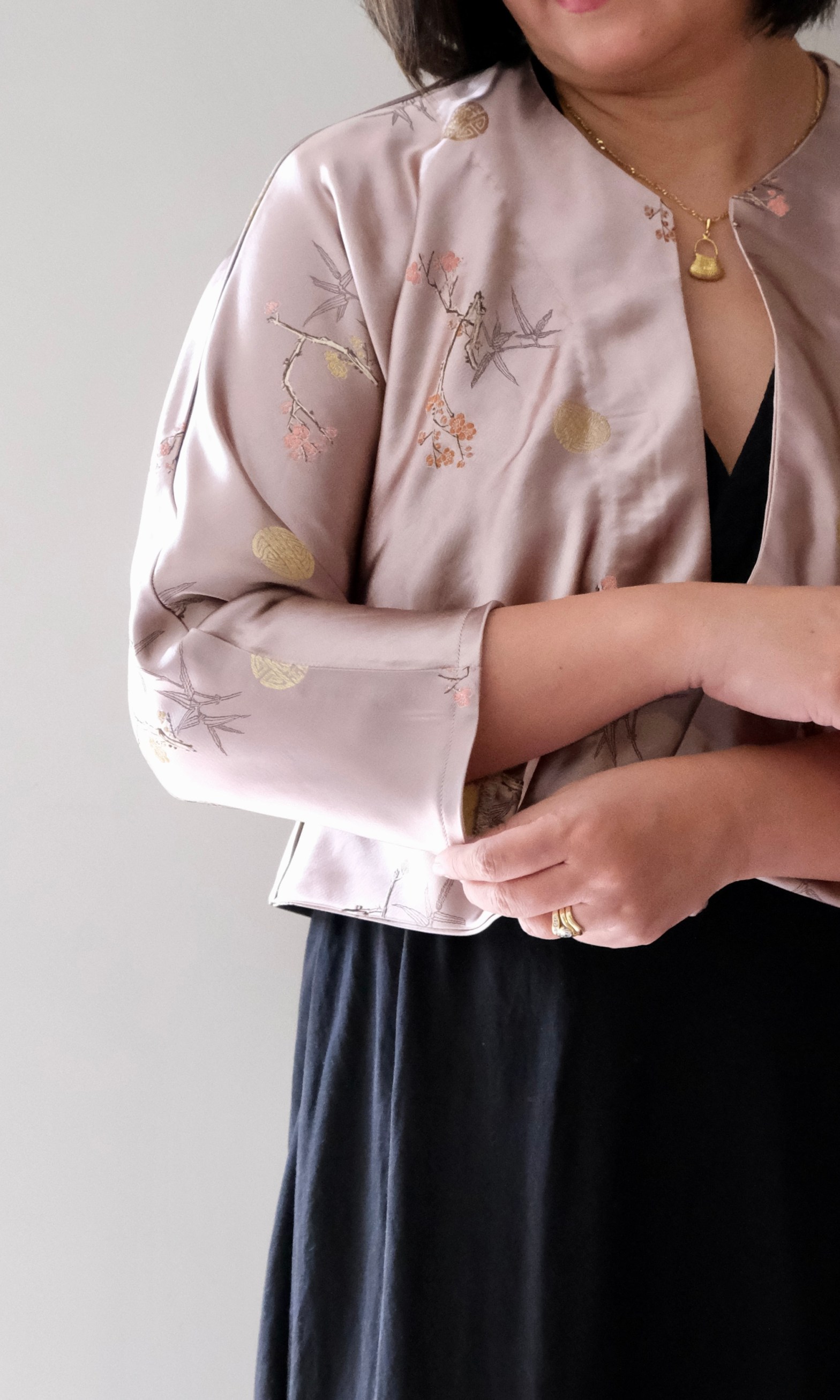
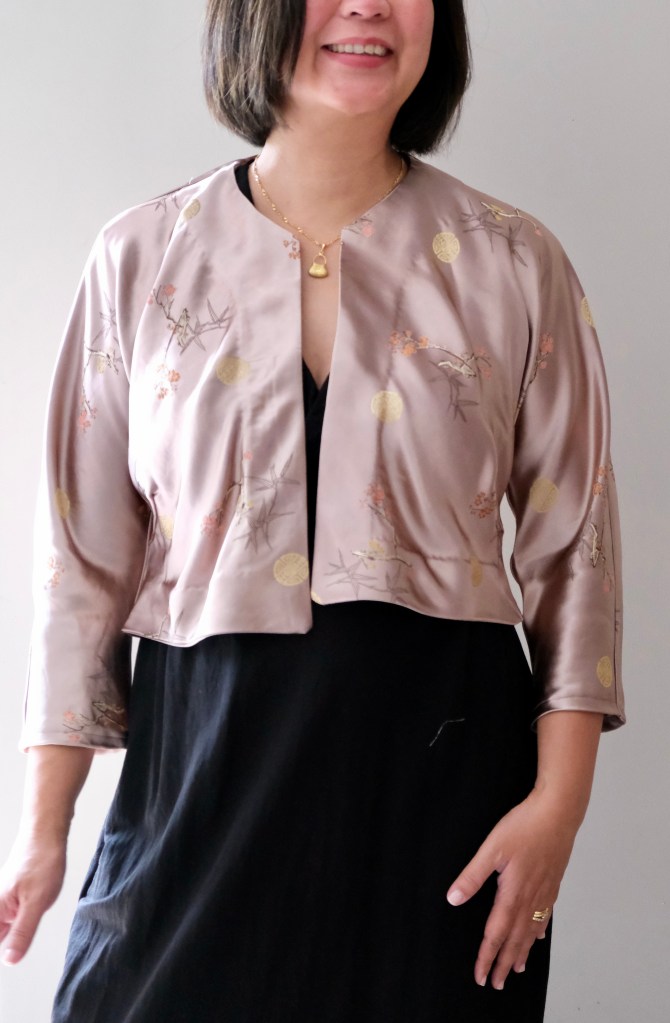
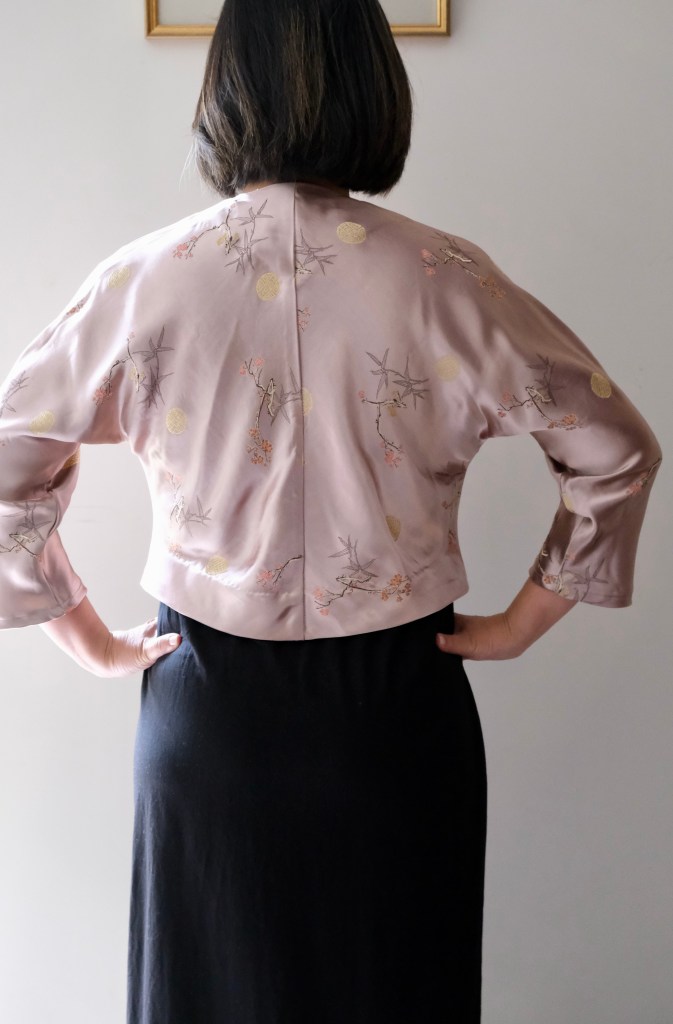
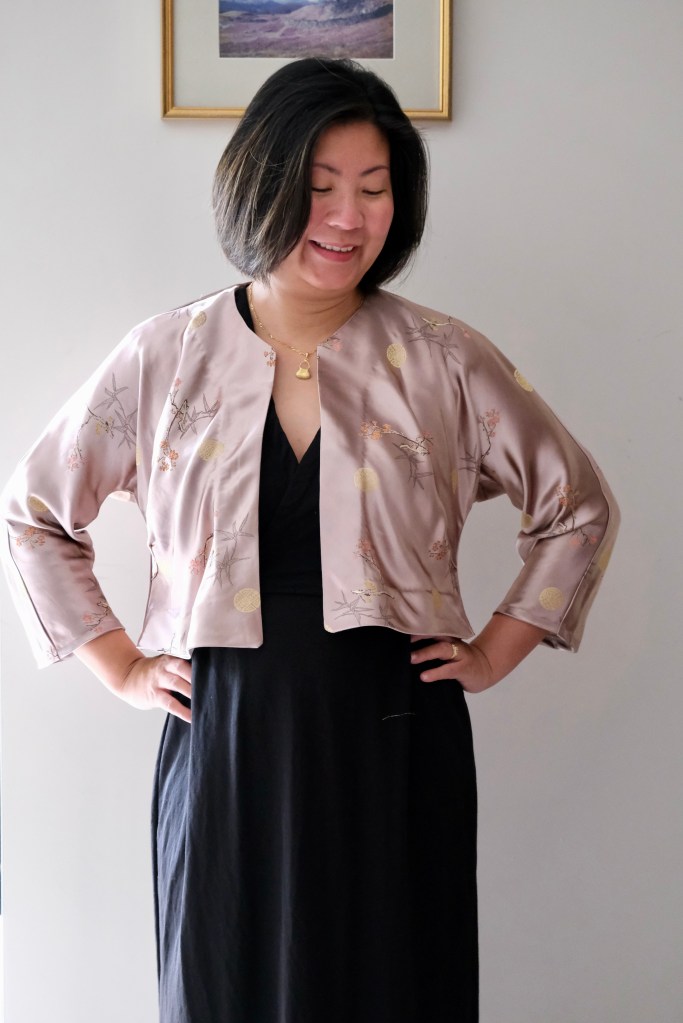
My latest make is the Cashmerette Catskills Jacket. They collaborated with Julie Eilber to design this lovely bias-cut jacket. The inspiration came from the designs of Claire McCardell who was famous for her ready to wear outfits in post war America. She is credited with creating American Sportswear and was famous for her matching sets.

The Catskills Jacket is the perfect cropped jacket with grown-on sleeves. The bias cut makes it drape beautifully and I love the roomy feeling under the arms. I can throw this on over a dress and it will be perfect as a layering piece in the warmer months. I don’t deal with the cold well and that includes the air-conditioning that everyone ramps up in the summer!

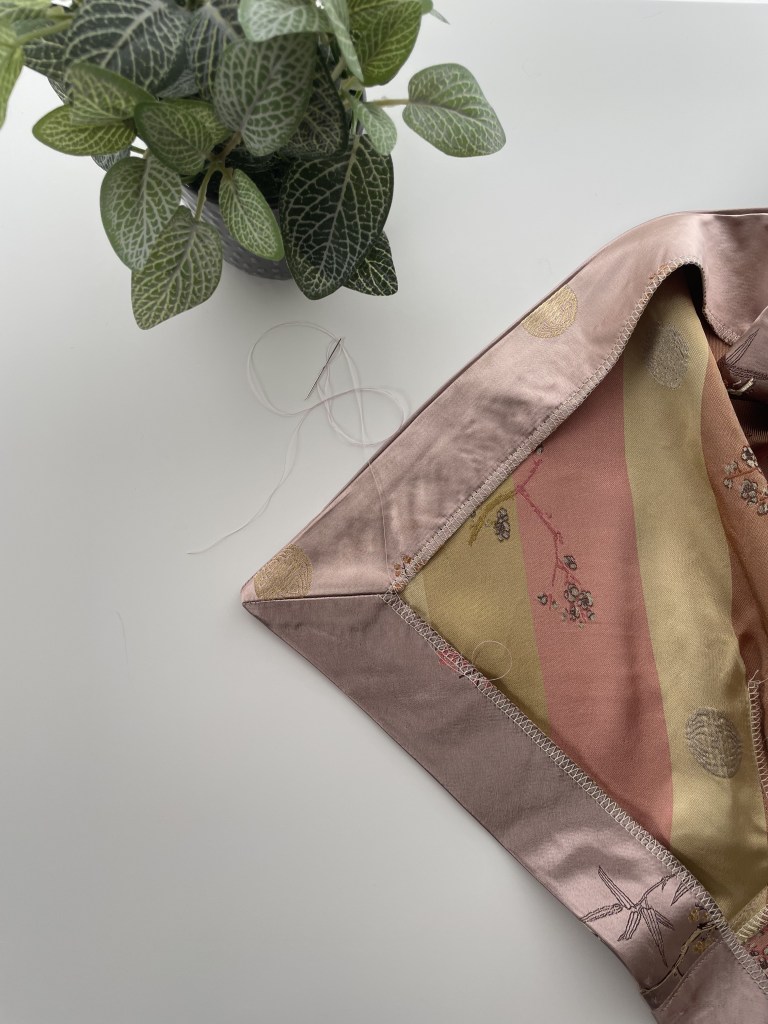
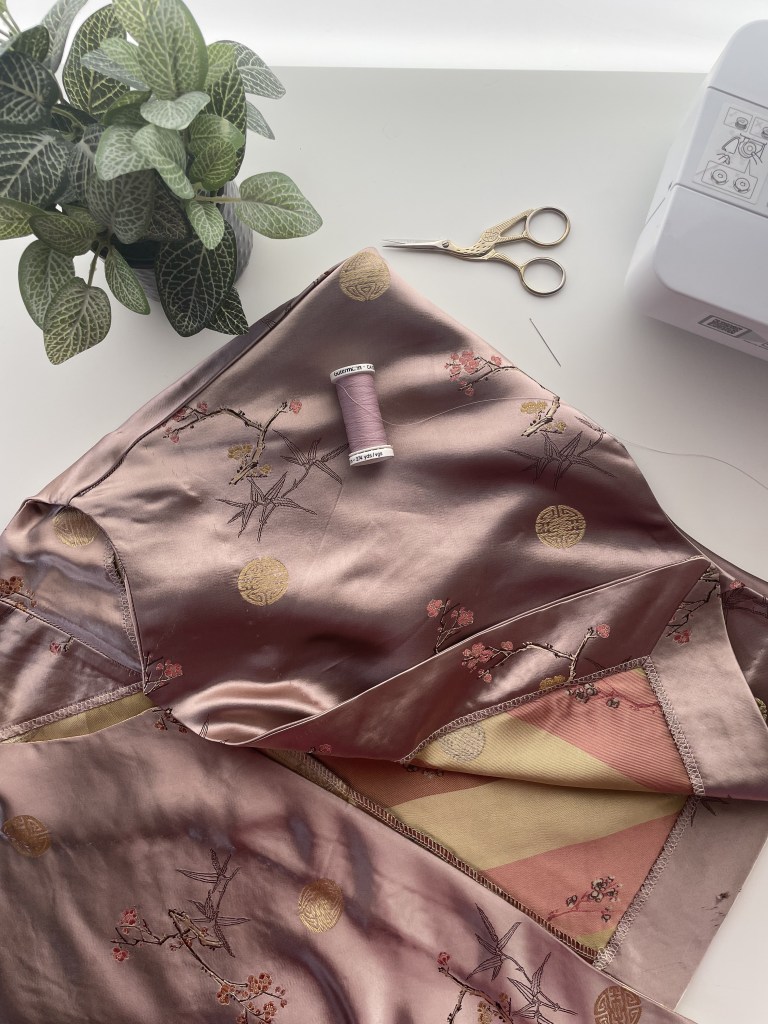
This beautiful fabric was given to me by a lady who was gifted it about thirty years ago. She heard that I did some sewing and she wanted me to have it. We think it might be silk satin but can’t be a hundred percent sure. Unfortunately, there had been some damage to the fabric due to its time in storage. Some of the threads had pulled on something so there were patches which I had to cut around. It was also very narrow at 90cm. She thought that perhaps the fabric might have been good for cushion covers but I felt I could use it for the Catskills Jacket. Due to the bounciness and thickness of the fabric, I couldn’t use the French seam instructions but instead finished the seams with an overlocker. I also had to do a fair bit of hand sewing to finish the facing.

Sizing of the jacket was very accurate. I made the size 10 for my measurements of 37-inch bust and 33-inch waist. I’ve chosen to sew the ¾ sleeves as it will be used in the warmer months. The pattern allows for a choice between five buttons with thread loops or eight hooks and eyes. I had some red frog fastenings but after some discussion on my Instagram, I decided the colour was a mismatch for the fabric. I’ve decided to leave off any closures as I’m not likely to need to do up the jacket when worn. I choose to reserve judgement but with the fabric it’s easier to attach buttons later than remove them.

I can’t wait to share my make with the lady who gifted me this beautiful fabric. I am blown away that it could turn into something so gorgeous. It has also made me more determined to sew up my fabric stash and make the most of them while they are in good condition as I’m in the habit of storing my “special” fabrics rather than sewing them up.

Thanks for reading and happy sewing!

X Em
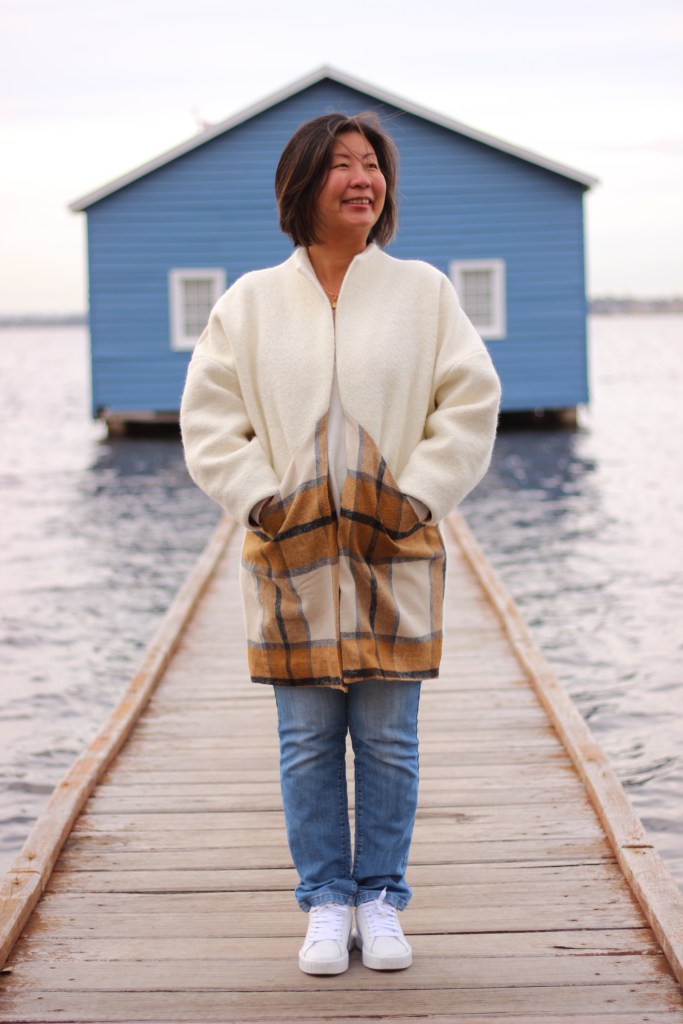
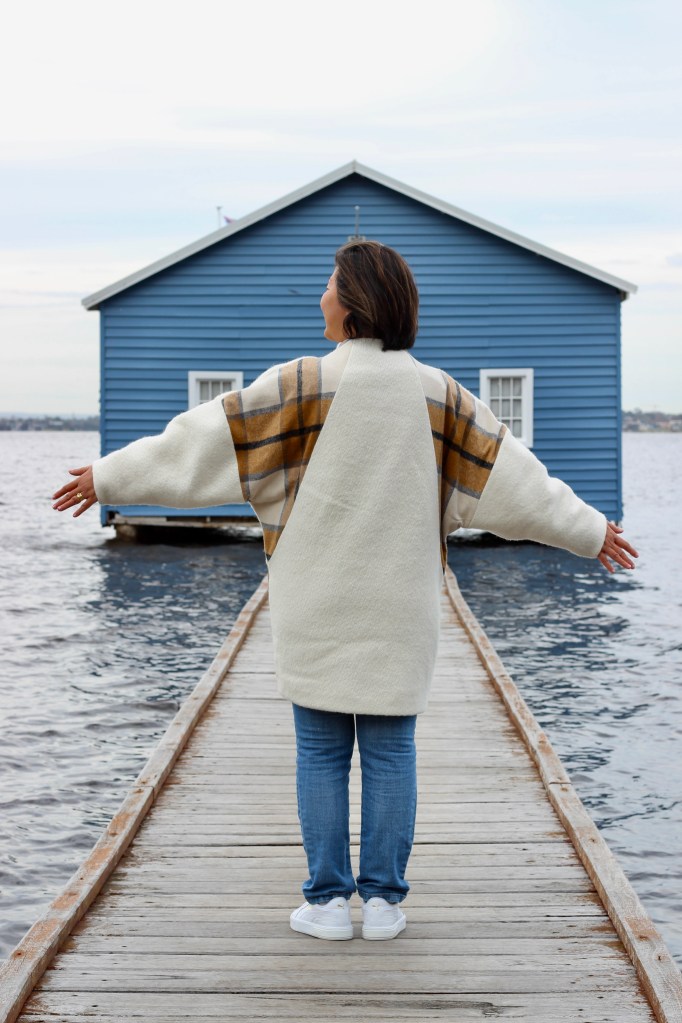
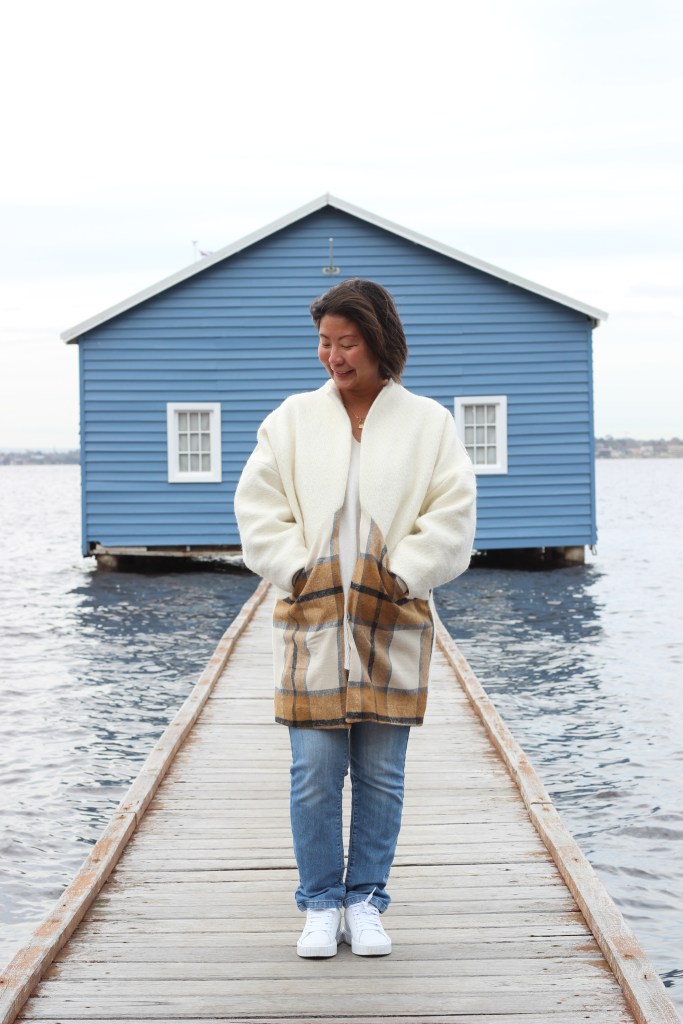
Nova Coat

I was trying to think of when I first made plans to sew the Nova Coat and checking my records, it looks like I purchased the pattern in May last year. Soon after getting the pattern, I enthusiastically went to Potter and Co. to buy my fabric. I was all set to sew until a sewing friend asked me how I was going to prepare my precious wool fabric. Yikes. I lost my nerve and now, 17 months later have finally decided to give it a go.

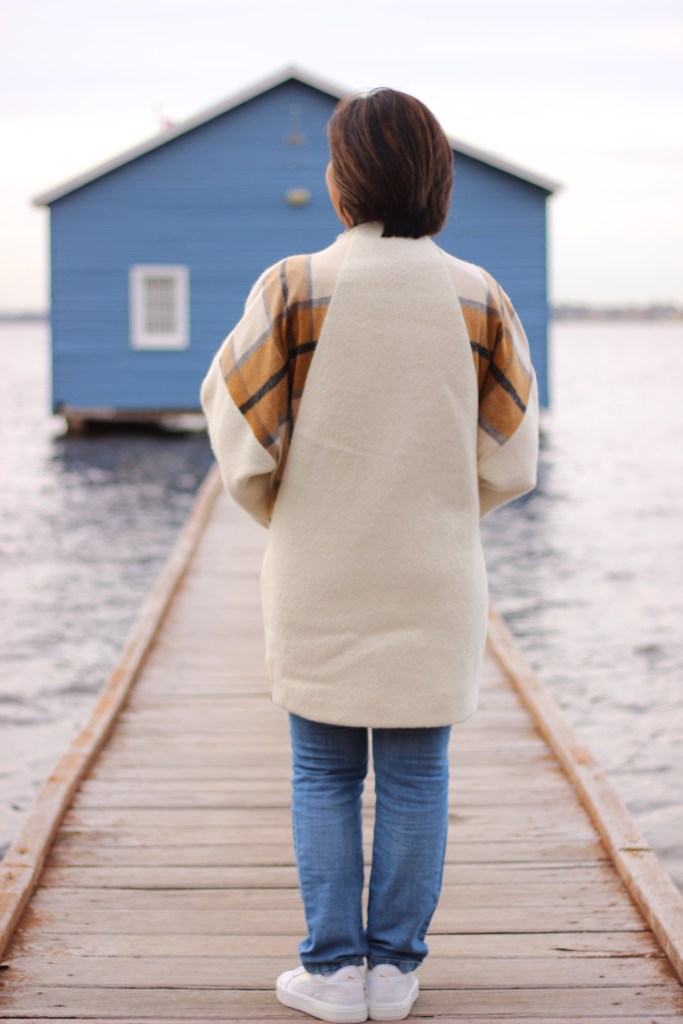
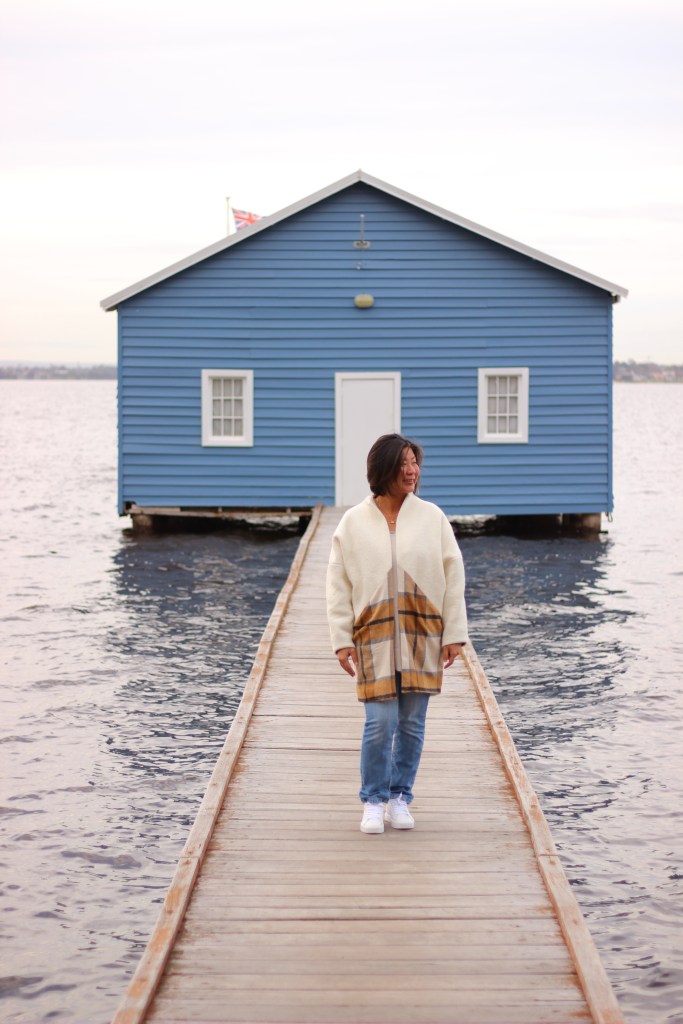
So, it turns out that preparing the fabric was not such a big deal after all. If I had just read page 12 of the pattern instructions, I would have seen that Katie tells us how to prepare the fabrics. If it’s dry-cleaned only fabric, don’t wash it. If it’s something that can be washed, wash it first. I’m not sure if it was fog brain from Covid or momentary lapse of common sense but I washed my dry-cleaned only wool fabric and it shrunk. Luckily, it remained soft, and I had remembered to use wool wash, but I nearly cried when I pulled it out of the machine and was wondering what possessed me to do the unthinkable? So, to make up for the shortfall in fabric, I bought a meter of the plaid. My coat is made from a luscious white wool blend and a soft neutral coloured plaid fabric. There have been many examples of colour blocking and mixing fabrics in the making of this coat. 

Due to delay in starting the project, I had time to stalk the pattern on social media. I found that most people had recommended sizing down the coat. Sometimes there was a recommendation to size down as much as two sizes. My sizing would normally sit in the Size 4 range. I wanted the oversized look and most importantly, a roomy jacket that could easily go over a chunky knit sweater. I find ready to wear coats never comfortably accommodate bulky winter wear. With this in mind, I only sized down to a Size 3 and am very happy with the fit. If you’re undecided, have a look at the “Finished Garment” sizing including the sleeve length as this will give you a better idea.

Sewing the coat took less time than what I thought it would. I genuinely love the drafting and the construction of the coat. I was a little stuck at step eight but I think I misunderstood the picture in the instructions. Also, my instructions steps were numbered differently to the sew-along steps (it doesn’t take much to confuse me). 

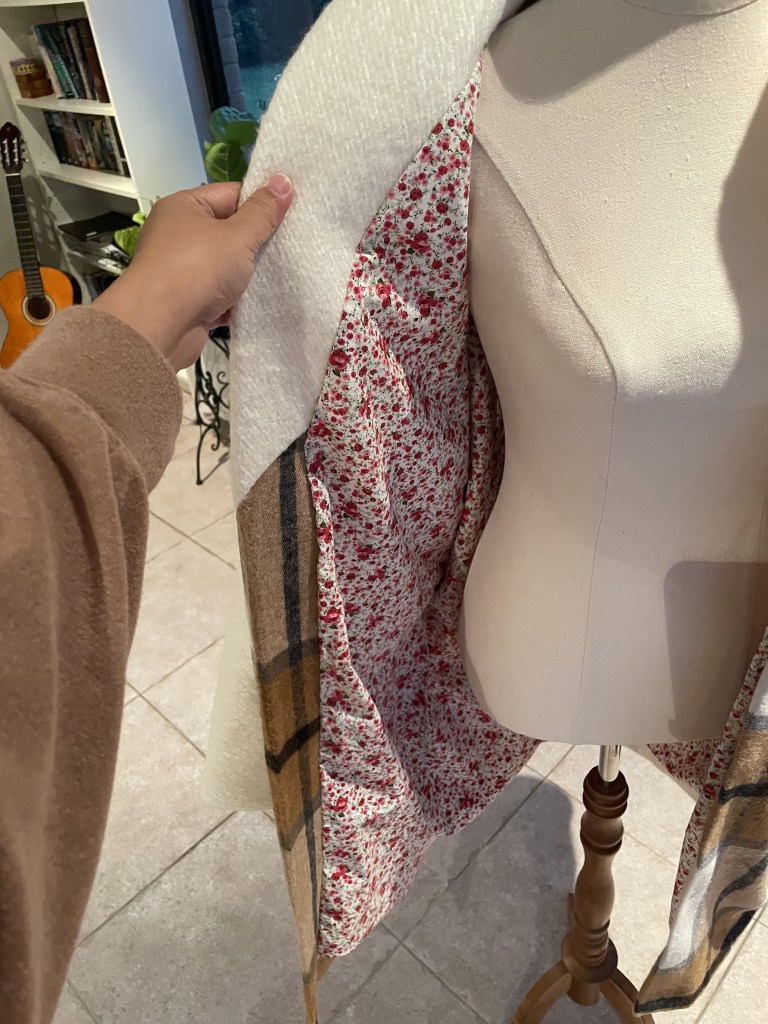
Attaching the liner was easier than I thought it would be. The instructions are so clear. My lining fabric is a mid-weight cotton in a bright pink burst of micro floral pattern. Most jackets have a slippery lining, I could have used satin or something similar, but this fabric caught my eye, and I wanted something cheerful and bright on the inside. It’s been such fun to watch people reaction when I reveal the bright lining!

This is a big tick off my “Make Nine” list. It’s being used at the moment, and I can’t wait to wear it a lot more next winter. I might even attempt the jacket version of the pattern!

Thanks for reading and happy sewing!

X Em

Marlo Sweater

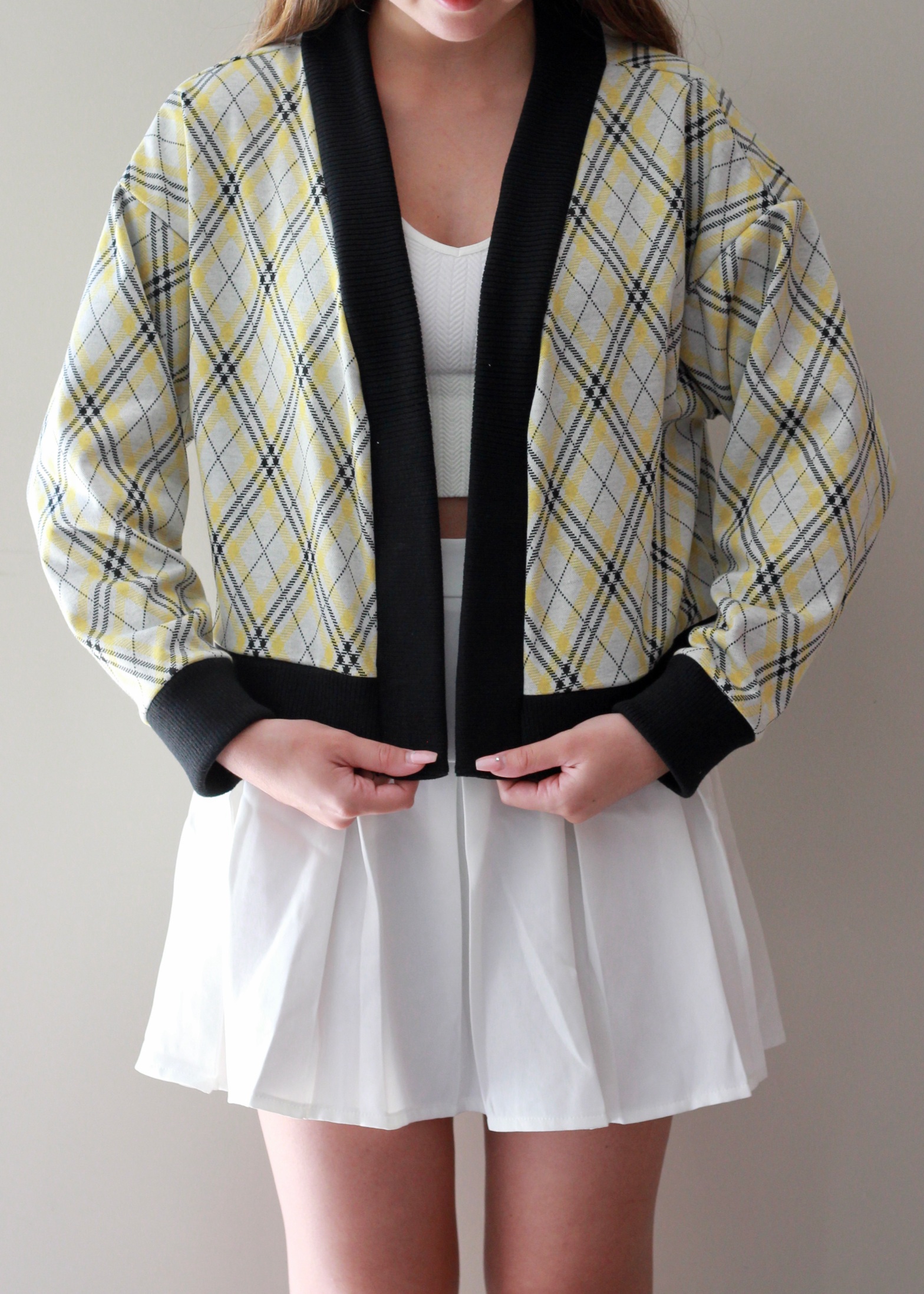
My daughter and I fell in love with the Marlo Sweater by True Bias at first sight. I always find it amusing that to my daughter’s generation, the 90s are regarded as “retro” which of course it is now but the 90s are still so fresh in my mind and the years of my youth! This pattern paired with the argyle patterned fabric that I found conjures images of the outfits that Cher Horowitz wears in the movie, “Clueless”. I love the bond that my daughter and I have formed over sewing. My daughter’s textile course in her final years of school was the catalyst to my sewing obsession. 

So, back to the Marlo Sweater, I decided to make the cropped version. My daughter was happy with a very oversized sweater, so I made it to my sizing which was the size 8.  My closet is often raided by her so it’s understood between us that my sweater will eventually be worn by her. Hence, why she is modelling it as well.

The instructions for construction were very comprehensive and easy to follow. I’ve sewn True Bias a few times now and the patterns are always well thought out and logical. Everything went smoothly. I started by pattern matching the argyle pattern of the fabric. To match the fabric, I had to cut the pattern piece individually instead of two paired pieces. 

The next step was to cut the ribbing. The width that the black ribbing came in did not allow me to cut the bottom ribbing piece in one length. Instead, I cut one length for the back then two equal pieces for the front. These three pieces were sewn together before attaching to the body of the sweater.

My second-hand overlocker has been the best bargain buy of my sewing journey. It’s been such a worthy investment. It allows me to sew directly onto knit fabric without having to zig-zag sew on a sewing machine. This makes it so fast to put together a knitted outfit.

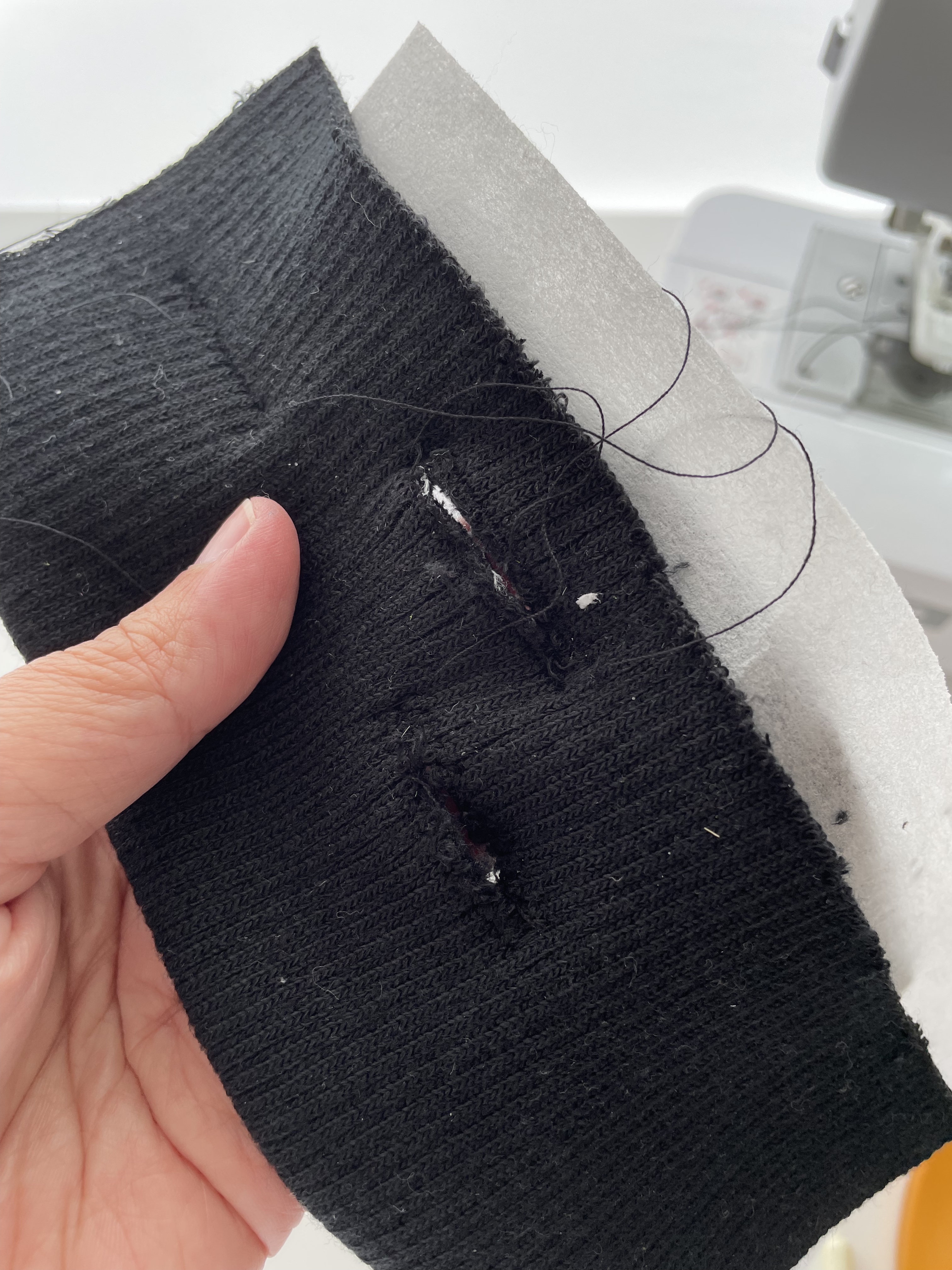
My real challenge (and the one that stalled this project) was the installation of buttonholes. There is a piece of interfacing that is already attached to the inner side of the front ribbing however, when I attempted to sew a buttonhole on a tester piece, the ribbing kept getting caught in the teeth of the machine. This meant that the fabric could not move forward. It was a test to my patience as well as my sewing skills.

After a couple of days of frustration, it occurred to me that the brain bank on Instagram could help me, and they did come to the rescue! The consensus was to line the back and if needed, the front of the ribbing with tear away interfacing or freezer paper. I promptly tested it and it does work well. However, after consulting my daughter, she said she preferred it without the buttons so after all that, I have left the buttons off.

I’ll definitely be making Version B which is the longer cardigan with patch pockets. My preference will be to put buttons on that!

Thanks for reading and happy sewing!

X Em
Reef Camisole and Shorts

Christmas holidays arrived and here in the Southern Hemisphere, we found ourselves in sweltering summer heat. Needless to say, it was too hot to be at the sewing machine but I managed to sew up the Reef Camisole and Shorts Set from Megan Nielsen Patterns. It was my final sew for the year just in time for my favourite time of the year. I’ve always loved the time after Christmas and the start of the new year where there is a quietness and a temporary lull to give us a bit of respite before the whirring of busy-ness begins again. It was a good time to finish making the Reef Set so I could have my pyjama day.

Motivated to finish by coffee and panettone

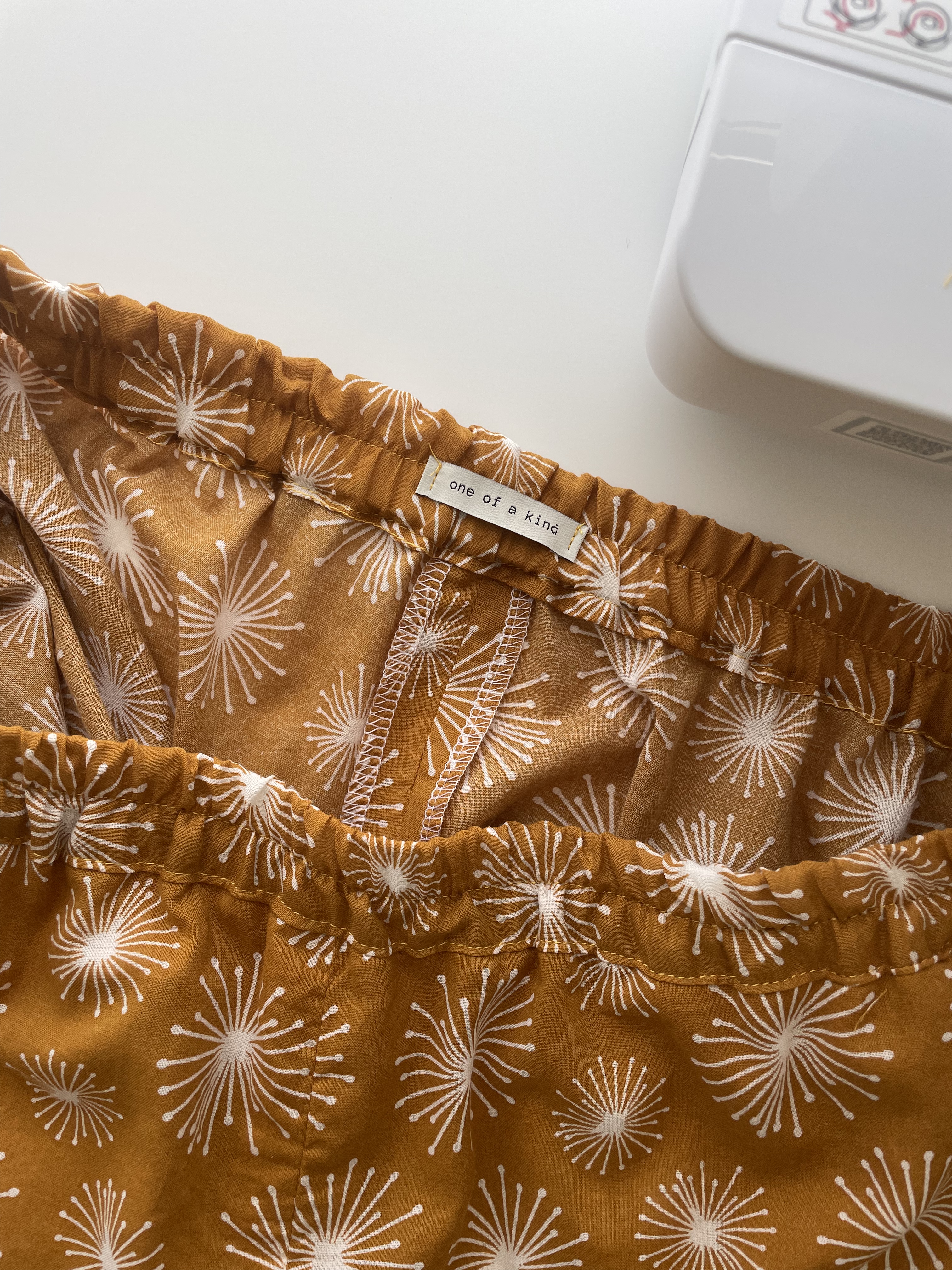
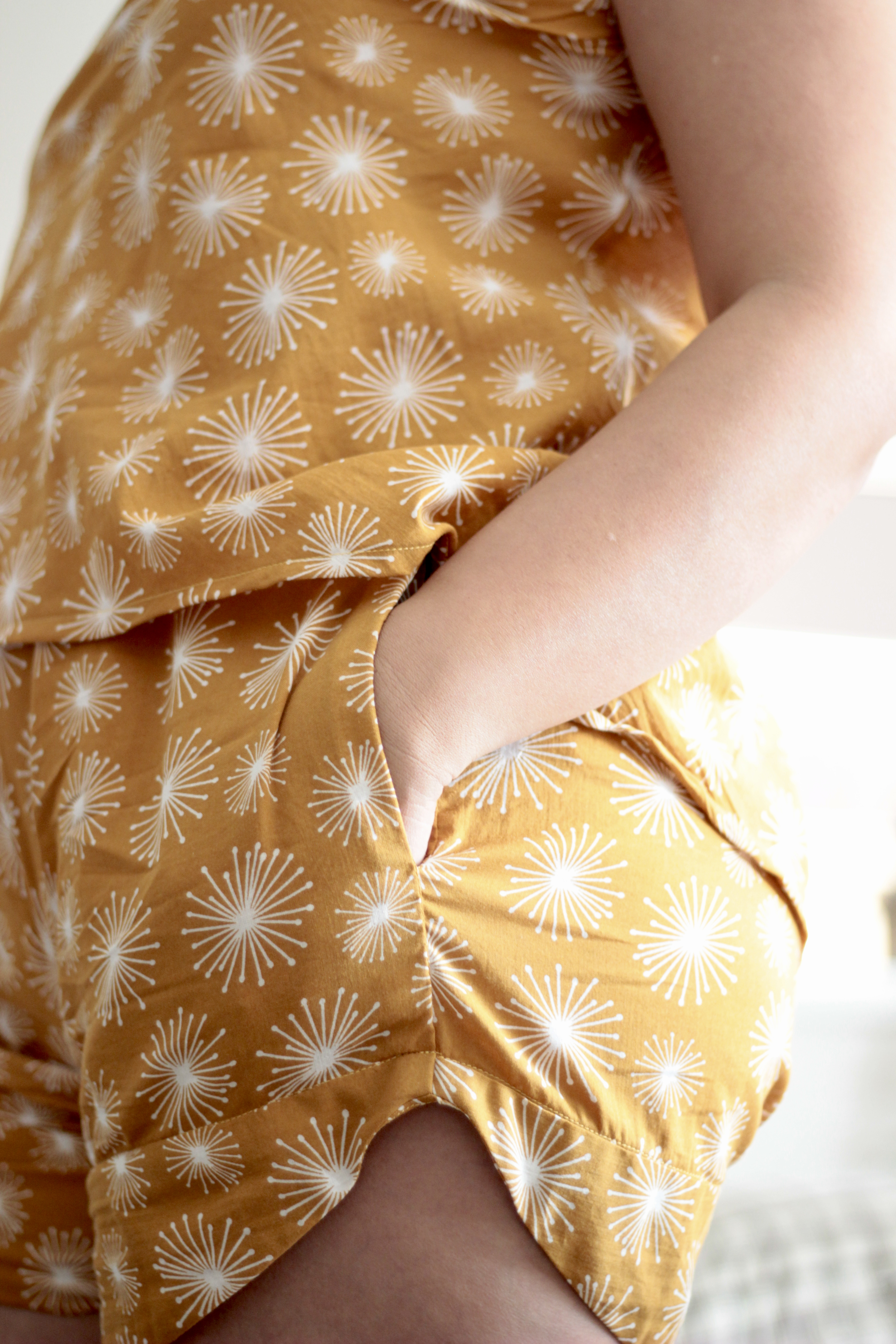
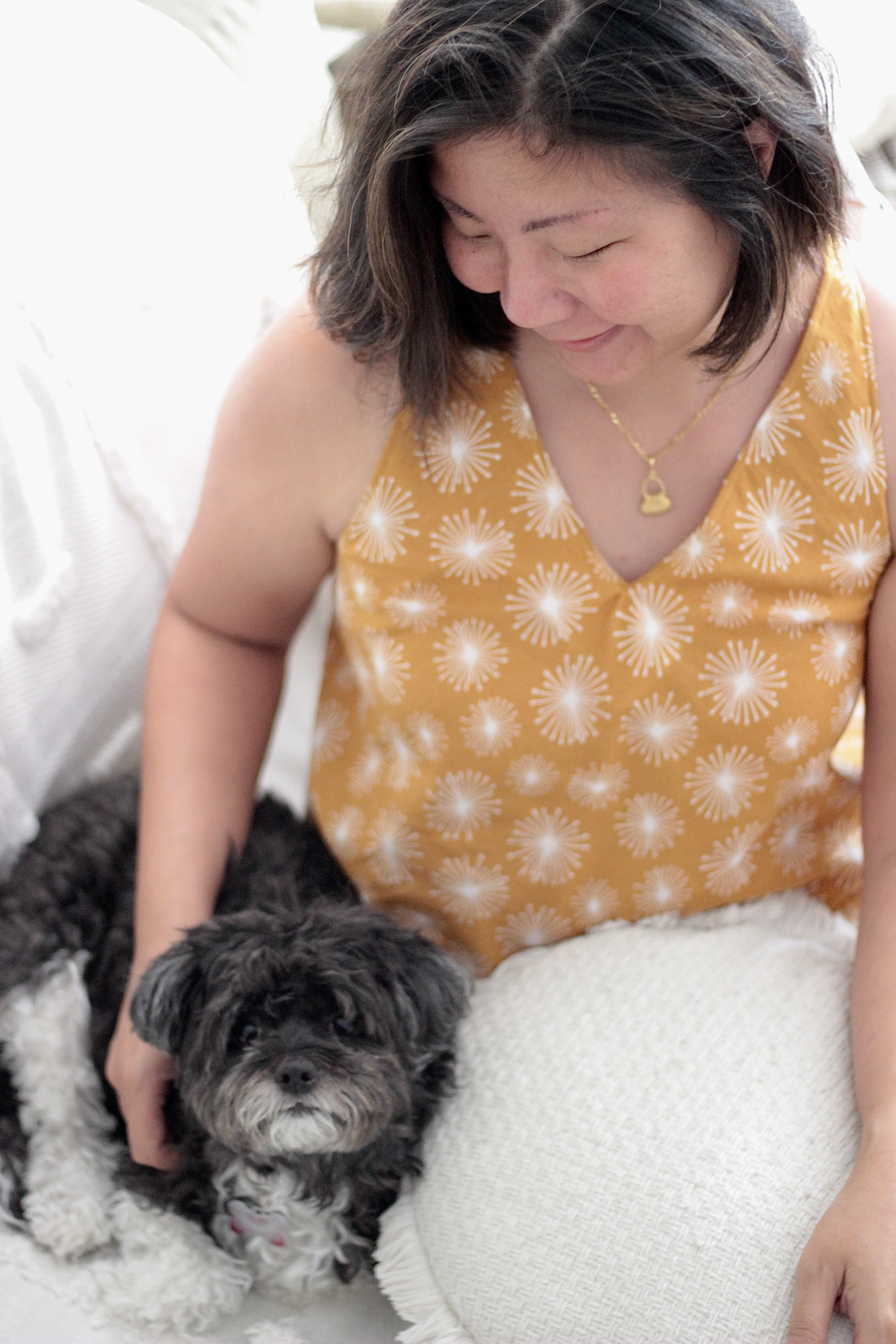
As usual, if you’re looking after a comprehensive sew-along, you should look at the Megan Nielsen Blog Site. This was my own sewing process. Before heading into that, I wanted to talk about the fabric that I used. I bought this lovely muslin from Spotlight Stores. It caught my eye because of the beautiful mustard colour and the pattern is reminiscent of a field of dandelions. Muslin is such a thin fabric; it’s often used for children’s clothing or baby wraps and for good reason. It’s soft, made of cotton and is such a breathable light fabric which is why I’ve thought to use it for summer pyjamas. 

I remember when I had just started sewing, I tried to sew with muslin fabric. I ended up cutting it up for cleaning cloths because it did not even survive the first wash! The best way to prepare muslin fabric for sewing is to overlock the raw cut edges before washing on the cool cycle. This preserves the integrity of the muslin fabric which has a loose weave otherwise you would risk your washing machine unravelling some of the thin fabric. After washing, I gave it a light iron and went on the cut out the pattern pieces. Another beginner tip is to check your needle. I made sure I had a 10/70 needle to ensure that I wouldn’t damage the delicate fabric.

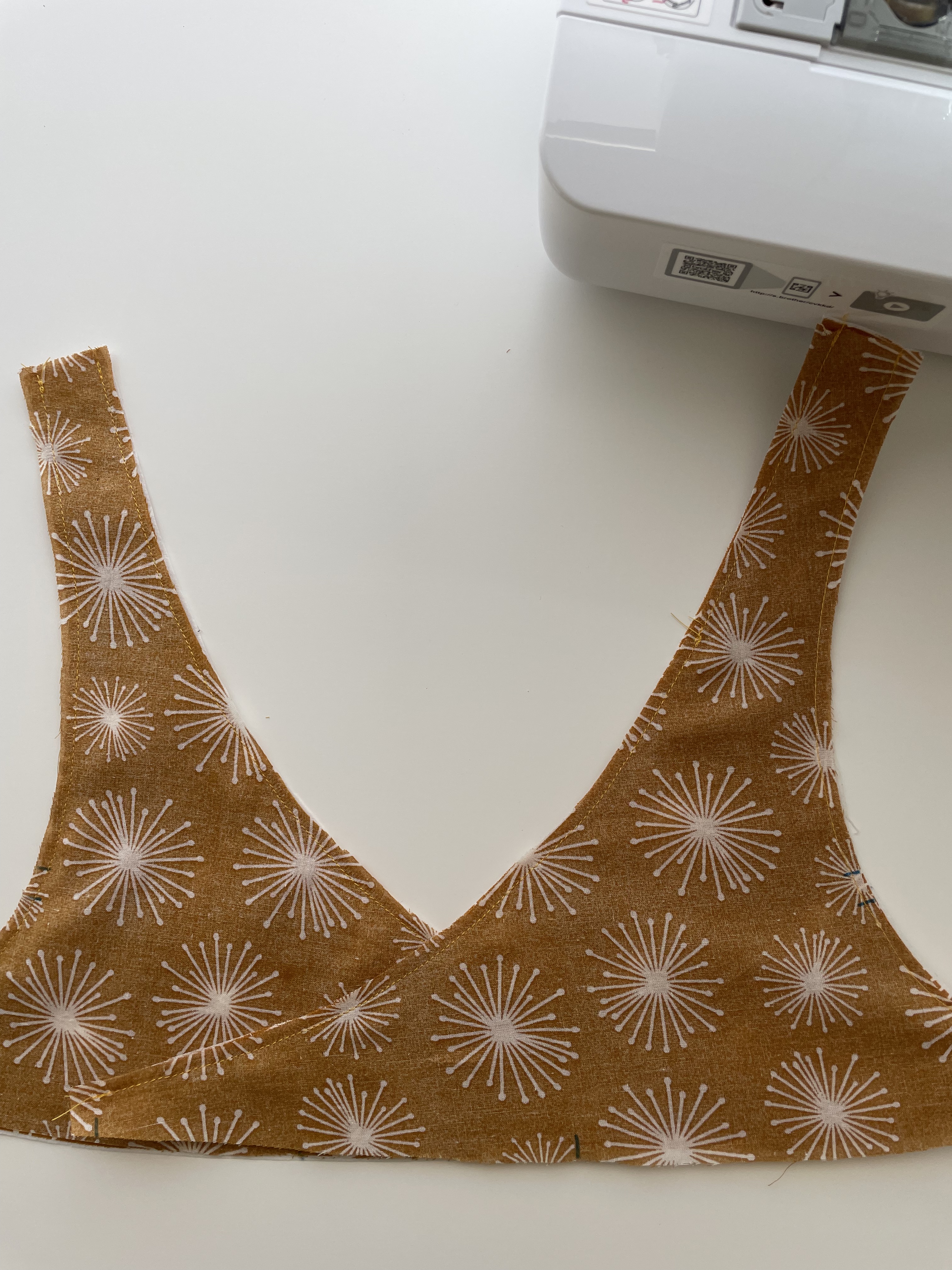
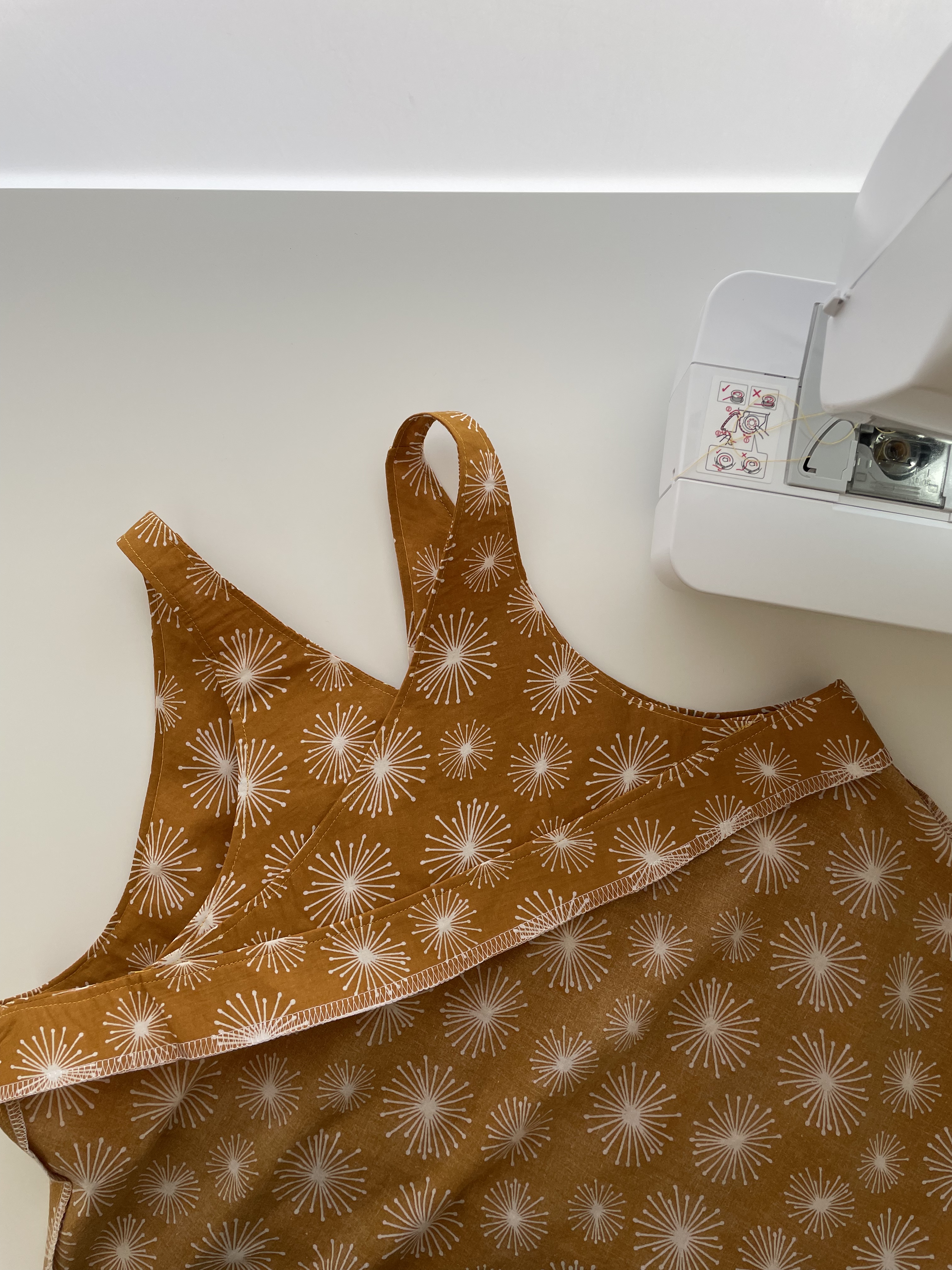
Starting with the camisole, which is cut on the bias, watch that you don’t handle the fabric too much and lay it flat as it will stretch if you hang the fabric before sewing. I also made sure to staystitch where needed as this helps to stabilise the fabric. I love the look of bias-cut garments as it drapes beautifully especially with silky materials. 

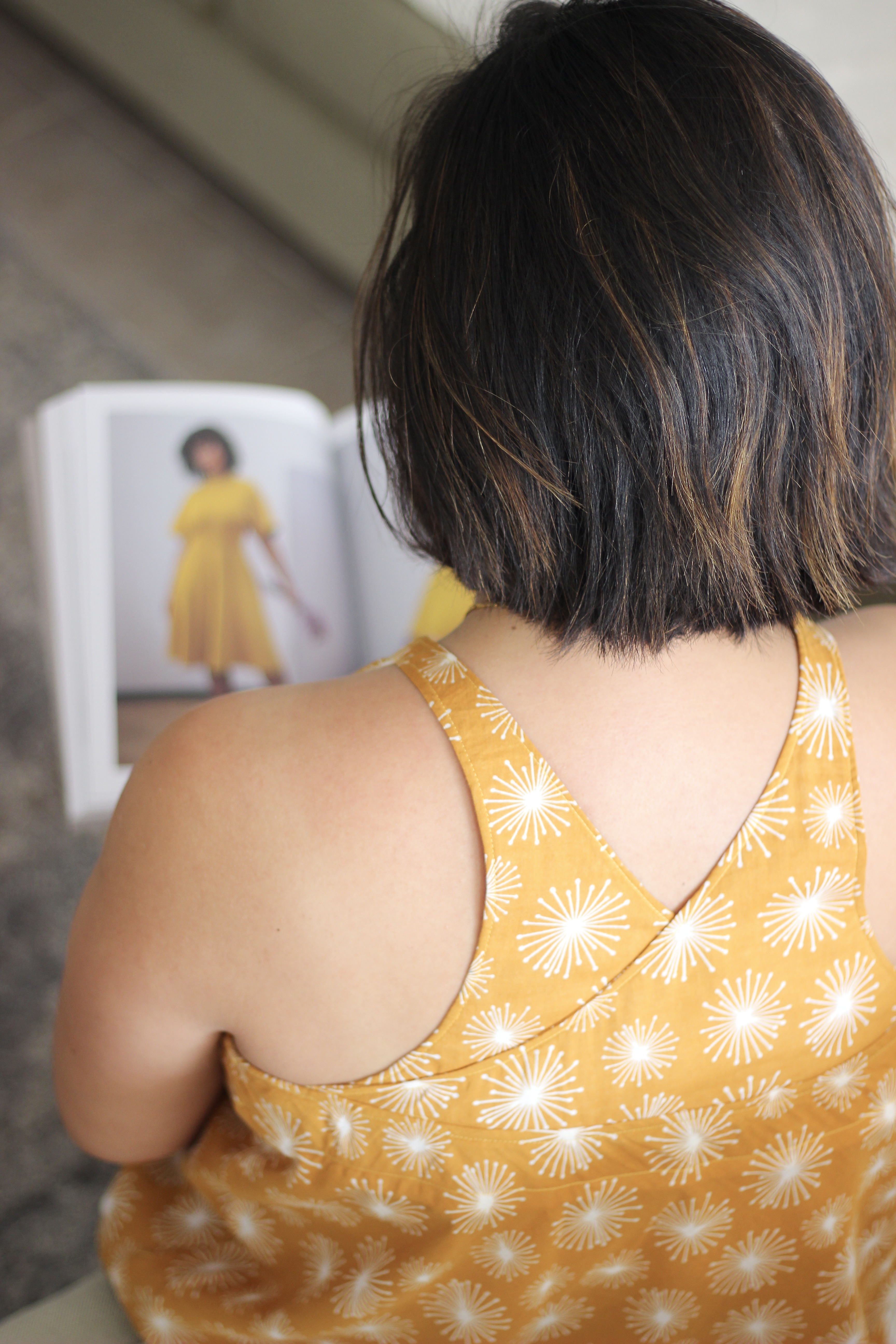
The crossover back yoke is the distinguishing feature of this camisole. It’s a really satisfying construction. It’s also so comfortable to wear. I’m tempted to sew this camisole as a top if I can find the right fabric like silk. Once the crossover back yoke is completed, it comes together very fast. Topstitching the neckline and armscye was my own addition to help secure this fragile fabric. I tend to wash everything in the machine and have little time for hand washing so this will go a long way of preserving my Reef Set. I also secured the facing by stitching in the ditch at the side seams and stitching down the back panel.

Onto the shorts, I made the View B option which is the mid-rise. The hemline is curved and again an interesting construction with the attachment of facings. It elevates the piece from basic elasticised waisted shorts to luxurious summer pyjamas shorts. It doesn’t stop there; it also has pockets!

A quick note on sizing, I made the size 12 for my measurements of 37-inch bust, 33-inch waist and 38-inch hips. The sizing was a great for the shorts, but I could sew up a size for the camisole top. The camisole has very narrow seams except for the side seams which returns to 5/8 inch. I narrowed the side seam to allow more room in the armscye. It still fits me in the size 12 but there are some horizontal fold lines where the front straps meet the bust line. The other option would be to make a full bust adjustment but I would also like to lengthen the camisole so I feel the best option would be to size up.

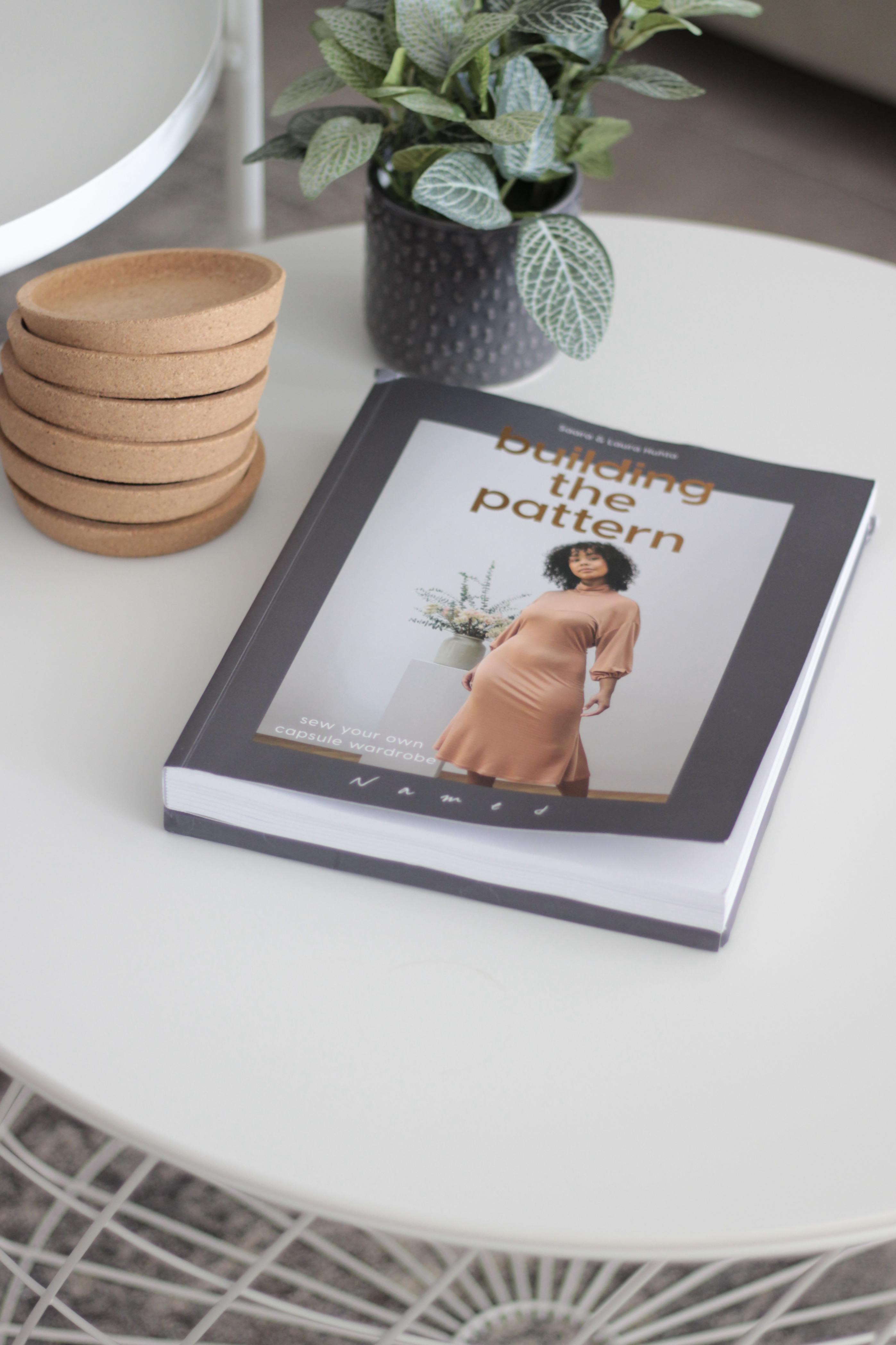
Now that the busy Christmas holiday period is over and we have turned over to the New Year, I have a few days of lounging around in my newly minted pyjama set. I’m really enjoying my new book which is the second book by Named Patterns titled, “Building The Pattern”. This is my first sewing book and it’s a gem.

Thank you for reading and wishing everyone a Happy New Year!

X Em

Wooster Jacket

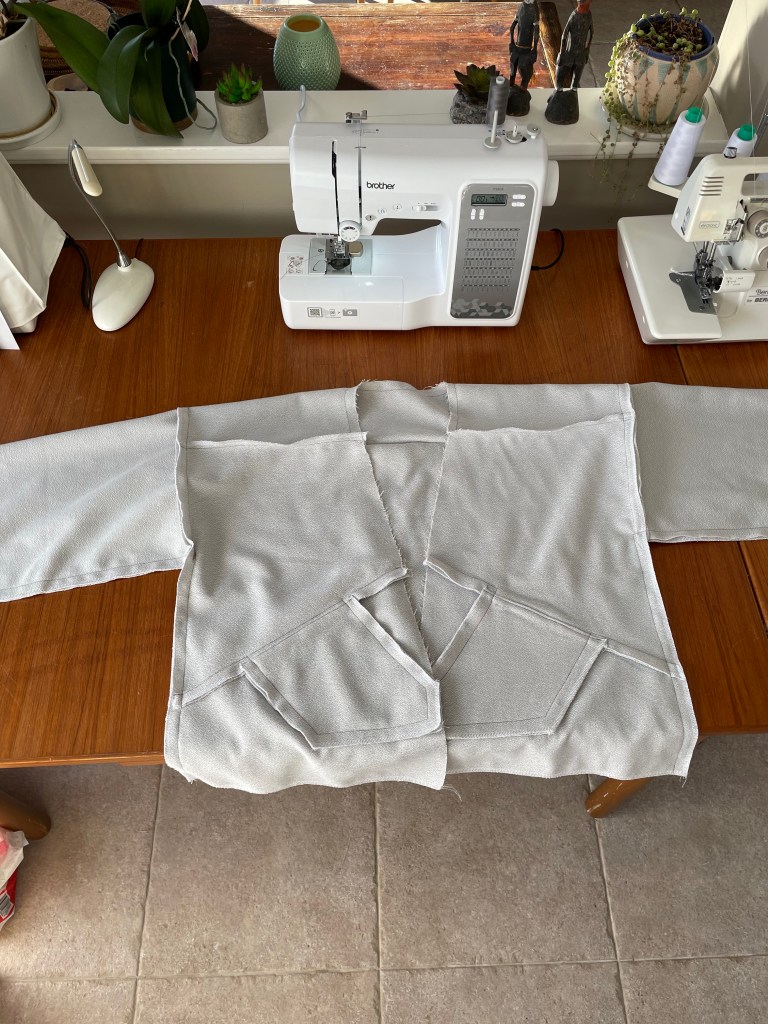
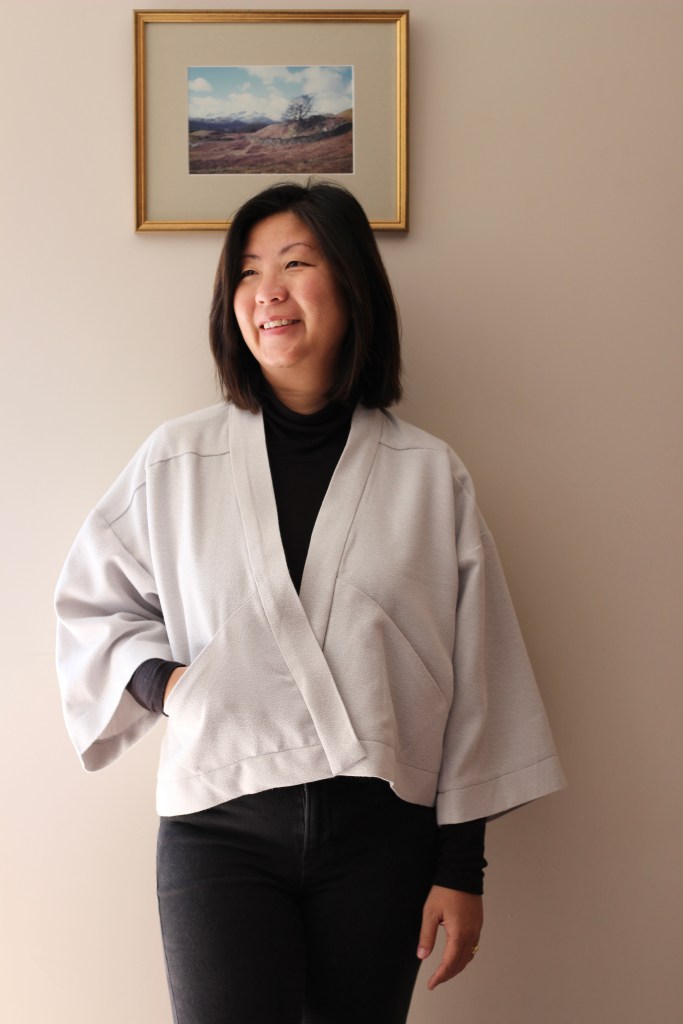
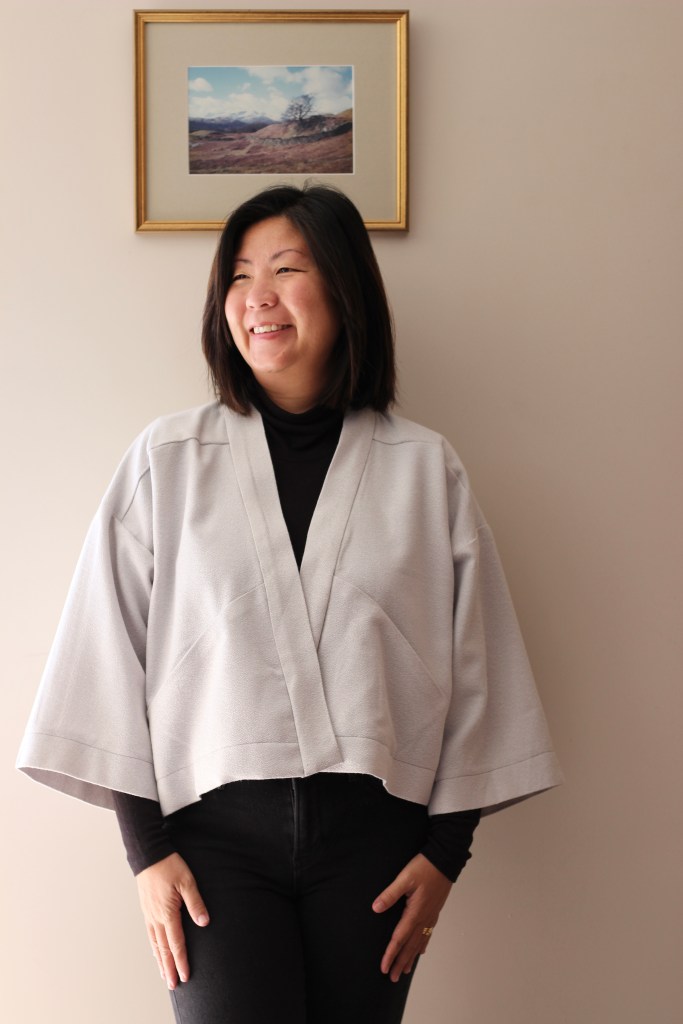
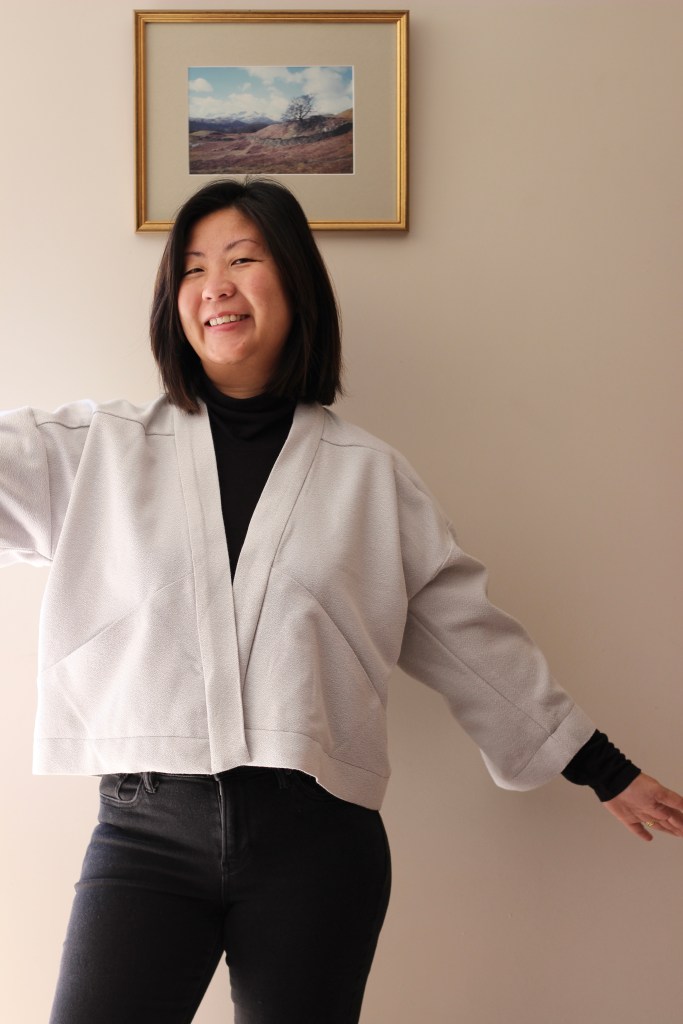
The Wooster Jacket is a timeless addition to any wardrobe. I was lucky enough to be gifted this beautifully designed piece by Sewing and the City. The description of the pattern is, “The Wooster is a loose-fitting unlined jacket with yoke detail, front slit pockets, bracelet length sleeves and a wide neck band.” This is my first time sewing a pattern from Sewing and the City and I daresay it won’t be my last. 
Sewing and the City offers tutorials for those who may be just starting out in their sewing but I found the instructions comprehensive enough for the short time I’ve been sewing. I decided to challenge myself to sew this jacket in a “Sew Everyday” challenge where I sewed for 15 minutes daily. This was such a fun way to sew and it helped me plan and understand the processes of putting this piece together. Here was my sewing process for the jacket:

  1. Complete all stay stitching
  2. Attach pockets to front panels
  3. Join front top and bottom panel
  4. Join yoke to back panel
  5. Sew on sleeves
  6. Sew side seams
  7. Sew hem
  8. Add neckband
  9. Sew sleeve hem

Just a few notes from my version, I sewed the size M which fit exactly as I liked. This pattern has a size range from 42 1/2 inch bust to 55 1/4 inch bust. I used a wool blend fabric to make my Wooster Jacket as it’s an unlined jacket so I chose a fabric that would sit softly against the skin. This fabric has a bit of polyester in the mix which made it hard to press and so when it came to attaching the neckband I stitched-in-the-ditch rather than topstitching it on. Also, there are no indications in pattern of when to overlock / serge the seams so I just noted where to do this when I read through the pattern. Other than that, it turned out exactly as the pattern promised! 

Thanks so much for reading and happy sewing!

X Em