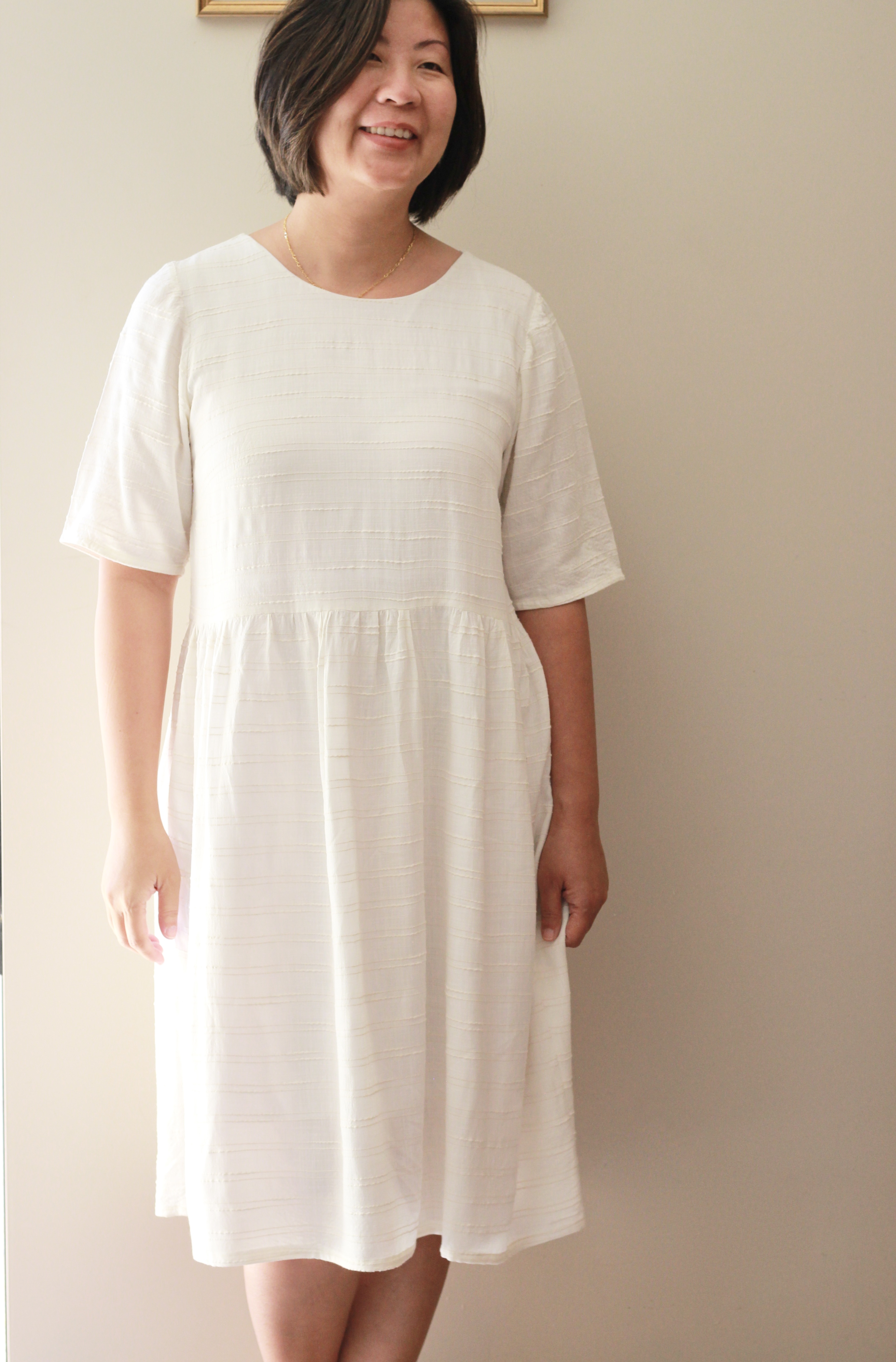
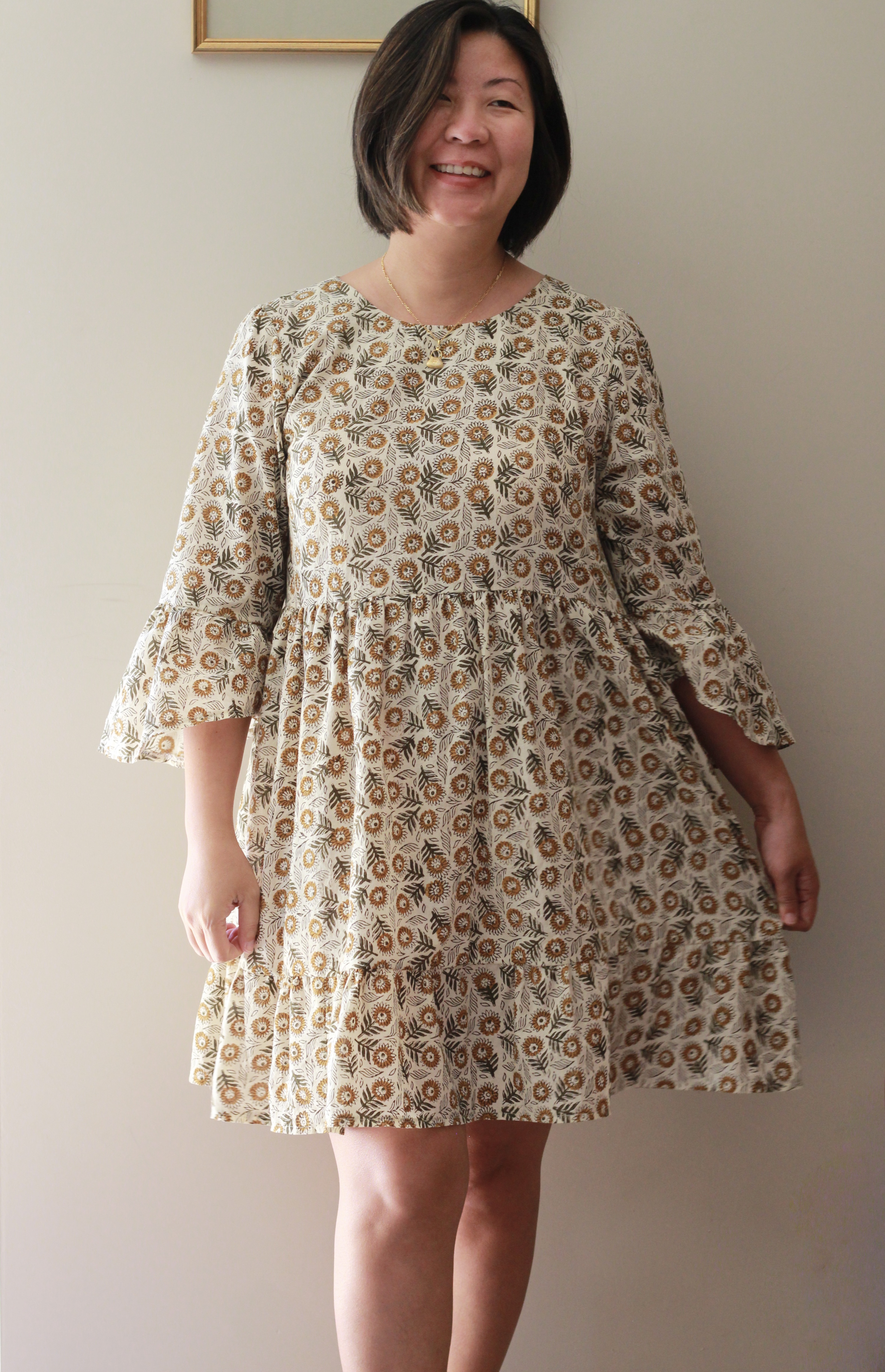
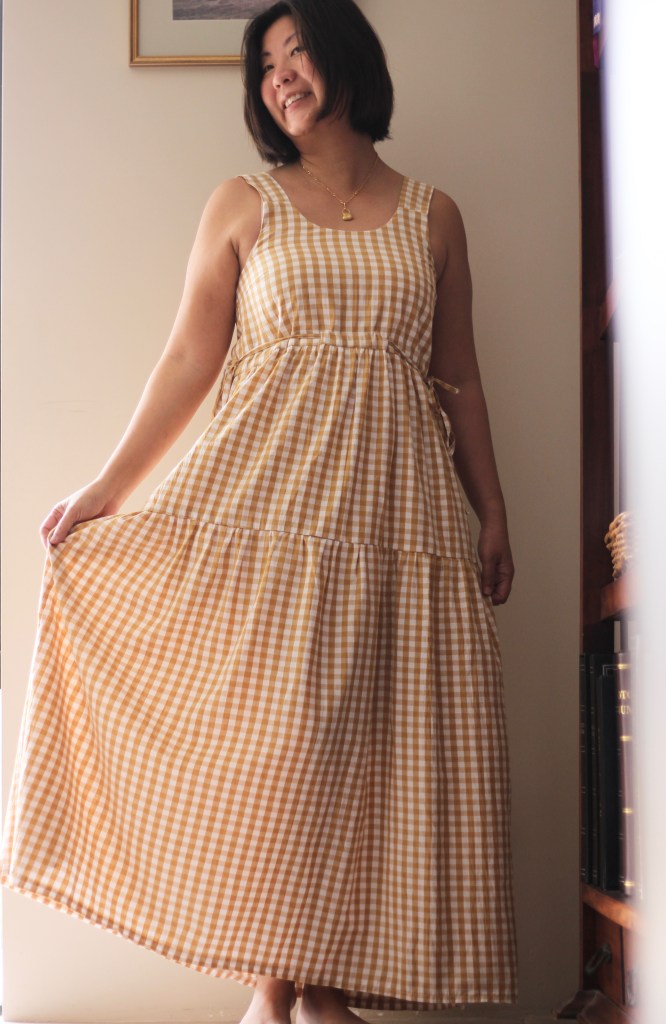
Holmen Top & Dress

When I looked up “Holmen”, images of a water-bound neighbourhood in Copenhagen popped up. The Holmen Top and Dress is a new release pattern from The Uncut Project. Anna and Isabel are the super talented duo behind this pattern company. They are from Copenhagen and their patterns reflect a cool Scandinavian vibe. 

I feel so lucky to be included in the testing team for the Holmen Top and Dress. The top and dress were made to have a good degree of movement and it can be worn for casual outings or out for a night. It transitions so well from day to night. Definitely a good one to pack for future holidays!

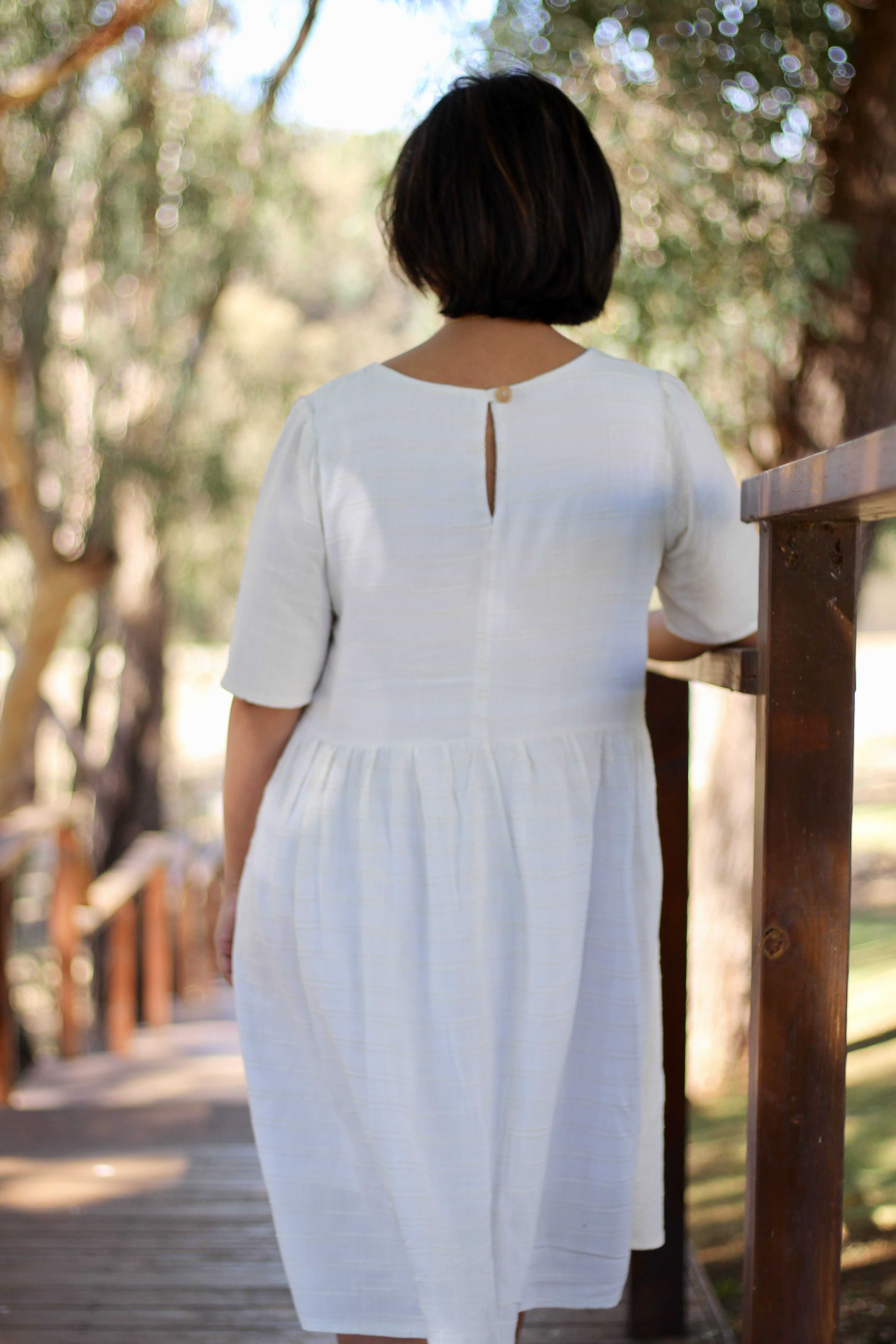
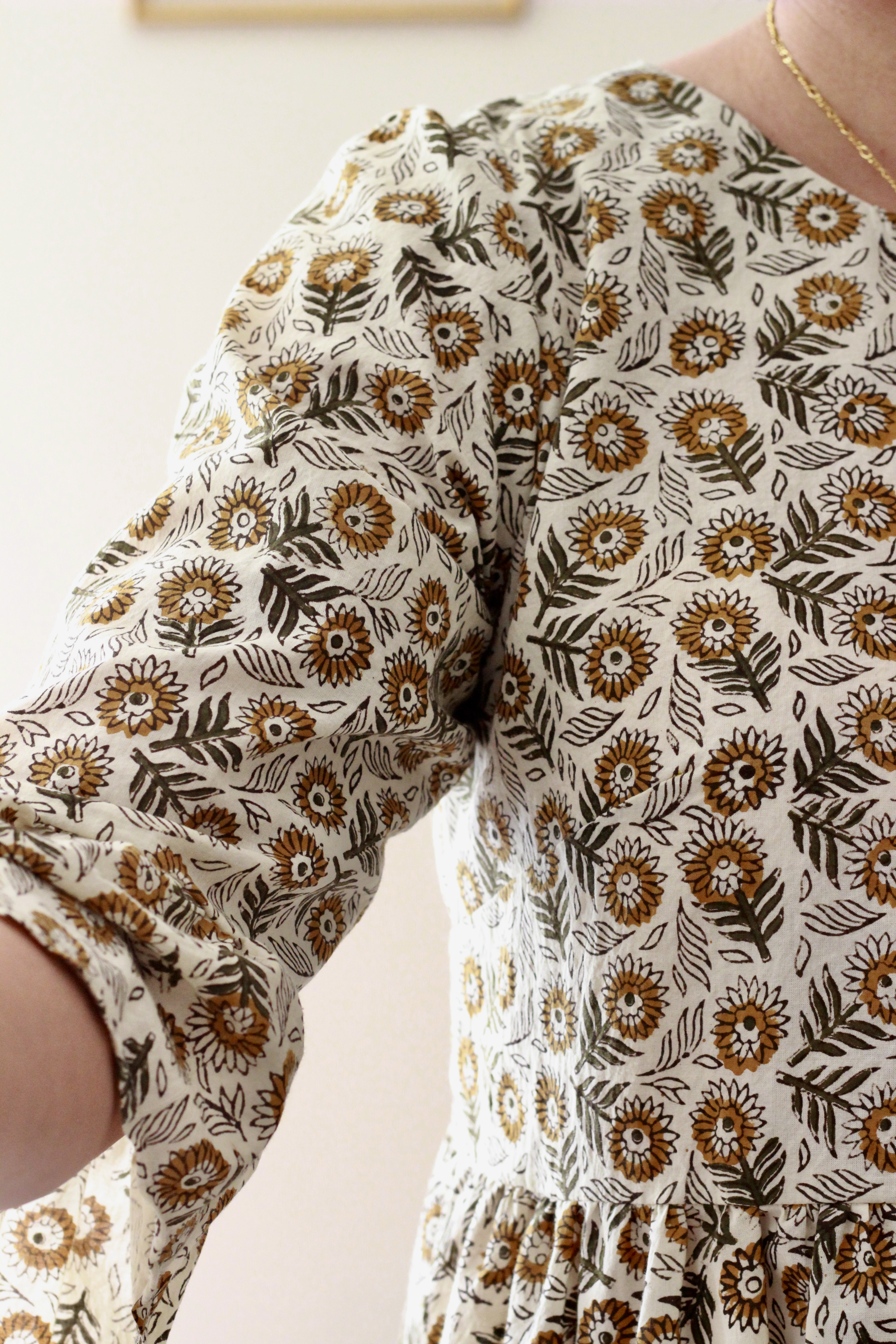
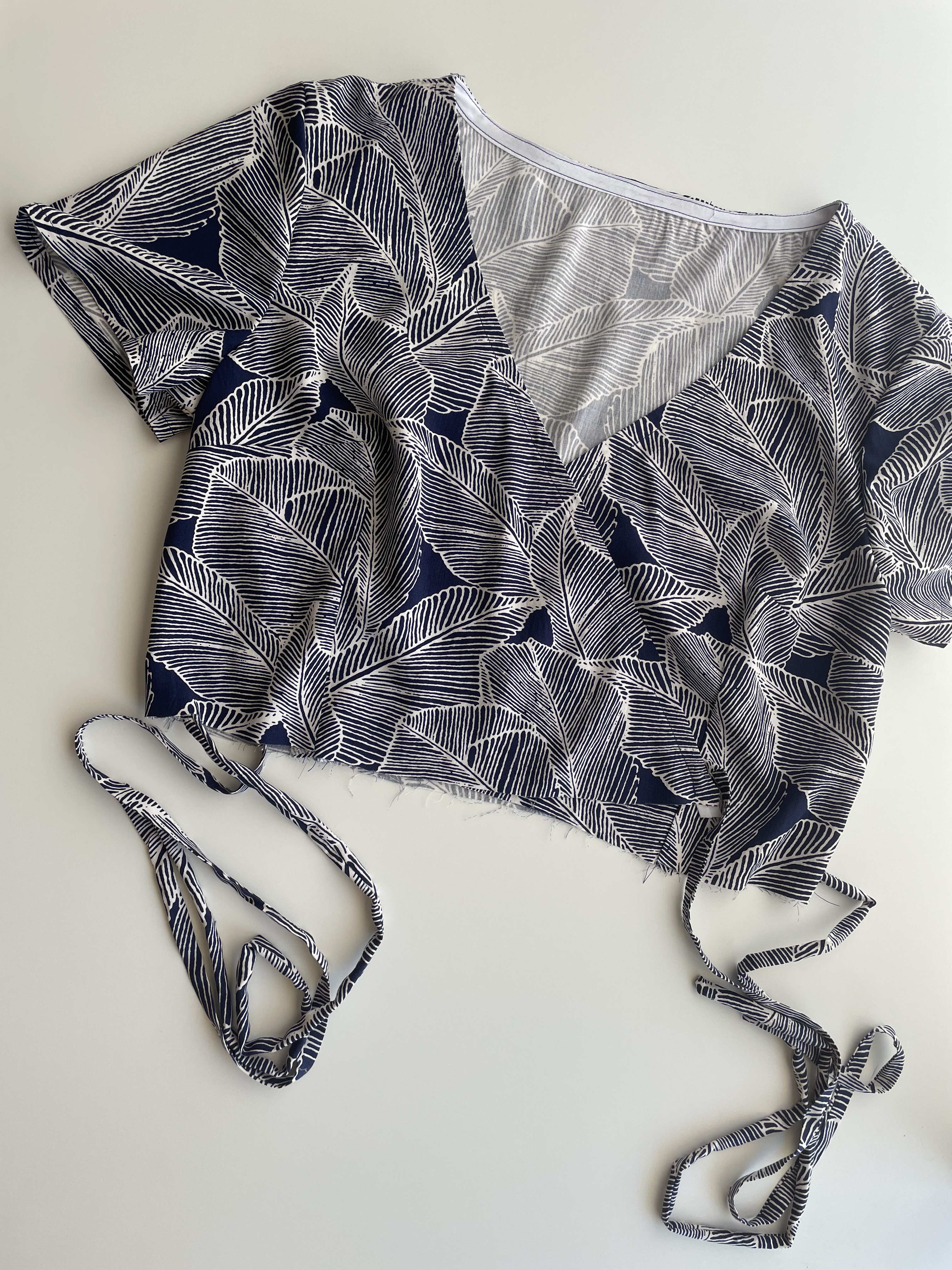
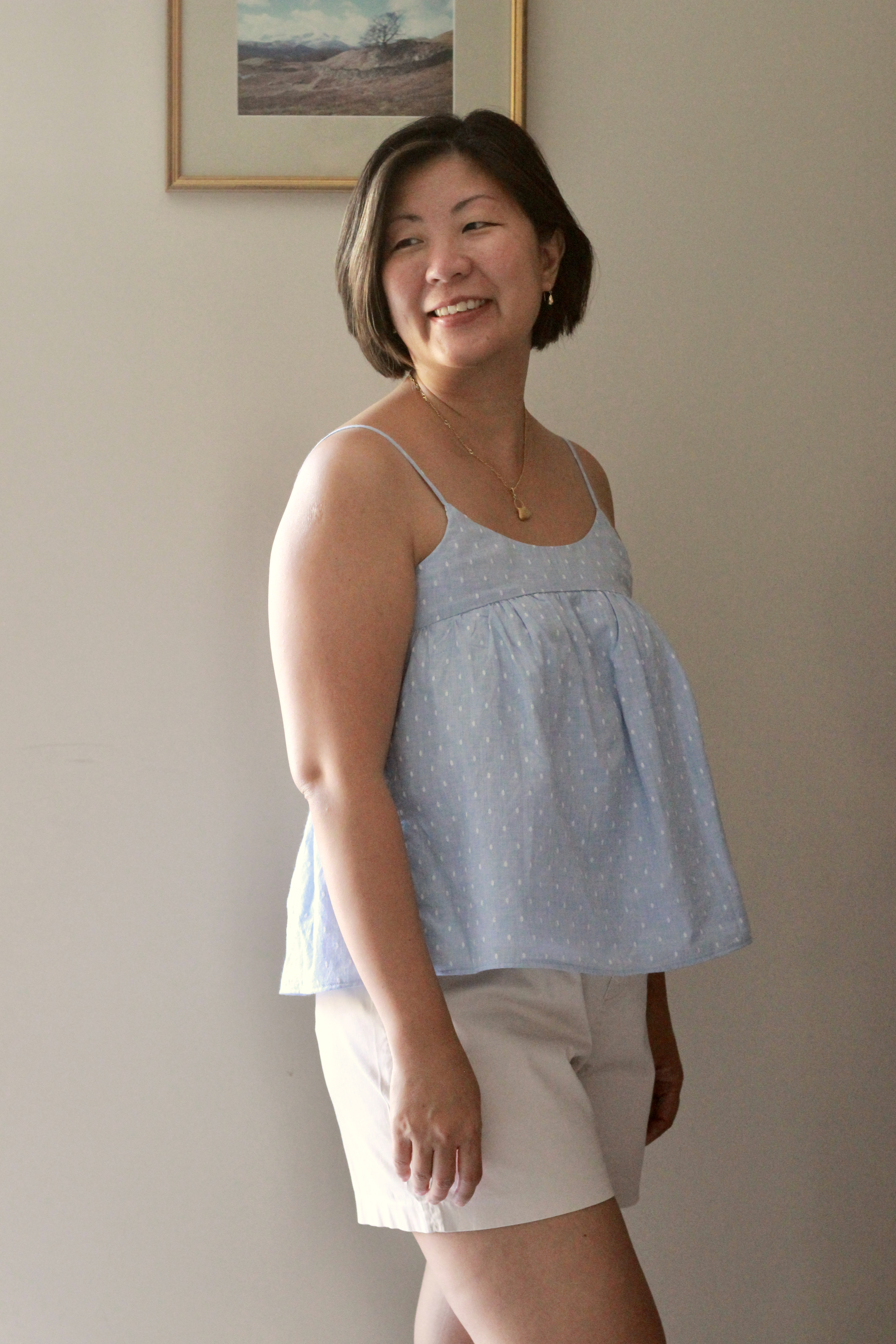
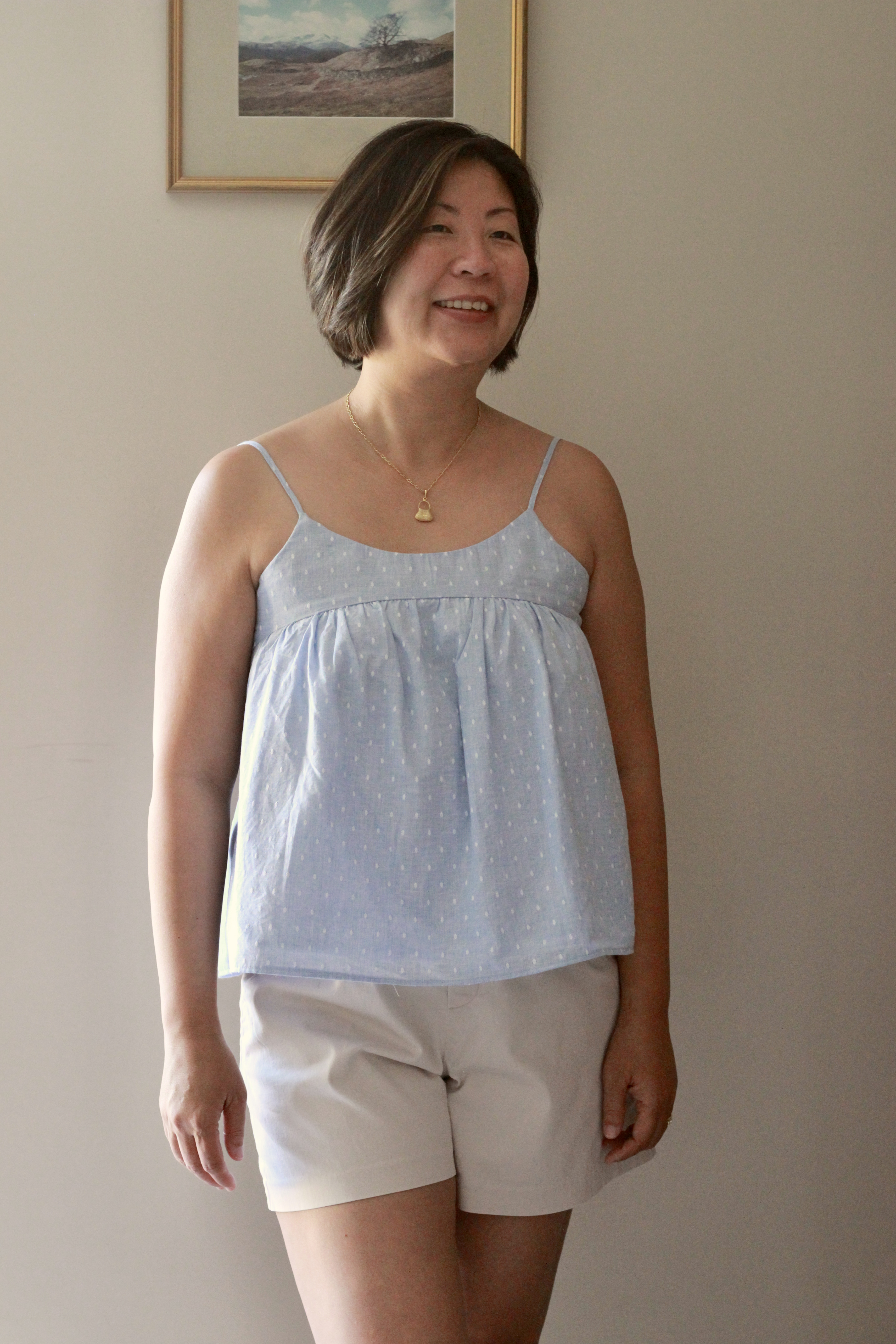
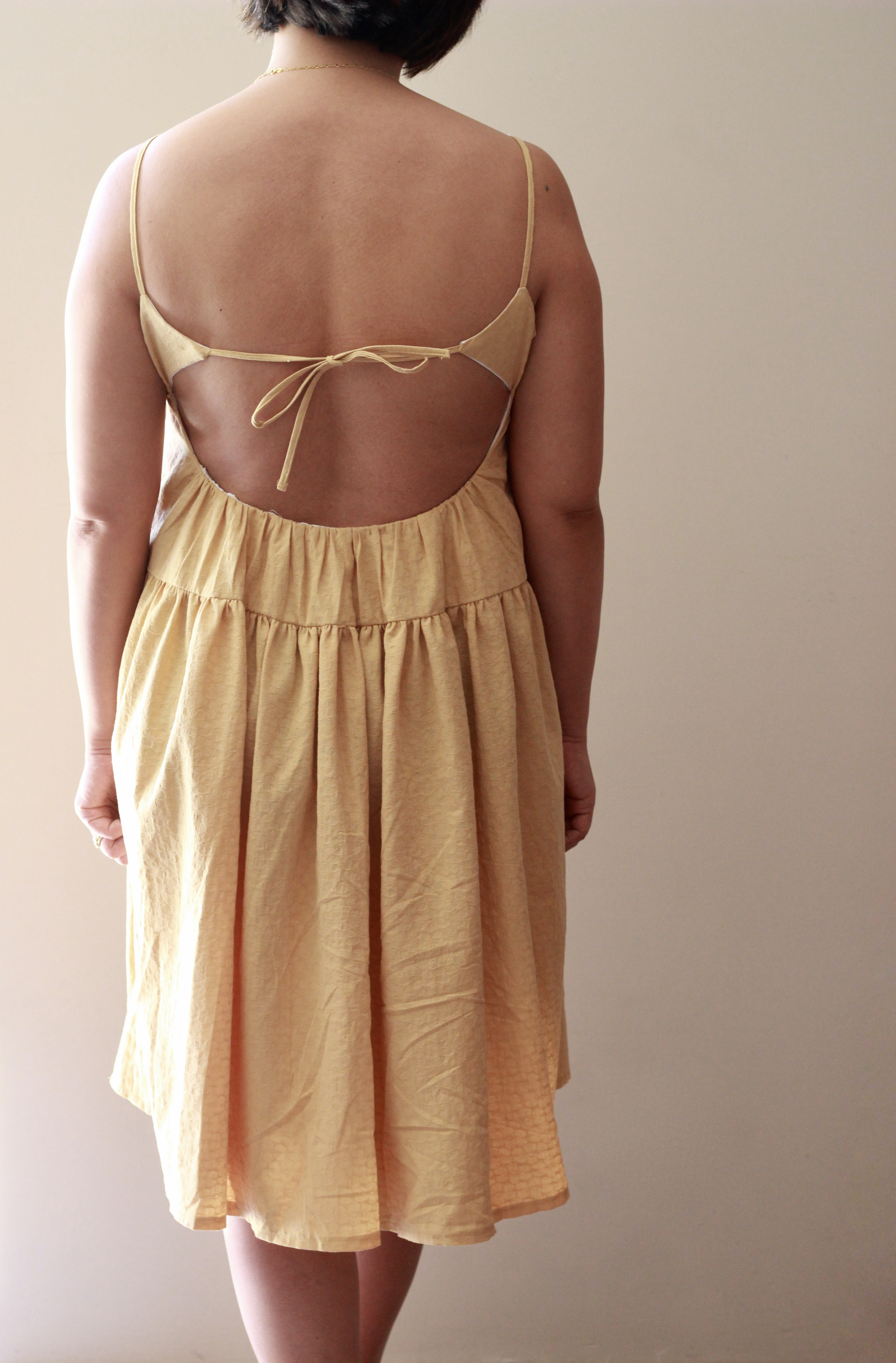
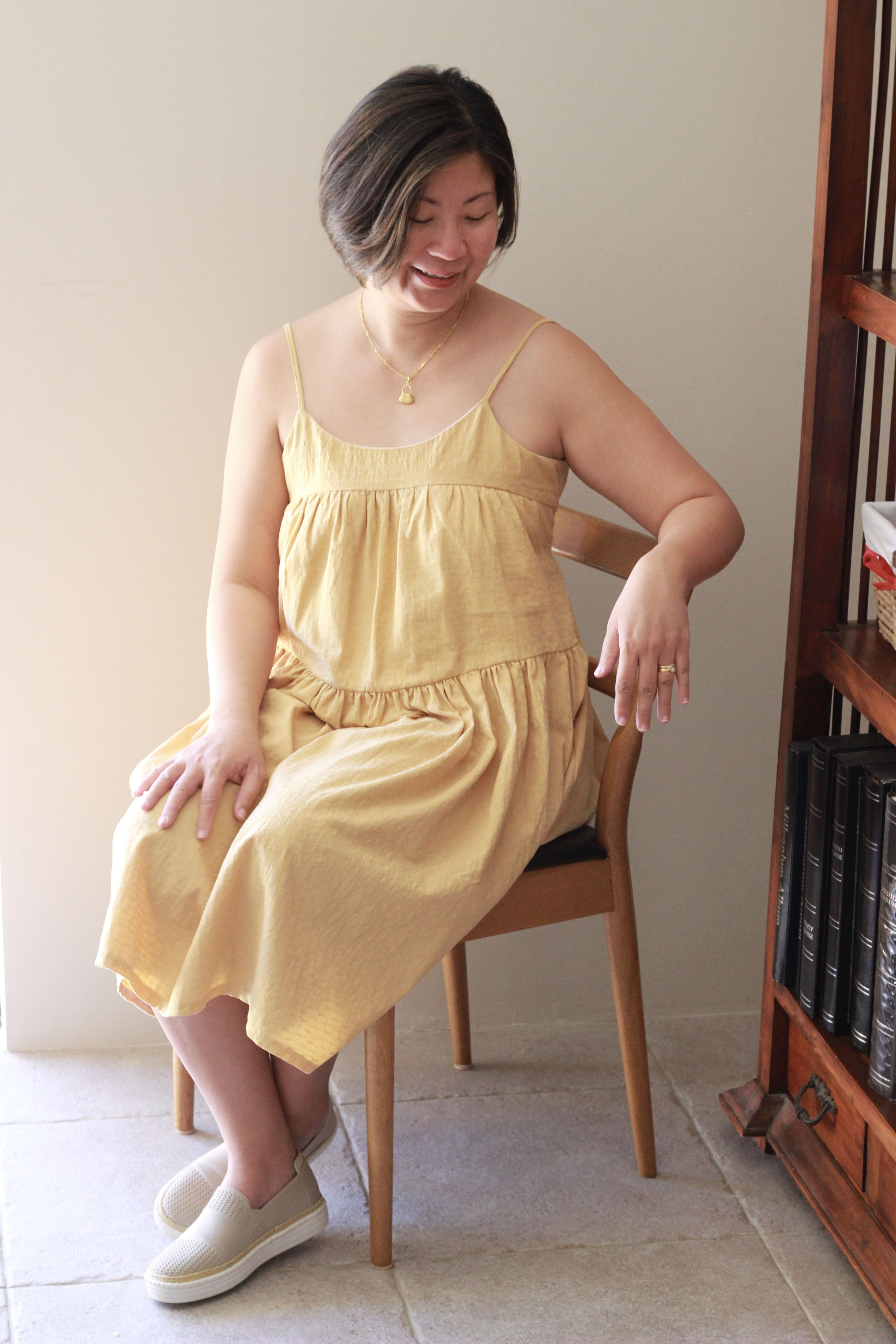
Being a self-taught sew-ist, I was mindful of my limitations, but this pattern is made for an advanced beginner which I felt, was an accurate designation. The bodice of the Holmen Top and Dress are made in a yoke style. It has a fitted yoke which a gathered tier is attached. The first tier for the dress is shorter and then fitted to another full gathered skirt tier. My favourite feature is the back of the Holmen Top and Dress. There is a low scoop which skims the curve of the spine, and the back panel is attached by a thin set of ties.

My test was for Size L. I felt the sizing was quite accurate. I did have to check with them for the back of the dress as this is such an original design. My measurements are 37-inch Bust, 33-inch Waist and 38 -inch Hips. So, my measurements fall between Size L and Size XL. I went with the Size L because the finished garment measurements were quite generous, and the fitting of the bust area was adjustable due to the straps. 

Unique Back Details

The process of testing is always interesting. I started by sewing a toile for the Holmen Top using some scraps of fabric from leftover projects and this allowed me to adjust shoulder strap length. It also allowed me time to follow the construction process and make notes where I felt instructions needed clarification. There really wasn’t any, only one small detail about which notch to sew to in the back tier, but all the instructions were clear, easy to follow and followed a logical sequence.

Once the toile was completed, I went ahead and sewed the Holmen Top. It’s a very satisfying sew. I used a thin blue cotton and lined it with white muslin. It was a challenge sewing the thin straps with my lightweight cotton as it kept shredding when I tried to turn the straps the right way around. In the end I used my own method to achieve the look. I love the look of the thin straps and I think it’s worth the effort. There is a lot of gathering especially around the curve of the back and it was a bit hard doing that amount of gathering but it was better the second time around when I sewed the Holmen Dress. Practise makes progress!

For the dress, I found a beautiful honey hued yellow textured cotton. Still lightweight but not as sheer as my blue top. I also lined the dress but only halfway with the white muslin. It’s a bit more economical doing your lining this way. I’m in love with the silhouette of the dress. It seems reminiscent of the nineteen twenties. 

Doing this pattern test has been enjoyable especially with Anna and Isabel, from The Uncut Project. It’s also so fulfilling at the creative level. It really makes me want to do more in the future. I always hesitate to apply when I see the call for testers but I’m so glad that I was offered to join the testing team otherwise I might have not been confident enough to join in!

Thanks for reading and happy sewing!

X Em
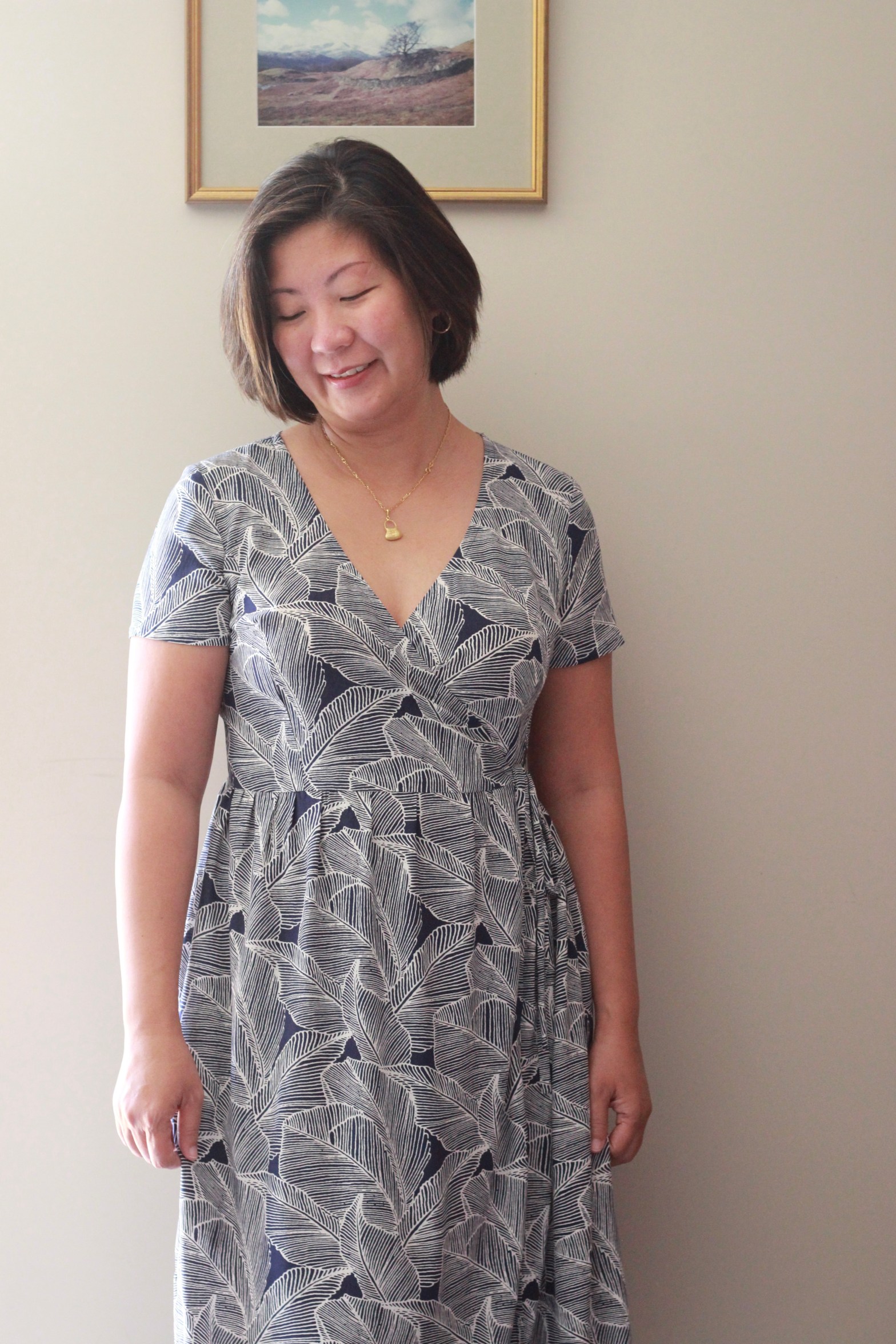
Celestia Dress

The Celestia Dress is a new release from Papercut Patterns, and I think it’s appropriately named! It’s heavenly to wear in this scorching summer heat. The Celestia Dress has a three-tier skirt which fans out from the under bust of the bodice. A bit of a twist from an empire cut dress. There are two options with a square neckline option and a bandeau style bodice which is adjustable with drawstrings. I was immediately drawn to the interesting bandeau style bodice with drawstrings. I’m documenting here my process (and mistakes made) of the bodice.

Initially this was going to be sewn as a top so that I could toile the Celestia for some incoming fabric.

However, I just couldn’t resist making the whole dress after finishing the top half. I was using some leftover linen and lyocell blend from another project. It’s in this beautiful red brick colour.

So, we start the sew by making these drawstrings. This was a great eye-opening process as I didn’t have to struggle with any loop turners or safety pins. It’s all done with cord. It’s then a simple process of attaching the drawstrings to the bodice which is wedged between the shell and a facing. 

Attached drawstrings to bodice

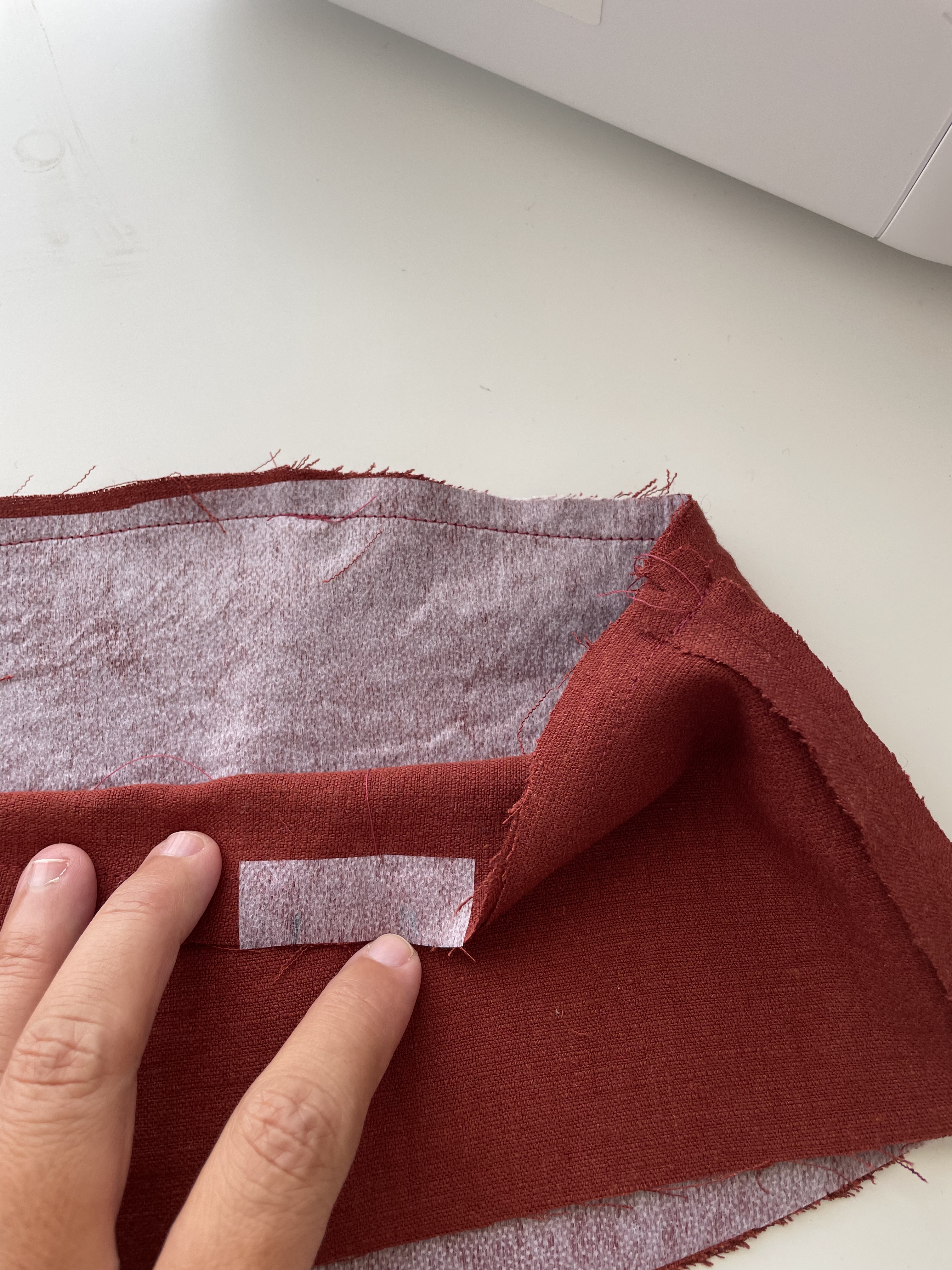
Papercut Patterns always have beautifully detailed instructions which is how a novice like me can sew from a wonderful pattern like this. However, I made a small mistake in Step 9 where we’re making the slit opening for the drawstring. We’re told to only snip the outer layer but unfortunately, I enthusiastically snipped through both layers. But fear not, I repaired this with some fusing. It has worked well, and disaster was averted. Phew! 

As I said, it was just me reading too fast and skimming rather than stopping to check each detail before doing. I have found that as my experience grows with sewing, I sometimes skim instructions and sew in a way that is familiar to me. However, I’m trying not to assume that the technique I’m using is the right way. I’ve found that different designers can have a different technique which is more effective or look better, so I always want to try follow instructions exactly as written in case it could further my learning. I’m also grateful for help from other seamstresses who share their knowledge and techniques.

Well, the rest of the sew was thankfully uneventful. To finish the bodice, there is a cord that runs between and then encased. You then pull a little out at each slit making a loop on each side.

You then finish by attaching the skirt to the bodice. I left the pockets out as I don’t always find them useful, and it can be annoying to iron around them. 

I made the size 4 but I think you’ll find the fitting very easy on this. The drawstrings can be adjusted for a broader or narrower back. It’s quite ingenious engineering. There were no modifications made. After many wears, the hemline may have dropped in the back of my dress. I was impatient to finish and wear the dress and so I’ll have to trim and resew the dropped hemline.

This was worn out and about in Fremantle which is a beautifully historic port city in Perth. It’s full of Victorian Era architecture and has a certain vibe. It was the first city we lived in when we arrived in Western Australia and I have fond memories of the buzz on weekends where it felt like the whole of Perth had descended on Fremantle. 

Exploring Fremantle

Thank you for reading and happy sewing!

X Em

Roscoe Dress

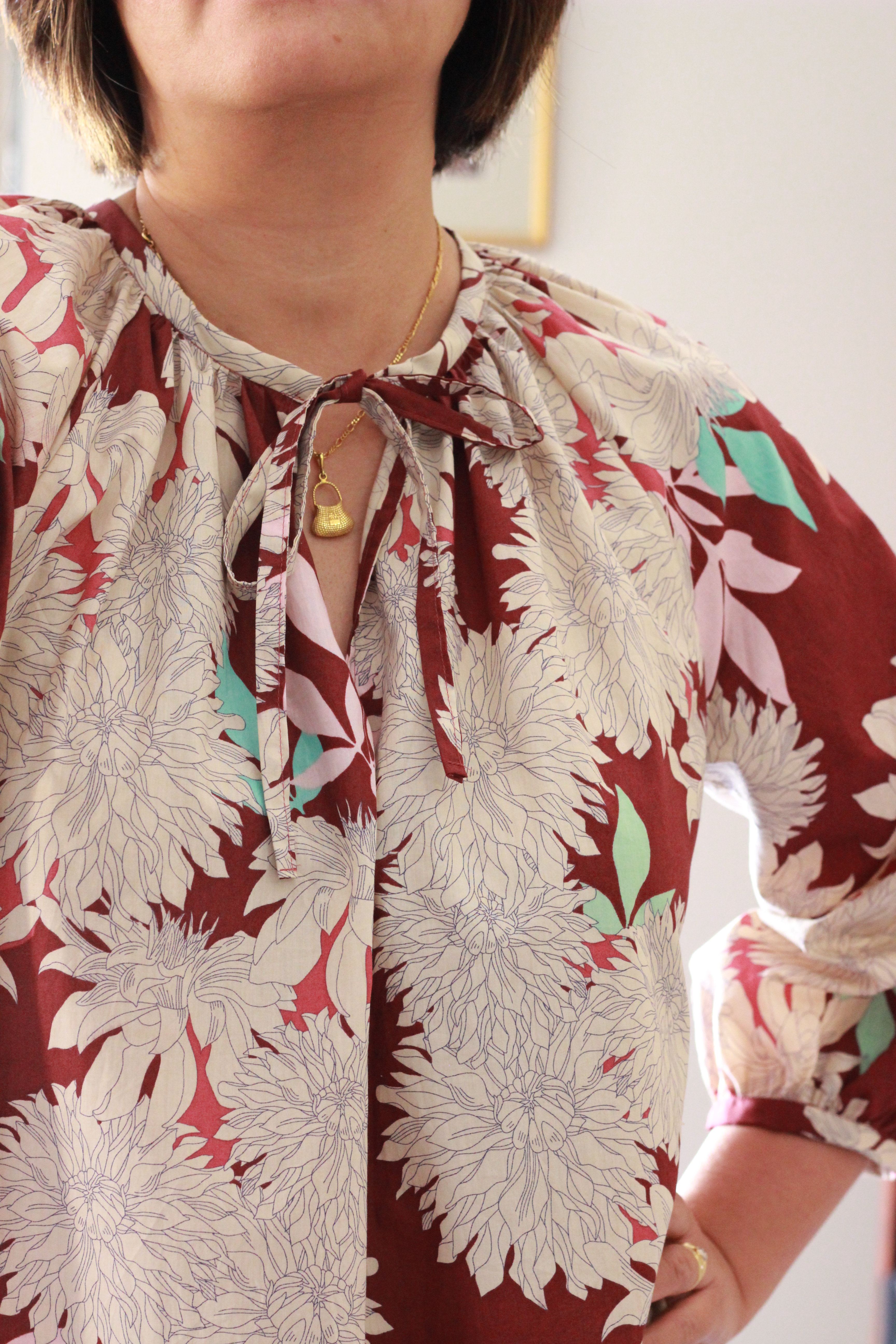
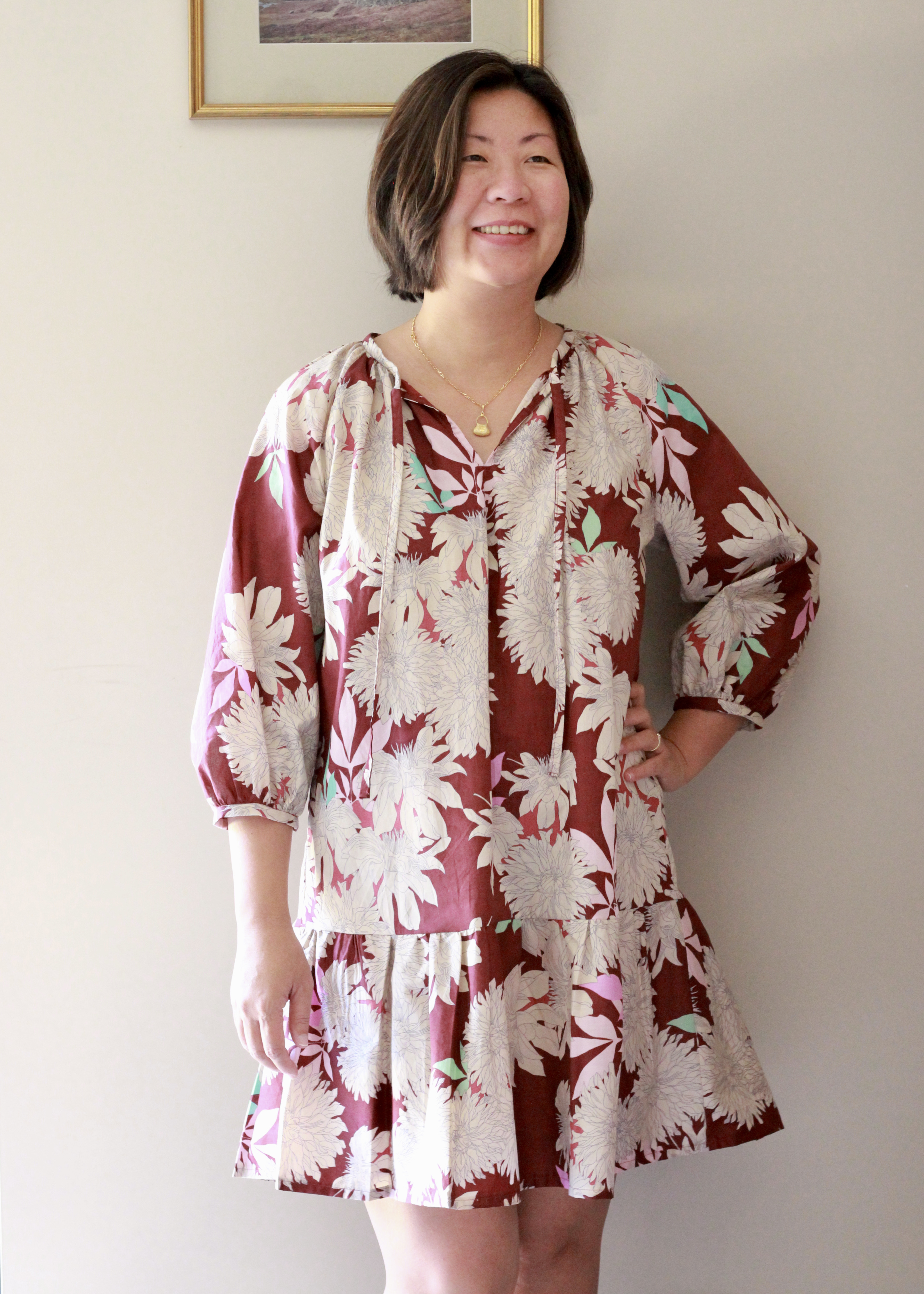
It is traditional to wear red to the family reunion dinner when celebrating the Lunar New Year. Red is considered a lucky colour, so I was excited when Maai Design started to stock Storrs London Fabric, and I came across the Hermia design in red. I love the big flowers drawn across a background of red with pops of highlighter blue-green and hot pink leaves. I knew it would match well with a boho inspired style dress which immediately brought to my mind the Roscoe Dress from True Bias. The dress has a gathered neckline with raglan sleeves. It also has a centre slit with neck ties. It’s truly such a pretty design. On the practical side, it’s lovely and cool to wear in summer when matched with the Hermia Storrs London fabric. The superfine 100% Egyptian cotton is billowy, loose, and cool to wear.

I made the size 8 for my measurements of 37-inch bust, 33-inch waist and 38-inch hips. Bohemian dresses are loose and made with freedom of movement in mind. The finished dress for my size was 48 inches around the chest which gives you some idea of the ease in the fit. There are three versions of the pattern, the first is a blouse which I’ll definitely be returning to sew, a tunic or short dress version and a midi version. I chose the short version which still falls just above my knees. I’m 5 foot 7, to give you some idea about the length of the dress.

Construction was very easy which was a relief because I was sewing to a deadline. The date of the Lunar New Year changes each year according to the cycles of the moon. It came around a lot earlier this year. The sewing went well, and it was a relief that it was so beginner friendly. I love to be challenged with my sewing but now was not the time! 

No modifications were needed however, initially I had made the bottom ruffle pieces slightly longer thinking that I wanted to cover my knees. I found myself shortening them to the original length promptly. It was only an inch and a half but it really threw off the balance of the design. It was interesting that such a small detail could detract from the beauty of a design. I guess that’s why they say that, “…the devil is in the details”.

Nothing much more to add except that it felt special to wear a dress that I had made and it was a great hit. I think I mentioned on my Instagram Post that I need to hide this next time my mum comes over or I might be missing a dress. It was lovely and cool to wear and sewing it with such special fabric elevated the dress from casual to special occasion wear.

Thanks for reading and happy sewing!

X Em
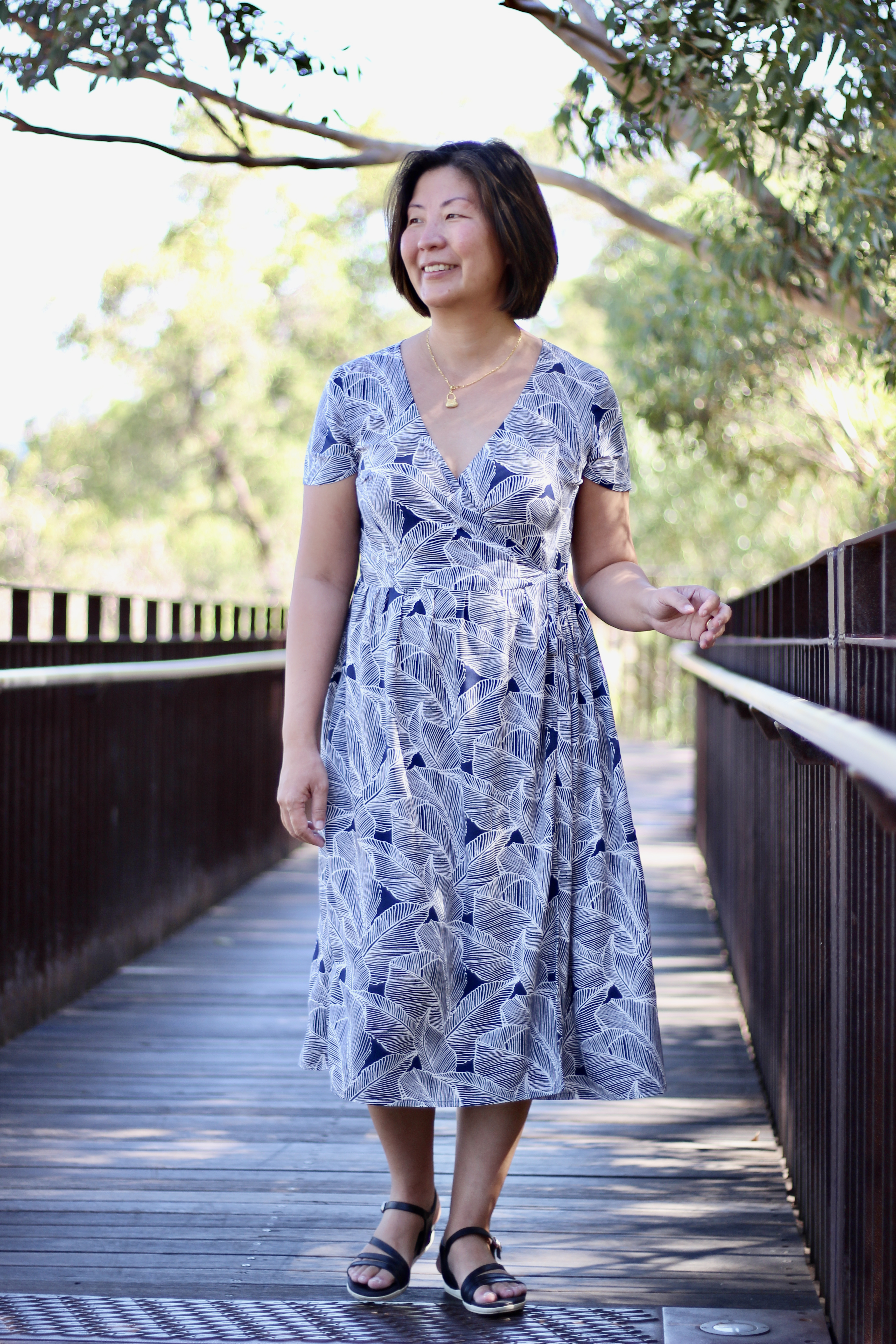
Grace Dress as a Pinafore

First of all, I’d like to say that I love the design of the Grace Dress as it is. The Grace Dress is a result of the creative collaboration of Taree Marsh of Masha Style and Abby Huston of Abby Sews. You can see my previous version of the Grace Dress on the blog. I have finally got some holidays coming up and I wanted something that will be good to wear with the current changeable weather. I love how the pinafore can be paired with a t-shirt or tank top for warmer days or a long-sleeved shirt or turtle neck for cooler days. It’s such a versatile garment. So, when I came back to sew Version A of the Grace Dress, it occurred to me that it could easily be hacked into a pinafore.

Version B Grace Dress

Before I get into the hack, have you ever thought about personalising your garments with a bit of embroidery? On a whim, I thought I would try it. Embroidery isn’t as difficult as I thought it would be. I’m definitely hooked so I’ll be putting together a bit of a “how-to” in the future. Make sure you don’t miss out by tapping on the follow button for future blog posts!

Trying out embroidery

Basically, the pinafore was invented as a protective garment for your dress. It was like an apron that could be worn over your “good” clothes. Very practical at a time when washing your clothes (especially heavy dresses) meant hard labour and was done with muscle power not a machine. Of course, that application no longer applies and we’re now lucky enough to be able to do our laundry by pressing a few buttons. As mentioned earlier, I like the pinafore for its versatility as a garment.

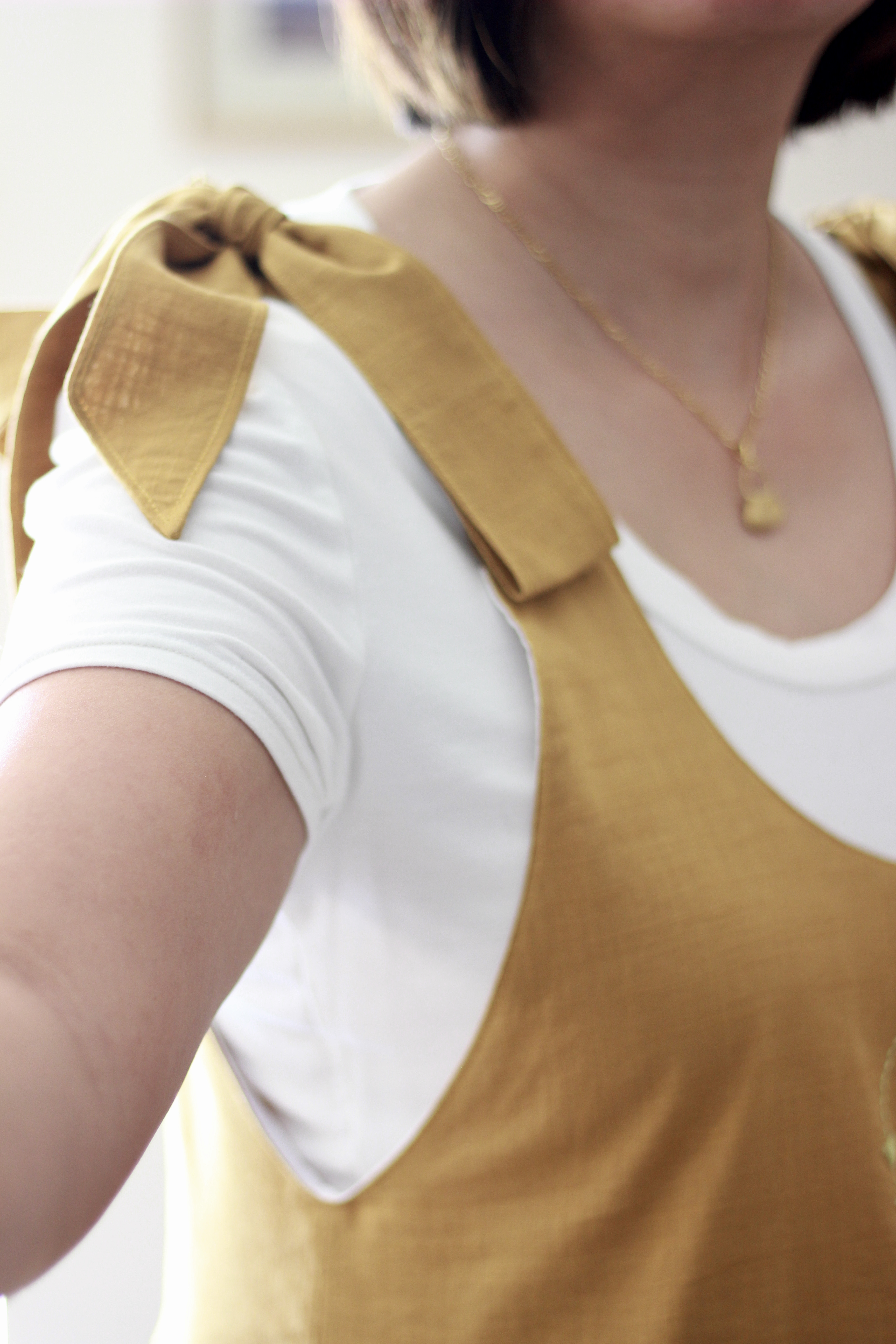
Okay, I started the hack by thinking about the front bodice neckline and the armscye. It is usually worn over another dress or shirts so there needs to be enough room to fit over whatever is worn underneath. So, I started by scooping out the neckline and the armscye. The neckline was deepened by two inches and I graded back to the curve to make sure that the neckline was not widened with that. 

The armscye was a bit more difficult. I was a bit fearful at first and made quite a shallow cut. Probably only deepening it by 1.5 inch but I later deepened this leaving 4 inch from the bottom of the bodice. I realised that the deepened “arm opening” was quite a distinct feature of the pinafore. Now that I had deepened the armscye, it is natural that the dart was no longer required. It’s important to meet the back armscye with the front so I went ahead and matched that up.

Essentially that was the only modification needed! I told you it was simple. Version A of the grace is fastened by these cute ties on the shoulders. I’ve sewn them together so they stay fastened without any risk of unravelling. It would also be cute to do the buttoned version of the shoulder strap!

Thank you for reading and happy sewing!

X Em

Romy Wrap Dress

Dress Hack

I first made the Romy Wrap Top from Pattern Scout last year when I had only been sewing for about 6 months. It’s a testament to her fantastic instructions that I could make such a beautiful top with my rudimentary set of sewing skills. I’ve since also sewn the dress version as well. The Romy Wrap dress is uniquely fastened with buttons and has a slender silhouette. 

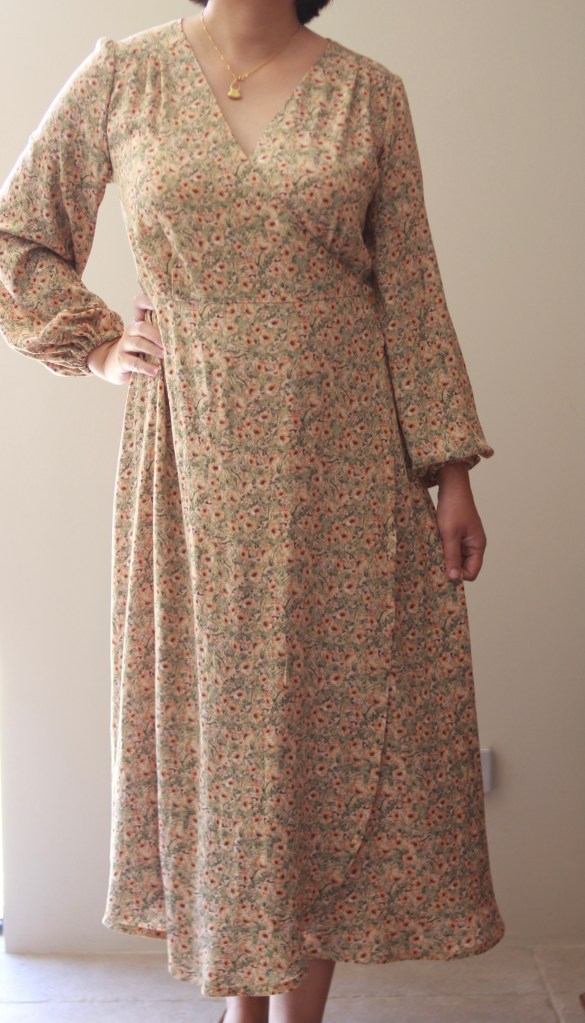
This time, I wanted to use the pattern to make a maxi dress with the sleeve expansion that was released for the pattern. I’ve been seeing a lot of ground skimming, floor length dresses inspired from the sixties. I found a beautiful rayon crepe from Spotlight Stores which had a beautiful field-of-poppies print in a mix of clementine and yellow on a field of green. Rayon crepe is beautifully sheer with a slight texture. It also has some weight to it, so it has a beautiful drape which just skims over the body in the most flattering way. However, it has a bit of “bounce” so if you’re a beginner like me, just be careful not to stretch the fabric as you’re sewing. Also, when cutting, it might be better to use a rotary cutter especially for tricky curves. My final tip is not to skip the stay stitching (don’t learn the hard way!)

There is a very comprehensive tutorial on the Pattern Scout Blog as well as a YouTube video so have a look there when you sew along but this is an account of my sewing process.

Firstly, I needed to lengthen the skirt piece. I didn’t have a firm idea of the extra length needed but I estimated about 10 inches and lengthened from the hem grading the curve as I approached the waistline. This was repeated for the back skirt piece as well. 

Then I went ahead and added the stay stitching around the neckline and the armscye as well as all the tucks on the front and back bodice pieces.

I also wanted to add another tip, which is to iron as you go. It just neatens the seamlines which can get a bit wavy with this bouncy fabric.

Ironing will save you when you’re pinning!

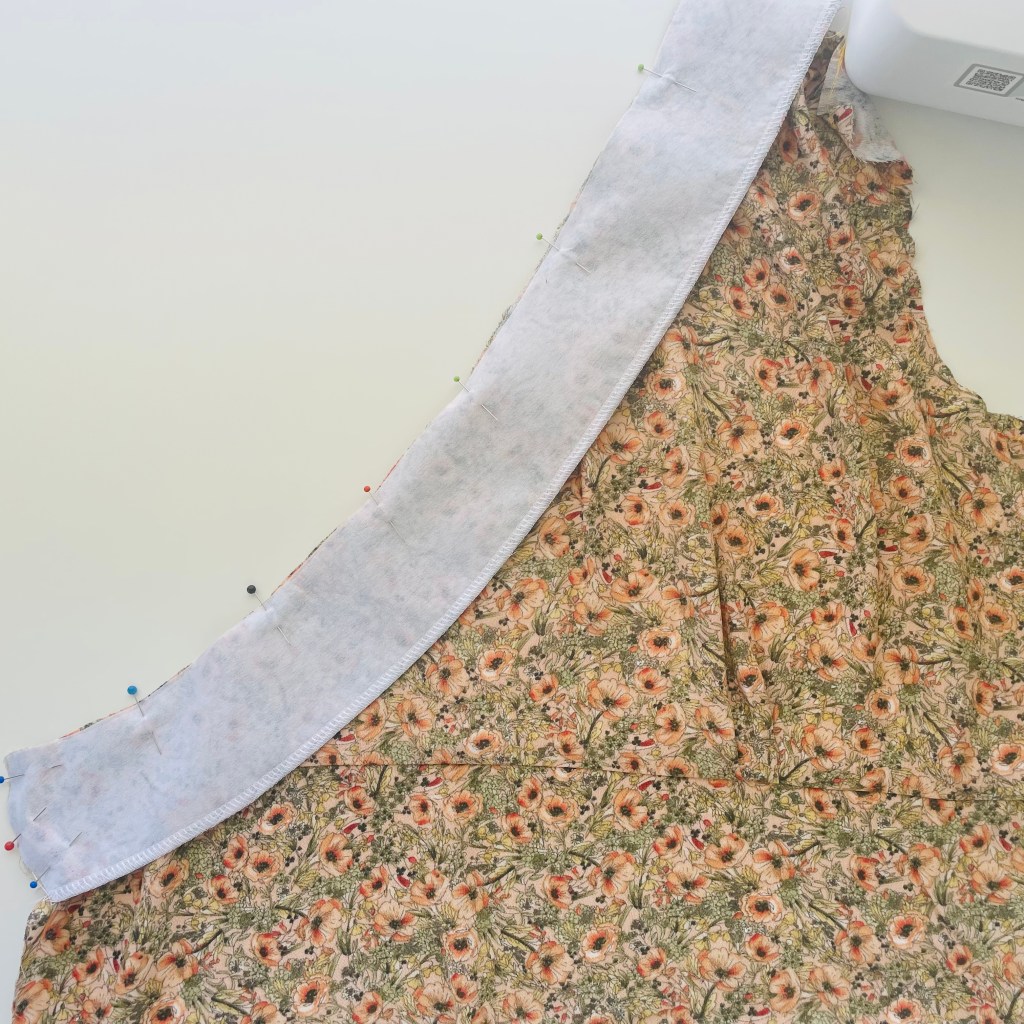
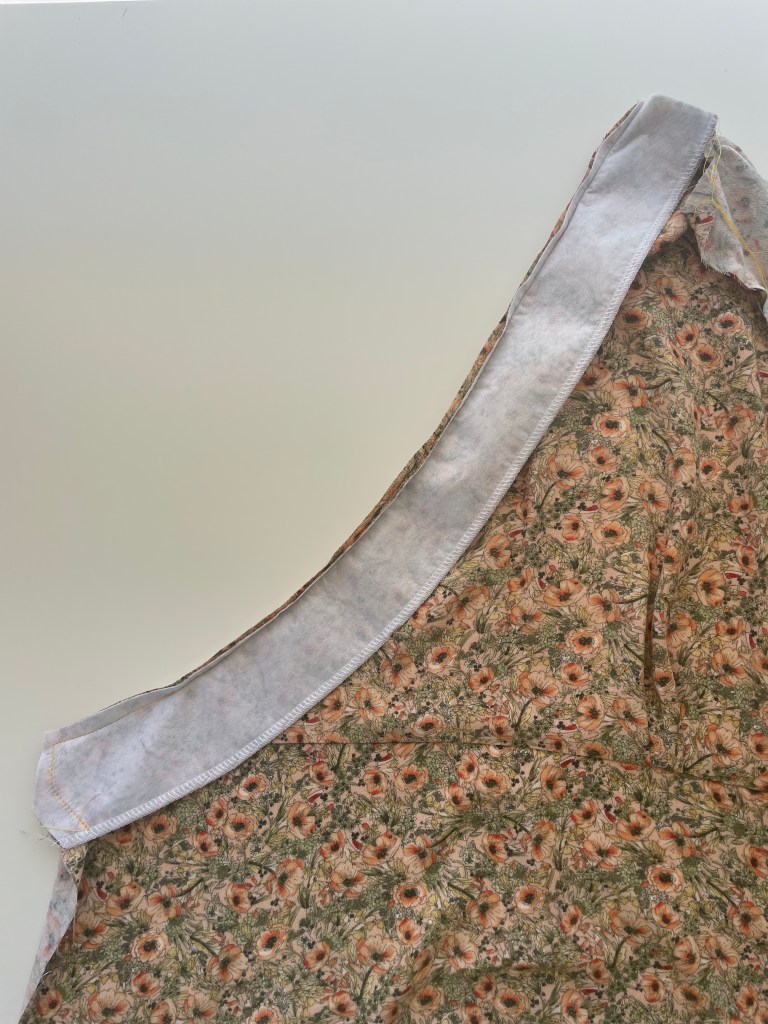
Once I attached the skirt pieces to their corresponding panels, I then pinned and attached the front interfaced facings. The corner was a bit tricky, so I just sewed slowly and I found it easier to sew with the interfaced side up. 

The next step was to sew on the yoke. The yoke is the piece that attaches the front panels to the back bodice and skirt. The instructions are very detailed, and I just followed them but I have heard that other people have used the “burrito” method which I have also used in other patterns. Maybe this is something I could try in the future but with my lengthened skirts, it could be too bulky.

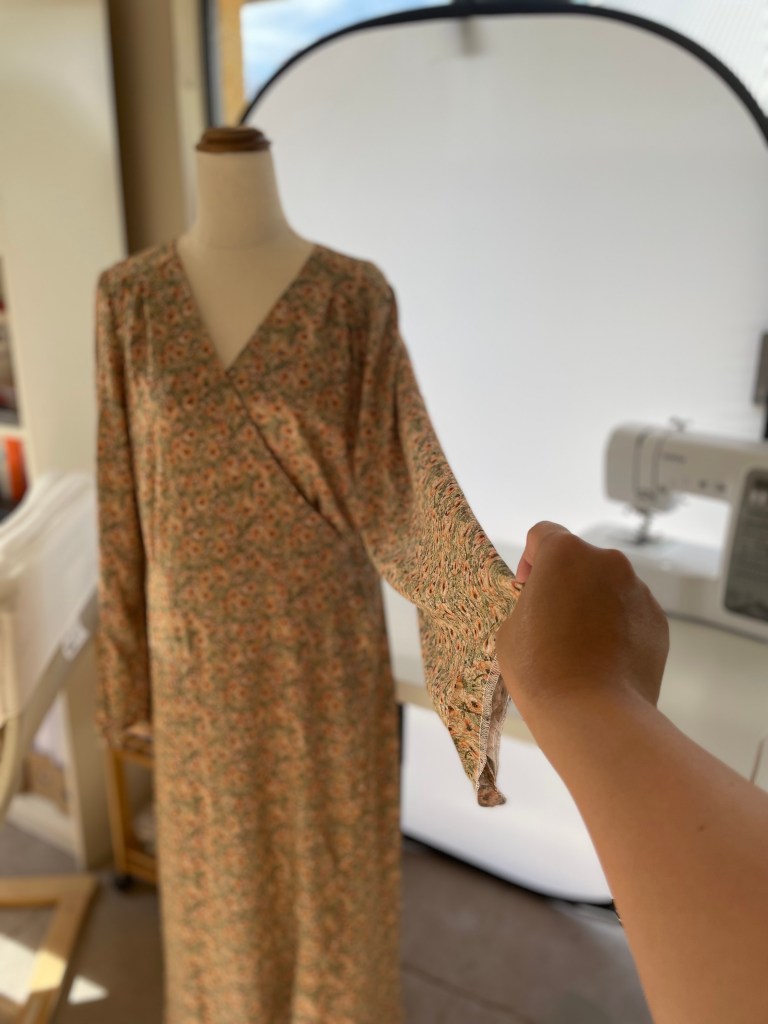
Now, getting the sleeves on was initially confusing because I kept getting extra fabric and I thought I had cut the wrong size. But when I compared the expansion pack instructions to the initial pattern, I realised that there was a bit of instruction missing. In the original, the sleeve is gathered along the yoke seam and don’t worry, I’ve contacted Casey at Patternscout so she knows. So happily, with this sorted, I could attach the sleeves and finish them. I love bishop sleeves for the fullness in the cuffs. 

The final part was to finish the hems before making buttonholes for the buttons. Now, I always must resist sewing up the hem too soon. With fabrics that have a bit of stretch, or with dresses cut on the bias, the dress should be allowed to hang on a hanger or dummy for at least a few hours. I had to trim the hem to even up the hemline before sewing up.

Thanks for reading and happy sewing!

X Em

Meridian Dress II

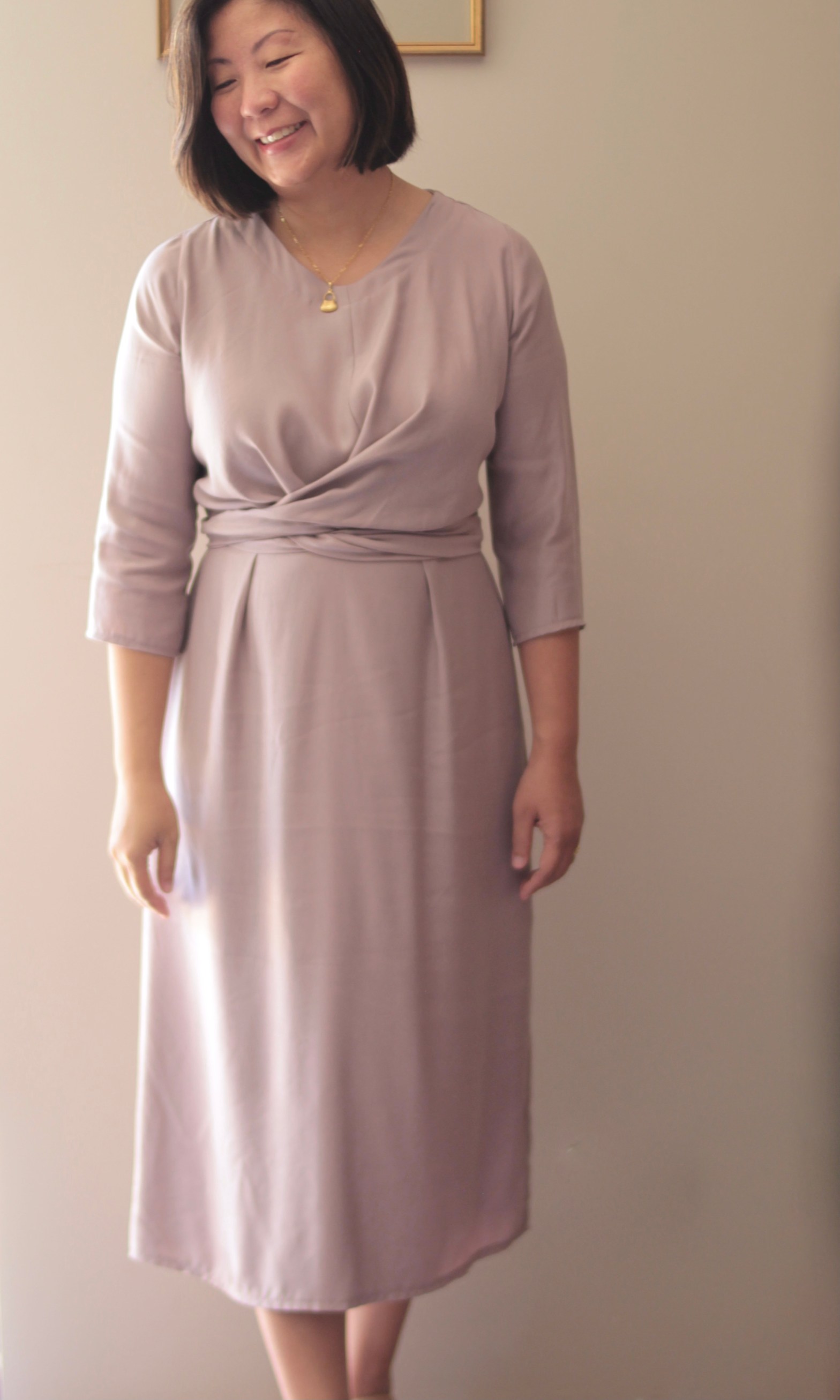
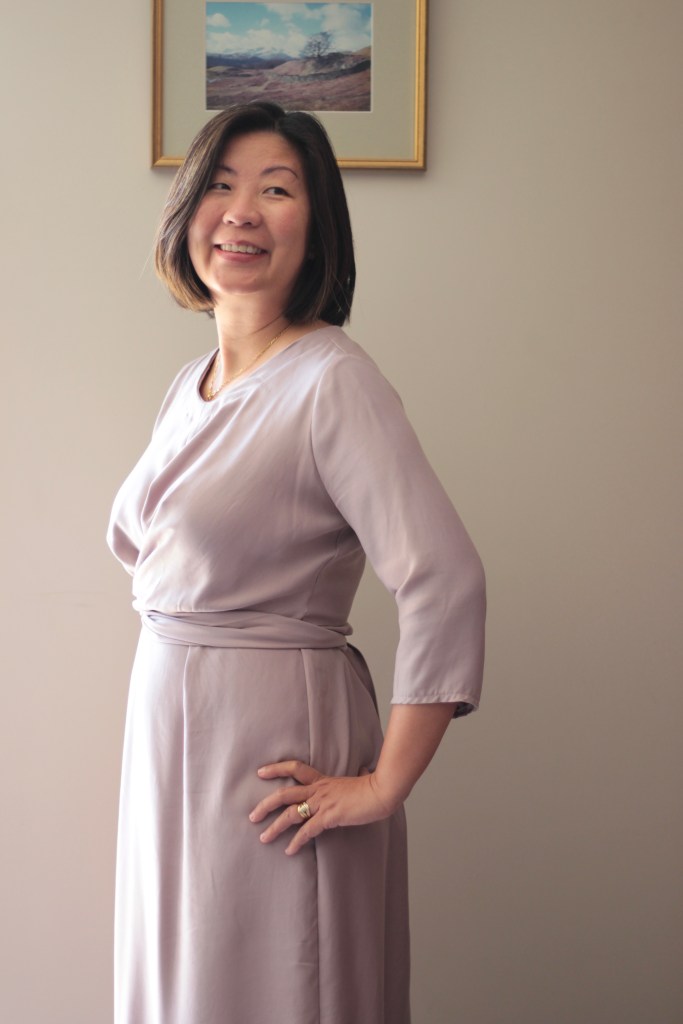
This is the Meridian Dress Mark II. I have already shared my previous version of this lovely dress, but I just wanted to share another one as I’ve sewn a version with sleeves, which is as intended by the original pattern from Papercut Patterns. Because I had made a toile, this did not take much time to sew up.

The fabric I’ve used is a Tencel Twill fabric that was snapped up at the Megan Nielsen in-store sale back in June. I was assisted by Belle (she models the curve range and blogs on the Megan Nielsen site) who was so helpful and lovely. I had already earmarked the Meridian Dress to sew but was looking for the right fabric. She brought out the Tencel Twill which had the drape I was looking for and of course, the dusky pink colour is so beautiful and hard to resist. When I bought ready to wear, I never really thought much about fabric. Of course, I enjoyed the colour and the pattern as well as the feel of the fabric but never really investigated what would match a certain design. 

So, what is Tencel? I was so surprised to find out that Tencel is made from wood pulp! Such a bonus to know that it’s a natural fibre. It’s also known for being breathable and highly absorbent so it’s great for any season being cool for summer and warm in winter. Wait, there’s more! Apparently it’s stink proof because bacteria can’t stick to its smooth surface.

I used 2.5 meters of fabric to make my Meridian Dress. Again, I made the size 4 and the only adjustment was to shorten the sleeves to ¾ sleeves. The wrap front bodice does give a lot of ease in the fit so definitely stick to the suggested sizing. If I were to make it again, the only minor adjustment that I would make is a full biceps adjustment. I always forget this and have sadly experienced “dinosaur arms” but it’s not too bad on this so I’ll leave it as is.

Oh! And, can I just make special mention of my invisible zipper installation! I’m so much happier with this. Comparing between my first and second make there has been 100 percent improvement. I always tell my kids that practise makes progress!

Thank you for reading and happy sewing

X Em

Matilda Dress

How is it the end of October already? The Matilda Dress caught my eye in the recent re-release by Megan Nielsen Patterns. I loved the version with sleeves, and I felt that it would be a great dress for the autumn or spring seasons where you can have warm days and cold nights. This has been a bit of a marathon sew and like all marathons, some parts were challenging but it felt like a satisfying achievement in the end.

The challenges mainly came from the fabric I chose. Firstly, the fabric I chose was a cotton blend linen but the weight of it might have been too heavy. Secondly, the fabric was a bit shifty. I think the weave must have been quite loose and without a walking foot, the fabric shifted quite badly when sewn. The loose weave also meant that the fabric frays quite easily. Next time, I will be looking to sew the Matilda with shirting fabric as suggested in the pattern! Despite this, I do love this soft fabric and as it’s slightly thicker, it will be getting a lot of wear until the weather warms up properly.

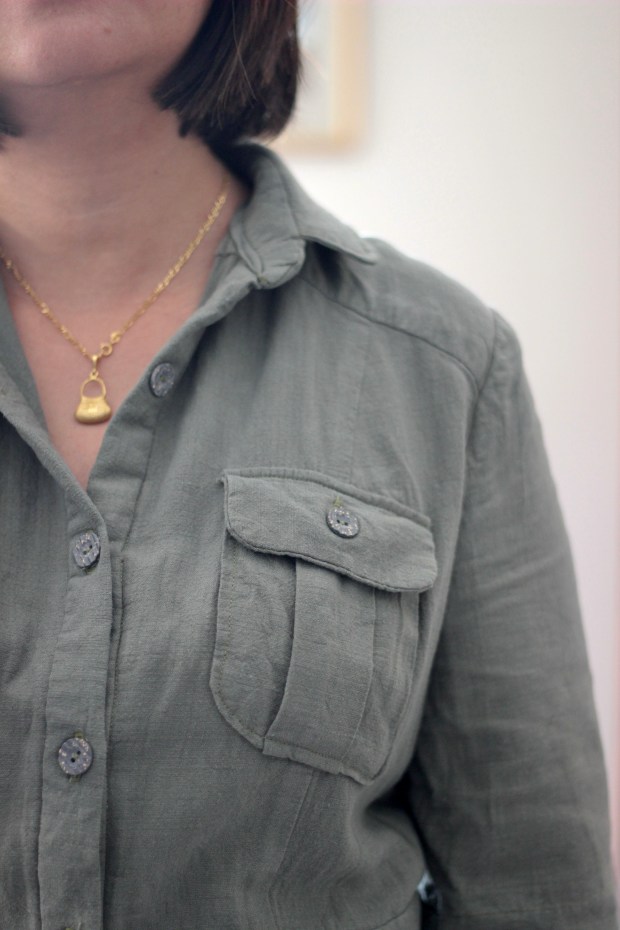
Packed full of features like pockets and collar

Okay, so onto the features of the Matilda Dress. Basically, I would describe it as a fitted shirt dress. It has two types of pockets, a yoke, collar with collar stand, has a waistband and princess seams. It was so interesting to have so many features in a dress and I was so grateful for the clear tutorials included with the pattern. I needed to refer to it when I was sewing the breast pockets and pocket flaps. I also referred to it again when I was installing the collar and the collar stand. I find that every time I’ve sewn a Megan Nielsen pattern, I learn something, and my skill level grows.

For my measurements of 37:33:38, I sewed the Size 14. No modifications were needed. Interestingly, in the past I’ve usually sewn the size 12 from Megan Nielsen Patterns but the size 14 fits better. I can still wear my other dresses made in the size 12 so I’m not sure if there have been some changes in the drafting? If you know then comment below. 

I managed to get all my pattern pieces from a 3-meter length fabric (I think it was 130cm in width). There were a lot of pieces, so I spent quite a lot of time playing pattern piece Jenga! The linen fabric was from my stash which was why I wanted to spend the time fitting all my pieces in. 

Full length of the dress

I’m not sure I’ve mastered this pattern yet. It will definitely need revisiting in the future but I’m happy to have made the attempt!

Thanks for reading and happy sewing!

X Em

Grace Dress

“Cottage core” is a term that I was introduced to by my daughter when I started to point out these beautiful dresses reflective of an idyllic rural lifestyle which have recently become more popular since last year. I’ve read that it’s society’s reaction to recent global events, making a wholesome, clean lifestyle more attractive. The Grace Dress definitely falls into this category with its vintage vibes. It’s what you imagine wearing if you had a field to roam in carrying a basketful of wildflowers with a backlighting of sunshine (inspiration for my picture).

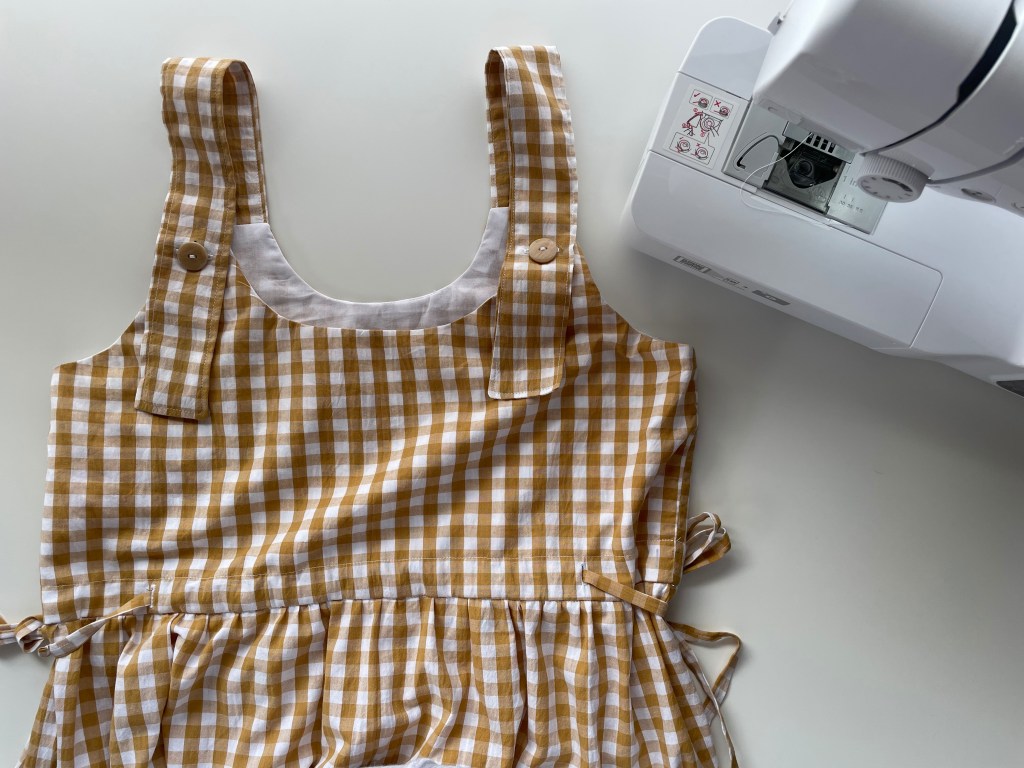
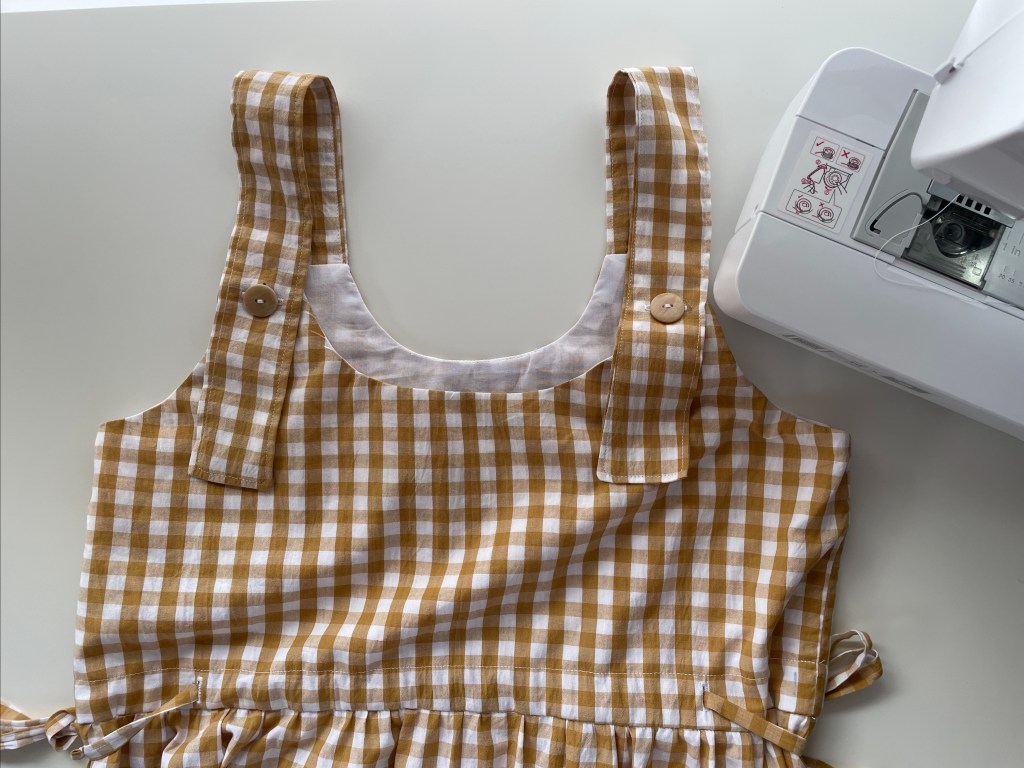
The Grace Dress is a collaboration between Taree from @marshastyle and Abby from @abby_sews. When they started promoting this, I immediately saved it and waited for the much-anticipated pattern release. I’ve sewn the View B of the dress which has a multi-tiered gathered skirt, buttoned shoulder straps and a casing for some waist-ties (very flattering). Oh! I also have to mention that it has generous pockets!

I made the size 8 with my measurements of 37 Bust, 33 Waist and 38 Hips. It has a great size range from 31:24:34.5 to 59:52:62.5 and after saying that I usually try to make a toile in my last blog post, I must confess that I just went straight into it without a toile with this sew because of the ease in finished garment. I’ve used this mustard yellow gingham fabric from Spotlight Stores. Gingham adds to that idyllic county aesthetic that I wanted with this dress. 

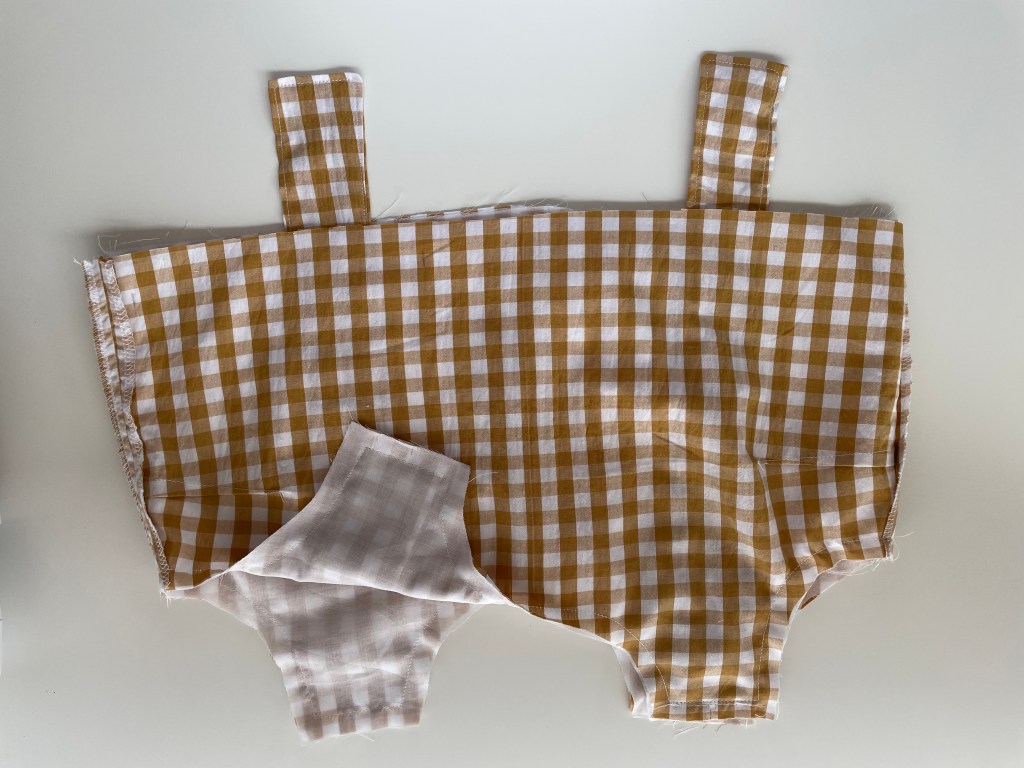
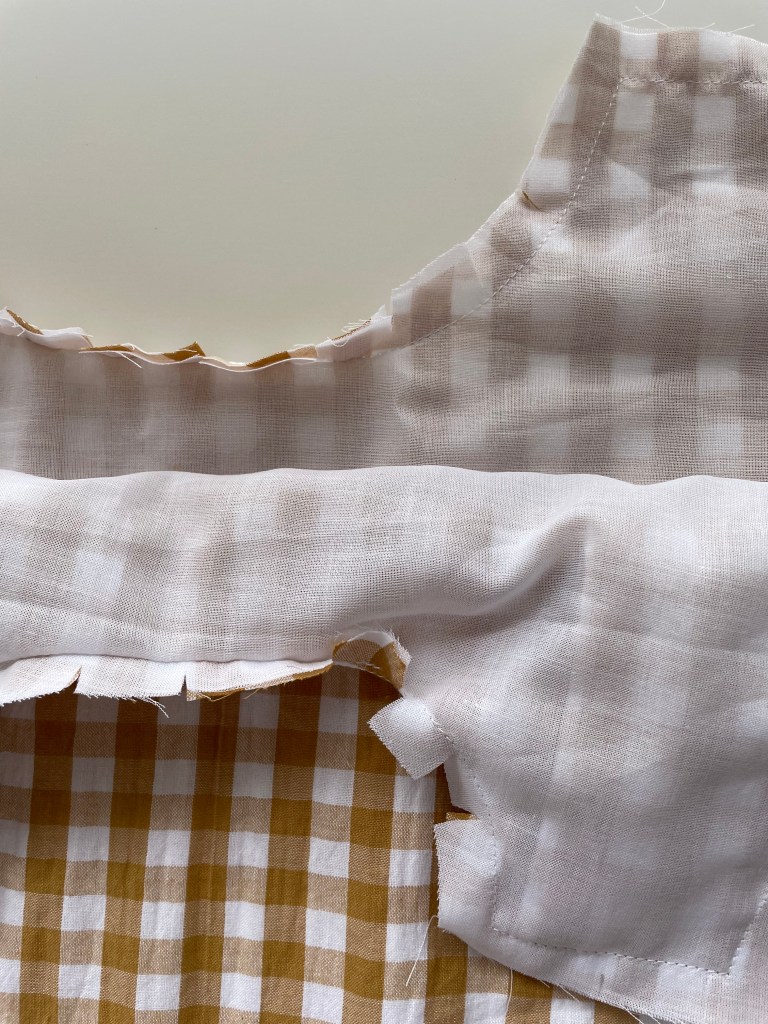
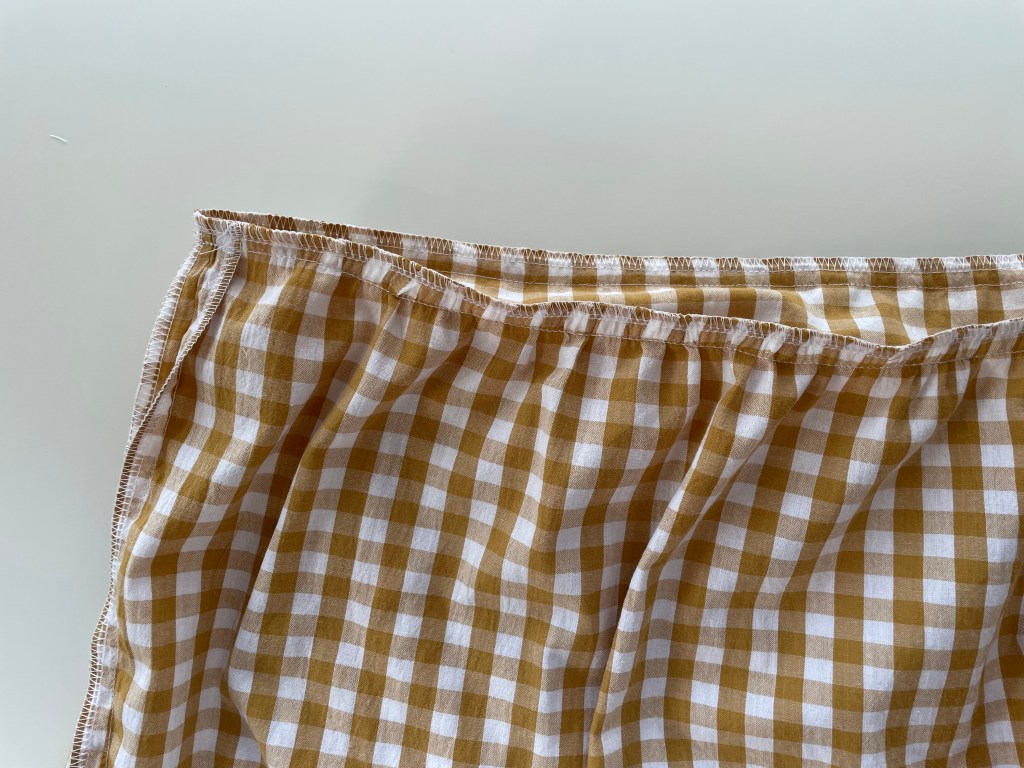
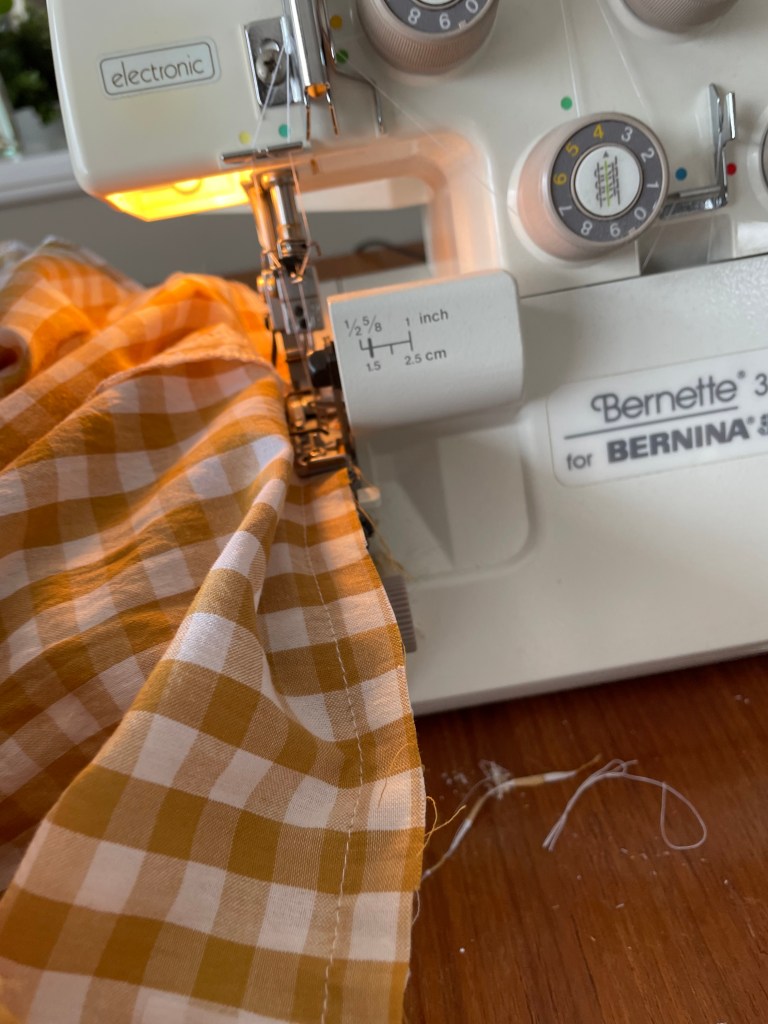
To start the sew, I prepared the straps and put together the bodice. Pretty standard construction with darts for the bodice. I used a white muslin for the lining pieces. The Grace Dress Pattern has lovely instructions for French seams, but I decided to finish with an overlocker. 

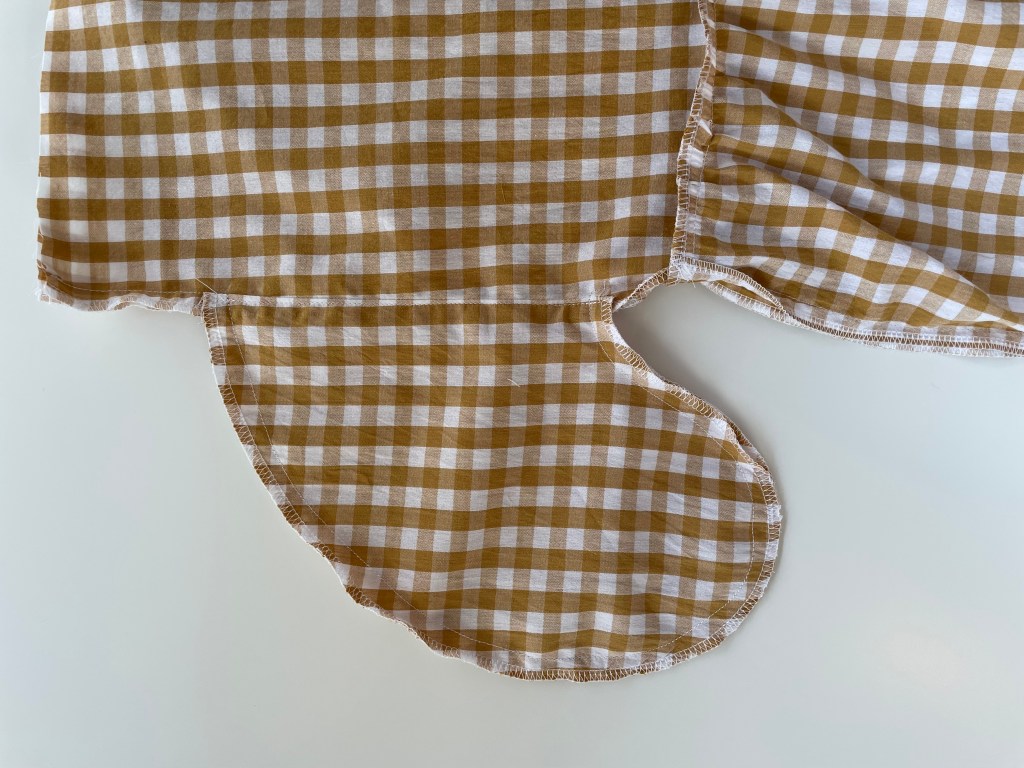
When you move onto the skirt, you’re putting in the pockets from the side seams. As mentioned above, I’ve decided to use an overlocker to finish my seams. To do this, I neaten my pocket pieces and neaten the skirt side seams on my overlocker. Then I attached the pocket pieces to the skirt pieces – make sure you keep the paired pocket pieces on the same side and be careful that you have the pocket markings at the same level for the front and back skirt pieces otherwise you’ll be frustrated by wonky pockets.

Skirt pieces are then gathered, and the longer bottom tier is attached to the top tier of the skirt. Now, how long is too long? This is a pattern made for 5’7 height which I did not modify. I really wanted a maxi dress and crave that swishy feel of a long skirt. 

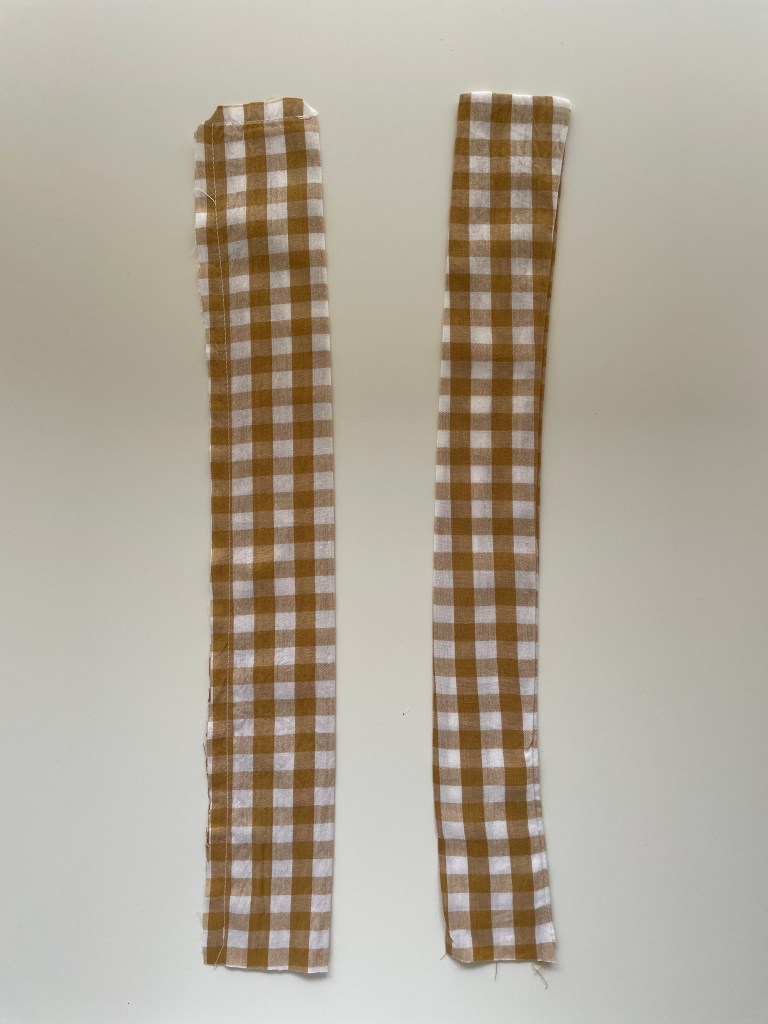
The most interesting part of the dress in View B is making this channel for waist ties. Skinny straps and ties are the bane of my sewing life. Yes, I have a loop turner. No, it doesn’t make it any easier. Yes, it still took me about an hour and a lot of swearing. Anyway, that doesn’t take away from this interesting little feature. This little feature sets it apart of from other tiered dresses as it cinches the fabric in at the right spot to make a very flattering silhouette. I chose to hand baste the lining before using the stich-in-the-ditch method to finish. 

The final part was to sew the buttons in to finish the shoulder straps. In my initial try-on of the dress, I realised that I have slightly sloping shoulders which made the straps gap quite badly. After some thought, I decided to sew the straps on a slight angle which also ensures that there won’t be any wardrobe mishaps. I’ve still attached the button as I had already sewn the buttonholes.

Here are some close-ups of the beautiful Grace Dress!

Thanks for reading and happy sewing!

X Em

Meridian Dress

With the onset of spring here in Perth, I thought I would tackle The Meridian Dress by Papercut Patterns which has been on my Make Nine Sewing Challenge List. The dress has a beautiful silhouette with an easy to fit wrap front. I jokingly told a friend that I was making this dress to go to dinner parties with because the wrap front makes it easy to adjust for a full belly! But actually, it really does work to make it a very comfortable dress to wear. Like most women my dress size can go between two sizes in one month – I work in women’s health and this is a common complaint. This is also often why we’re sometimes caught out with, “nothing to wear” when a last minute event pops up and we haven’t had a chance to check the current fit of a “going out” outfit.

I’ve sewn the size 4 for my measurements of 37 Bust, 33 Waist, 38 Hips. The finished measurements range from B34.6:W24.4:39.2 to B51.2:W40.9:H55.7. No adjustments were needed for my sew. The front wrap bodice had a very interesting construction and the main thing to watch out for is the attachment of the front bodice to the skirt. There is a chance of a hole if you miss catching the panels of fabric where the wrap meets so just go slowly and I also hand basted that part with a coloured thread to make sure I wouldn’t miss it.

The fabric I used was a thin polyester crepe which was a beautiful green with small flowers. I chose it because of the wrap front. I felt that a bulky fabric might spoil the silhouette. This also meant that I had to modify how the facing was sewn. It was attached in the usual way at the neckline and zipline, but I didn’t sew down three inches from the edge. Instead, I stitched in the ditch at the waistline and the shoulder seams.

Also, I think it’s time I invested in an invisible zip sewing foot. I’m still attaching mine with a normal zipper foot and I found it a bit difficult this time. It might have also been the needle as I was using a 70/10 for the fine, delicate fabric but perhaps should have sewn the zip with a heavier needle. Do you change your needles when sewing? Comment below. Anyway, it came together in the end and I love the back view of this dress. I’m hoping to find a prettier button for the dress in the future.

So, this is actually my wearable toile for this pattern. Sometimes I toile with spare cheaper thrifted fabric and sometimes I dive in with a cheaper fabric that’s wearable but I try to always toile. This fabric was a real bargain at $9 per meter from Spotlight Stores so I bought about two meters. I only had enough for the dress without sleeves which I’ve ended up really liking. I wear cardigans all the time, even in summer so sleeveless is often more comfortable for me. I will be making this dress again and I will be attaching the sleeves in the next one. To finish the armscye, I made some bias binding. It’s such a satisfying process! 

The Meridian Dress is such a flattering, elegant dress and I’m definitely giving it 10/10 for design and instructions. A very satisfying sew and good for an advanced beginner.

Thanks for reading and happy sewing!

X Em

Fern Top and Dress Hack

September brings with it the promise of sunshine and finer weather. So, naturally, I’m starting to think about a summer wardrobe. I do often wonder if I should start working on my summer wardrobe in winter and sew up my cold weather wardrobe in summer. Anyway, I had always meant to sew up another Fern Top from Pattern Scout Studios. I then saw a mention of a dress hack so I decided to go ahead and do this!
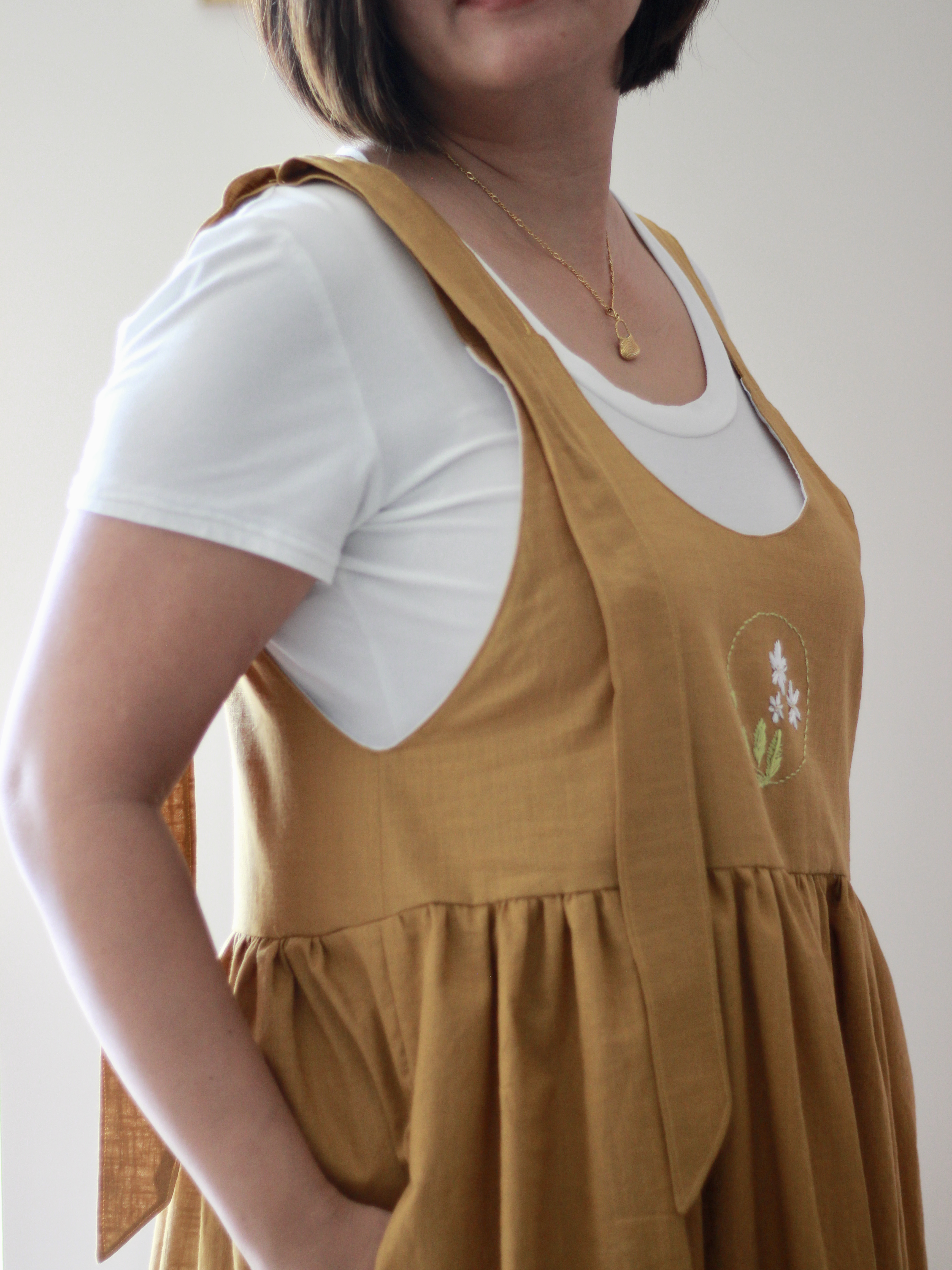
The original pattern is a pretty top that has a central panel with a round collar which the dolman sleeve pieces attach to. Then Pattern Scout released the square neck extension pack which was what really sold me. I really love a square neckline! So, my first version of this pattern was the square neckline version of the top. 

This time I’ve sewed the square neckline again but decided to use the free tutorial for the flutter sleeves. So, most of the hard work for this hack was actually done! I just added the skirt by using two rectangular pieces and gathering the top of the skirt and attaching this to where the “skirt” of the top would’ve attached to.

I should also mention that I had fully lined my dress with muslin. I used a divinely floaty, sheer, lightweight “seaweed stripe” linen that I was lucky enough to score at the in-store sale at Megan Nielsen’s shop in June. I didn’t know at the time what I was going to make out of the fabric but it was too good to pass up and I’m only just starting to feel confident enough to invest in my fabrics. I bought two meters of this linen which was just right for this make. So, getting back to the sheerness of the fabric, it’s beautiful and light but quite see-through so for modesty’s sake and so my family don’t disown me in public, the muslin was a perfect pick to line the dress with.

This dress is so comfortable to wear. It’s not quite warm enough yet but the baby-doll style is great for those sticky and humid summer days. Hopefully this will inspire someone to give it a go! The Fern Top is great as-is but such a wonderful bonus with so many options to customise it.

Thanks for reading and happy sewing!

X Em